Introduction Course of Department of Applied Marine Science
セクションアウトライン
-
Based on biology, physics, and social science, the department conducts comprehensive education and research on the investigation and measurement of living resources and the marine environment, information analysis, and the construction of production systems, aiming for the comprehensive and sustainable utilization of marine living resources. Based on this knowledge and technology, the program also develops human resources capable of addressing a wide range of comprehensive issues in the management, production, and utilization of marine resources in Japan and abroad from the standpoints of international cooperation, industrial promotion, and resource conservation.
An overview of the program is presented in the video below.
-
-
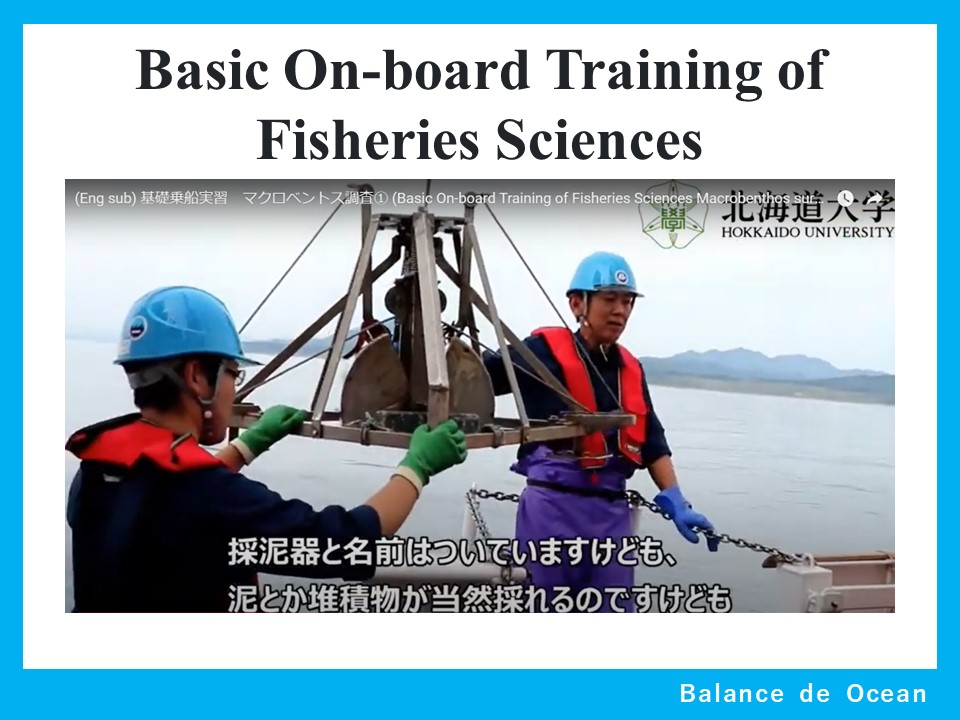
This is the first on-board training for the department after being assigned to a ship. Sapporo for Hakodate and board the training ship Oshoro-Maru. Students will experience basic practical training and onboard life in the sea around Hakodate and the Tsugaru Straits.

-
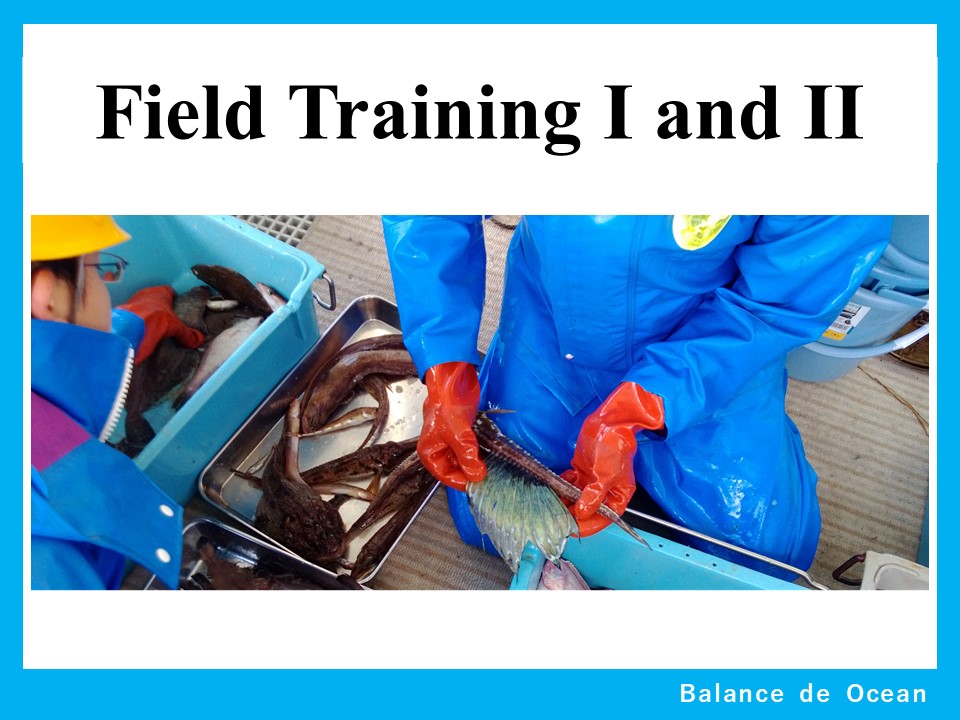
In Field Training I and II of the Department of Applied Marine Science, students learn about work, research, and investigation methods on board vessels and at fishing sites through practical training using measurement technology and fishing practice.
Professors prepare practical assignments in each academic field, and the following seven assignments are being offered in Academic Year 2020.
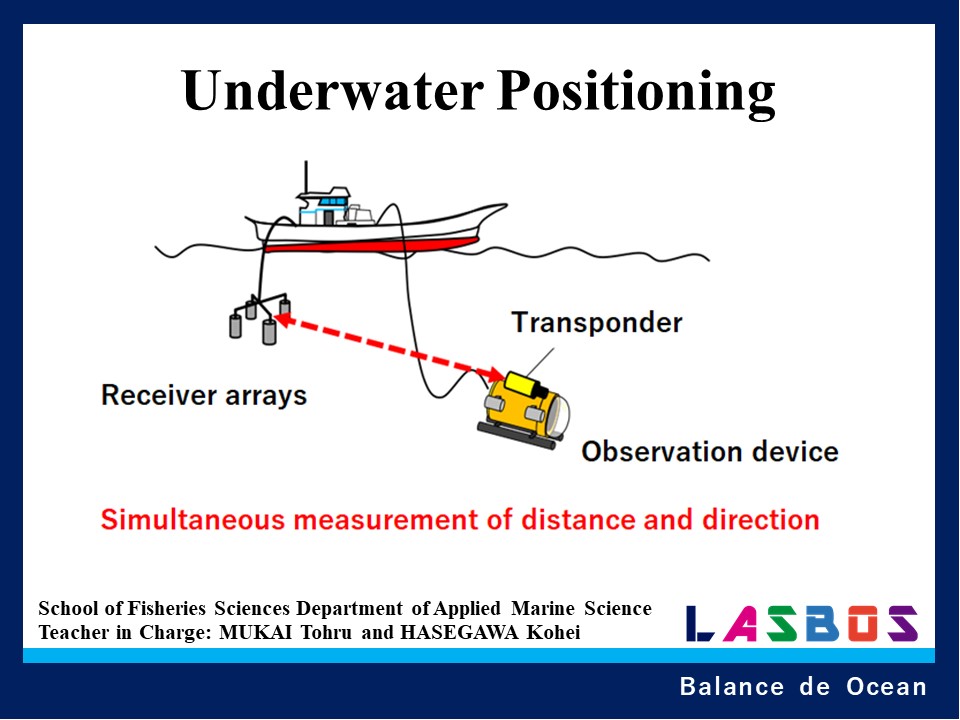
- Acoustic measurement training
- Marine observation training
- Bottom trawling and oceanographic observation training
- Coastal economic training
- Squid and mackerel fishing training
- Tuna longline training
- Bottom troll fishery training


-
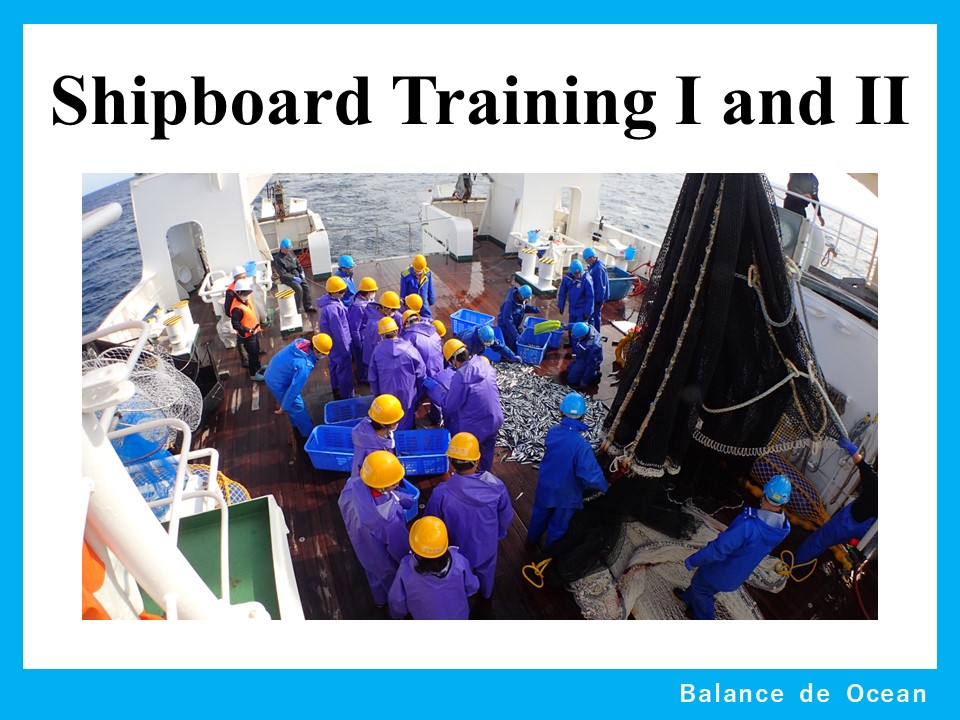
In the Shipboard Training Ⅰ of the Department of Applied Marine Science, students will discuss the structure of the ocean between the Tsugaru Strait and off the Pacific Ocean using data on temperature, salinity, currents and distribution of dissolved oxygen and chlorophyll-a. We also aim to understand the actual state of marine debris such as plastic products floating on the ocean surface, which has recently been reported in the mass media.

-
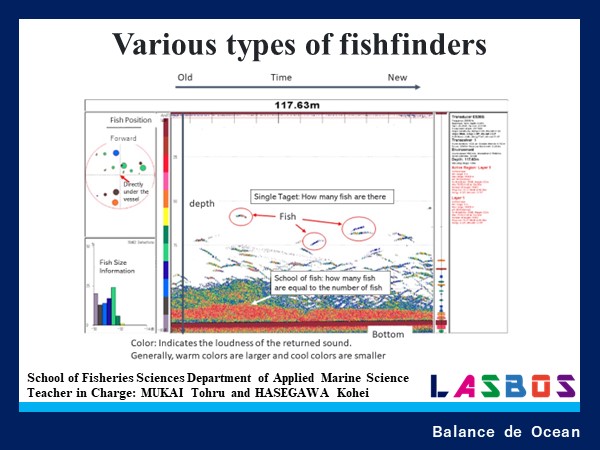
In the Shipboard Training II of the Department of Applied Marine Science, students collect marine organisms using a variety of fishing gear. Students also learn how to search for marine organisms using devices such as fish finders and sonar. Through training, students aim to gain an understanding of marine research and marine resource survey techniques.


-
-
-
-
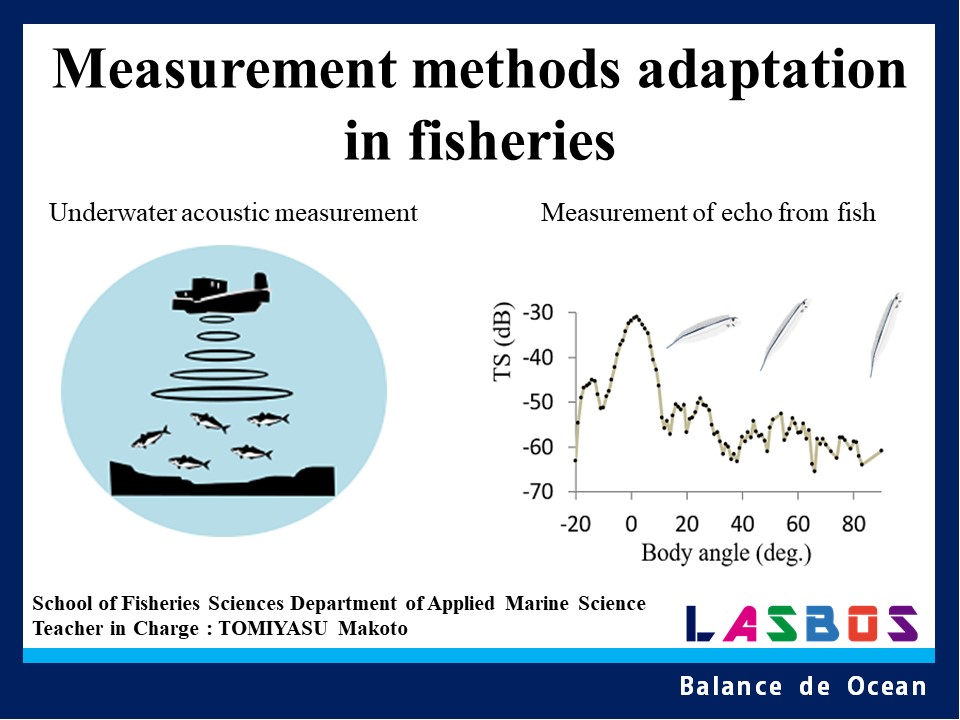
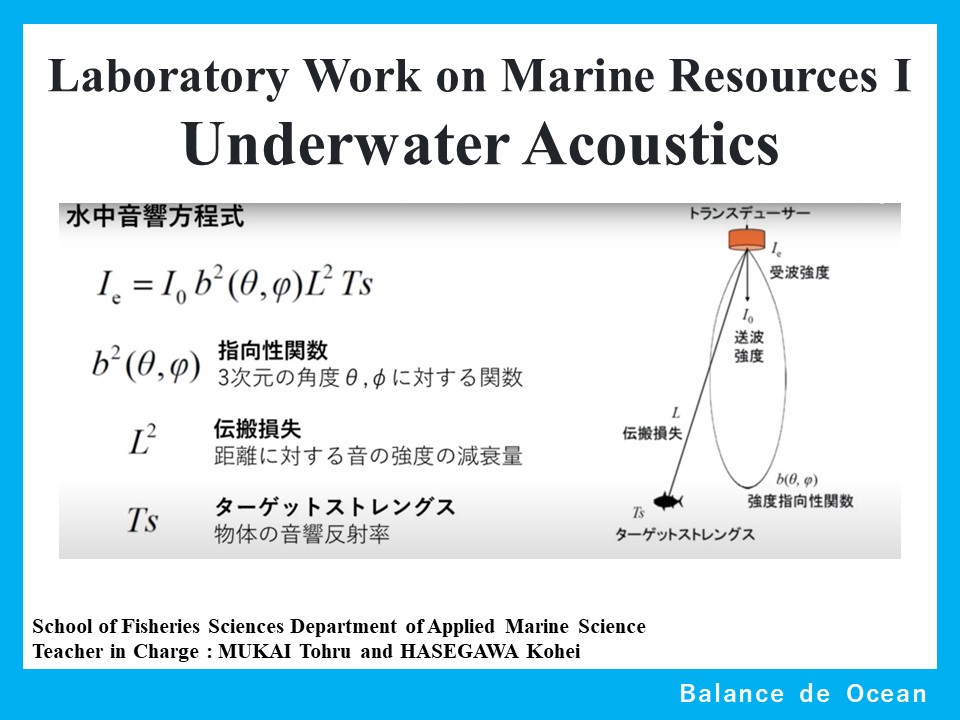
- Experiments in Underwater Acoustics for Fisheries
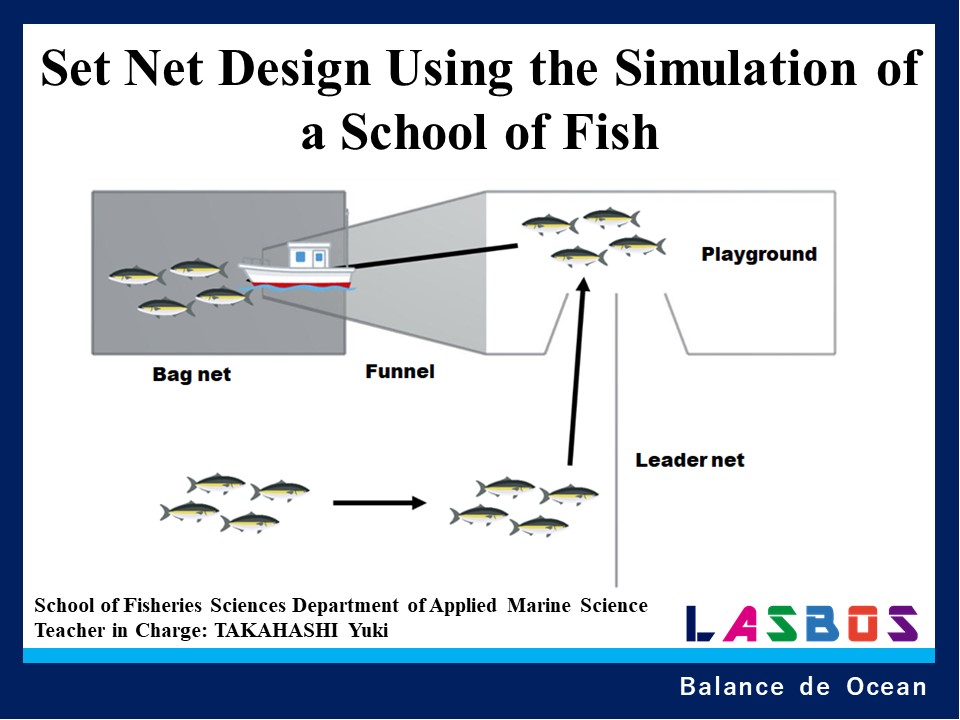
- Experiments in Fishing Engineering
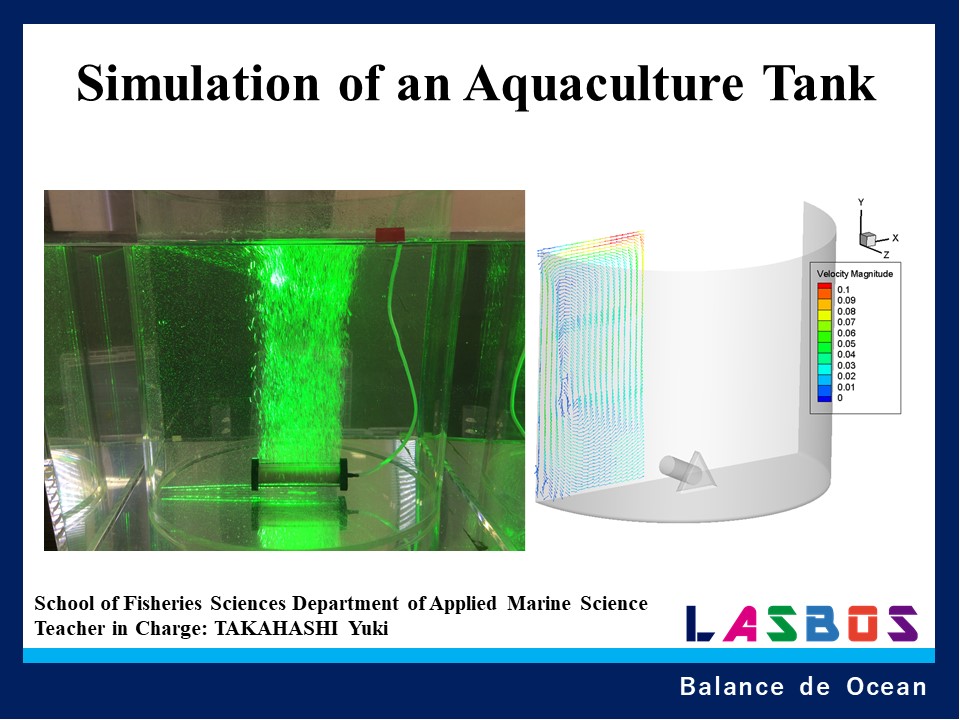
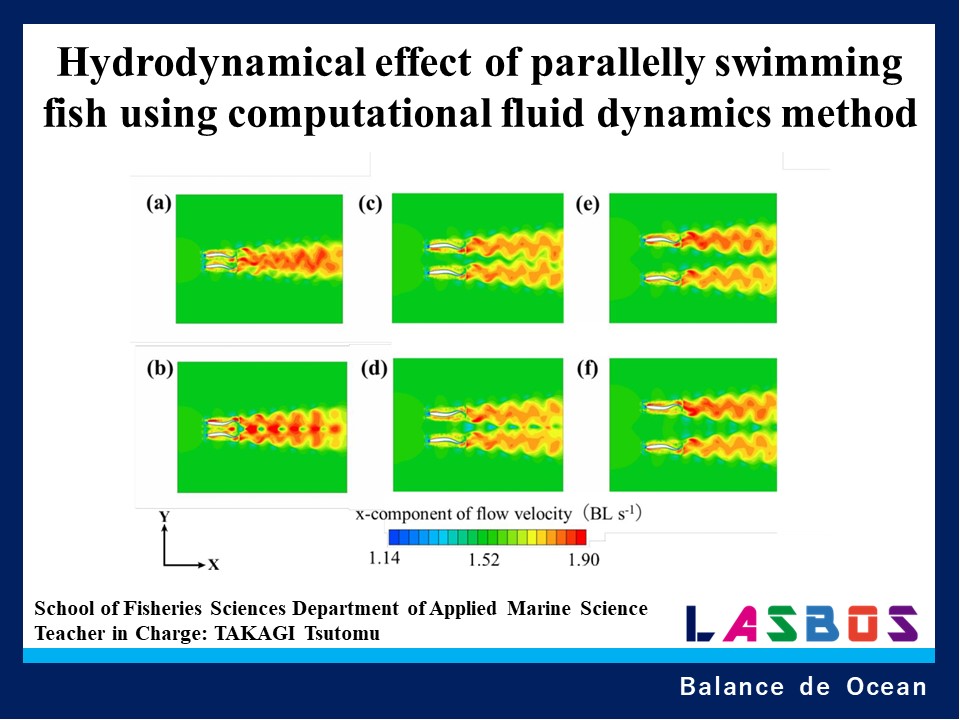
- Experiments in Fluid Dynamics
-
-
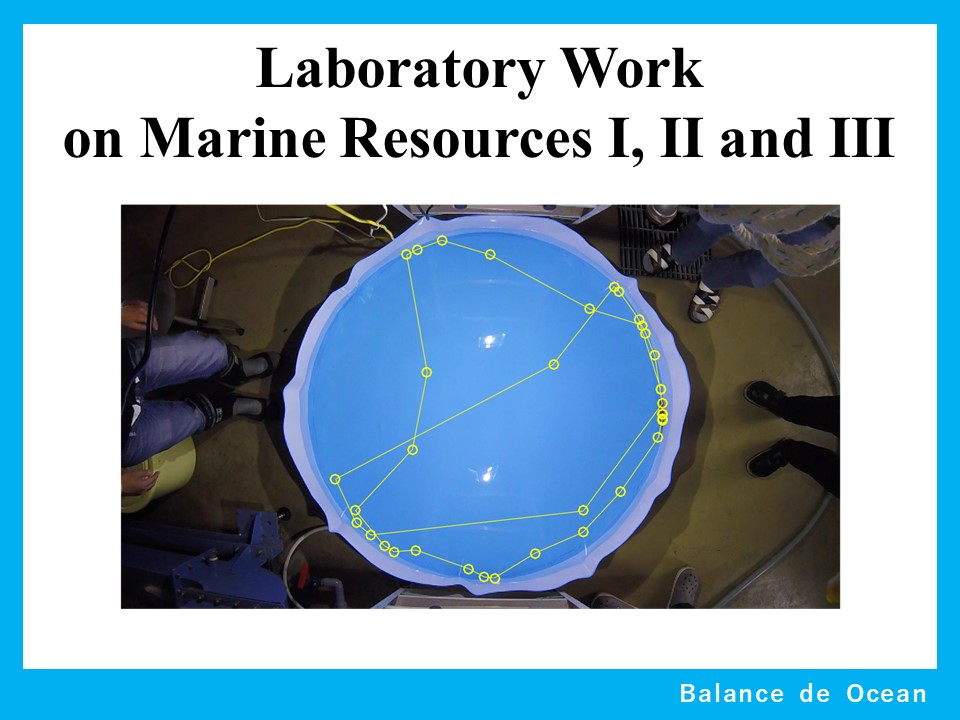
- Behavior ecology experiments
- Satellite data analysis - Microwave remote sensing
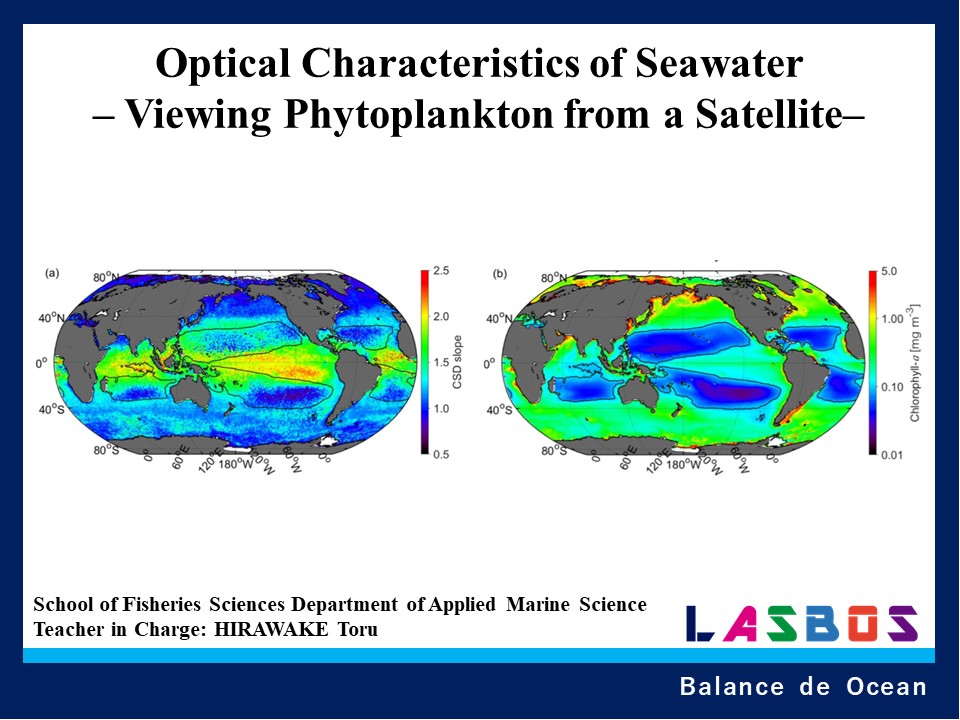
- Satellite data analysis - Ocean color remote sensing
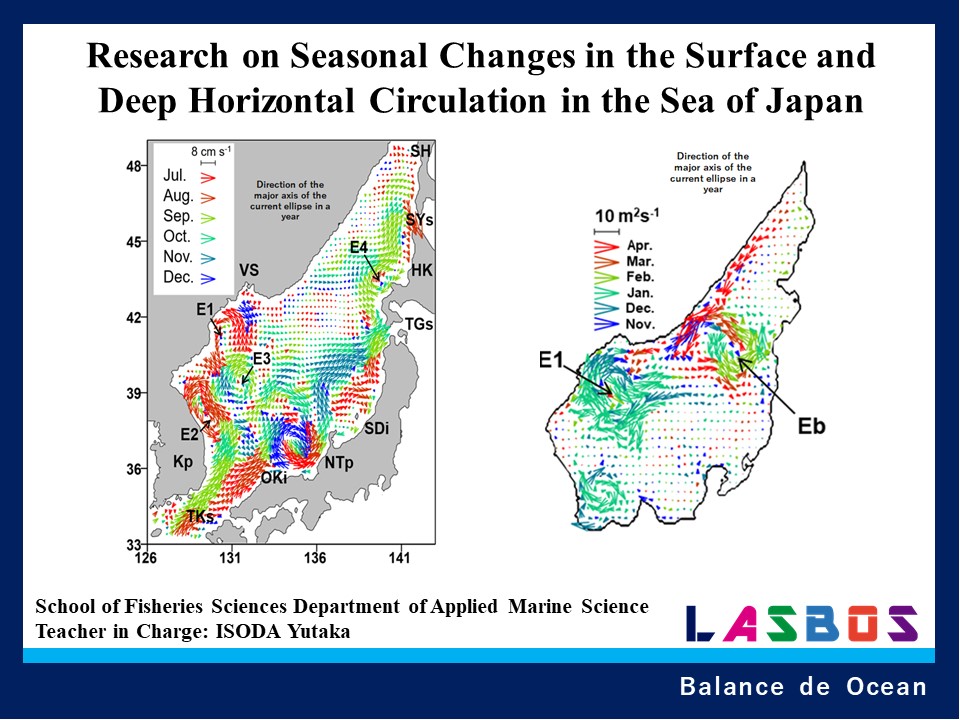
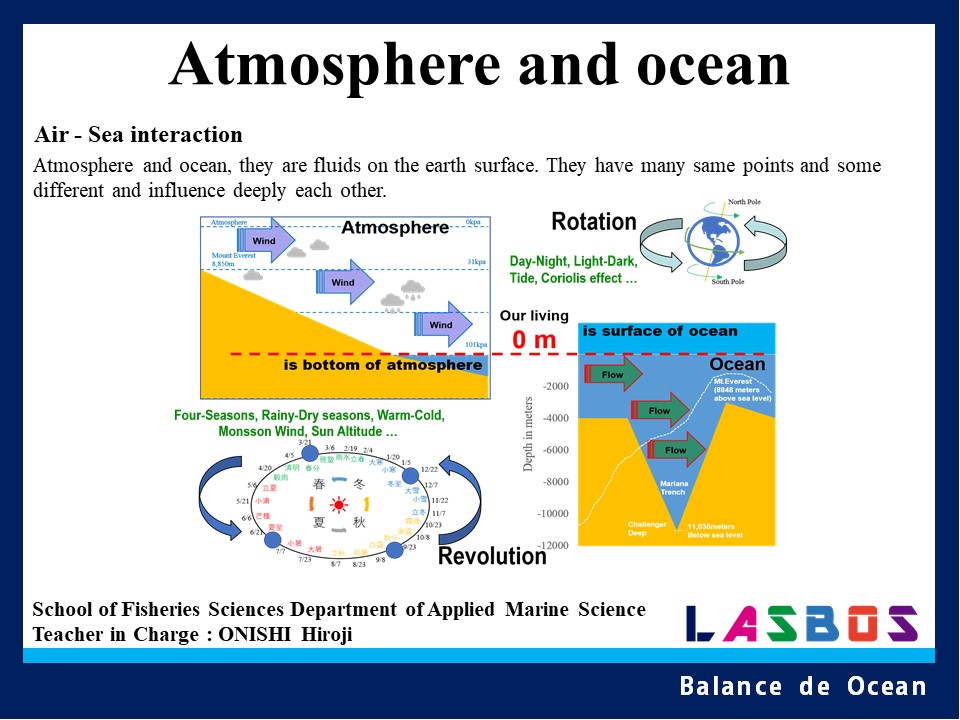
- Hydrographic data analysis
- Biomechanics of fish swimming
- Image processing for behavioral measurement
- Fisheries and marine engineering
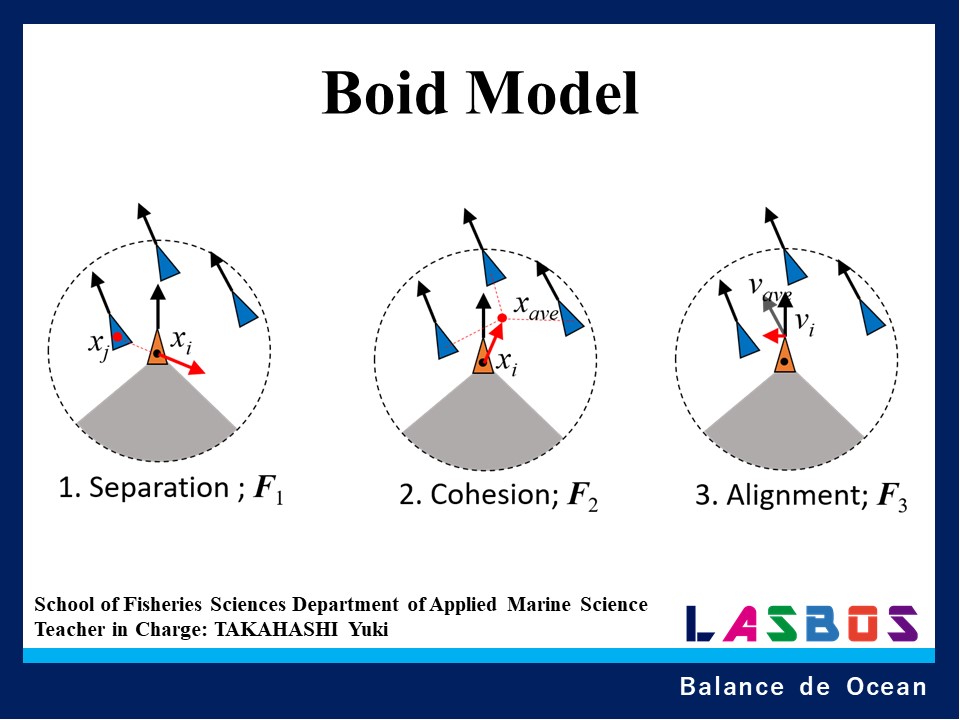
- Fisheries information engineering, computational fluid dynamics
- Behavior ecology experiments
-
-
-
-
Marine Environmental Science
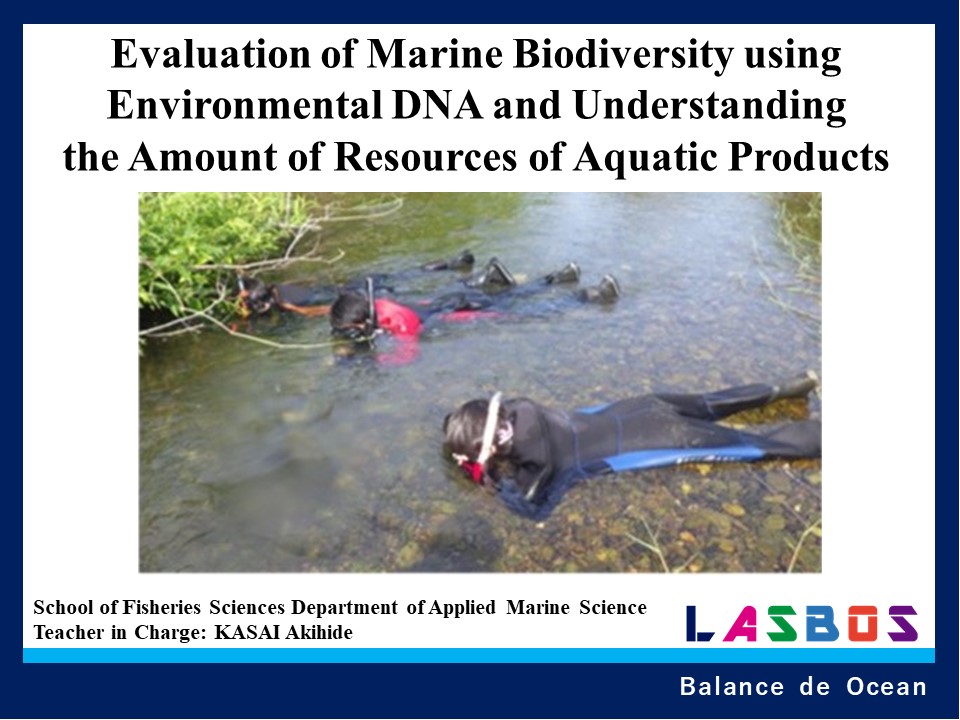
Kasai Laboratory (overview of Research and Survey) Professor KASAI[LASBOS][School official]
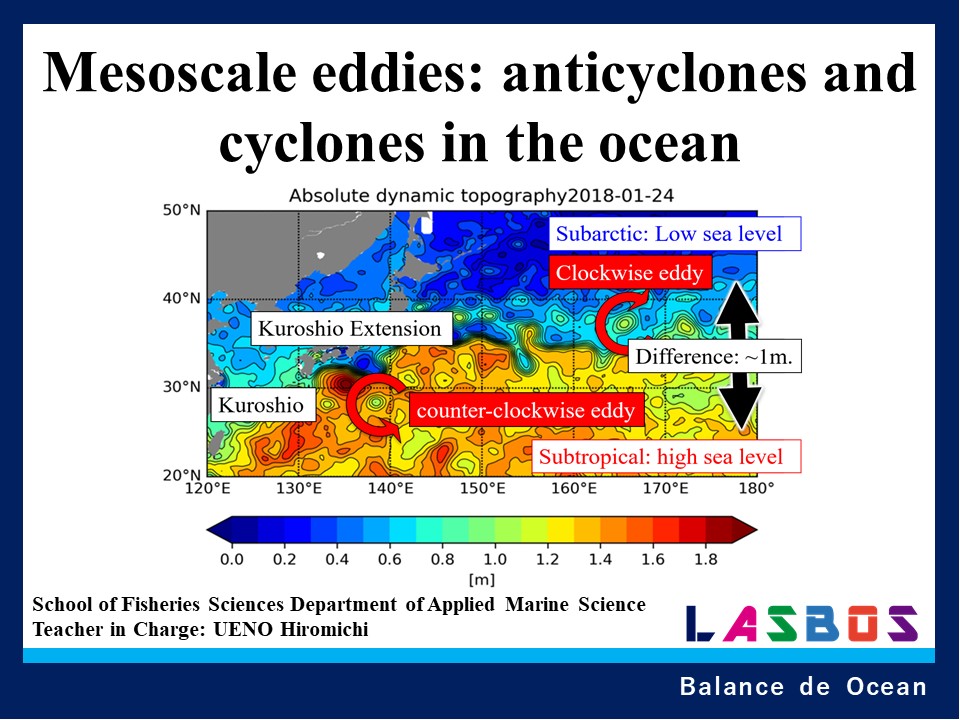
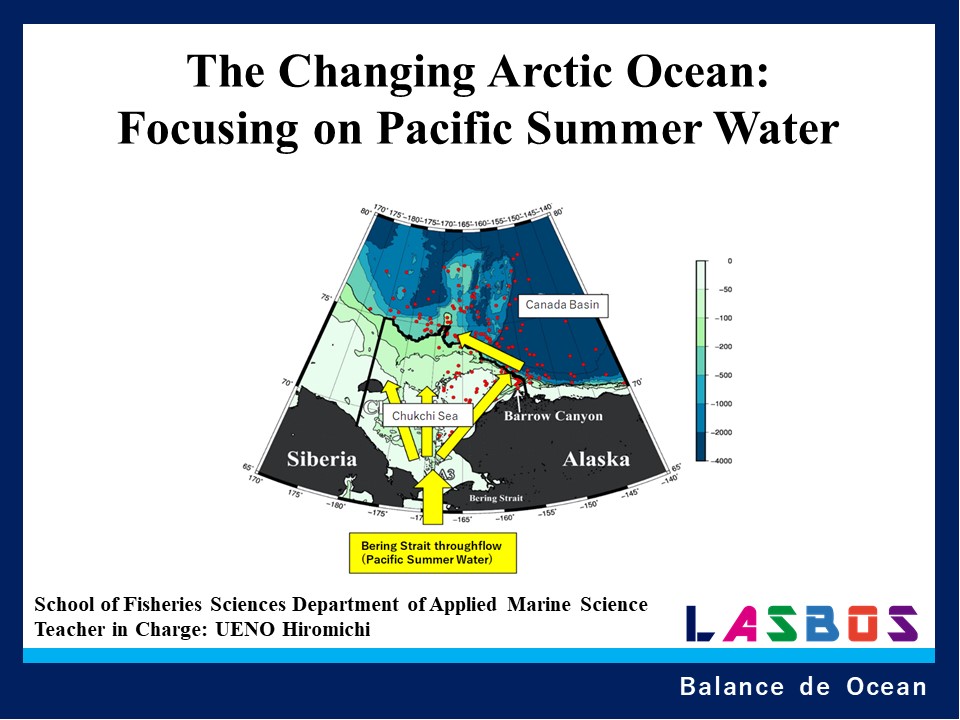
Ueno Laboratory Professor UENO[LASBOS][School official]
Associate professor NISHIKAWA[School official]Marine Environment and Resource Sensing
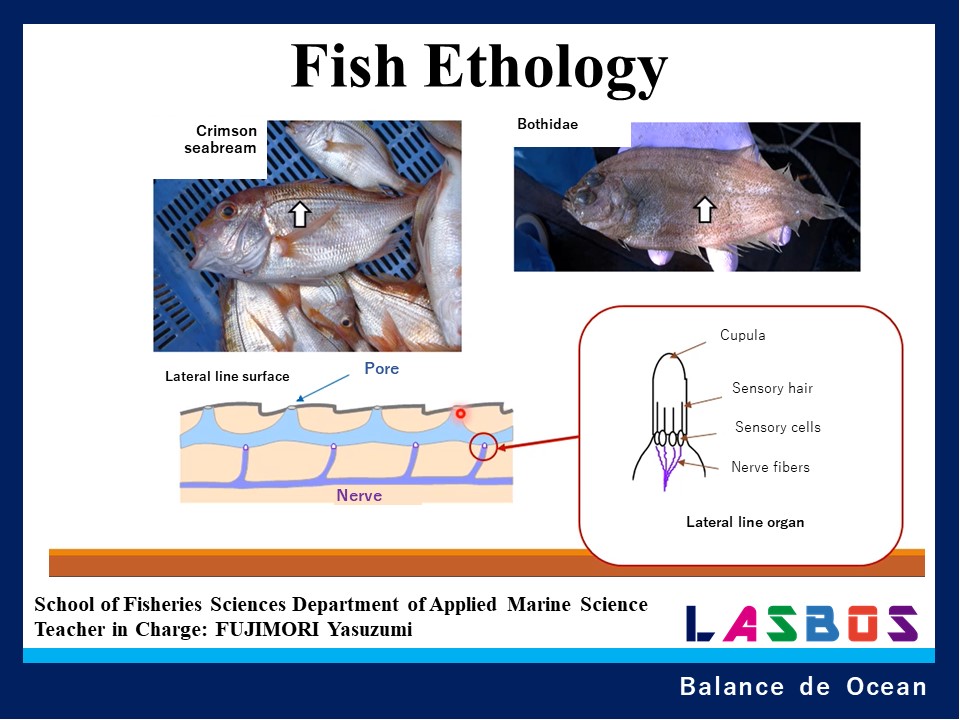
Professor FUJIMORI[LASBOS][School official], Assistant professor TOMIYASU[LASBOS][School official]
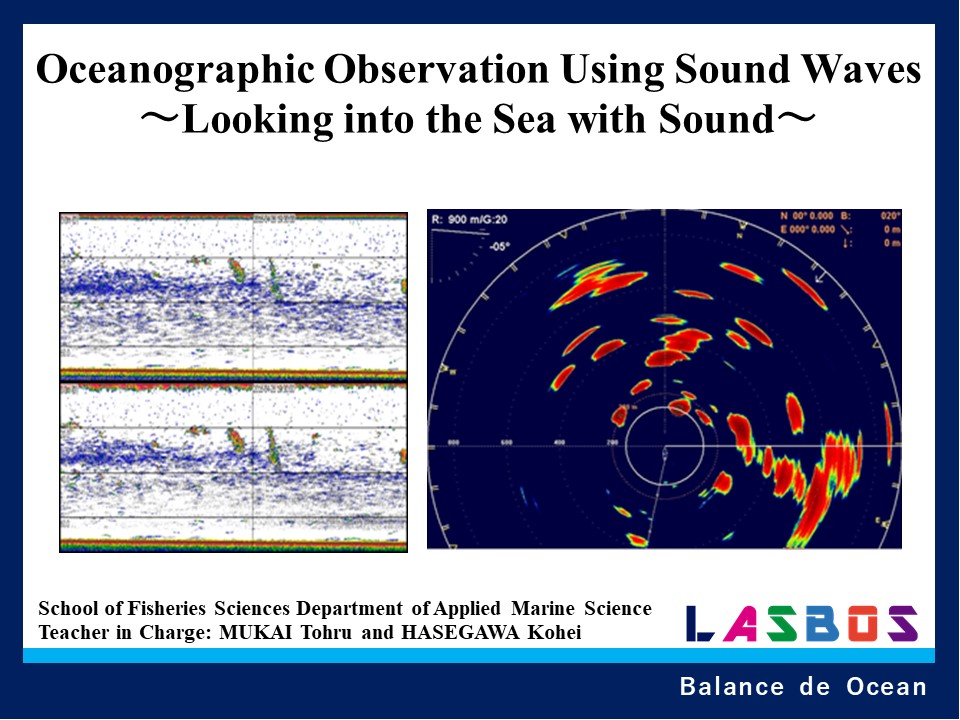
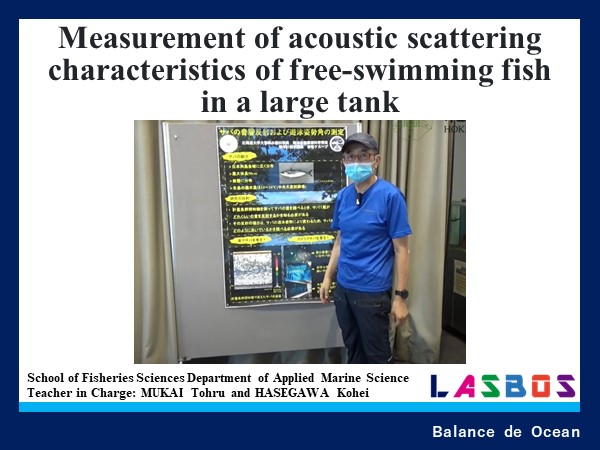
Acoustic Measurement Professor MUKAI[LASBOS][School official], Assistant professor HASEGAWA[LASBOS][School official]
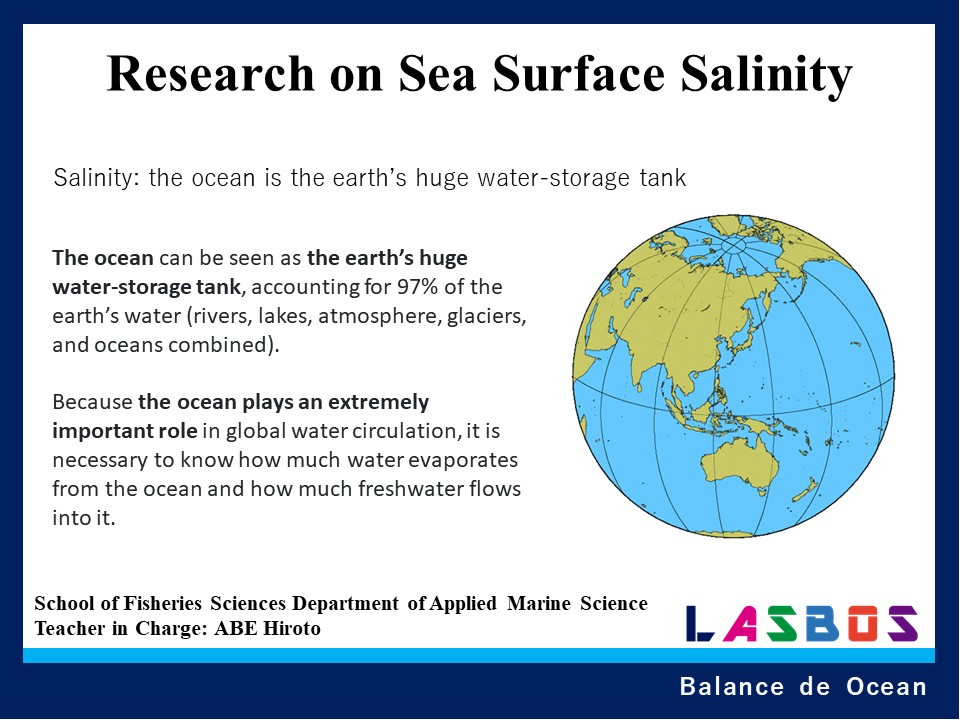
Laboratory of Satellite Oceanography Associate professor ABE[LASBOS][School official]Fisheries Engineering
Professor YASUMA[LASBOS][School official], Associate professor TAKAHASHI[LASBOS][School official]
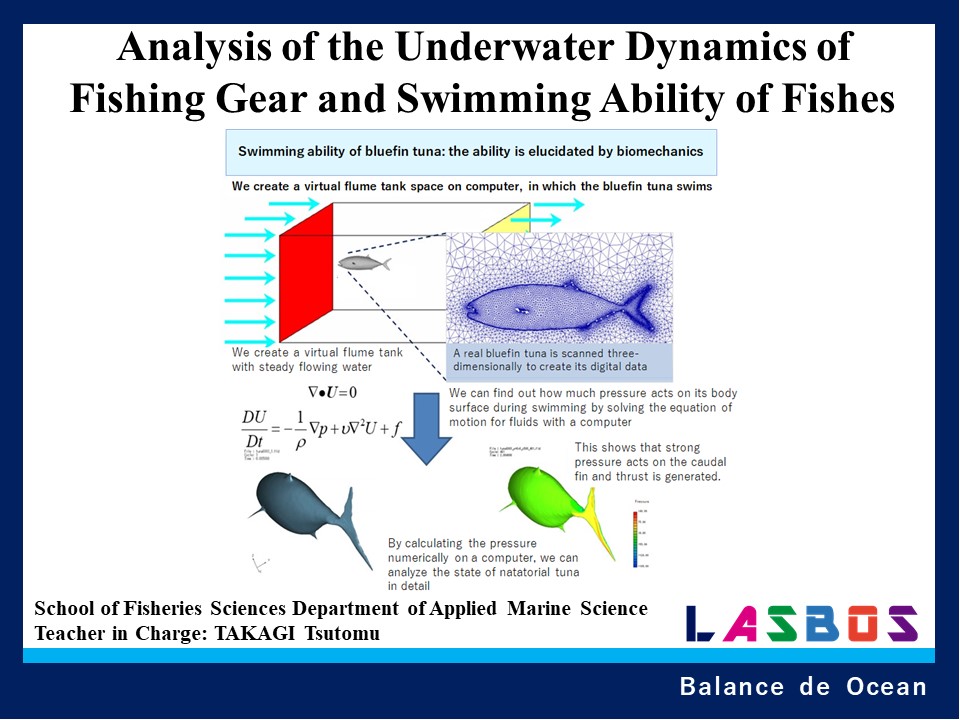
Professor TAKAGI[LASBOS][School official]
Komeyama Laboratory Associate professor KOMEYAMA[School official]Humans and the Ocean
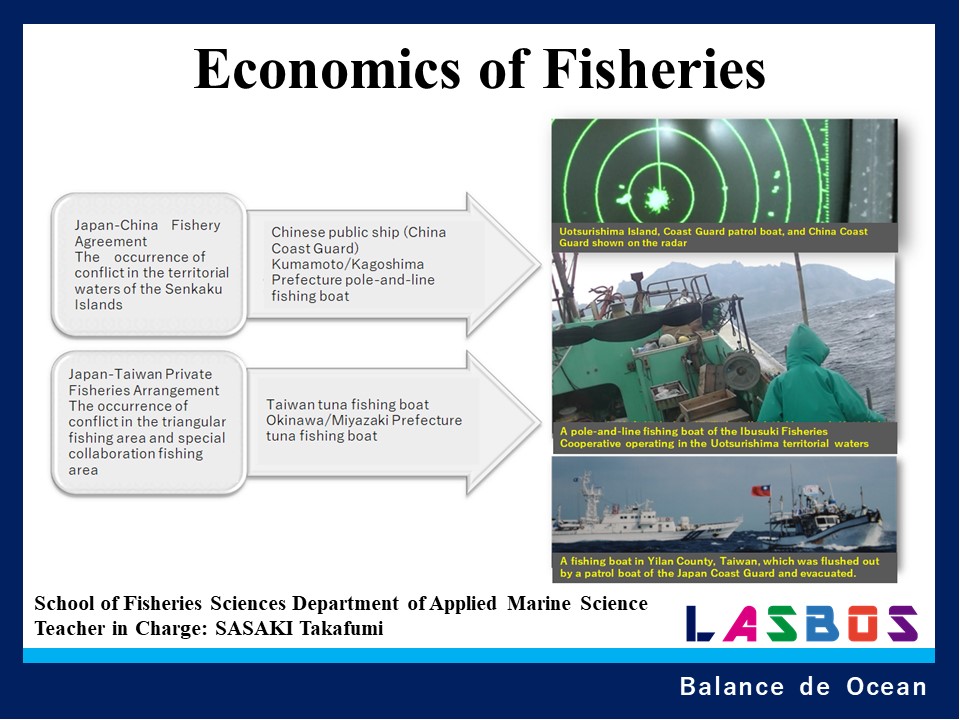
Associate professor SASAKI[LASBOS][School official]
Laboratory of Marine Ecosystem Change Analysis, Field Science Center for Northern Biosphere
Professor MIYASHITA[School official], Assistant professor YAMAMOTO[LASBOS][School official]
-