Effective Utilization of Collagen and Chondroitin in Fish Processing Byproducts
Section outline
-
-
The value of marine products is not limited to food, and they can have even greater value if used adequately. Our research uses the latest physiology, biochemistry, and biotechnology to create value in the fisheries and aquaculture industries. Here, we introduce the research on collagen obtained from fish processing byproducts.
Keywords: tissue engineering,cell scaffold material,wound dressing materials,functional cosmetics,functional food
-
-
-
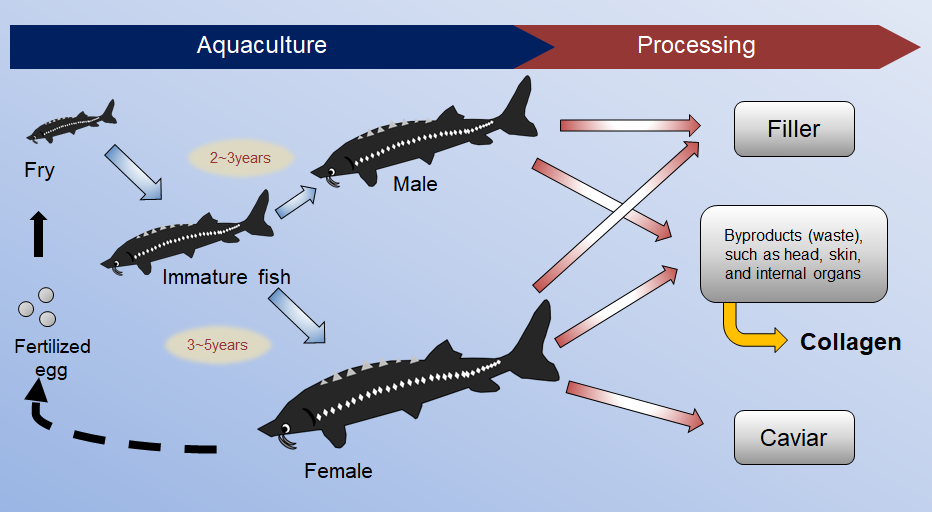
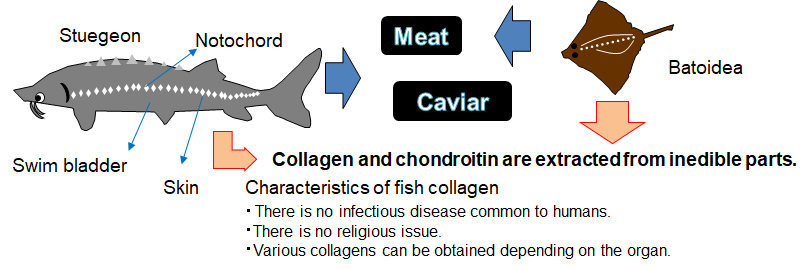
The aquaculture of sturgeons, which produces high-quality caviar, is expected to be highly profitable. However, most of the fish body (called byproducts) after caviar processing is discarded and is very wasteful as only a small part of the meat is used. Thus, it is important to develop uses of the byproducts by reducing the parts to be discarded (zero emission).
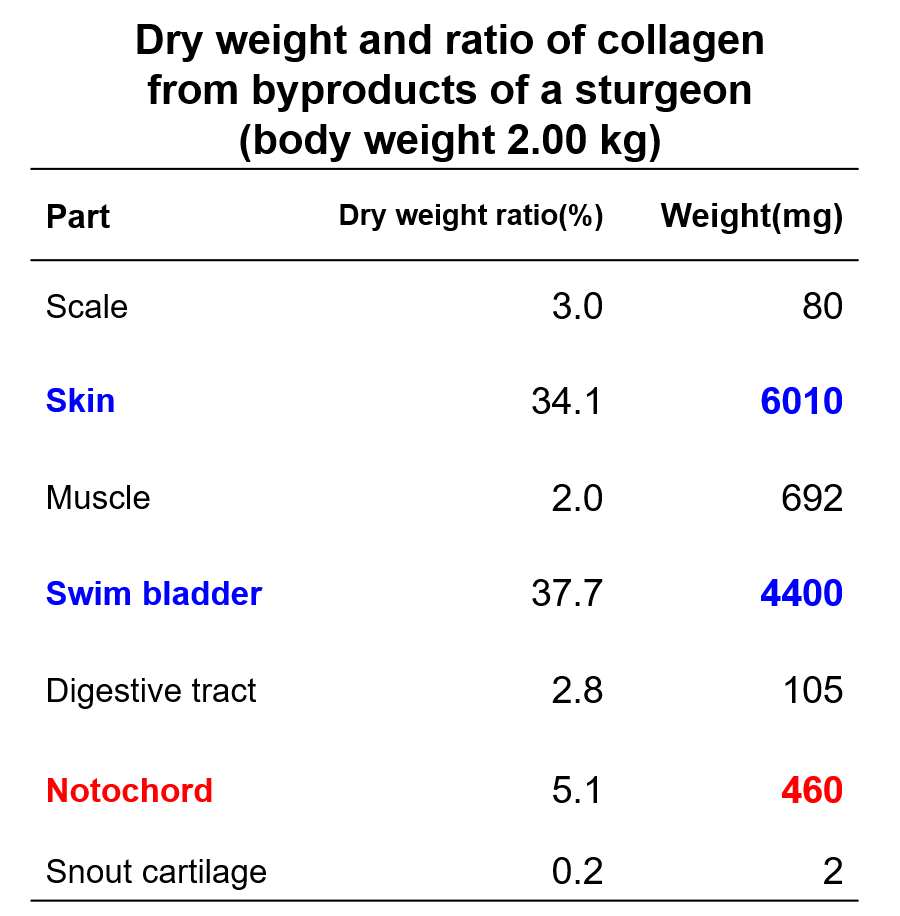
Collagen is extracted from byproducts to generate materials for tissue engineering, health foods,and cosmetics. The amount obtained varies greatly depending on the body part and extraction method.
-
-
-
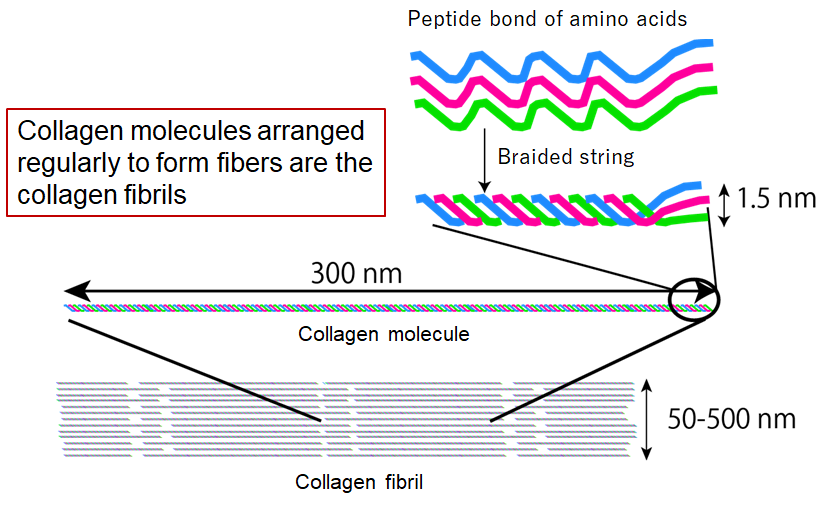
The collagen molecule is a type of protein. It is made up of three spiral peptide-bond chains of amino acids and is a string with a diameter of 1.5 nm and a length of 300 nm.
-
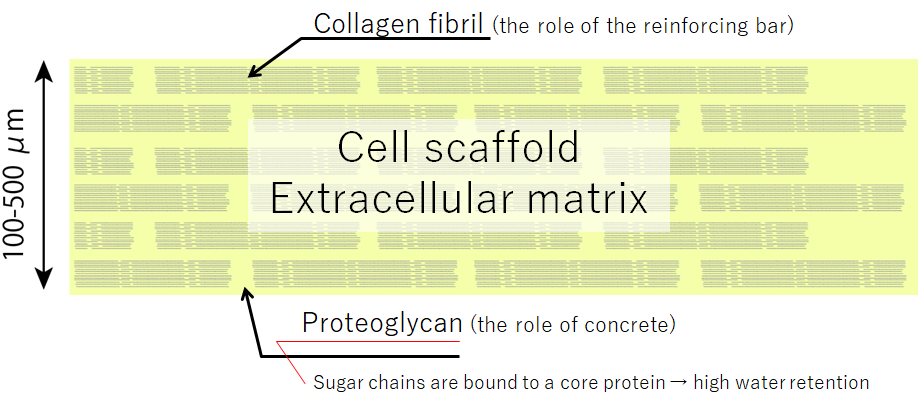
A thick fibrous bundle of collagen fibrils is called a collagen fiber bundle. Collagen fibrils and fiber bundles are distributed among various tissues and organs in our body, supporting the body three-dimensionally. Thus, they play the role of a reinforcing bar in a reinforced concrete building. The space between the collagen fibrils and fiber bundles is filled with proteoglycans, which act as concrete in a reinforced concrete building. A proteoglycan contains a large number of sugar chains bound to the core protein and has high water retention. The complex of collagen and proteoglycan, called the extracellular matrix, plays an important role in life support by acting as a cell scaffold and storing signal transmitters for cells to regulate their activity.
-
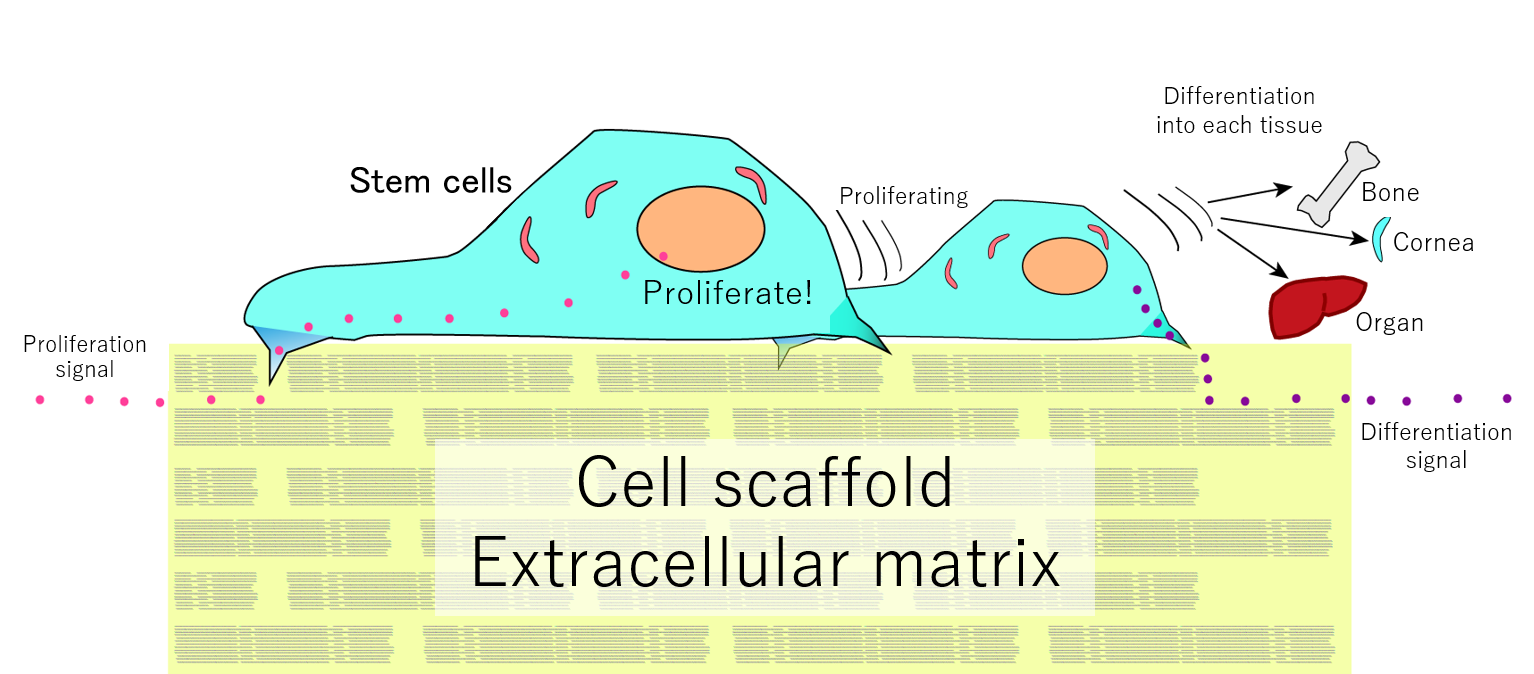
An artificial scaffold (such as collagen) is necessary for creating artificial tissues with cultured cells in biotechnology. Upon binding to a scaffold, cells acquire various information from the scaffold to proliferate or differentiate into each tissue. With an appropriate scaffold, the proliferation or differentiation of cells can be induced as intended.
-
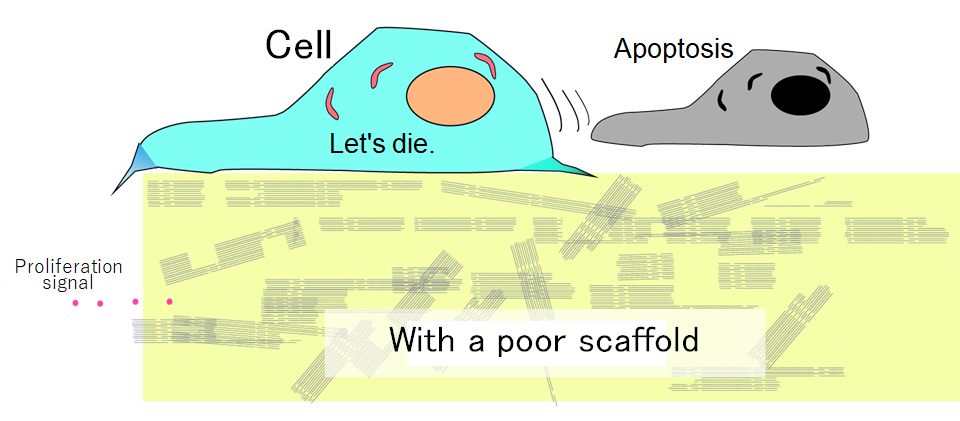
On the other hand, cells with a poor scaffold die by themselves (apoptosis). An appropriate scaffold depends on the type of tissues to be created. As the extracellular matrix structure found in the tissues of our body differs from tissue to tissue, a custom-made scaffold is needed for each type of tissue to be created.
-
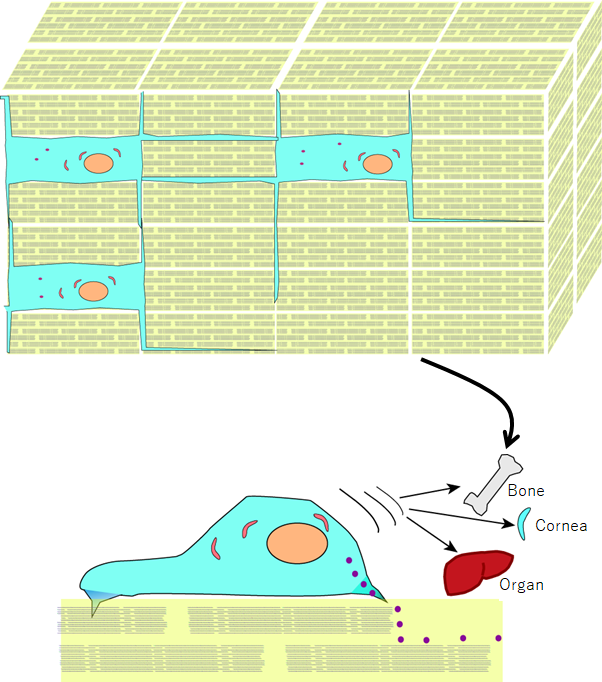
Because the tissues of living organisms have a three-dimensional structure, they do not form with a flat scaffold. A custom-made scaffold with a three-dimensional structure is needed for each tissue, which requires a suitable scaffold material.
-
-
-
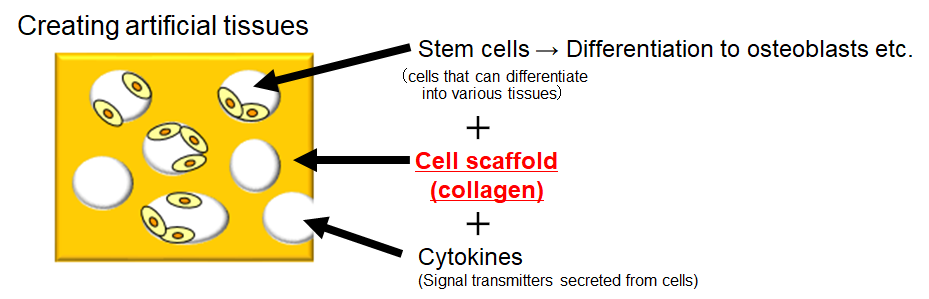
Tissue engineering combines stem cells, three-dimensional cell scaffold materials,and cytokines to create artificial tissues. In regenerative medicine for bone diseases, for example, the stem cells collected from a patient are proliferated by adding a scaffold (collagen) with an appropriate three-dimensional structure and differentiation-inducing factors, and then they are differentiated into osteoblasts and cartilage cells. Once the artificial bone tissue grows to the size required for treatment, it is transplanted to the disease site of the patient.
-
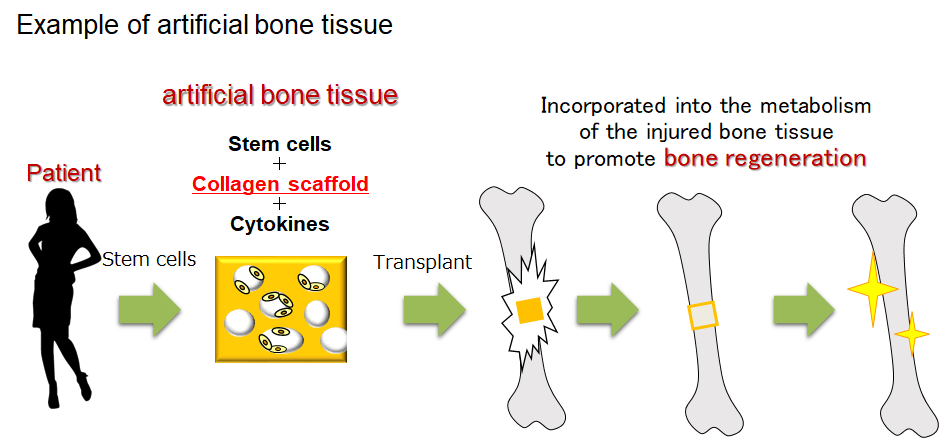
Our laboratory is conducting research on the application of sturgeon collagen to cell scaffold materials for tissue engineering.
-
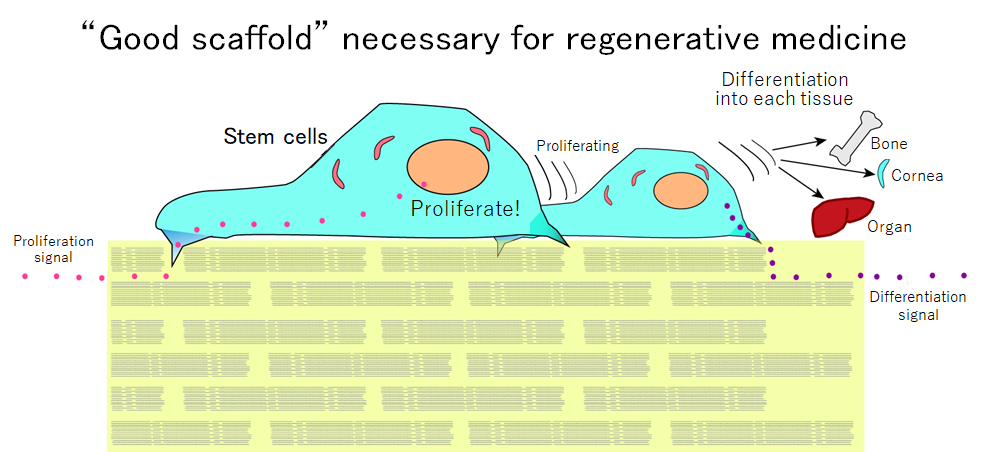
The artificial scaffold of fish collagen has many advantages.
- Suitable for material synthesis due to its high fibrogenic ability
Fibrotic material has a high affinity for cells
→ Stem cells adhere well to the scaffold and easily fuse with the surrounding tissues after transplantation.
Free from common infectious diseases with humans
(In Europe, all scaffolds have been switched to fish collagen)
-
-
-
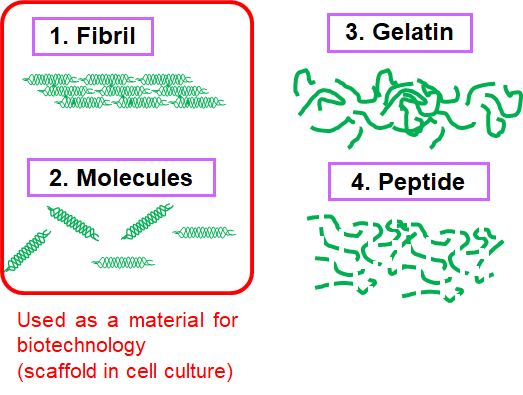
1. Fibril: the fiber of collagen molecules

The form of collagen found inside the body of animals. The molecules are arranged regularly to form a fiber.
It serves as a cell scaffold, creating a three-dimensional structure of the tissue.
Used as a scaffold for tissue engineering.
-
2. Molecules (collagen molecules): three spiral peptide-bond molecules
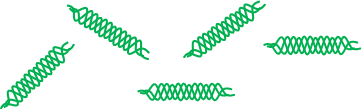
The form of collagen found upon extraction.
They have strong cell adhesion and are used in cell culture.
In addition, they have strong water retention and are also used in cosmetics.
-
3. Gelatin: peptide-bond polymer

Collagen molecules that are unraveled by heating
In addition to being used as a gelling agent for food, they are used in cell culture.
-
4. Peptide: amino-acid peptide-bond small molecule

A low molecular weight product obtained by hydrolyzing gelatin.
Because of its various cell activities, it is used in functional cosmetics that activate skin cells.
It is also used in health foods due to its high absorbency.
-
-
-
The price of collagen varies as the manufacturing method and cost are different depending on the form of collagen. The most expensive collagens are the molecules and the fibrils composed of molecules. Highly purified collagen molecules for cell culture are worth approximately 150,000 yen per gram. More than four grams of collagen can be obtained from the swim bladder of sturgeon (2 kg), which is worth over 600,000 yen. This is approximately the same value as caviar from a female (20 kg).
(The price of caviar varies depending on the quality, but it is calculated at 300 yen per gram, which is a medium quality caviar).
-
-
-
Zhang et al., 2014, Food Chemistry
Because a large amount of collagen can be obtained from the skin and swim bladder their industrialization is possible.
Type II collagen can be obtained from the notochord. Type II collagen is contained in special tissues, such as the cartilage, and is a valuable collagen with a small amount distributed on the market. The notochord is a tissue unique to the ancient fish Acipenseridae, which normally degenerates in other animals.
-
-
-
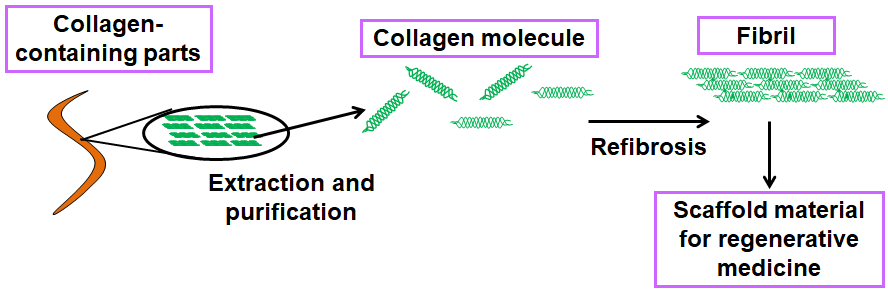
Collagen molecules are extracted from each part of an animal. To be used as a collagen material for medical use, it must be thoroughly purified and have no impurities. Purified collagen molecules need to be returned to fibrils for use as cell culture scaffolds. This requires establishing the conditions under which the regular fibrils (fibrils that can efficiently induce cell proliferation and differentiation) are produced. On satisfying these requirements, we aim to streamline processing and bring it to the world as an industrial product.
-
-
-
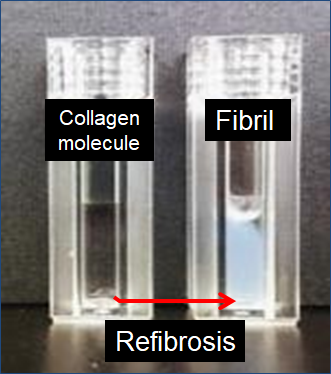
Collagen from the swim bladder of sturgeons exhibits special properties that are different from mammalian collagen. The extracted collagen molecules dissolve well in an acidic solution (left), but when neutralized with a buffer solution, they form fibrils and become cloudy and white (right).
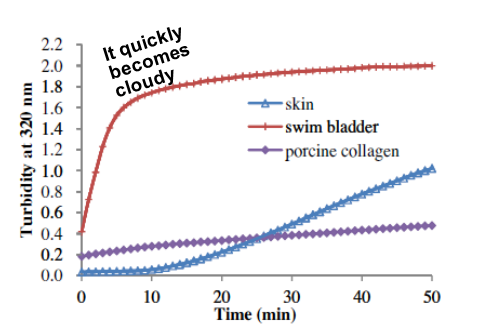
This graph shows the change in the cloudiness measured with a spectrophotometer. As you can see, the swim bladder collagen (red line) becomes cloudy more quickly (= fibril formation progresses) than the porcine collagen (purple line).
Zhang et al., 2014, Food Chemistry
-
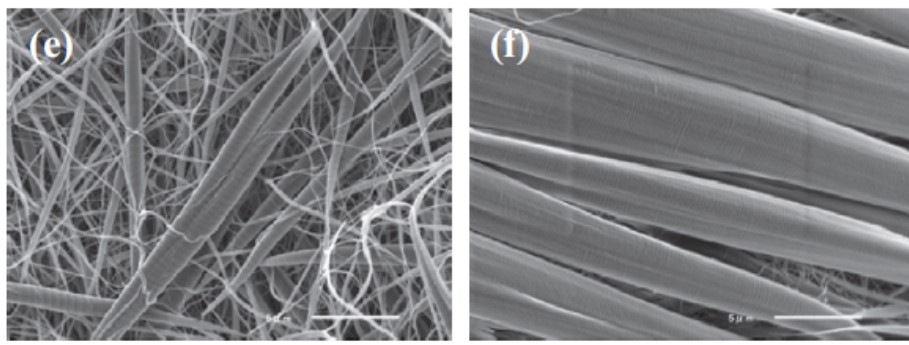
These are scanning electron micrographs of the fibrils prepared as mentioned above. As you can see, fibers of various thicknesses are formed. Porcine collagen can only make much finer fibrils. When used as cell scaffolds, it is highly advantageous for collagen fibrils to be able to quickly produce various forms. This is because cells can recognize the thickness and orientation of the collagen fibrils in scaffolds and react in various ways. If the thickness and orientation of the collagen fibrils of the swim bladder can be controlled, it may be possible to control the proliferation and differentiation of cells.
-
-
-
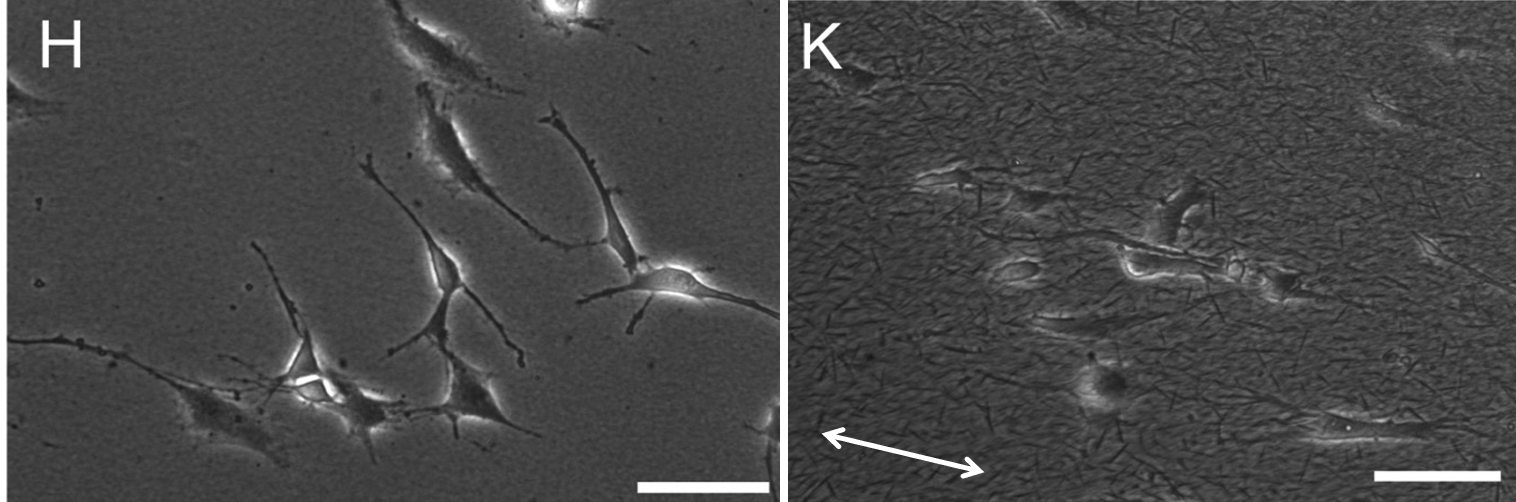
We have developed a technology to coat cell culture dishes with the collagen fibrils of sturgeons swim bladders.
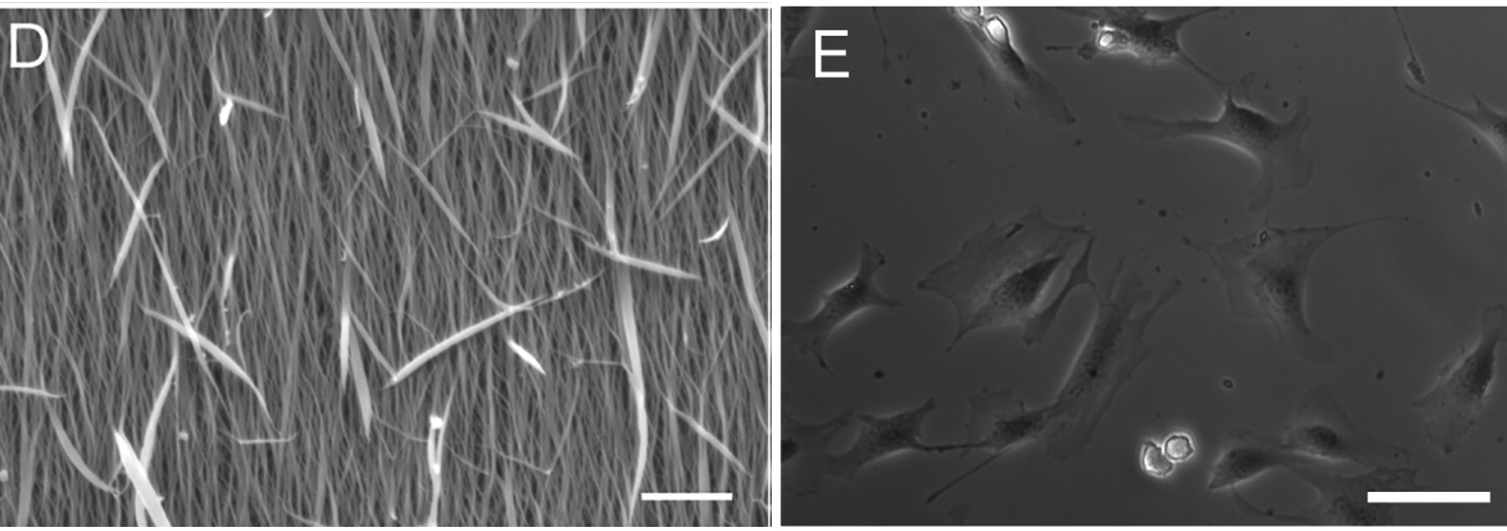
Scanning electron micrographs of a culture dish coated with (B) collagen molecules,(C) thin fibrils,and (D) thick fibrils
E, H, and K are polarized light micrographs of mouse osteoblast progenitor cells cultured in each dish. Each shows a characteristic cell morphology, and the cells, especially in K, extend in one direction along the traveling direction of the fibrils (arrow in K). Although not shown in the figure, cell proliferation and differentiation also differ greatly depending on the type of coating. Such coating is not possible with porcine collagen. This technology has made it possible to develop inventive research, such as investigating the reaction of cells to collagen in detail.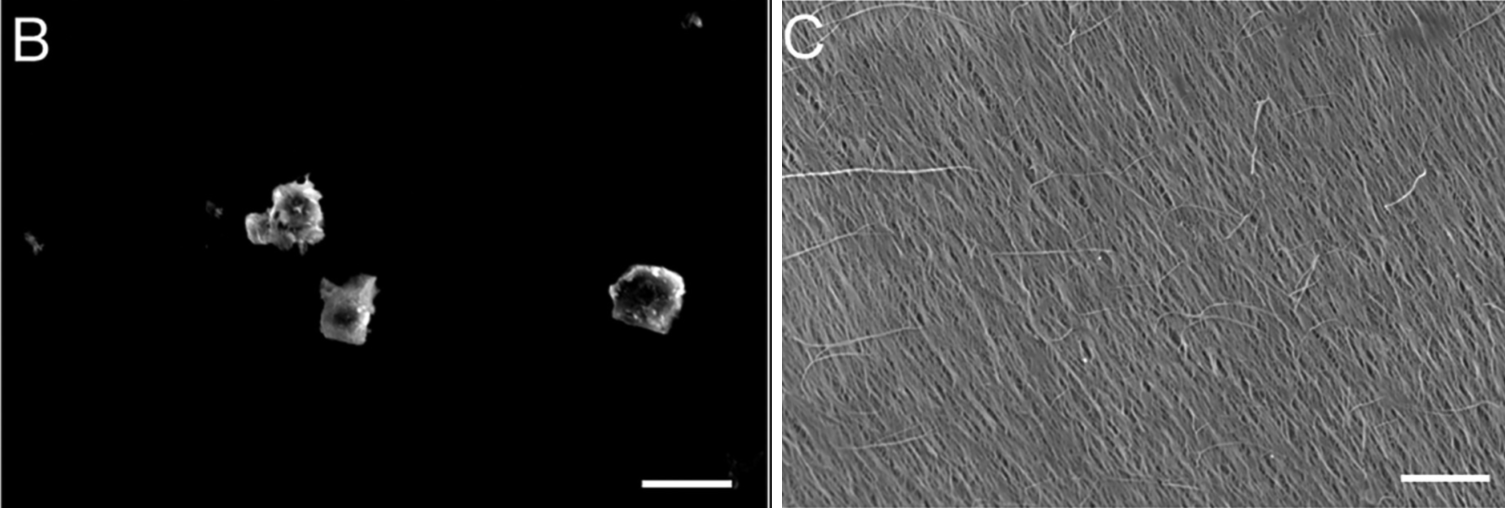
We will further develop this technology, aiming to synthesize three-dimensional cell scaffold materials in the future.
-