

Tissue engineering and regenerative medicine using sturgeon collagen
セクションアウトライン
-
-
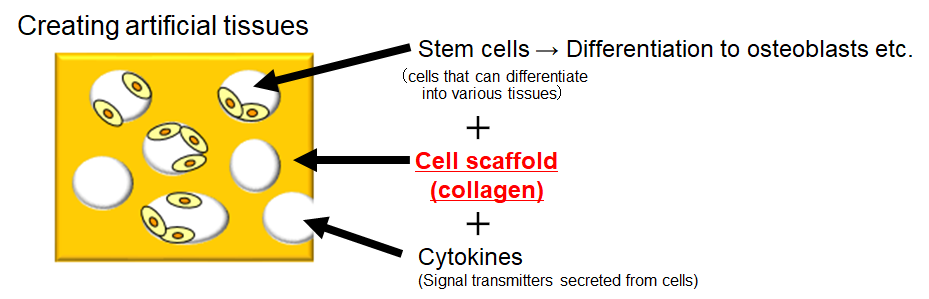
Tissue engineering combines stem cells, three-dimensional cell scaffold materials,and cytokines to create artificial tissues. In regenerative medicine for bone diseases, for example, the stem cells collected from a patient are proliferated by adding a scaffold (collagen) with an appropriate three-dimensional structure and differentiation-inducing factors, and then they are differentiated into osteoblasts and cartilage cells. Once the artificial bone tissue grows to the size required for treatment, it is transplanted to the disease site of the patient.
-
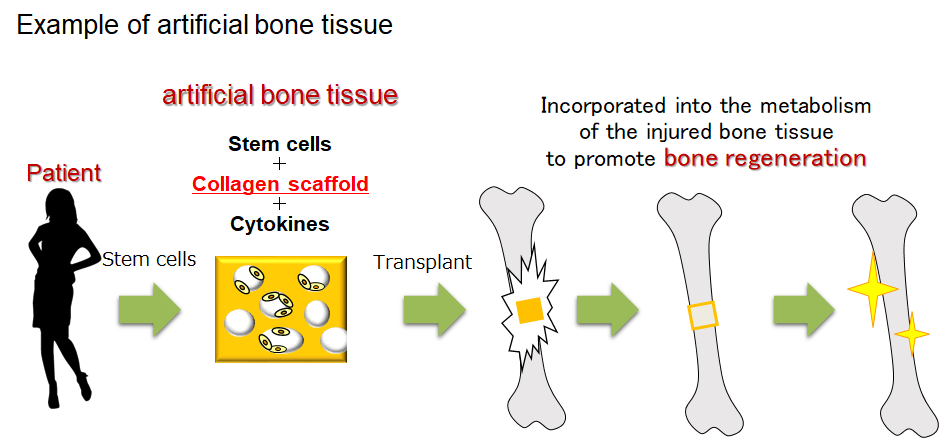
Our laboratory is conducting research on the application of sturgeon collagen to cell scaffold materials for tissue engineering.
-
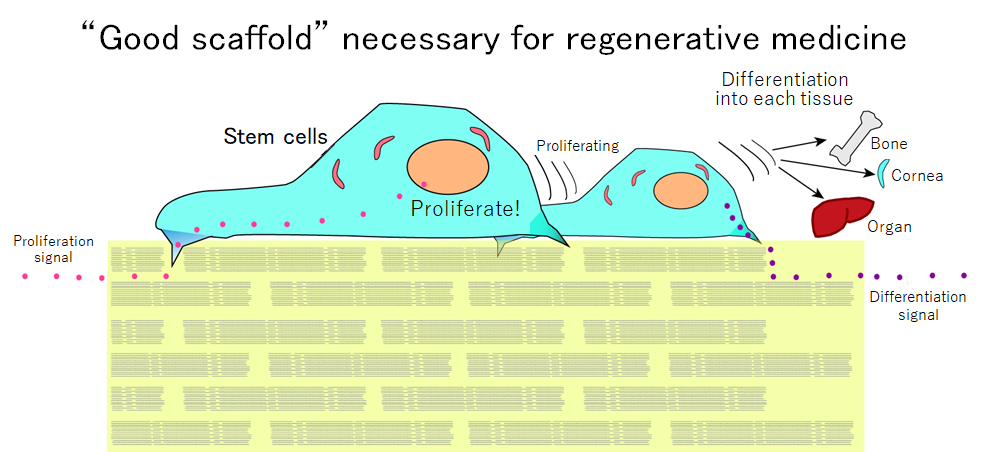
The artificial scaffold of fish collagen has many advantages.
- Suitable for material synthesis due to its high fibrogenic ability
Fibrotic material has a high affinity for cells
→ Stem cells adhere well to the scaffold and easily fuse with the surrounding tissues after transplantation.
Free from common infectious diseases with humans
(In Europe, all scaffolds have been switched to fish collagen)
-