Search for health functional ingredients in red algae, a low-use resource; a method for preparing new oligosaccharides
單元大綱
-
Search for health functional ingredients in red algae, a low-use resource; a method for preparing new oligosaccharides × SDGs
-



We found that the low-use red alga Dulse from Hokkaido, Japan is rich in a polysaccharide called xylan, which has a different structure from that of xylan from land plants. In addition, we found that xylooligosaccharides specific to Dulse, prepared by enzymatic degradation of Dulse xylan, showed selective growth-promoting effects on bifidobacteria. Through these studies, we would like to contribute to the development of functional food ingredients that improve people's health.
-
-
-

Red Alga “Dulse”
Dulse is a red algae that grows in cold waters. Dulse can be eaten
overseas, but most of it was unused in Japan. In particular, it was
difficult to dispose of a large amount of dulse because it grew on
the culture rope for kelp, a special product of Hakodate.
Nutrients in Dulse
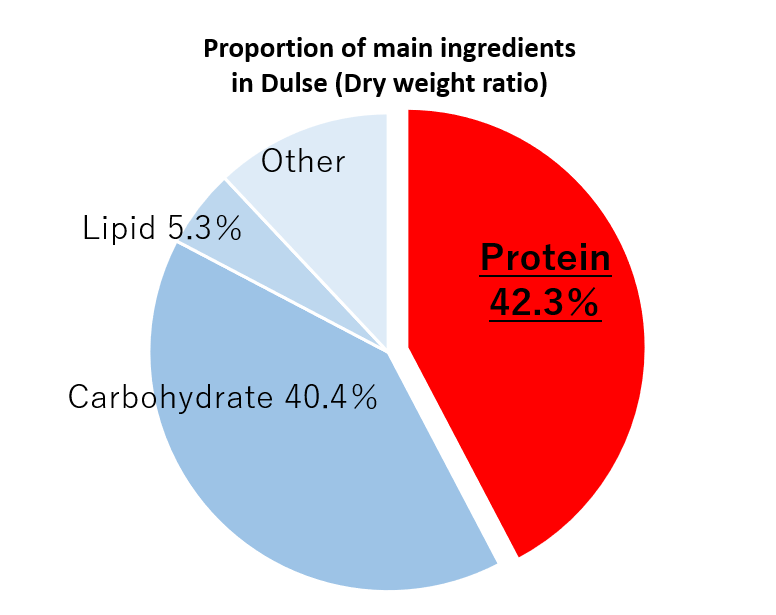
Dulse, like other red algae such as laver (“Nori” in Japanese), contains a lot of protein and the amount is comparable to soybean. On the other hand, it contains a lot of carbohydrates, especially dietary fiber.
Dulse’s cell walls contain polysaccharides classified as dietary fibers called xylan.
This xylan has an unusual structure that is different from that of land plants.
-
-
-

Extraction of Xylan and Preparation of Xylooligosaccharide
First, samples for analysis was prepared. In other words, dulse, exterminated in Hakodate city, was freeze-dried,
crushed and removed lipids and proteins. The obtained cotton-shaped xylan was hydrolyzed by a commercially
available carbohydrate hydrolase.

Analysis of Xylooligosaccharides
The xylan hydrolyzate was analyzed in detail using various instruments. The composition of the product in the hydro-
lyzate was analyzed by HPLC, the molecular weight was analyzed by GC-MS, and the structure was analyzed by NMR.
These analyzes confirmed whether xylooligosaccharides with a structure peculiar to dulse were generated.
-
-
-

Result of Analyzing Xylan Hydrolyzate
An unidentified peak was detected in the enzymatic degradation product from dulse xylan by HPLC analysis.The
material of this peak was analyzed by GC-MS and NMR. As a result, we found that it is β-(1→3)/β-(1→4)-xylo-
triose, which is characteristic of the structure of dulse xylan.
-