

2024 "Ocean and Life" (undergraduate specialty "Environment and People ") class introduction
章节大纲
-
-
The Ocean harbors a wide variety of life. Studies of marine life have contributed to a deeper understanding of the role of living organisms, which is the fundamental concept in the field of Life Science, and in the creation of the new study field “Marine Life Science”. This course provides an omnibus lectures on various topics of marine life science and marine environments by experts in the Faculty of Fisheries Sciences, Hokkaido University. The lectures are performed in Japanese.
-
-
Instructor:KUDO Isao
Born in Sapporo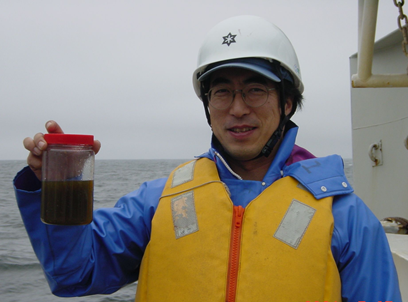
professor of Faculty of Fisheries Sciences, Hokkaido University
Doctor of Fisheries(Hokkaido University、1989)
Specialty: Marine biogeochemistry, Primary roduction science
Participated in a demonstration experiment to reduce global warming by applying trace amounts of iron to the open ocean in the northern North Pacific Ocean to accelerate biological productivity by increasing phytoplankton.
・Can phytoplankton save the planet?
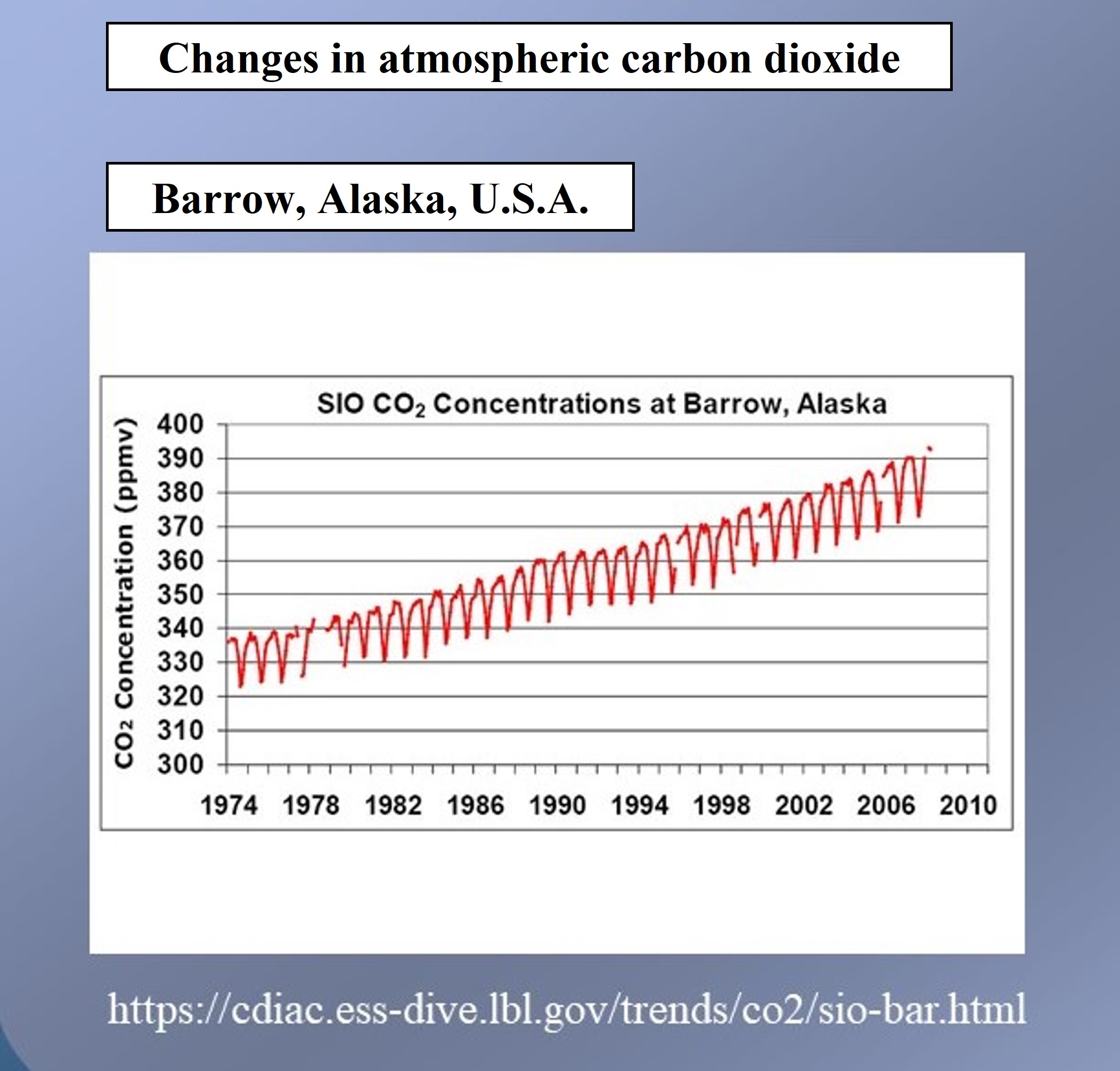
Characteristics and factors of carbon dioxide variability
①(1) Seasonal change (lowest in summer, highest in winter)
Terrestrial photosynthesis
②Regional differences in amplitude (largest in Alaska)
Seasonal differences in plant mass
③Global increase of about 1.6 ppm annually
④In 2017, exceeded 400 ppm.
Changes in atmospheric carbon dioxide. Changes seasonally like sawtooths. It decreases in summer as land plants and trees fix carbon dioxide in their leaves in the form of organic matter through photosynthesis. From summer to fall, leaves fall off and decompose, releasing organic carbon back into the atmosphere as carbon dioxide. The amplitude varies by region. In Alaska, where the amplitude is the largest, the difference in biomass between summer and winter is the greatest; on an island in the southern hemisphere (Samoa), the effect is small because the island is surrounded by the ocean. In Antarctica, the amplitude is also small because moss and other organisms only grow in summer. If you look closely, you can see that the amplitudes are in opposite phases in the Northern and Southern Hemispheres. (The plant growth season is six months off). However, overall, it is steadily increasing year by year. This is due to the accumulation of anthropogenic carbon dioxide. It exceeded 400ppm last year.
What happens when carbon dioxide in the atmosphere increases?

The Role of the Ocean in Anthropogenic CO2 Increase

Experimental Evaluation of the Effects and Impacts of Enhancing Phytoplankton Carbon Absorption by Iron Spraying as a Global Warming Mitigation Measure
Research Introduction:「Oligotrophication and its countermeasures in Mutsu Bay」
-
Instructor:KASAI Akihide(Applied Marine Science, Marine Environmental Science)
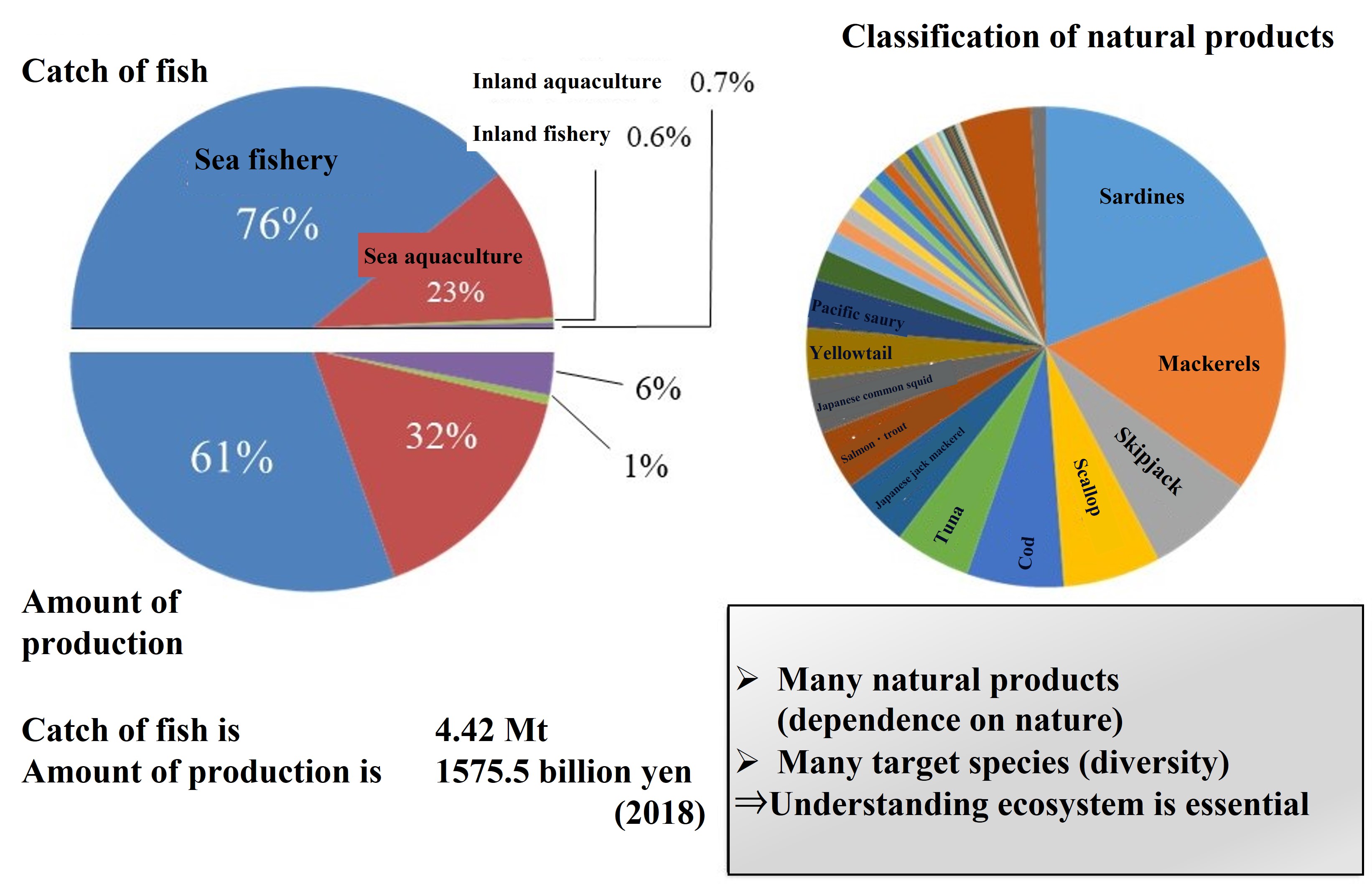
・Japanese Fisheries
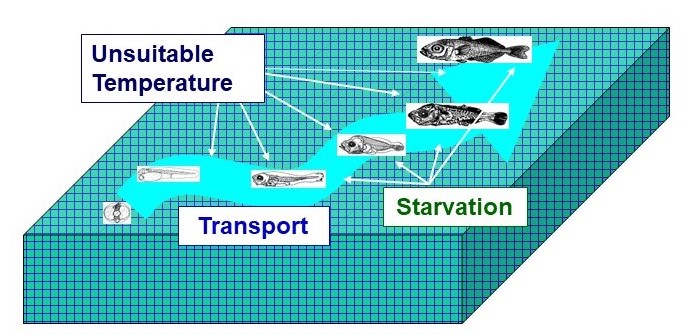
Critical Period Hypothesis (Hjort, 1914)
Underlying explanations of recruitment variation among fish stocks have been an issue for several decades. An understanding of biological relationships between larval fish and their zooplankton prey is needed for interpreting recruitment success. Recruitment fluctuations often depend upon events occurring during a critical period between spawning and the time of first feeding by larvae. Conditions affecting these early life stages will also determine the number of individuals that survive in a year class. The timing of spawning can enhance the spatial and temporal affinity between larvae and their food resources.
・Modeling of the initial depletion process of Japanese jack mackerel
Japanese jack mackerel mature at the age of 2~3 years, and mature females spawn 50,000~500,000 grains per fish.
The main spawning season is from February to May.
Representative of a polyphagous floating fish, a TAC target species.
→ large initial depletion, Hjort's (1914) hypothesis
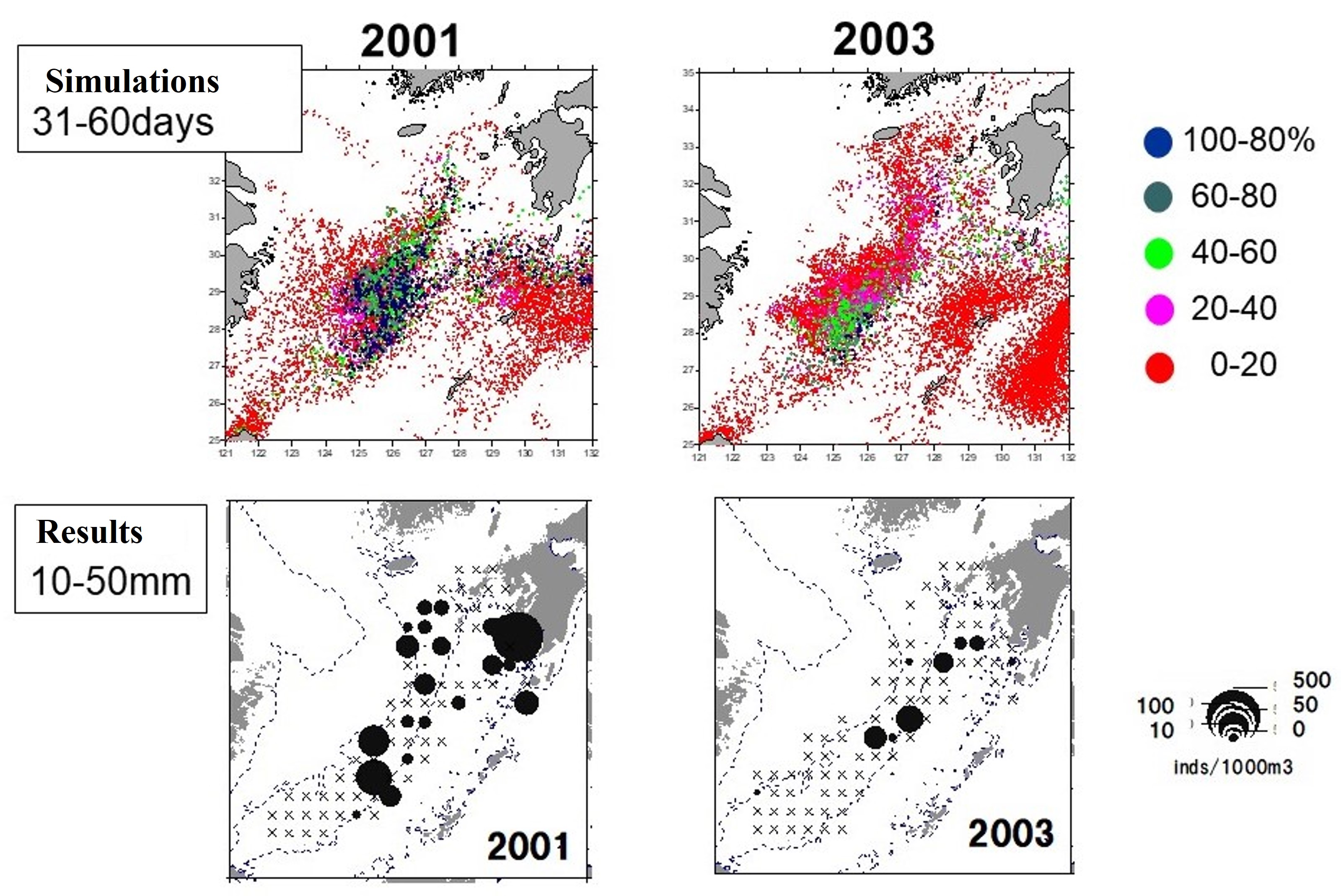
・Comparison with juvenile distribution
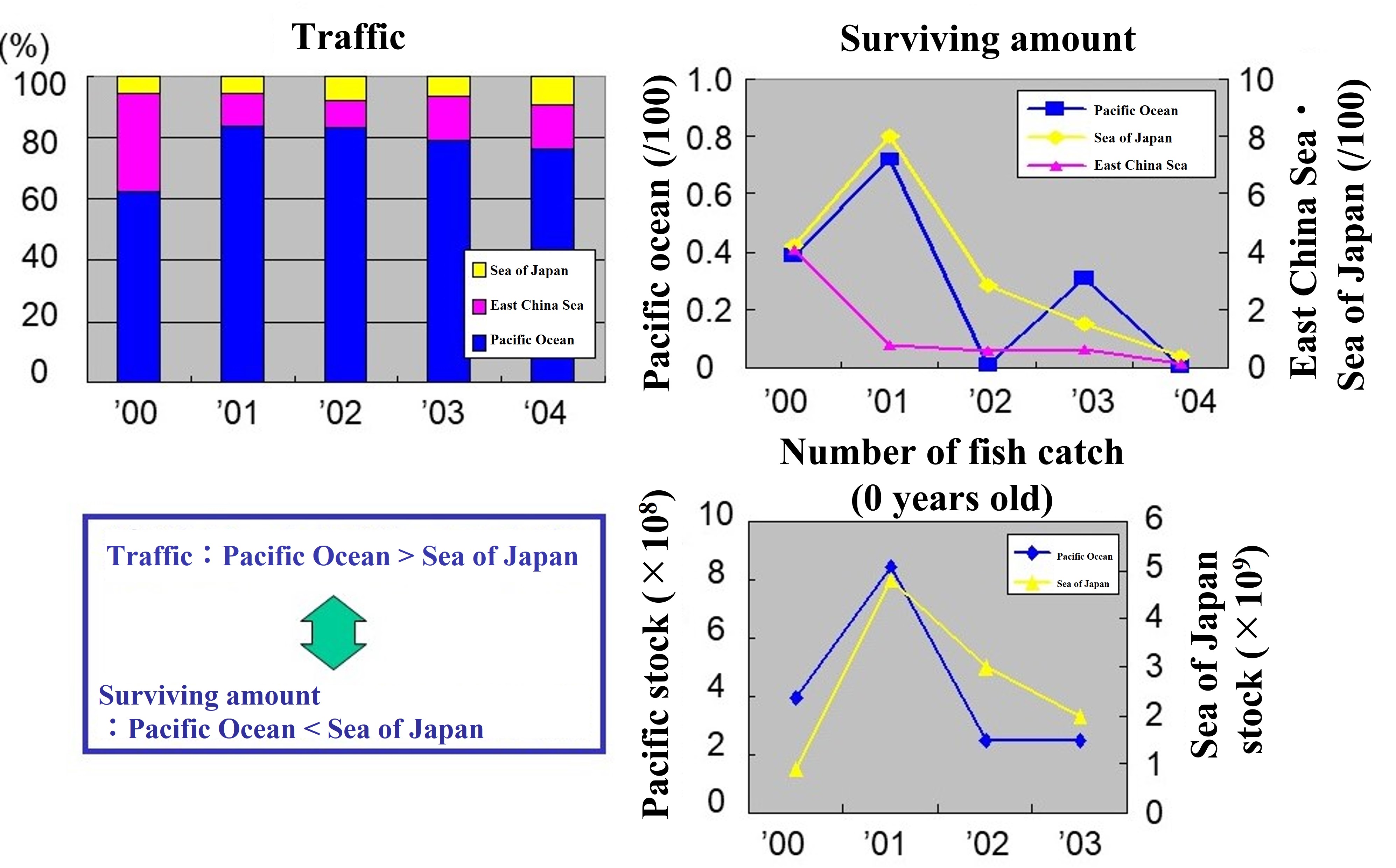
・Particle location and viability after 90 days
Research Introduction:Assessment of marine biodiversity using environmental DNA and understanding of the abundance of marine organisms
-
-
For sustainable fishery production (including aquaculture), it is necessary to understand how marine life occurs and grows. It is also important to use fish without waste (zero waste) and to add value. This class will provide the foundation for those of you who wish to study these subjects professionally in the future. In the future, we aim to train people who can contribute to the SDGs (zero hunger and life below water).
The United Nations has designated the decade beginning in 2021 as the "Decade of Marine Science" to contribute to the SDGs. Marine science as defined by the UN includes the field of fisheries.

-