

(12) Physics and life in the sea
セクションアウトライン
-
Instructor:KASAI Akihide(Applied Marine Science, Marine Environmental Science)
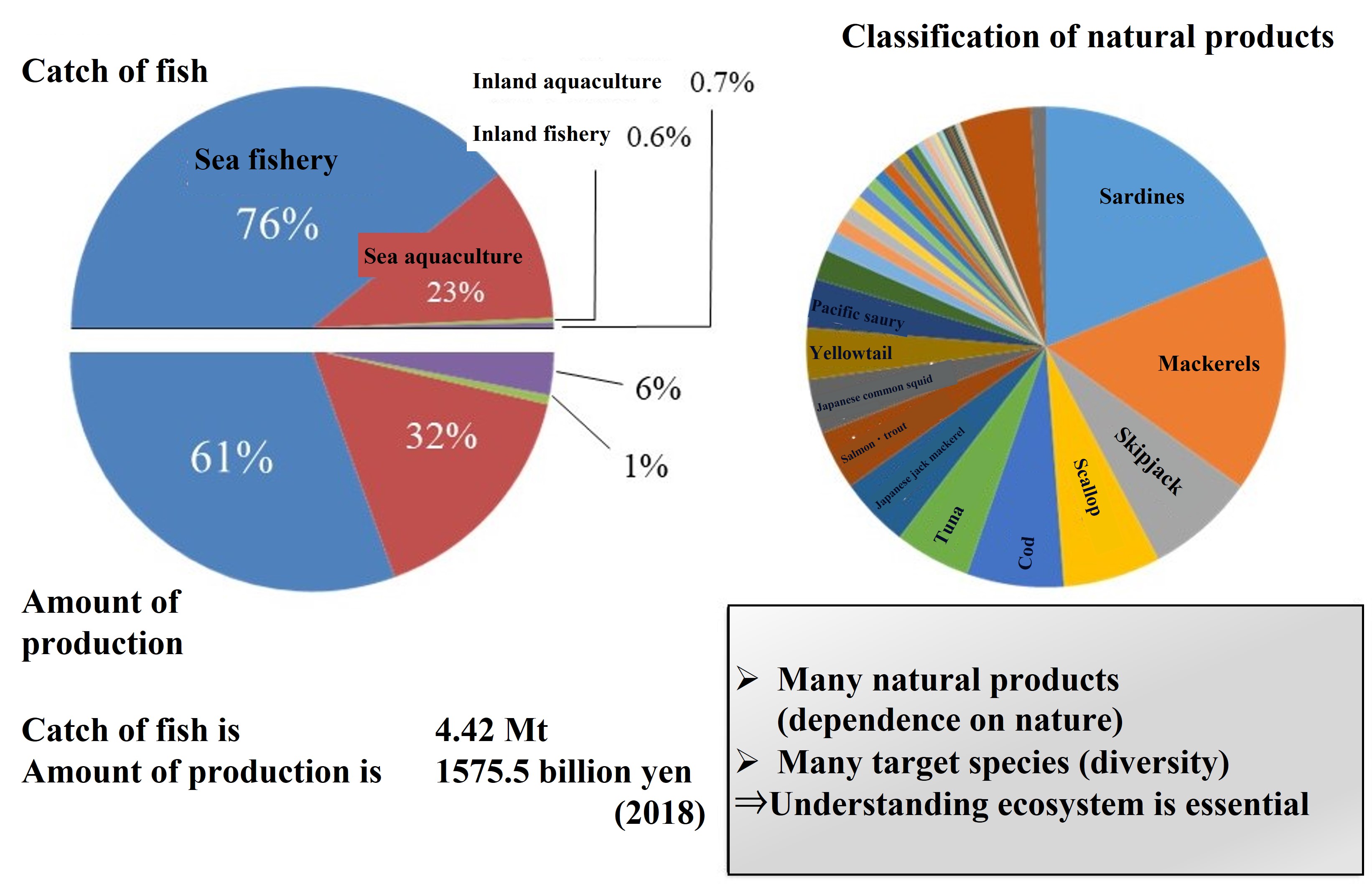
・Japanese Fisheries
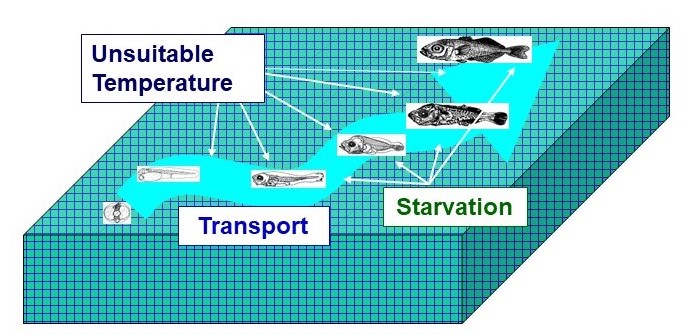
Critical Period Hypothesis (Hjort, 1914)
Underlying explanations of recruitment variation among fish stocks have been an issue for several decades. An understanding of biological relationships between larval fish and their zooplankton prey is needed for interpreting recruitment success. Recruitment fluctuations often depend upon events occurring during a critical period between spawning and the time of first feeding by larvae. Conditions affecting these early life stages will also determine the number of individuals that survive in a year class. The timing of spawning can enhance the spatial and temporal affinity between larvae and their food resources.
・Modeling of the initial depletion process of Japanese jack mackerel
Japanese jack mackerel mature at the age of 2~3 years, and mature females spawn 50,000~500,000 grains per fish.
The main spawning season is from February to May.
Representative of a polyphagous floating fish, a TAC target species.
→ large initial depletion, Hjort's (1914) hypothesis
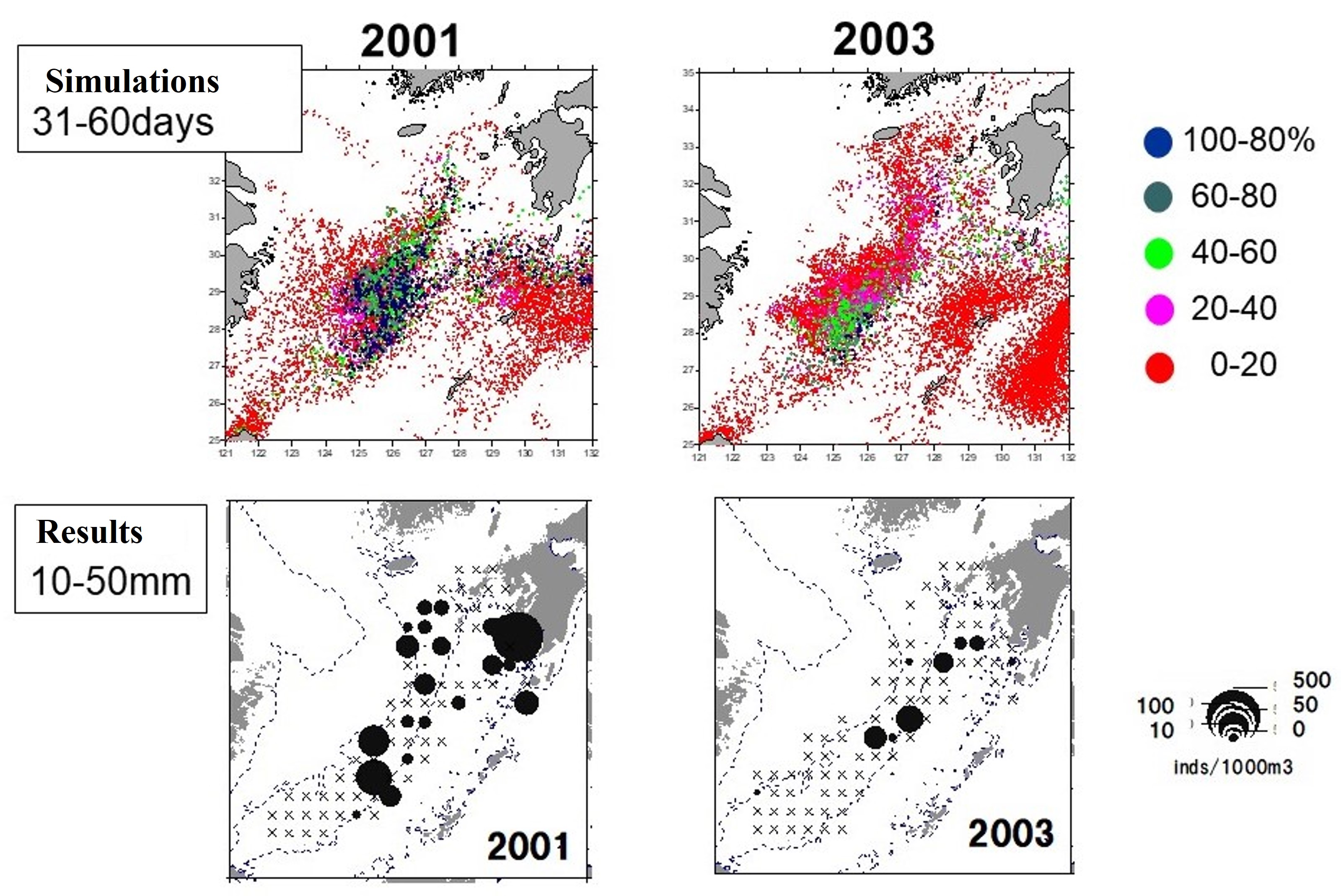
・Comparison with juvenile distribution
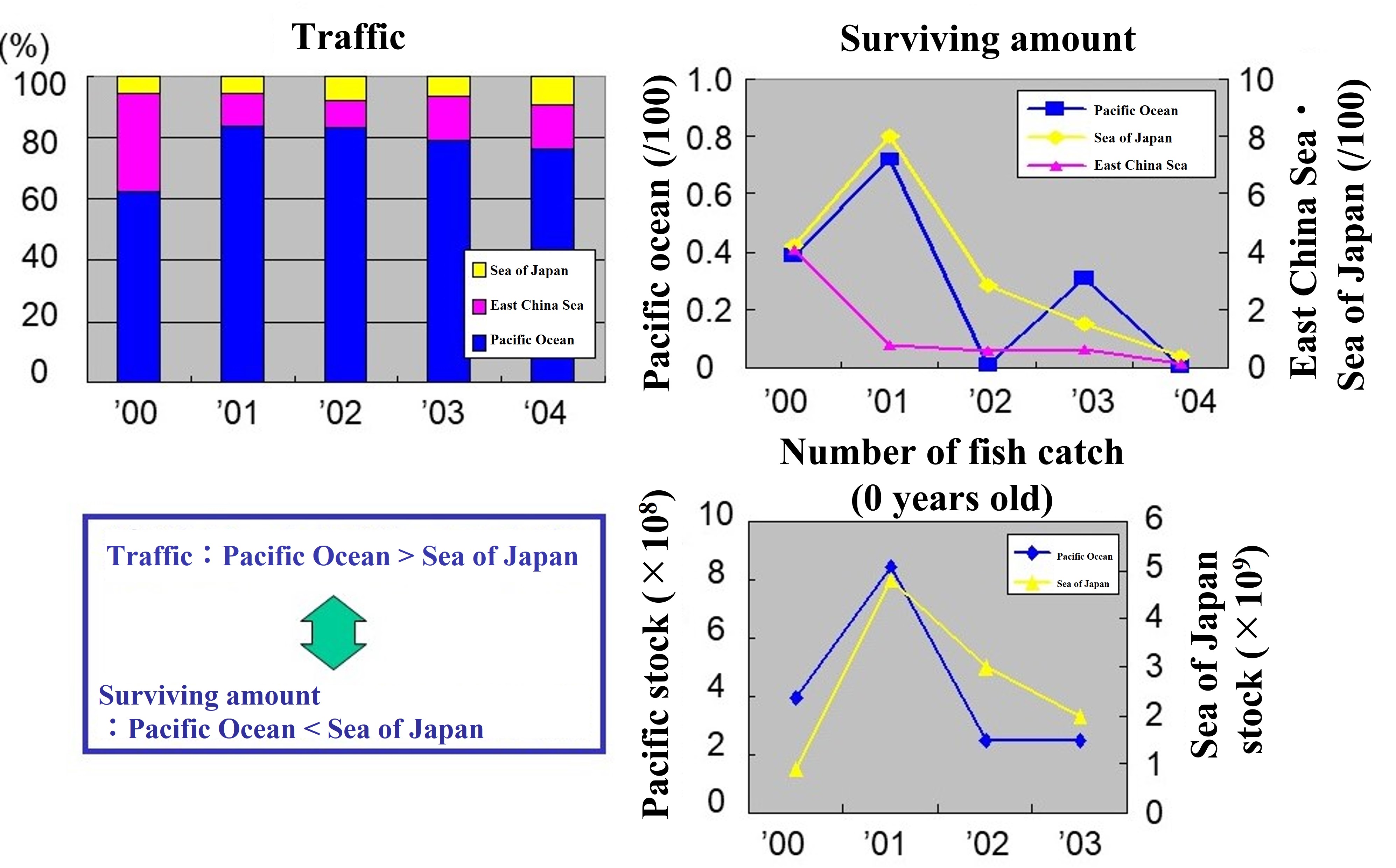
・Particle location and viability after 90 days
Research Introduction:Assessment of marine biodiversity using environmental DNA and understanding of the abundance of marine organisms