

(11) 「Chemistry and life in the ocean」Can phytoplankton save the planet?
セクションアウトライン
-
Instructor:KUDO Isao
Born in Sapporo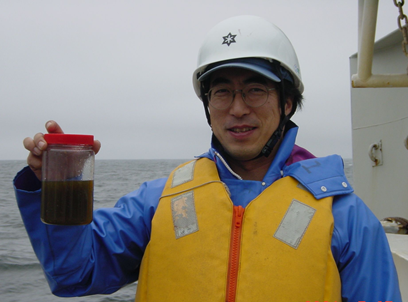
professor of Faculty of Fisheries Sciences, Hokkaido University
Doctor of Fisheries(Hokkaido University、1989)
Specialty: Marine biogeochemistry, Primary roduction science
Participated in a demonstration experiment to reduce global warming by applying trace amounts of iron to the open ocean in the northern North Pacific Ocean to accelerate biological productivity by increasing phytoplankton.
・Can phytoplankton save the planet?
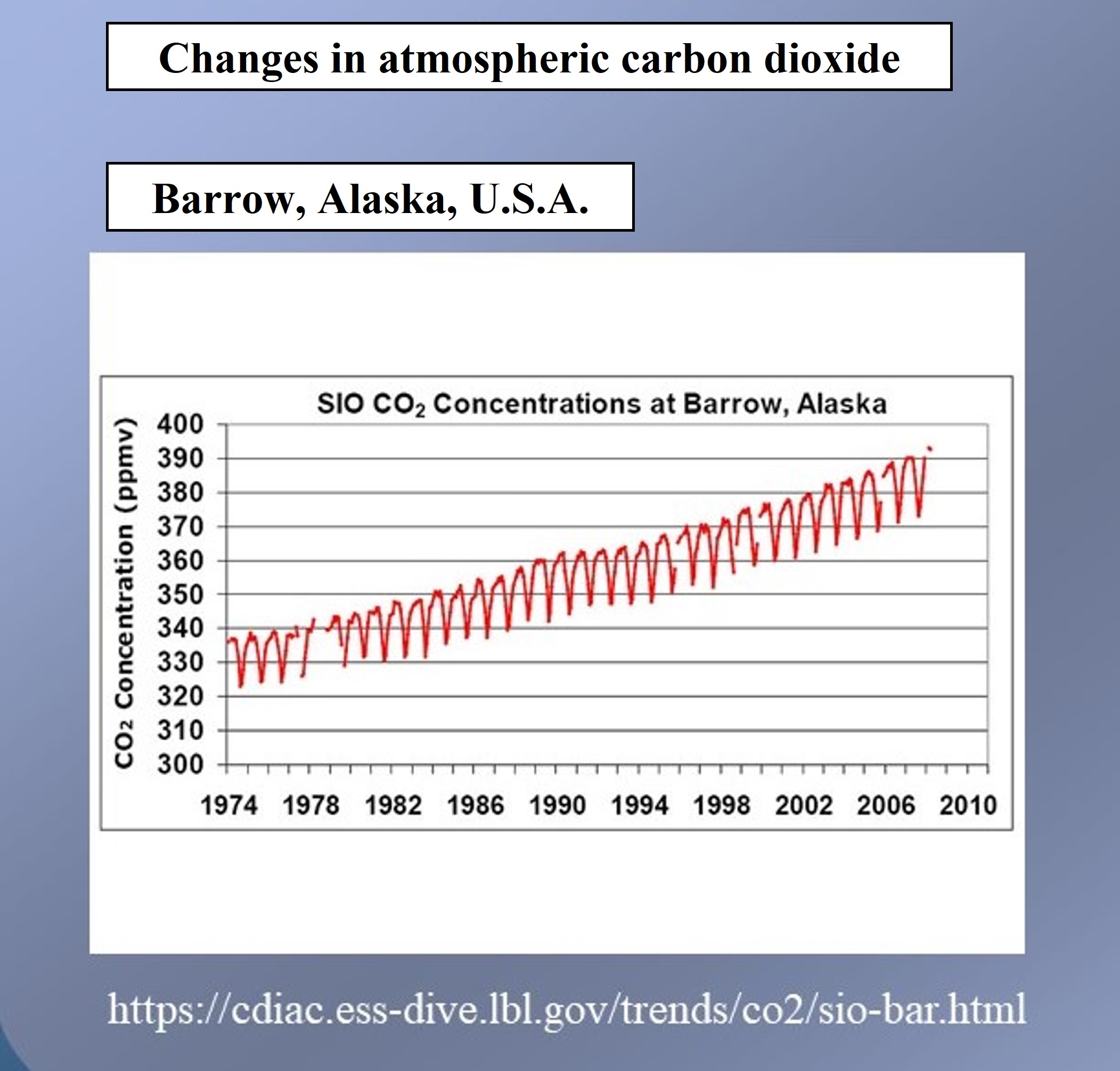
Characteristics and factors of carbon dioxide variability
①(1) Seasonal change (lowest in summer, highest in winter)
Terrestrial photosynthesis
②Regional differences in amplitude (largest in Alaska)
Seasonal differences in plant mass
③Global increase of about 1.6 ppm annually
④In 2017, exceeded 400 ppm.
Changes in atmospheric carbon dioxide. Changes seasonally like sawtooths. It decreases in summer as land plants and trees fix carbon dioxide in their leaves in the form of organic matter through photosynthesis. From summer to fall, leaves fall off and decompose, releasing organic carbon back into the atmosphere as carbon dioxide. The amplitude varies by region. In Alaska, where the amplitude is the largest, the difference in biomass between summer and winter is the greatest; on an island in the southern hemisphere (Samoa), the effect is small because the island is surrounded by the ocean. In Antarctica, the amplitude is also small because moss and other organisms only grow in summer. If you look closely, you can see that the amplitudes are in opposite phases in the Northern and Southern Hemispheres. (The plant growth season is six months off). However, overall, it is steadily increasing year by year. This is due to the accumulation of anthropogenic carbon dioxide. It exceeded 400ppm last year.
What happens when carbon dioxide in the atmosphere increases?

The Role of the Ocean in Anthropogenic CO2 Increase

Experimental Evaluation of the Effects and Impacts of Enhancing Phytoplankton Carbon Absorption by Iron Spraying as a Global Warming Mitigation Measure
Research Introduction:「Oligotrophication and its countermeasures in Mutsu Bay」