(2) Research and study section
Garis besar topik
-
-
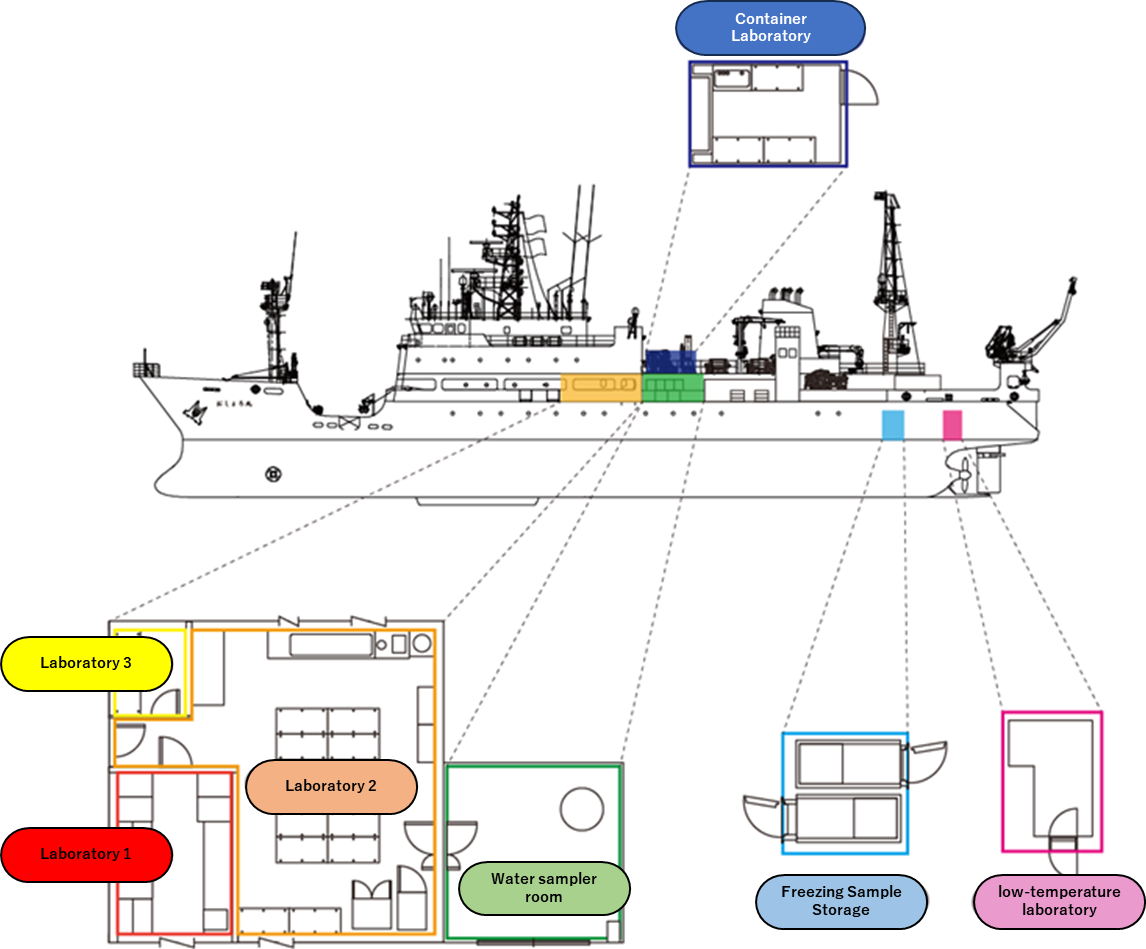
Figure 5 shows the layout of the 「Oshoromaru」dedicated research and survey compartments. Each compartment has different features to meet a wide range of research needs. The main stage for research and surveys is the research area, which occupies the middle of the aft deck. Consisting of three laboratories, it is located on the same level as the researchers' living quarters and the observation deck, to allow for flow lines in the execution of research and survey cruises.
-

Figure 5: Arrangement of survey/research compartments
-
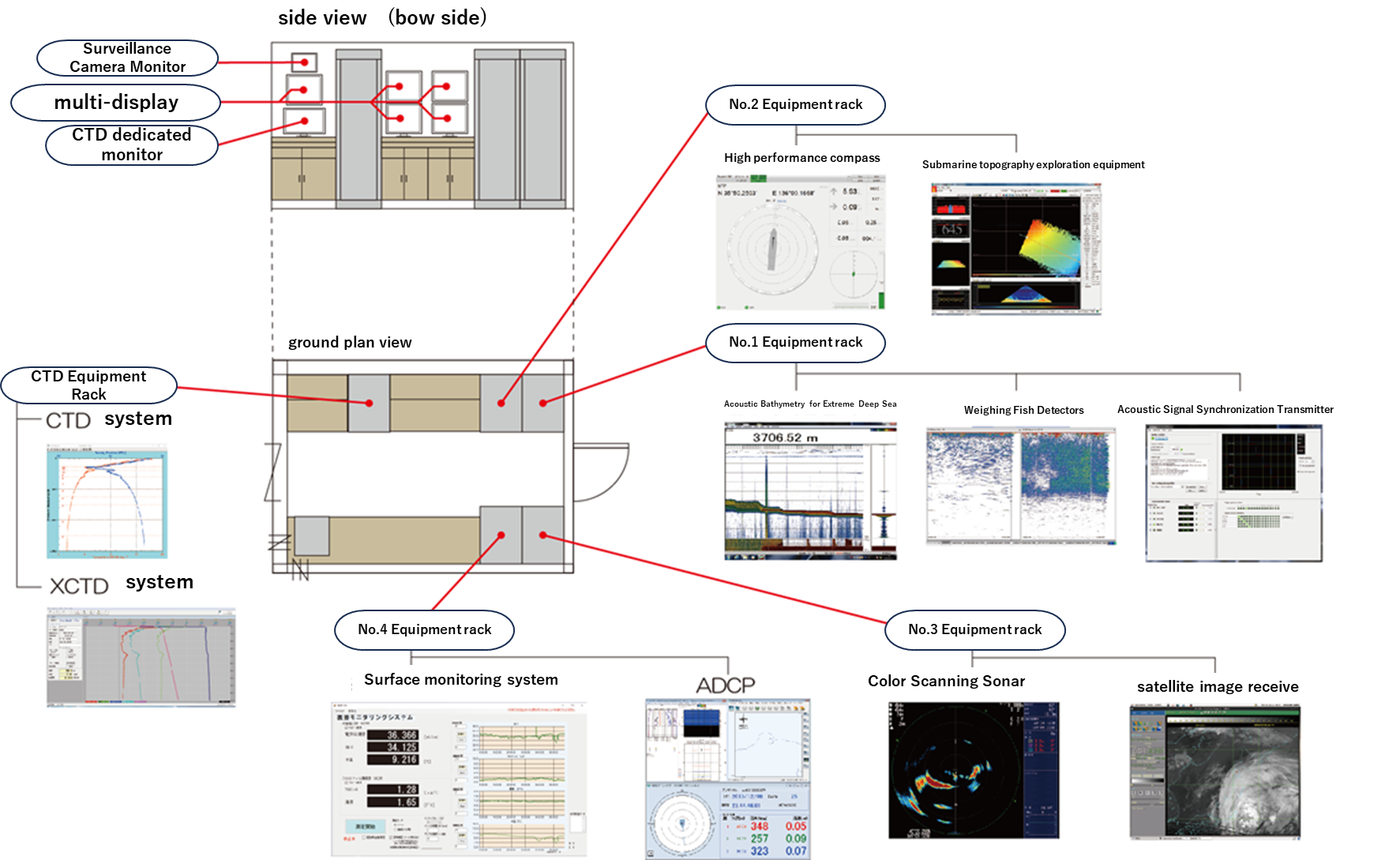
Figure 6 shows the details of "Laboratory 1. The control equipment for the ship's permanent instruments, such as the CTD and various acoustic measuring instruments, are installed in this room, and the operation of these instruments and data recording and processing are performed in this room. To avoid bringing in water and dust, which can cause malfunctions of electronic equipment, visitors are required to remove their shoes, coats, and other equipment at the entrance. A multi-display system is used for the monitors installed on the walls, and each monitor can be used to display any of the observation equipment.
-

Figure. 6 Layout of 「Oshoro Maru」 Laboratory 1
-
Figure 7: Laboratory 1 (VR animation)
-
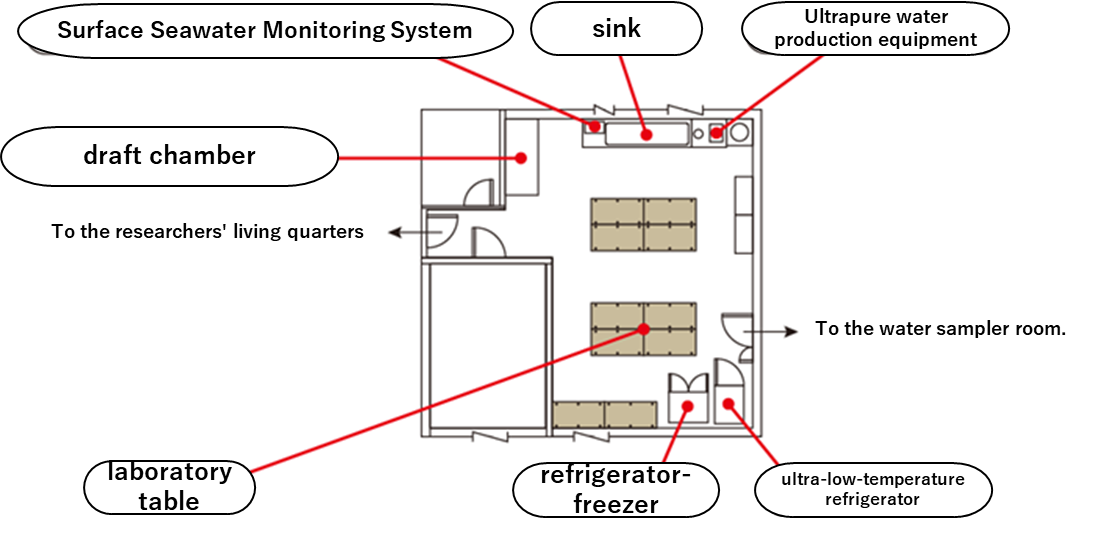
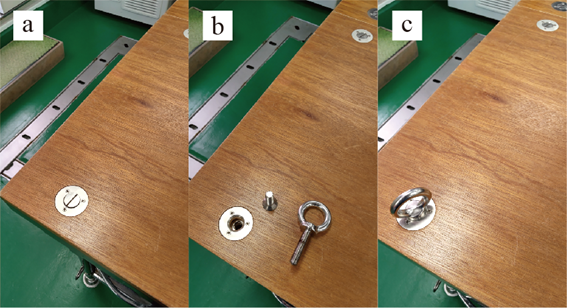
Figure 7 shows a plan of Laboratory 2. Laboratory 2, the largest of the three laboratories, is a laboratory for handling aqueous samples such as seawater, organisms, and sediments. A laboratory that does not bring in water, such as Laboratory 1, is called a "dry laboratory," whereas a laboratory like Laboratory 2 is called a "wet laboratory. The floor is waterproofed, and drains are provided so that dirt and salt contained in seawater can be washed away with water. In addition to several lab benches, the laboratory is permanently equipped with basic equipment necessary for research, such as a sink, a refrigerator-freezer, a draft chamber (a lab bench with an exhaust function for working with harmful gases), and an ultrapure water production system. On the other hand, nothing is permanently set up on the laboratory table so that the passengers can freely arrange the equipment and materials they bring on board and conduct experiments. Bolt holes are provided in the laboratory table, ceiling, and walls, allowing the attachment and removal of metal fittings for fastening equipment and materials (Figure 8). The dimensions of these bolt holes are the same for all experimental tables. If an analyzer or other equipment with holes that match these dimensions is prepared in advance, it can be easily fastened to the laboratory table (the same dimensions as those of the JAMSTEC Hakuho Maru). The top panel of the laboratory table is made of wooden plywood, so wood screws can be driven directly into the table to secure the equipment. Furthermore, since the lab bench is removable from the floor, it is possible to remove the lab bench and bring in and install large laboratory equipment, allowing the entire laboratory to be arranged to suit the purpose of the voyage.
The sink is equipped not only with a fresh water faucet, but also with a faucet that supplies seawater pumped up from the ship's bottom for research purposes. A surface seawater monitoring system installed right next to the sink continuously measures the characteristics of the surface seawater (temperature, salinity, turbidity, and chlorophyll-a concentration) pumped from the ship's bottom during the entire voyage.
-

Figure. 7 Layout of 「Oshoro Maru」 Laboratory 2
-

Figure. 8 Removable eyebolts on the experimental table
a) Before installation b) Bolt holes and eyebolts c) After installation
-
Figure 9: Laboratory 2 (VR animation)
-
Laboratory 3, also known as the "environmental control room," is a room for conducting experiments under controlled environmental conditions (brightness and room temperature). Because of the inevitable temperature fluctuations in Lab 2, which has an outdoor entrance, Lab 3 is used for work that must be conducted at a stable room temperature (e.g., measuring the salinity of seawater). This room has no windows, so it can be used as a dark room by dimming the lights and closing the door.
The "water sampler room," which is adjacent to laboratory 2, is used to store observation equipment such as the CTD water sampling system. A water sampler trestle is installed on the wall of the water sampler room, and up to 36 Niskin water samplers up to 12 liters in size can be fixed side by side. The open door of the water sampler room leads to the observation deck, where the observation work is performed.
-
Figure. 11: Water sampler room (VR movie)
-
The "Container Lab," a portable laboratory, is installed in the exposed section of the end-boat deck. The Container Lab is a shipping container converted into a laboratory, and one of the four types (wet, clean, refrigerated, and multipurpose) is selected and installed as required for the purpose of the voyage.
-
Figure 12 Container lab (VR video)
-
A "cryogenic laboratory" (room temperature range: 0~10°C) and two "frozen sample rooms" (internal temperature range: -50~-20°C) are located on the rear of the upper deck. The cryogenic chamber is used for experiments under low-temperature conditions and also serves as a storage area for samples that need to be kept refrigerated. The cryo storage is divided into two compartments, each containing different types of samples to prevent contamination of the samples by mixing samples of different properties. One compartment is used to store samples that must be protected from contamination by other samples, such as seawater for chemical analysis, while the other compartment is used to store samples that are more likely to become contaminated, such as fish specimens.
-
Figure. 13 Low-temperature laboratory (VR movie)
-