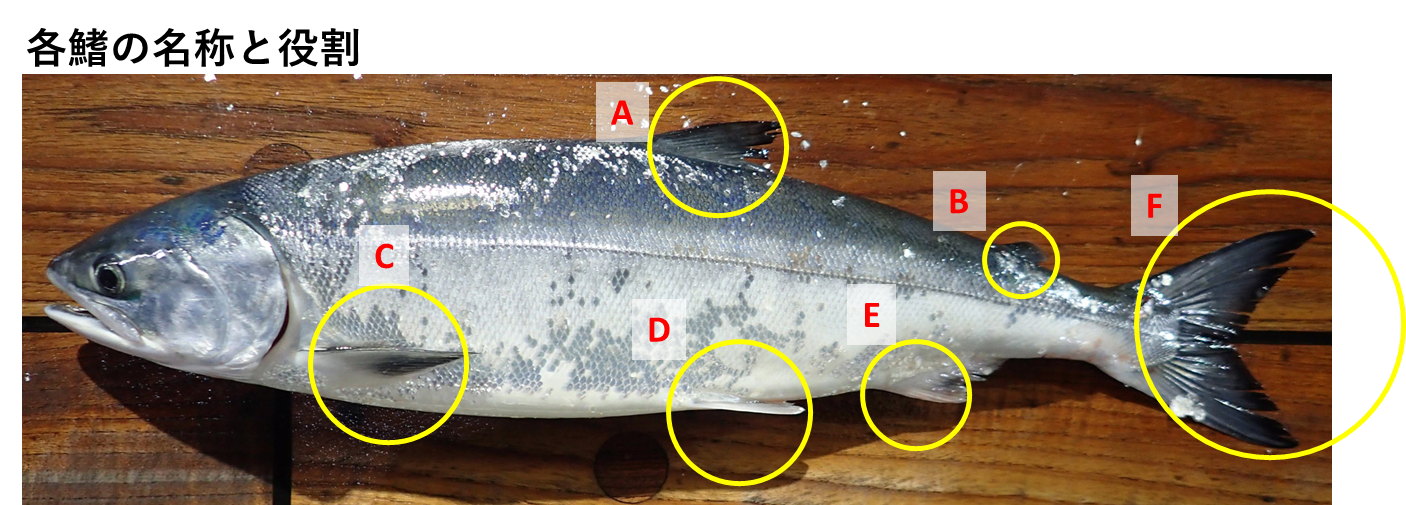
Morphological characteristics of salmonids
Section outline
-
-



In Japan, we have developed a hatching and release business that takes advantage of the salmon's tendency to return to their mother rivers and obtains them as highly productive fishery resources. We aim to upgrade this business to a more robust and sustainable food production system that can adapt to ecosystem considerations and climate change, and through our research we hope to contribute to the SDGs (Zero Hunger, Enriching the Oceans).
The United Nations has designated the decade beginning in 2021 as “the Decade of Marine Science” to contribute to the SDGs. Marine science as defined by the UN includes the field of fisheries.
-
-
-
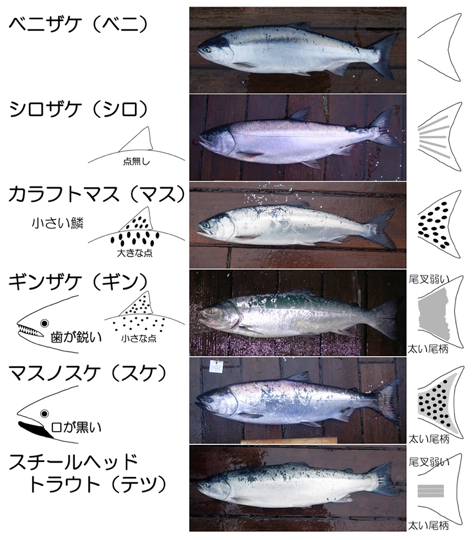
ベニザケ(ベニ): Sockeye salmon
シロザケ(シロ): Chum salmon
点なし: no spots
カラフトマス(マス): Pink salmon
小さい鱗: small scales 大きな点: big spots
ギンザケ(ギン): Coho salmon
歯が鋭い: sharp teeth 小さな点: small spots 尾叉弱い: weak fork 太い尾柄: thick tail peduncle
マスノスケ(スケ): King salmon
口が黒い: black mouth 太い尾柄: thick tail peduncle
スチールヘッドトラウト(テツ): Steelhead trout
尾叉弱い: weak fork 太い尾柄: thick tail peduncle
-
-
-
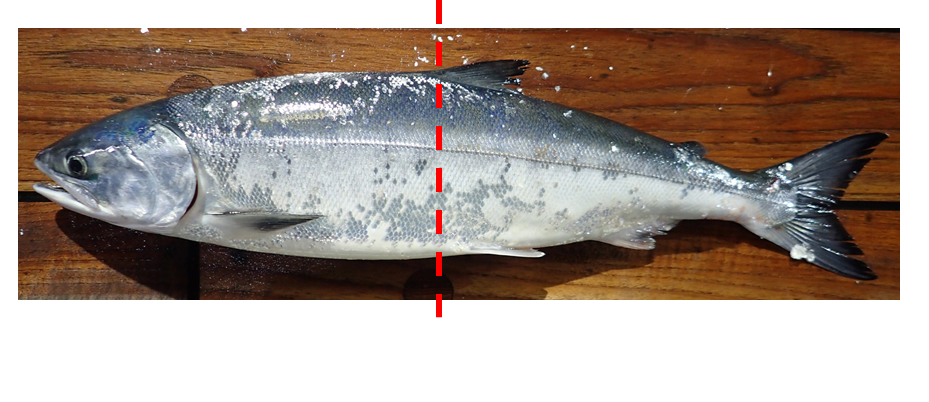
First, salmonids are generally considered to have a round, slim body shape.

サケ科: Salmonidae タイ科: Sparidae カレイ科: Pleuronectidae ウナギ科: Anguillidae
-
-
-
-
Let's look at other fish species.
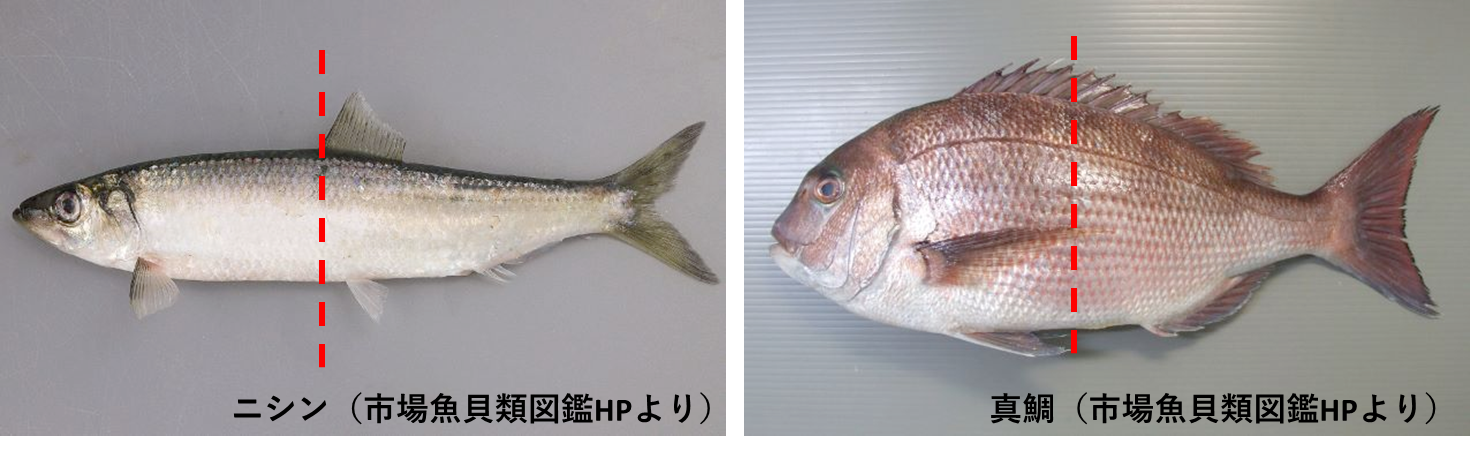
ニシン: Pacific herring 真鯛: Red sea bream 市場魚貝類介類図鑑HPより: Pictures from the Market Fish and Shellfish Catalogue website
Pacific herrings, like salmonids, have dorsal and ventral fins near the center of their bodies, but red sea breams are different.
-
-
-
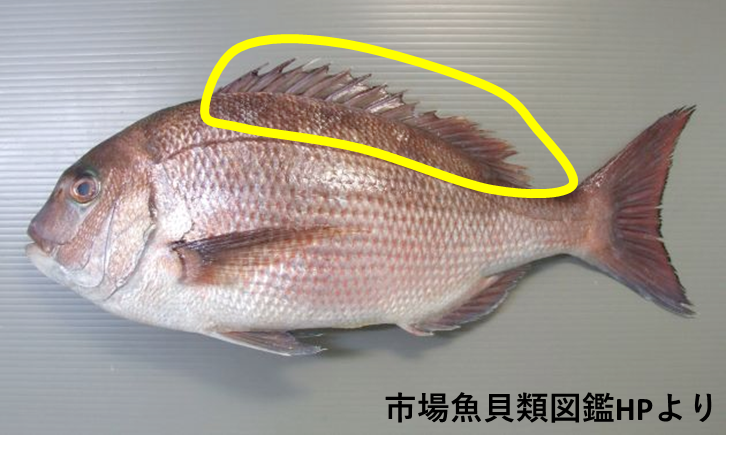
Pictures from the Market Fish and Shellfish Catalogue website
-
-
-
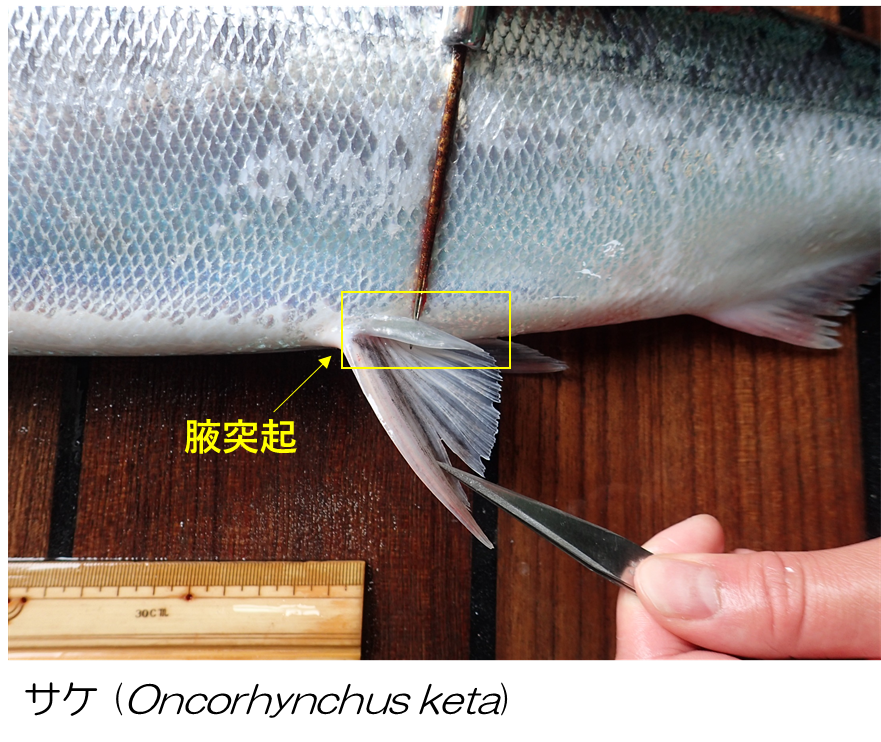
Chum salmon (Oncorhynchus keta)
-
Rainbow smelts, the family Osmeridae, have an adipose fin but no axially scales.
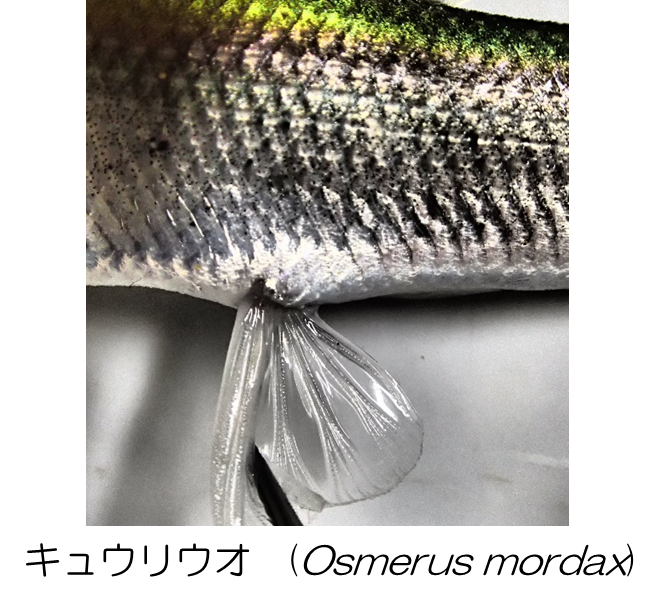
Rainbow smelt (Osmerus mordax)
-
-
-
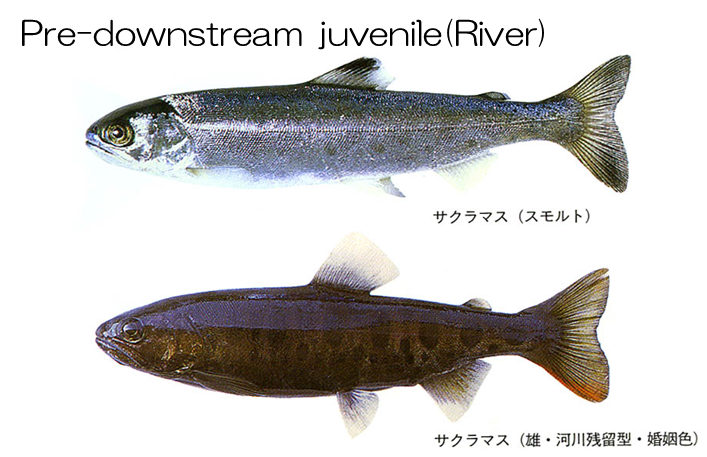
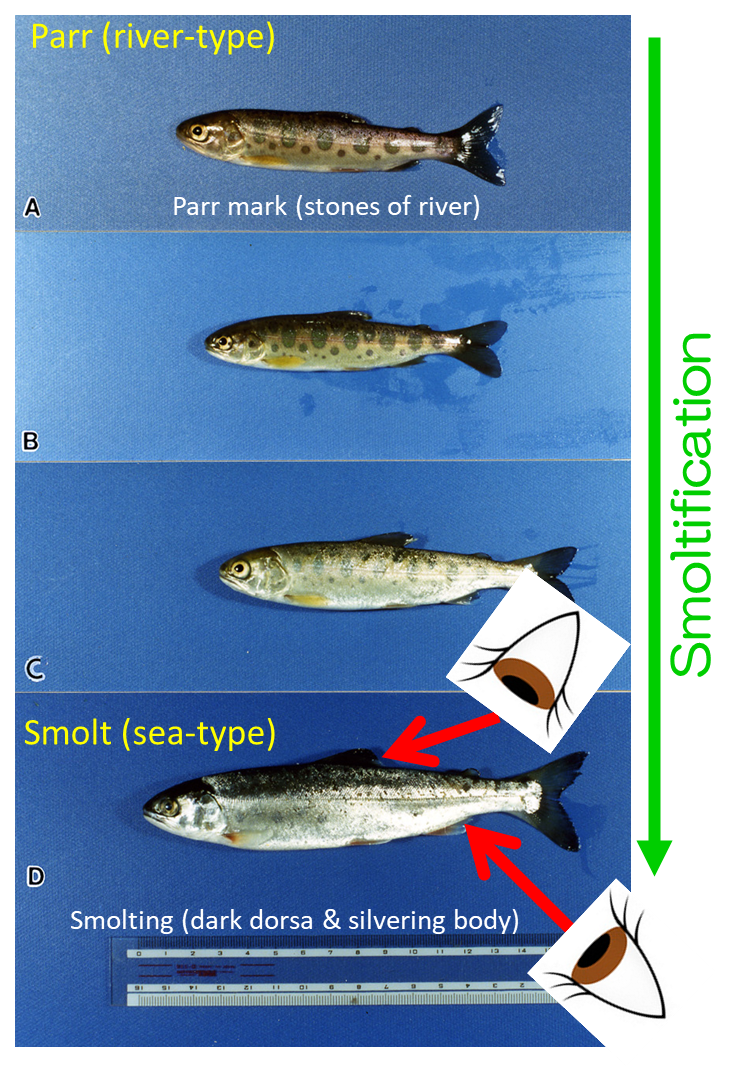
Parr marks are spots on the body of juvenile fish during their river life.
They are thought to be for camouflage as they resemble pebbles on the river bottom.
-
Conversely, when spending time at sea, salmonids undergo a morphological change called smoltification, in which their backs turn gray and their bellies turn white.
This is thought to be due to a countershading effect, whereby they assimilate the color of the seafloor when viewed from above and the color of the sky when viewed from below, making them harder to spot by predators.
-
-