
Material Cycle Studies in the Polar Ocean
Section outline
-
-

There is a detail of the research below.
-
-
In very cold places, vast of ocean freezes like puddles on the road side and ponds freeze in winter. The ocean is covered with ice, the whole area becomes pure white, and the fantastic world expands. The presence of ice is deeply involved in climate change as it affects global heat and the transport of substances. Our research group conducts field observations on frozen oceans such as the Antarctic, Arctic, and Sea of Okhotsk.We conduct research, focusing on the absorption and release of greenhouse gasses such as carbon dioxide by the frozen ocean and the material cycle of nutrients and carbon.
-
-
Cold oceans in polar regions have a high dissolution rate (the ability to dissolve air in the ocean water becomes larger as the water gets colder) and are prone to absorbing CO2 in the atmosphere. In the polar ocean, the freezing phenomena generate dense water. Dense water submerges into the deep ocean with CO2 absorbed by the ocean surface from the air, thus efficiently transporting and isolating CO2 in the air into the deep ocean.

-
-
-
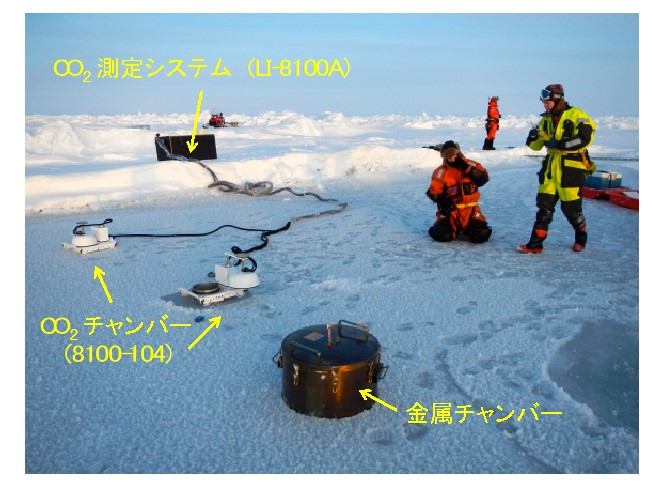
Traditionally, sea ice has been recognized as a "barrier" that covers the ocean surface and hinders the material circulation between the atmosphere and the ocean. However, field observations on sea ice (such as the picture below) have recently revealed that sea ice plays an important role in the exchange between the atmosphere and ocean, such as greenhouse gas involved in climate change and volatile organic compound.
-
-
-
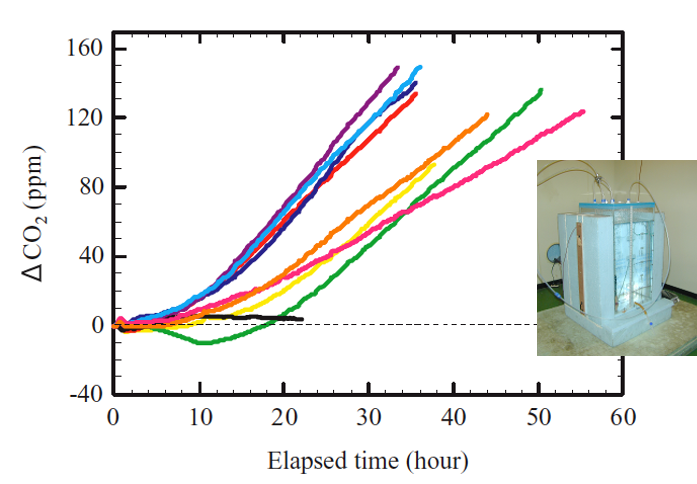
Occasionally, sea ice area cannot be observed because they are far from Japan and are cold. For this reason, some indoor experiments may be conducted focusing on specific phenomena. We froe the seawater in the low temperature room and measured CO2 concentration (CO2) continuously. The figure above is the result we investigated the effect of differences such as room temperature, salinity, on the CO2 release of the air from the sea ice.
-
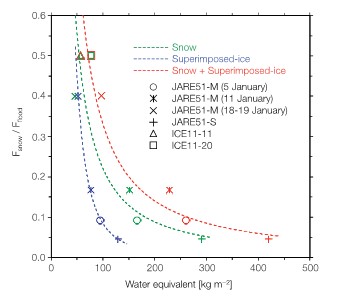
There is snow on the actual sea ice area. Although the air exchange in the sea ice area involves the exchange of air between sea ice and the air through the brine channels present in the sea ice (shown on the left), the presence of snow has been found to reduce the exchange efficiency. The figure above shows how the thickness and nature (density) of the snow change the efficiency of the air exchange between sea ice and the atmosphere.
-
-
-
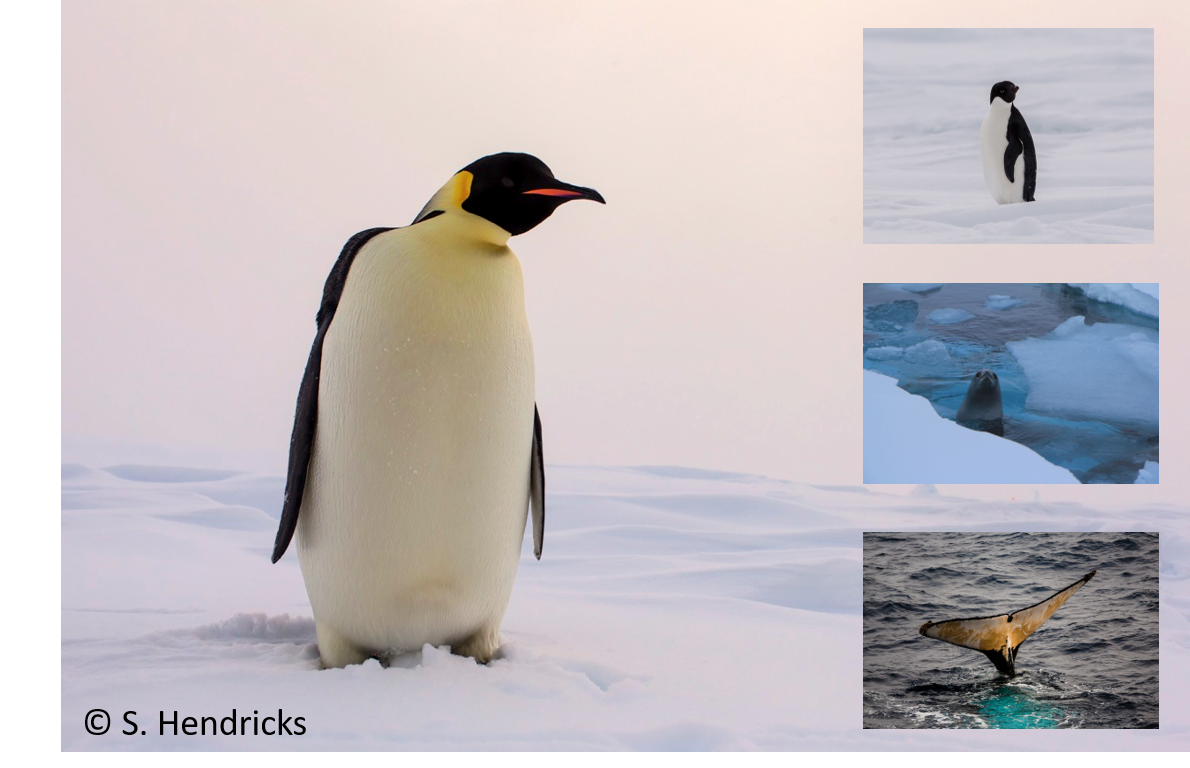
We can see various animals while observations on sea ice. The animals seem to watch us being curious. Observations on sea ice can be cold and harsh, but you can be healed by the animals you meet.
-