4 Middle Caranum copepods
섹션 개요
-
-
Gaetanus variabilis
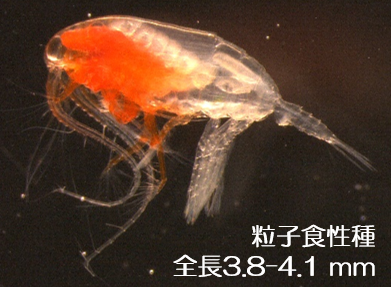 粒子食性種:particle-eating species, 全長:full length
-
-
-
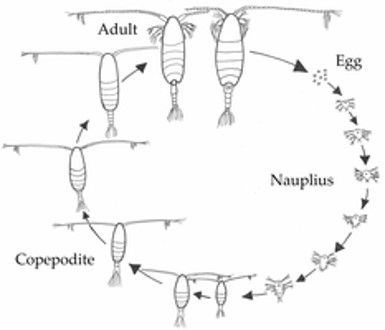
- The life history of copepods (when born and when dead) is known for species distributed primarily in the surface layer (0-200 m).
- On the other hand, there is little information on the life history of copepods distributed in the middle layer (200-1000 m depth).
- Copepods, like other crustaceans, molts and grows. As the number of segments and legs increases with each molting, observing them reveals what stage of development of the species.
- Neutral copepods levels of Gaetanus variabilis appearing in planktonnet samples collected stratified up to a depth of 2000 m were counted at each developmental stage.
Life history schematic is provided by the American Marine Atmosphere Agency HP.
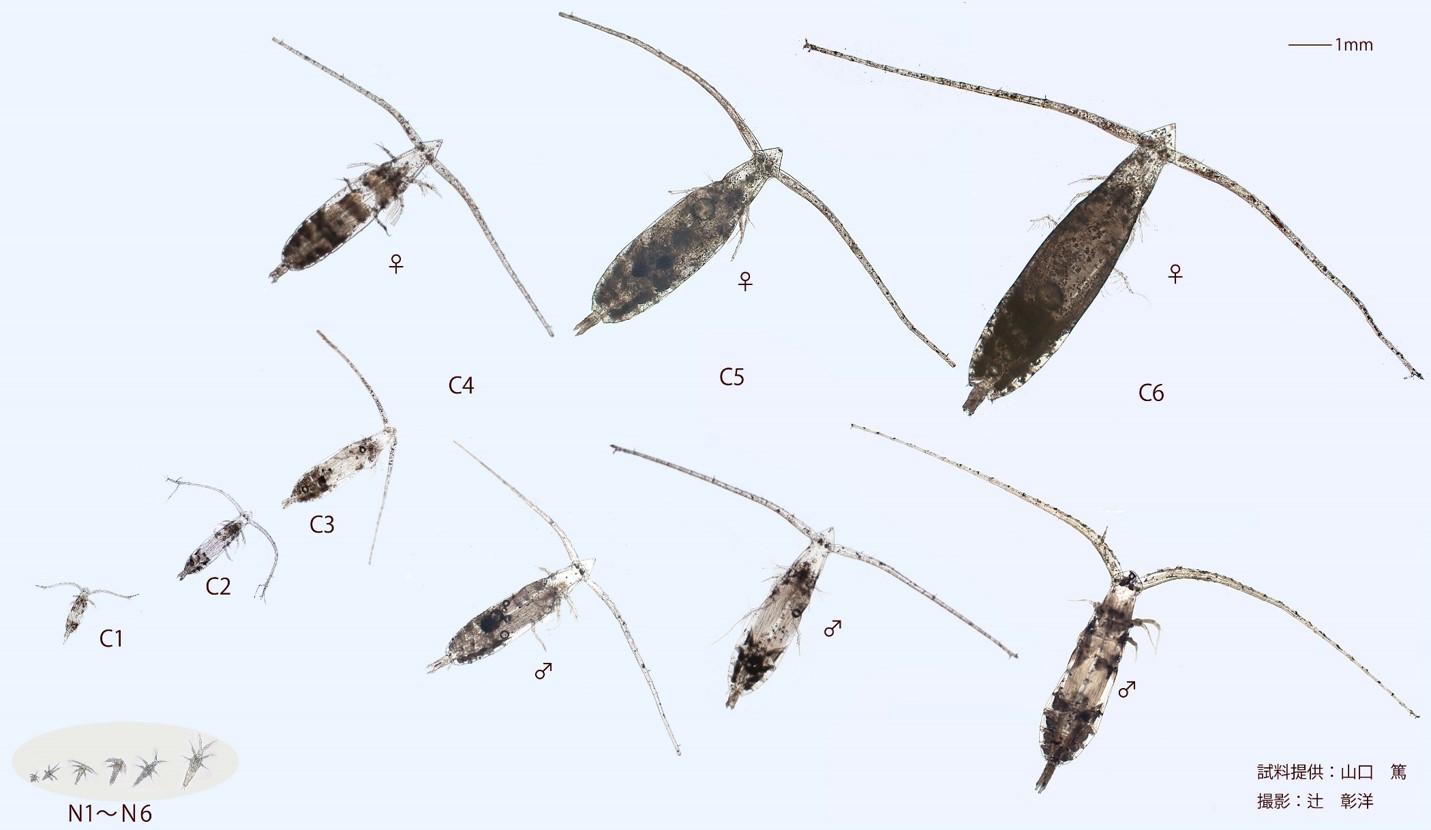
Above is a picture of the North Prius 6th (N1-N6) and Copopodite 6th (C1-C6) of copepods's Eucalanus bungii dominated off the coast of Kushiro on the same scale. In planktonnet, C1-C6 are mainly collected. C4-C6 are divided into males and females according to their morphology.
- The life history of copepods (when born and when dead) is known for species distributed primarily in the surface layer (0-200 m).
-
-
-
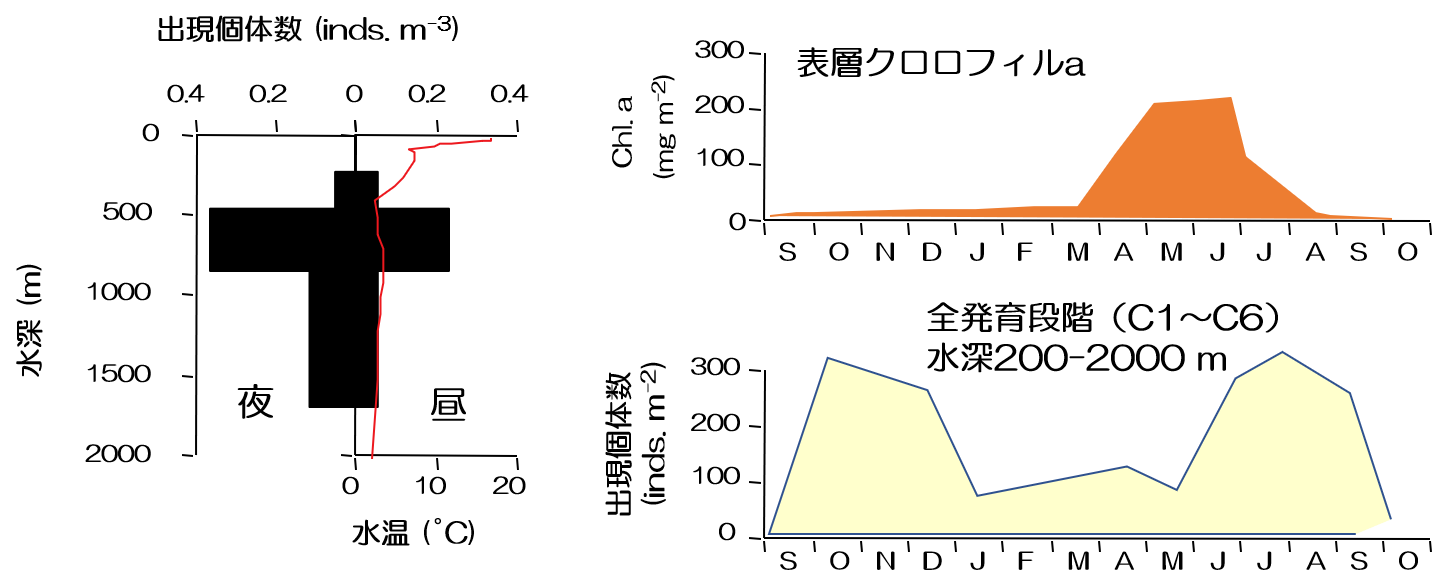
出現個体数:number of appearance individuals, 水深:water depth, 夜:night, 昼:daytime, 水温:water temperature, 表層クロロフィルa:Surface chlorophyll a, 全発育段階:all developmental stages
Gaetanus variabilis was distributed at depths of 500-1000 m throughout the year. On the other hand, it was found that there is a seasonality in the number of individuals appearing at all stages of development. The difference in distribution depth between day and night was not clear. In the offshore Kushiro (Oyashio area) where we went for the survey, a clear bloom of phytoplankton occurred in the surface layer from April to June.
-
-
-
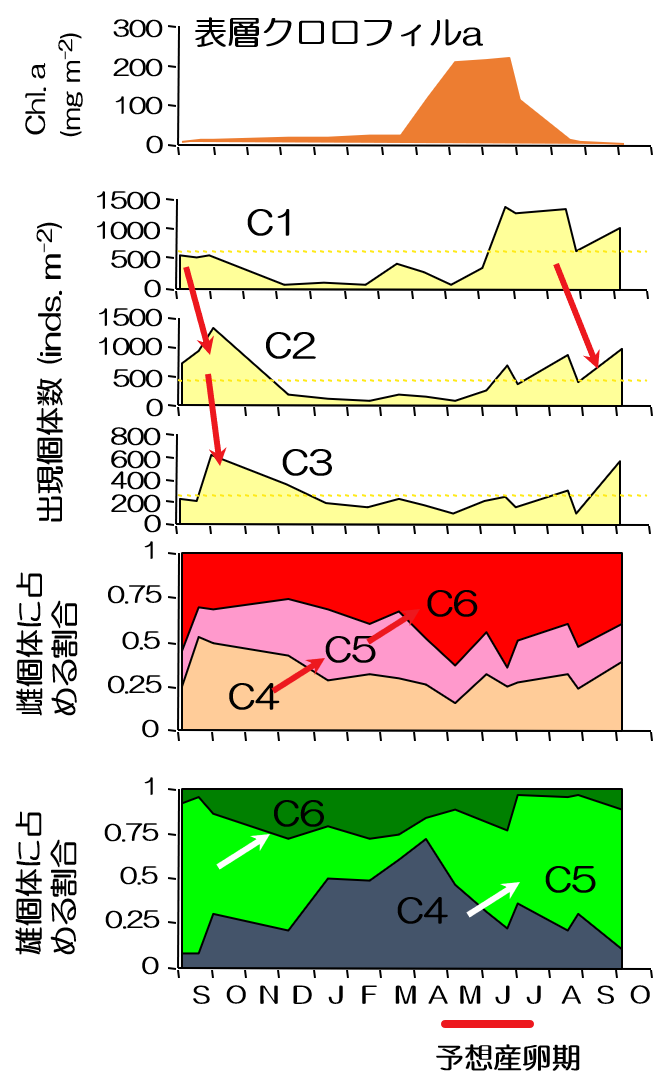
表層クロロフィルa:surface Chlorophyll a, 出現個体数:number of appearance individuals, 雌個体に占める割合:proportion of female individuals, 雄個体に占める割合:proportion of male individuals, 予想産卵期:Expected spawning season
Looking at the number of individuals appearing at each developmental stage, it can be seen that there are many C1 stages from June to August.A separate egg-nauplius rearing experiment revealed that it takes 51 days for egg hatching and nauplii development under the field environment.Taking these into account, it was found that the reproduction (egg laying) of this species almost coincided with the high season of chlorophyll a in the surface layer.Growth from C1 to C3 could be traced clearly.After C4, this species has different developmental times in both sexes, and females spend a long time in C6 (parental adult).Expediting a long time in the adult state of a female is an advantageous life history strategy in that it rapidly shifts to egg laying in response to an increase in the number of food particles settling from the surface layer.
-
-
-
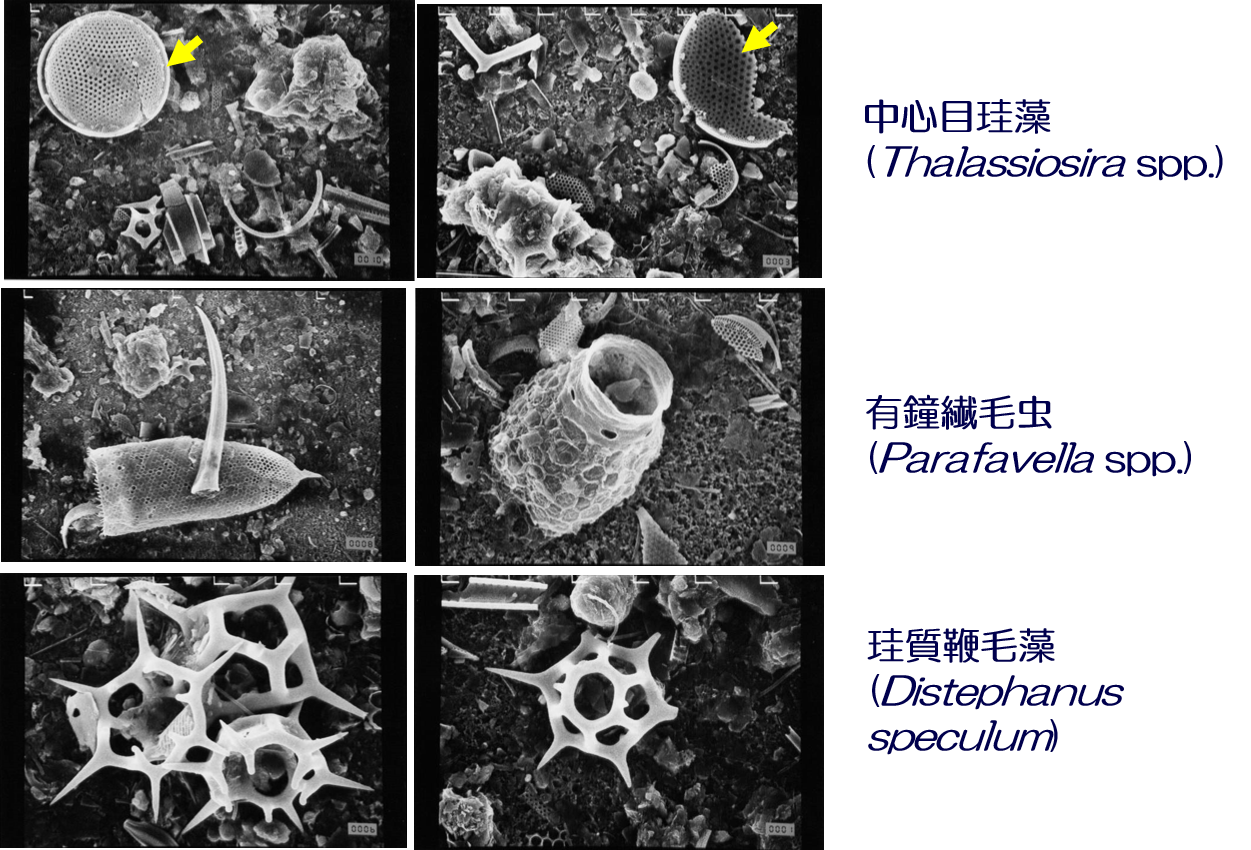
中心目珪藻:Centroorder diatoms, 有鐘繊毛虫:Tintinnid, 珪質鞭毛虫:Silicoflagellate
Gastrointestinal contents of female adults collected from 600-700 m water depths were predominantly occupied by surface-derived sediment particles.
-
-
-
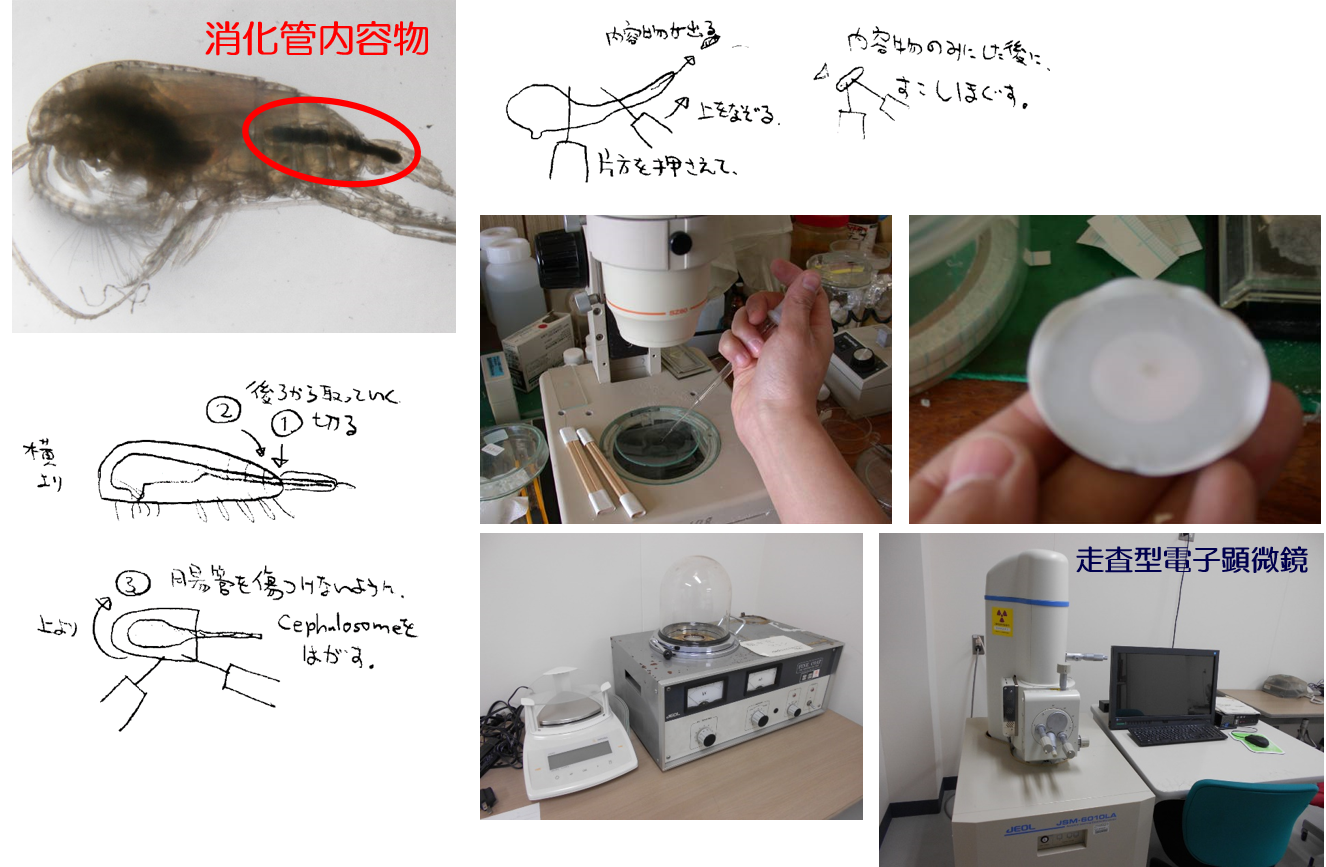
消化管内容物:gastrointestinal contents, 内容物が出る:contents come out, 上をなぞる:trace over, 片方を抑えて:hold one side, 内容物のみにした後に少しほぐす:After only the contents are loosened a little, 横より:from the side, 上より:from above, 後ろから取っていく:take from behind, 切る:cut, 腸管を傷つけないようにCephulosomeをはがす:Peel off the Cephulosome so as not to damage the intestinal tract, 走査型電子顕微鏡:Scanning electron microscope
The digestive tract contents are desalted, filtered through a filter, dehydrated, and coated with gold before being observed by electron microscopy.
-
-
-
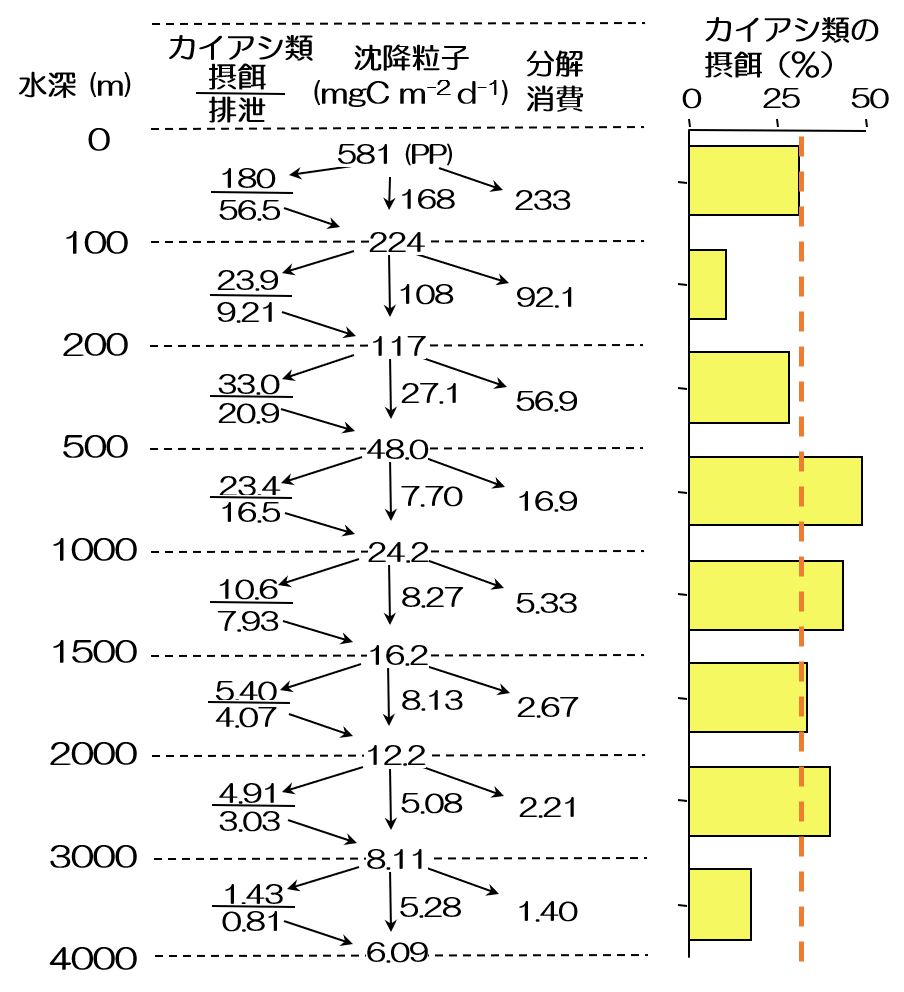 水深:water depth, カイアシ類:Copepods, 摂餌:feeding, 排泄:excretion, 沈降粒子:sedimentation particles, 分解:decomposition, 消費:consumption,カイアシ類の摂餌:feeding of copepodsSedimented particles that have fallen into the 0-4000 m water depth pass through three paths in each of the eight water depths.One is direct settling (downward arrow),Second, consume by copepods (left arrow),The third is microbial degradation consumption (right arrow).
A mean of 32% of the precipitated particles were found to be consumed by copepods in water depths of 0-4000 m.
-