3 Copepods
Garis besar topik
-
-
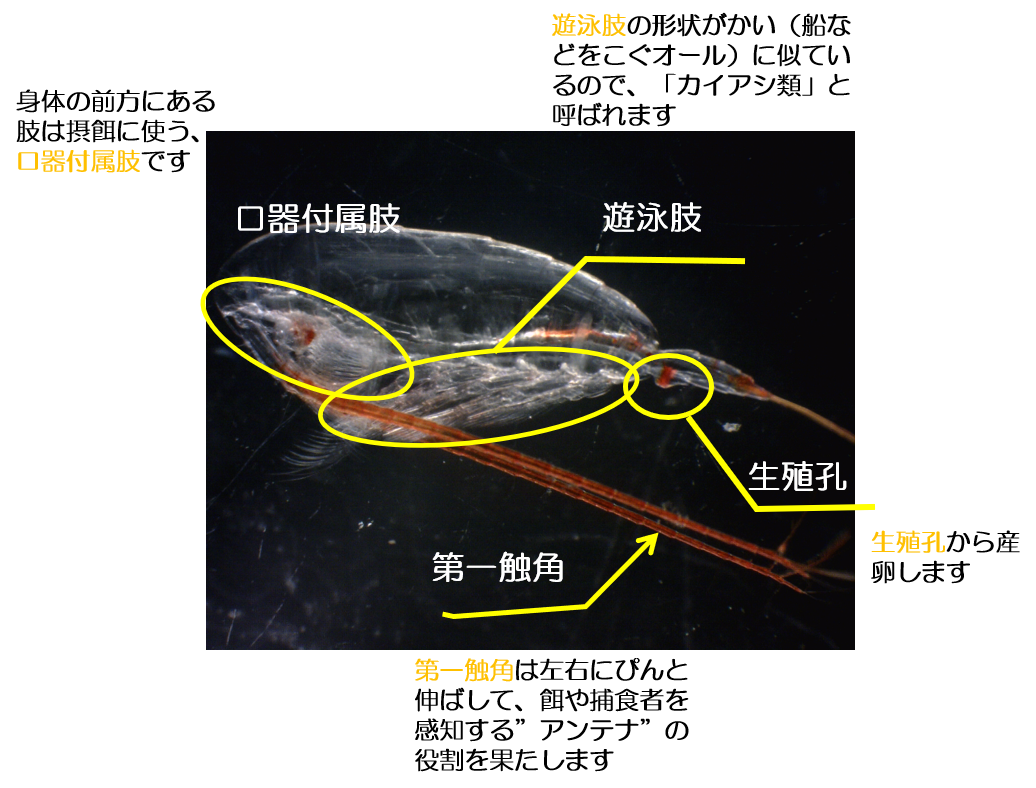 遊泳肢の形状がかい(船などをこぐオール)に似ているので、「カイアシ類」と呼ばれます:In Japanese, copepods are called "kai ashi" because the shape of swimmerets resembles paddles (paddle is "kai" in Japanese, and "ashi" means "arthropodium" here).身体の前方にある肢は摂餌に使う、口器付属肢です:The arthropodium on the front of body are mouthparts used for feeding.生殖孔から産卵しますThey lay eggs from the gonopore.第一触角は左右にぴんと伸ばして、餌や捕食者を感知する”アンテナ”の役割を果たしますCopepods have their first antennae stretched out to the left and right. They act as "antennas" to detect prey and predators.口器付属肢:mouthparts, 遊泳肢:swimmerets, 生殖孔:gonopore, 第一触角:first antenna
- Copepods is the most prevalent (about 80% of the population and biomass) crustacean among multicellular zooplanktons in the oceans around the world.
- Copepods is about 0.5 to 10 mm long, and its phagocytosis is a particulate-feeding species that eats phytoplankton and unicellular zooplankton. However, it also includes carnivorous species that feed on other multicellular zooplanktons, and detritus-feeding species that feed on marinsnow and detritus that have settled from the surface.
- Differences in diet and diet are thought to have a major impact on copepods species differentiation, with species richer in the middle layer (200-1000 m). This is thought to reflect the variety of copepods baits in the middle class.
- Copepods is the most prevalent (about 80% of the population and biomass) crustacean among multicellular zooplanktons in the oceans around the world.
-
-
-
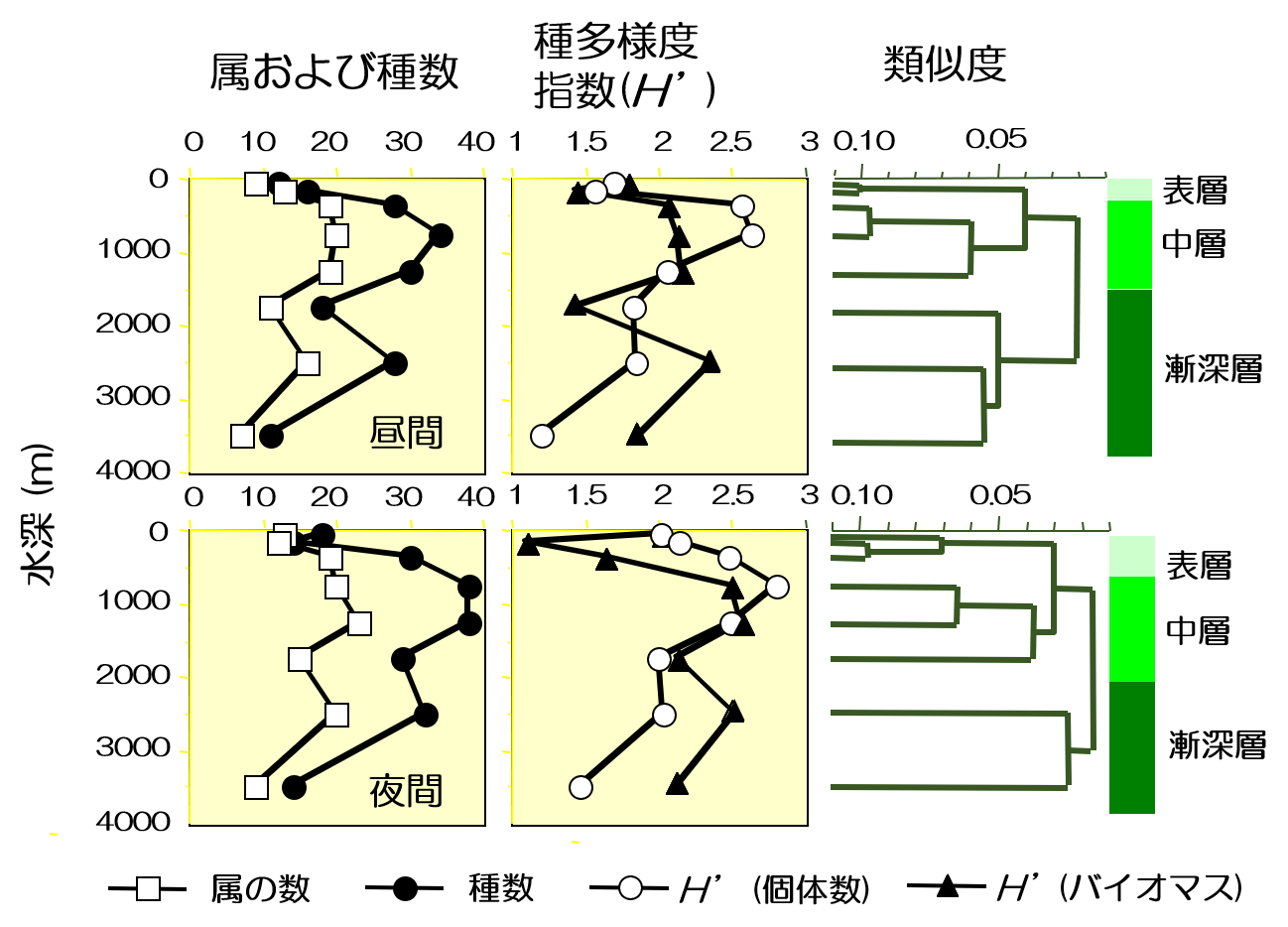
属及び種数:number of genus or species, 種多様度指数:species diversity index, 類似度:degree of similarity, 水深:water depth, 表層:surface layer, 中層:middle layer, 漸深層:bathyal zone, 属の数:number of genus, 種数:number of species, 個体数:number of individuals, バイオマス: biomass, 昼間:daytime, 夜間:night
Diversity is high in the middle layer (200-1000 m).
-
-
-
咀嚼歯:chewing tooth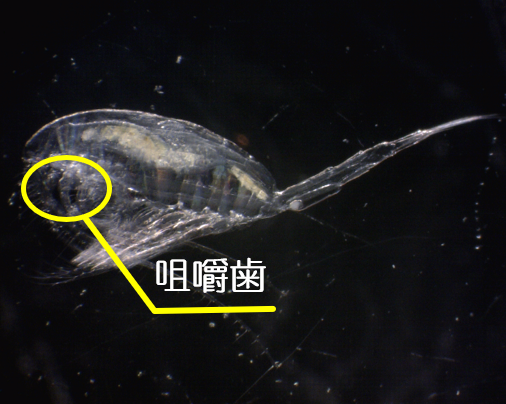
The Metridia belonging to the caranus of copepods is a typical particulate diet species with a body length of 2-5 mm.
Within the same genus, the shape of the chewing teeth of the appendages of the mouth varies widely from species to species.
The chewing teeth of the superficial species are smooth, and the chewing teeth of the deep sea species are irregular.
-
-
-
Four species of the genus Metridia dominate the subarctic zone. The vertical profiles of these four species were segregated vertically within a 0-4000 m water column between homogeneous species with each other.
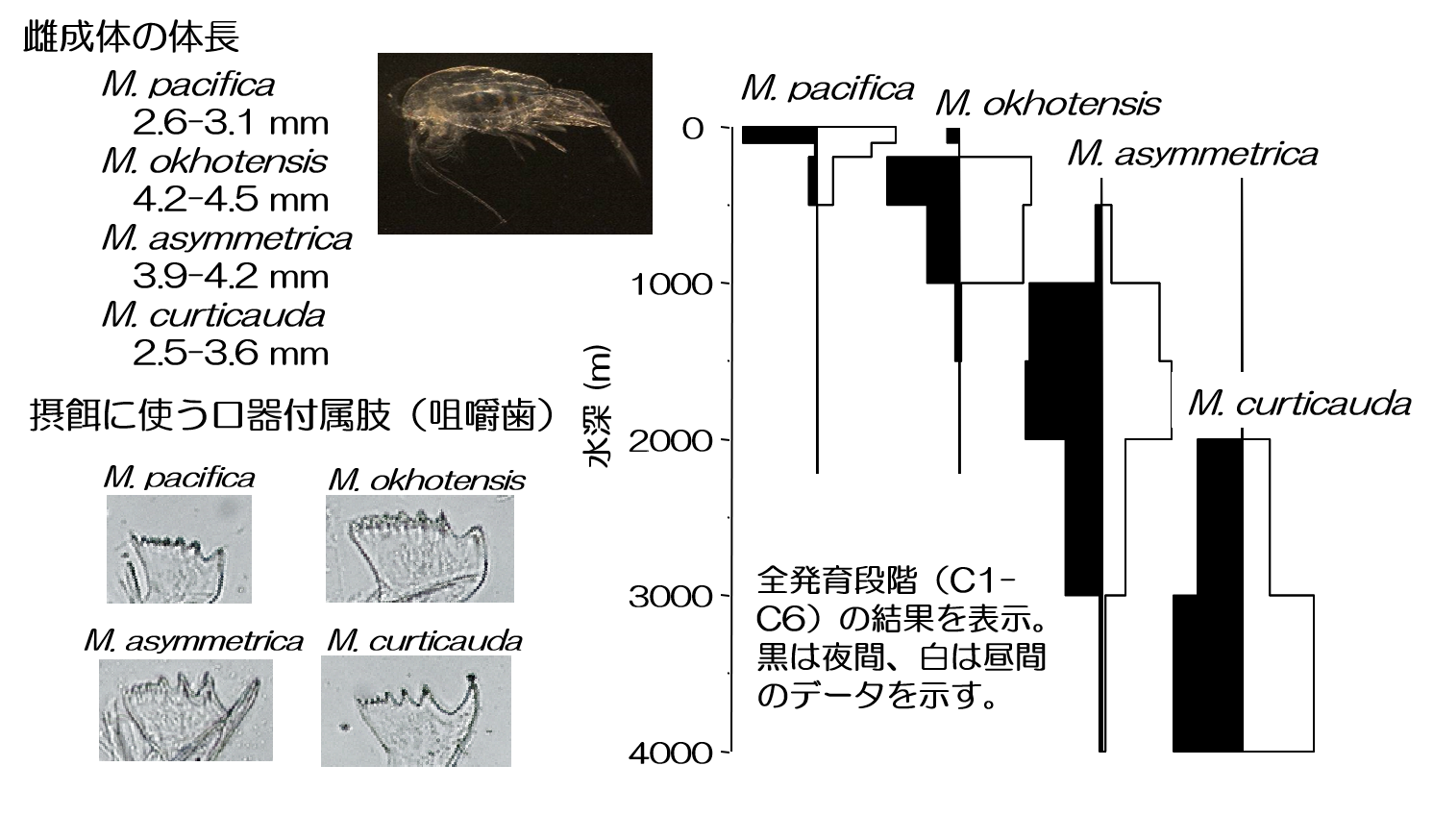 雌成体の体長:length of adult female, 摂餌に使う口器付属肢:mouthparts used for feeding, 水深:water depth発育段階(C1-C6)の結果を表示:Results for developmental stages (C1-C6) are displayed.黒は夜間、白は昼間のデータを示す。:Black indicates nighttime data, and white indicates daytime data.
-
-
-