Garis besar topik

  •    

    • 2  14  SDGs top

      In Japan, we have developed a hatching and release business that takes advantage of the salmon's tendency to return to their mother rivers and obtain them as highly productive fishery resources. We aim to make this business more robust and sustainable food production system, and to upgrade it to one that can adapt to ecosystem considerations and climate change. We will also get students interested in biodiversity by learning about fish taxonomy of salmon and trout. We hope that students will learn the basics of these studies in this class, and we hope to nurture human resources who will contribute to the SDGs (Zero Hunger, Enriching the Oceans) in the future.

      The United Nations has designated the decade beginning in 2021 as the Decade of Marine Science to contribute to the SDGs. Marine science as defined by the UN includes the field of fisheries.

    • Faculty of Fisheries Sciences, Hokkaido University IMAMURA Hisashi

      Salmon and trout are the common names for fish of the subfamily Salmoninae of the family Salmonidae, of which about 15 species are known from Japan. Taxonomically, there is no clear distinction between fish called “salmon” and those called “trout”. There are genuine “salmon” (chum salmon), but no “trout”. In this lecture, I will introduce mainly Japanese salmon and trout species from a taxonomic point of view and explain their phylogenetic evolution.

    • : salmon : trout

      サケとマス: salmon and trout

      種とは: what is species

      系統分類学: phylogenetic taxonomy


    • “Salmon and trout” is the generic name for the subfamily Salmoninae (about 120 species worldwide, about 15 species in Japan).

      There are 4 genera in Japan.


    • This lecture will mainly introduce Japanese salmon and trout species and explain their phylogenetic evolution.


    • Faculty of Fisheries Sciences, Hokkaido University SHIMIZU Munetaka

      Most salmonids are born in freshwater and spend a certain period in rivers before descending to the sea. However, the descent characteristics (age, duration, etc.) differ among species. Even within the same species, there are cases where some individuals descend to the sea and others remain in the river depending on the river environment. Genetic factors are also important. In other words, salmonid oceanic descent is influenced by the interaction of genetic and environmental factors. In this lecture, the seemingly simple phenomenon of salmonid descent to the sea will be explained from various perspectives. Specifically, topics such as why they descend to the sea, how they adapt from freshwater to seawater, and to what extent their descent to the sea is genetic will be covered.


    • Polymorphism in the life history of cherry salmon in Hokkaido, Japan

      Why, how, and how many down the river?


      体サイズ: body size : winter : spring : summer : autumn 1年目: first year 2年目: second year

      相分化成熟のため川に残る雄(早熟雄): males that remain in the river for phasic maturation (precocious males) 海へ下る個体(スモルト): individuals descending to the sea (smolt) 幼魚として川に残る個体(パー): individuals remaining in the river as juveniles (parr)


    • Faculty of Fisheries Sciences, Hokkaido University MIYASHITA Kazushi

      In recent years, biologging has been attracting attention as a technology for understanding the behavior of living organisms. Biologging refers to a technology in which a recording device is attached to the target organisms to acquire various data such as swimming depth and water temperature, and is widely recognized as an excellent technique for studying how they swim, feed, and move. Research on salmonids using biologging has been conducted both domestically and internationally, and it is now possible to understand their behavior in the wild, which had been difficult in the past. In this lecture, I would like to introduce some of the research on salmonids using biologging, especially those that I have been involved in.


    • Faculty of Fisheries Sciences, Hokkaido University KUDO Hideaki

      Salmon that are born in the river and grow up in the ocean perform a “homing habit”, returning to the river where they were born in order to leave behind their offspring. This life phenomenon is not only biologically interesting, but also fisheries and propagation projects have been developed to take advantage of this characteristic. In this lecture, I will give an overview of salmon migration, mainly from a physiological perspective, and discuss ongoing research on “olfactory imprinting”, which is strongly related to the identification of the home river during the final stage of homing habit.


    • 河川: river

      産卵・受精: spawning and fertilization →ふ化: hatching →浮上: surfacing →稚魚: juvenile

      サケ,カラフトマス: chum salmon and pink salmon その他の遡河性サケ属魚類: other anadromous salmonsパー: parr →銀化変態: smoltification →スモルト: smolt

      降海回遊: descending migration 母川刷込: mother river imprint 嗅覚: olfaction 各河川固有のアミノ酸組成: amino acid composition specific to each river

      海洋: ocean

      索餌回遊: foraging migration

      成長: growth →性成熟開始: start of sexual maturity 磁気感覚: magnetic sensation →母川回帰: return to mother river →母川想起・識別: mother river recall and identification


    • Faculty of Fisheries Sciences, Hokkaido University YAMAMURA Orio

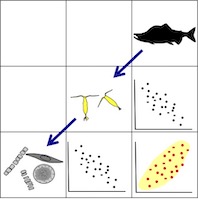
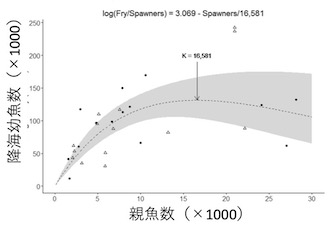
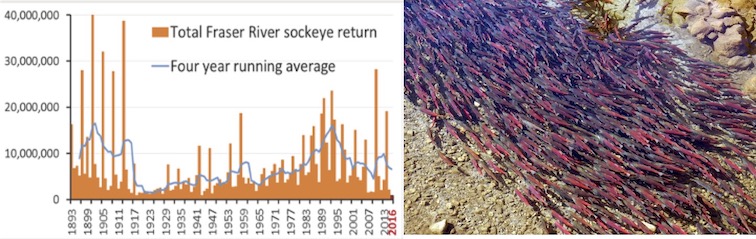
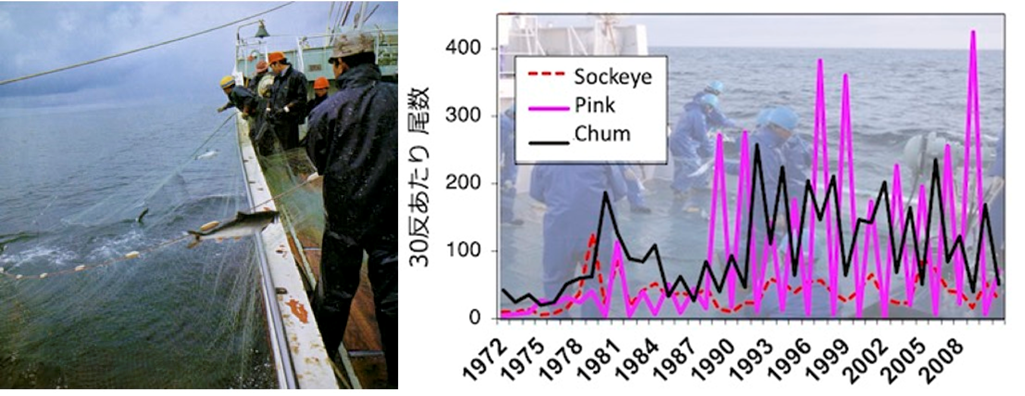
      Eight species of the genus Oncorhynchus have speciated in the North Pacific Ocean and reigned as “champions” of subarctic waters. How did the ancestors of salmonids, which originally completed their life histories in rivers, come to exploit the ocean? The key to the answer lies in the differences in productivity of both habitats under cold climates. This lecture will outline how salmonids utilize the productive forces of the ocean, what is their position (niche) as members of the ecosystem, and how they are affected by climate change.


    • Faculty of Fisheries Sciences, Hokkaido University MIYAZAWA Haruhiko

      Three main issues will be covered in this lecture. First, the mechanisms of price formation and the general factors influencing prices of seafood products, especially domestic chum salmon. Secondly, the diversity of the commodities that can be grouped under the term “salmon” and the associated “pecking order” or hierarchy of price levels by commodity is shown. Thirdly, the factors behind the decline in the price of domestic chum salmon, which have fallen to the bottom of the price hierarchy since the 1980s, are clarified from the perspectives of (1) changes in socio-economic conditions, (2) changes in the price hierarchy due to the increase in imported salmon, and (3) changes in the purchasing power and demand and consumption structure of the population. The significance and challenges of the current response of production areas to maintain domestic chum salmon prices in light of the changes in the situation following the Great East Japan Earthquake will also be discussed.


    • This lecture has the following INDEX

      1. how to look at the price level of salmon trout - the problematic aspects of this lecture

      2. landings, sales and price formation of autumn chum salmon

      3. price differentials of salmon trout species and the slump in autumn chum salmon prices

      Factors behind the decline and relative inferiority of autumn chum salmon prices - trends in supply (production and imports) and demand (consumption and needs).

      5. considering responses to the “autumn chum salmon problem” (price problem).


    • In other words...

      The price of salmon trout is extremely varied, highly uneven and hierarchical, depending on species and other factors.

      The autumn chum salmon, the most productive of the domestic salmon species, has fallen to the bottom of the price pecking order.

      Furthermore, the price level of domestically produced autumn chum salmon has fallen significantly since the late 1980s until recently.

      So how is the price of autumn chum salmon determined?

      Why has the price of autumn chum salmon fallen so far and into the bottom of the price hierarchy?

      And how should our country's fishermen, who are suffering from falling prices, respond?


      This lecture will consider the above.


    • Faculty of Fisheries Sciences, Hokkaido University FUJIMOTO Takafumi

      In the history of human food production, selective breeding has been used to achieve better production. In selective breeding, useful traits have been specialized and organisms have changed to show a variety of forms and characteristics. On the other hand, genetic recombination technology is considered one of the effective breeding techniques in that it can introduce traits that cannot be obtained by crossbreeding between the same species. In this lecture, plant and animal breeding will be outlined, salmon, the first genetically modified food approved by the FDA for animals, will be introduced as a representative example, and methods for producing genetically modified organisms will be explained and their use will be considered.


    • Nanae Freshwater Station, Field Science Center for Northern Biosphere, Hokkaido University YAMAHA Etsuro

      Developmental engineering is the technology of artificially modifying an individual’s genes, chromosomes, genome, nucleus and cytoplasm, and cellular make-up to create organisms that are fit for a particular purpose. These techniques have been used successfully in the breeding of crop varieties and in animal husbandry, and are also being studied in fish. Developmental engineering of a certain fish species requires an understanding of the “body-building mechanism” of the fish. In other words, it is necessary to understand how the various cells of the body are produced from a single cell, the fertilized egg, in order to make modifications that are suitable for the purpose. This lecture will explain the mechanism by which the “body” is produced from the fertilized egg of the fish, and how the methods used to analyze it are linked to applications.


    • Faculty of Fisheries Sciences, Hokkaido University KURIHARA Hideyuki

      Salmonids are an important marine product of Hokkaido. The value of a fishery product can only be achieved if people are satisfied with the use of salmon and are willing to pay for it. This lecture introduces how people have used salmon as food or material, and deepens understanding by introducing the characteristics and uses of salmon from a food science perspective, as well as non-food uses.


    • Key words

      foodstuff, ingredient features, food hygiene, chemicals, how to use the Ainu people and others


  •   Salmon and Trout SDGs2 SDGs14