單元大綱

  • Pseudopleuronectes herzensteini (Jordan & Snyder, 1901)

    •    SDGs との関連を説明
The relationship with SDGs

    • 【About Video】

      Pseudopleuronectes herzensteini (Jordan & Snyder, 1901)

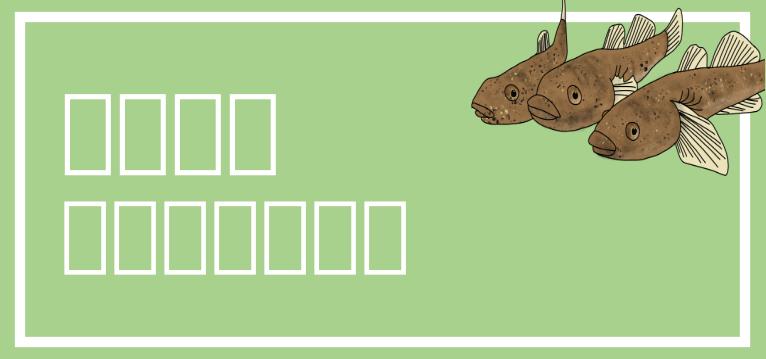
          It inhabits in the coastal area north of Yamagata Prefecture and Fukushima Prefecture, and around Hokkaido, Japan. It is characterized by a lack of special morphological features as a flounder, and it is very similar to marbled flounder Pseudopleuronectes yokohamae. The blind side (white side) has pale yellow lines, but some individuals do not have it (marbled flounder does not have any yellow lines). The small protuberance between the eyes is slippery and scaleless (there are scales on marbled flounder), the overall body color is brown (green), and scales are larger and its body is thinner than marbled flounder. Eggs are pelagic and non-cohesive. The good fat and delicious from summer to autumn. Good for boiled. Large fish can also be eaten with sashimi (marbled flounder is also delicious, and in summer it becomes a substitute for the Japanese flounder Paralichthys olivaceus (Temming et Schlegel) as sashimi and sushi).

      【動画の概要】

      マガレイ
      学名:Pseudopleuronectes herzensteini (Jordan & Snyder, 1901)

       山形県と福島県より北の海域、北海道周辺に生息。形態に特徴がないのが特徴で、マコガレイによく似る。白い方の無眼側の後方に薄い黄色の帯が現れることがあるが、ない個体もいる(マコガレイには絶対黄色い筋は入らない)。両目の間の隆起はツルツルしていて鱗がなく(マコガレイには鱗がある)、体色は全体的に茶色(同緑色)、ウロコはマコガレイよりも大きく、身が薄い(同厚い)。卵は分離浮遊性(粘性沈着性)。夏から秋に良く太り美味。煮つけ。大型魚は刺身でも食べられる(マコガレイも美味く、夏はヒラメの刺身や寿司ネタの代用として重用されている)。

    • SDG 14 LIFE BELOW WATER SDG 14 海の豊かさを守ろう

         There are many kinds of fish living in the ocean. We can identify the species by the slight differences in patterns. It is relatively easy to identify the species of adult fish, but it is difficult to identify the species of juvenile fish. I would like to contribute to SDG 14 (LIFE BELOW WATER) by letting as many people as possible know how interesting and important marine biodiversity is.

         The United Nations has designated the decade starting in 2021 as the "Decade of Ocean Science," with the aim of contributing to SDGs. Ocean science, as defined by the UN, includes the field of fisheries.

       海には、たくさんの種類の魚が生息しています。ちょっとした模様の違いから、種類を判別します。成魚の種類分類であればやりやすいのですが、仔魚期の種類分類は難しいのです。海の生物多様性の面白さや大事さを、多くの人に知ってもらうことで、SDGs(海を豊かに)に貢献したいと考えています。

       国連では2021年からの10年間を、「海洋科学の10年」に定めて、SDGsに貢献することを目指しています。国連が定める海洋科学には、水産漁業の分野も含まれます。

      LASBOS SDGs top (English) LASBOS SDGs top
  •