セクションアウトライン

  • キアンコウについて

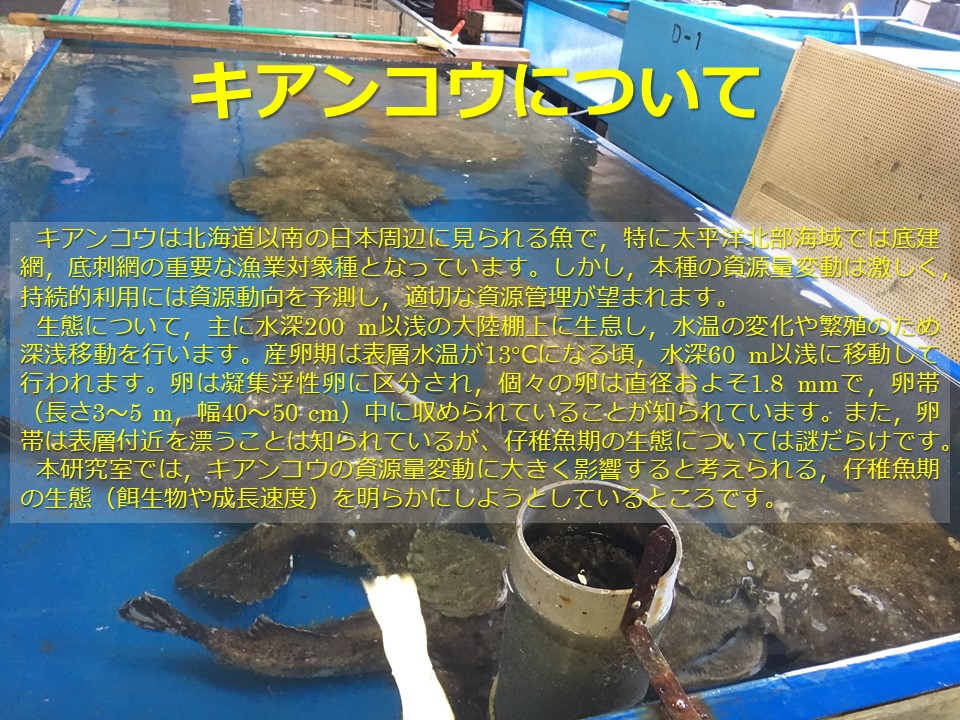
    •  The yellow goosefish, Lophius litulon, is found around Japan south of Hokkaido, and is an important target of bottom setnet and bottom gillnet fisheries, especially in the waters of the northern Pacific Ocean. However, the abundance of this species fluctuates rapidly, so it is desirable to predict the trend of the stock and to manage resource appropriately for sustainable utilization of the species.

       This species lives mainly on the continental shelf at depths shallower than 200 m, and migrates to shallower depths due to changes in water temperature and for reproduction. When the surface water temperature reaches 13°C, they migrate to depths of 60 m or shallower and spawn. Eggs are classified as agglutinated floating eggs, each of them is approximately 1.8 mm in diameter, and are contained within an egg veil (3 to 5 m long and 40 to 50 cm wide). The egg veil is known to drift near the surface, but its biology during the larval and juvenile stages is still a mystery.

       We are currently trying to clarify the ecology (prey and growth rate) of the larval and juvenile stages, which is thought to have a great influence on the fluctuation of the abundance of yellow goosefish.


    • キアンコウ

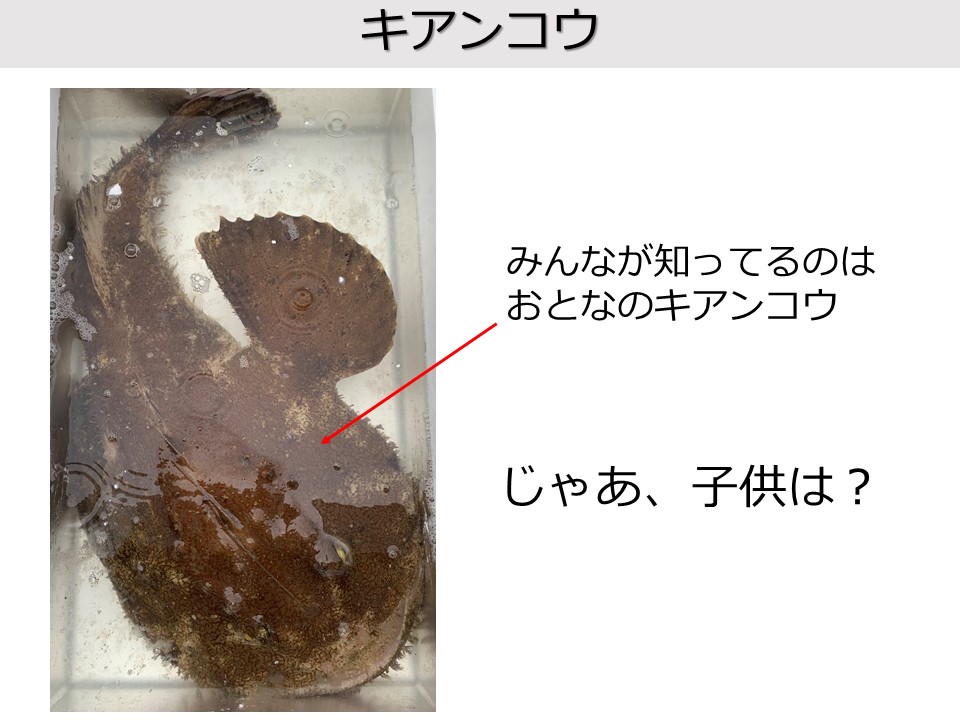
    • The adult yellow goosefish is known to everyone.

      Then, what about its offspring?


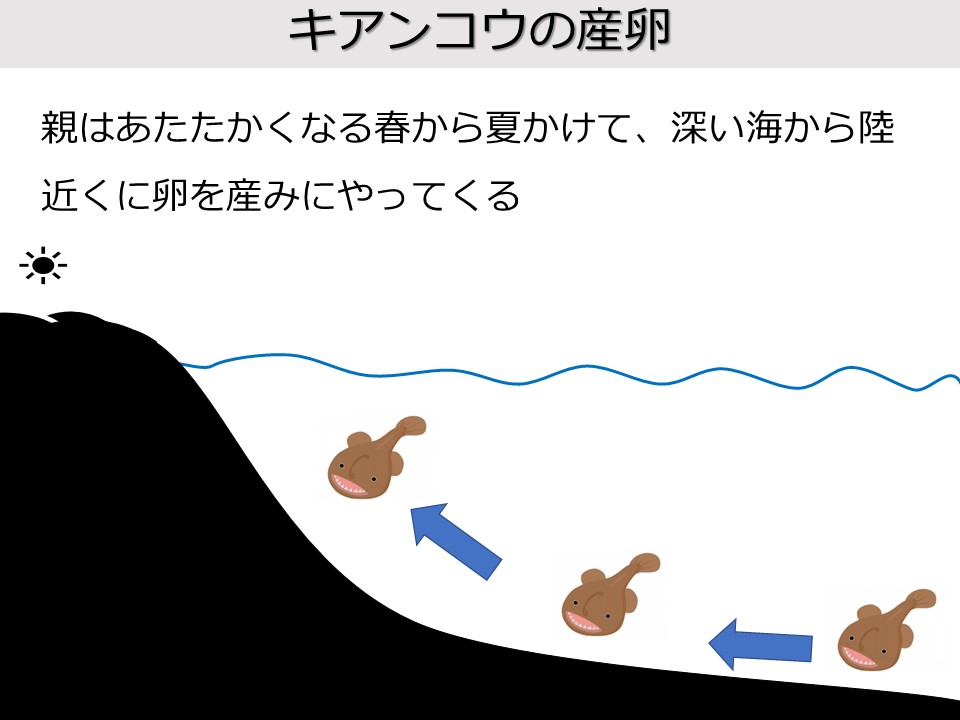
    • キアンコウの産卵

    • Parents come from the deep sea to lay eggs near land in the warm spring and summer.


    •  


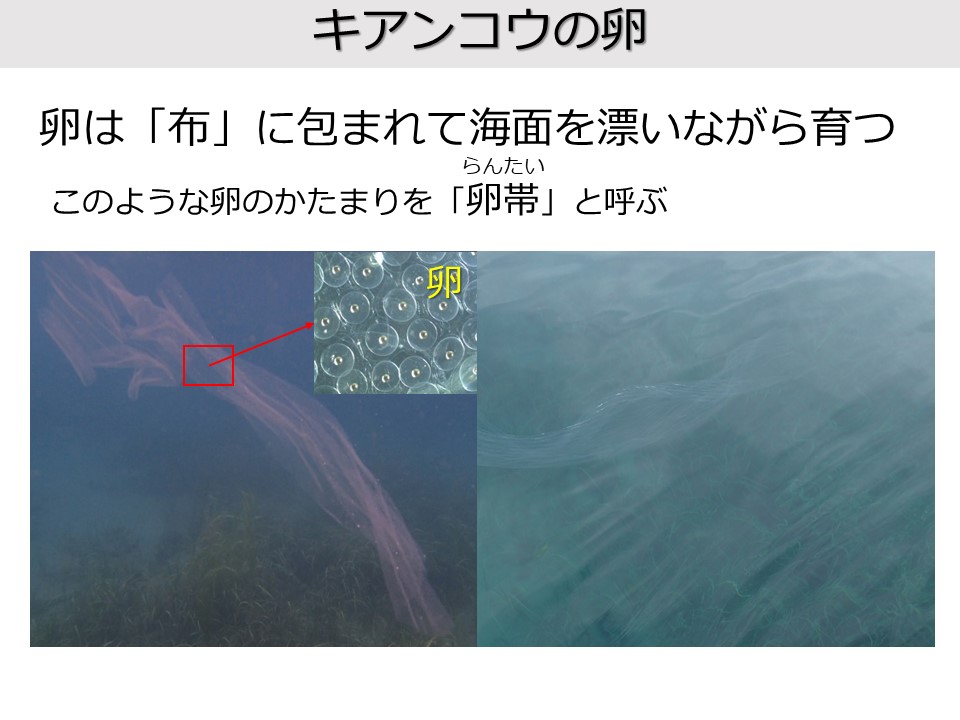
    • キアンコウの卵

    • Eggs are wrapped in a “cloth” and grow while drifting on the surface of the sea.

      This mass of eggs is called an “egg veil”.


    •  


    •  


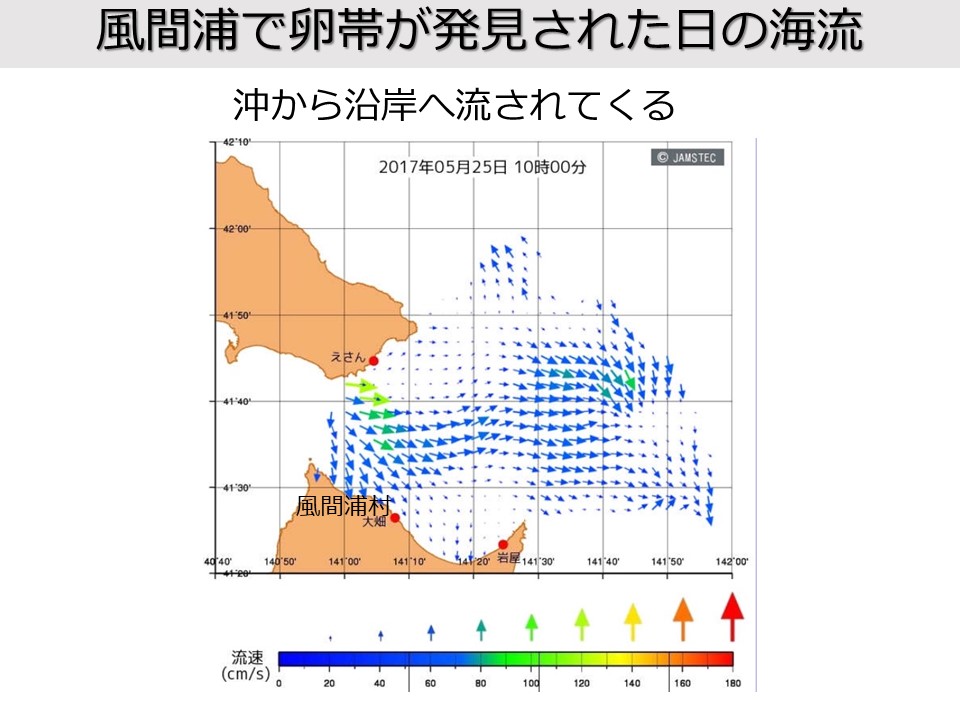
    • 風間浦で卵帯が発見された日の海流

    • Currents on the day the egg veil was discovered at Kazamaura

      It is drifted in from offshore to the coast.


    • Image courtesy of Japan Agency for Marine-Earth Science and Technology

      (The following is a link to the website)

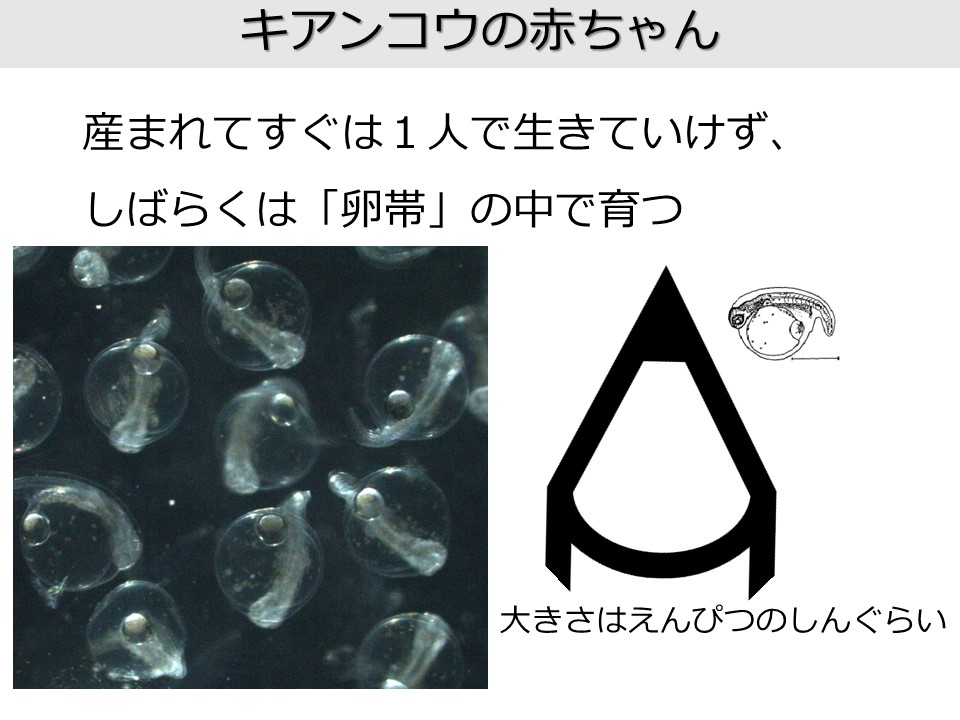
    • キアンコウの赤ちゃん

    • Baby of yellow goosefish

      They are unable to survive on their own immediately after birth and grow for a while in an “egg veil”.

      They are about the size of a pencil lead.


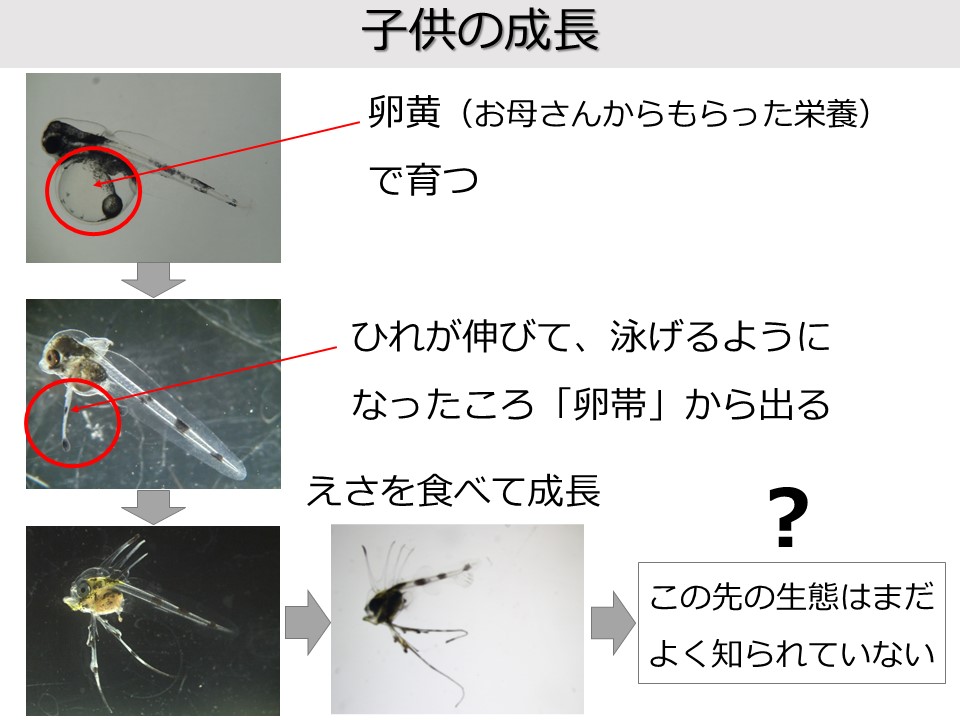
    • 子供の成長

    • Growth of fry

      They grow on egg yolk (nourishment provided by their mother).

      When their fins grow long enough for them to swim, they emerge from the “egg veil”.

      They feed and grow.

      The ecology of them beyond this point is not yet well known.


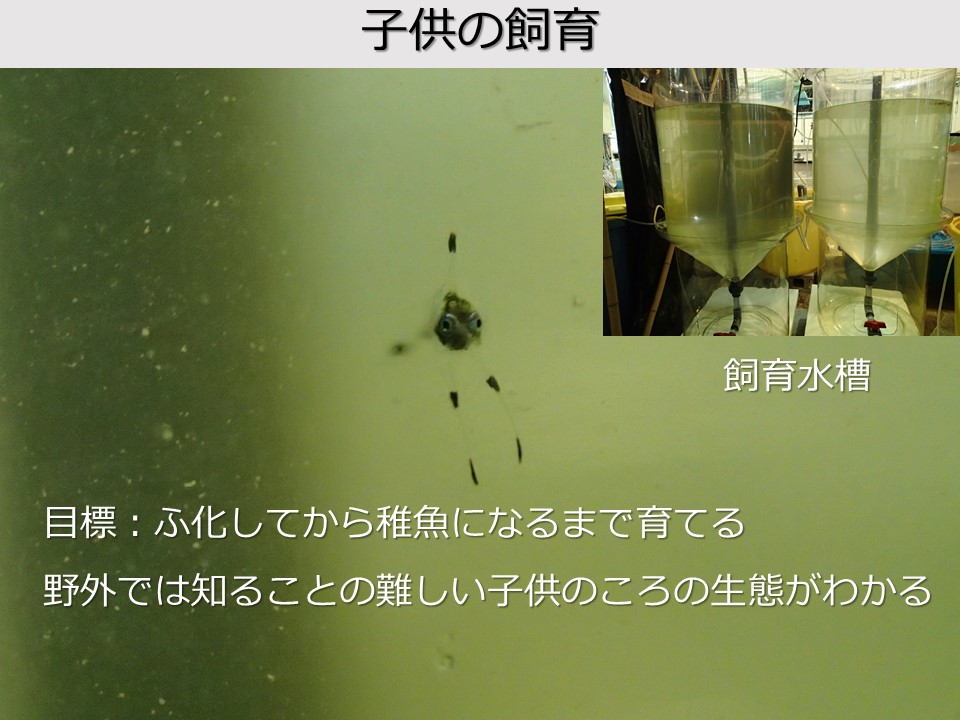
    • 子供の飼育


      Rearing tank

    • Rearing of larvae and juvenile

      Goal: To raise fish from hatching to juvenile

      The ecology in early life stages, which is difficult to know in the field, can be understood.