Section outline

    • In addition to its use as a food, seaweed is also expected to be used as a functional material because it contains components with various functional properties such as anticancer, antihypertensive, anti-obesity, and antiviral effects. However, due to recent climate changes caused by global warming and other factors, the stable production of these seaweeds is becoming more and more difficult due to poor growth and the spread of diseases. In order to overcome this problem, it is essential to breed seaweeds in a similar way to that used for vegetables and fruits, but the breeding of seaweeds is not yet well developed. Therefore, our laboratory is developing technologies to search for useful genes related to the growth rate and synthesis of high-functional components.

      Various Expected Seaweed Applications
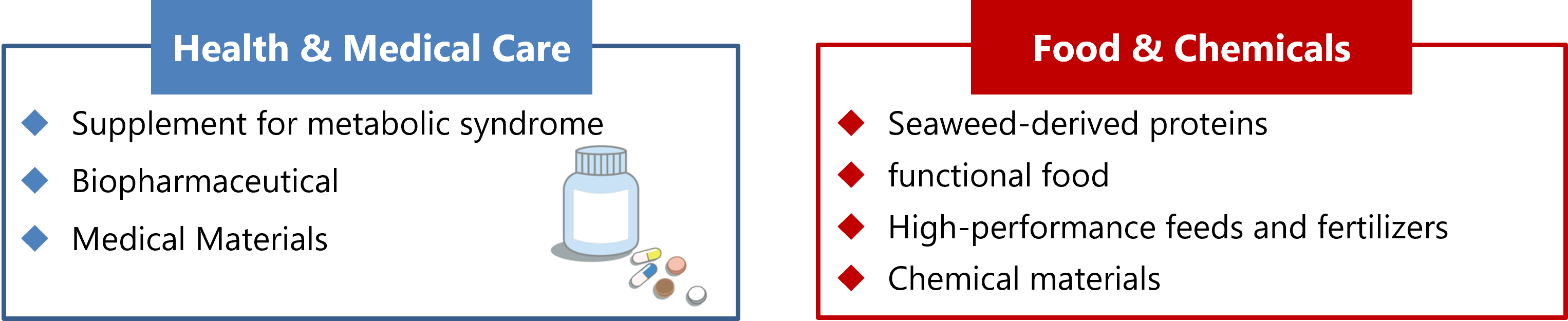
      Various Expected Seaweed Applications


    • By expressing a gene in large amounts in a cell or, conversely, by suppressing its expression, we can learn about the function of that gene. We have been working on the development of gene transfer technology, a fundamental technology essential for these analytical methods.

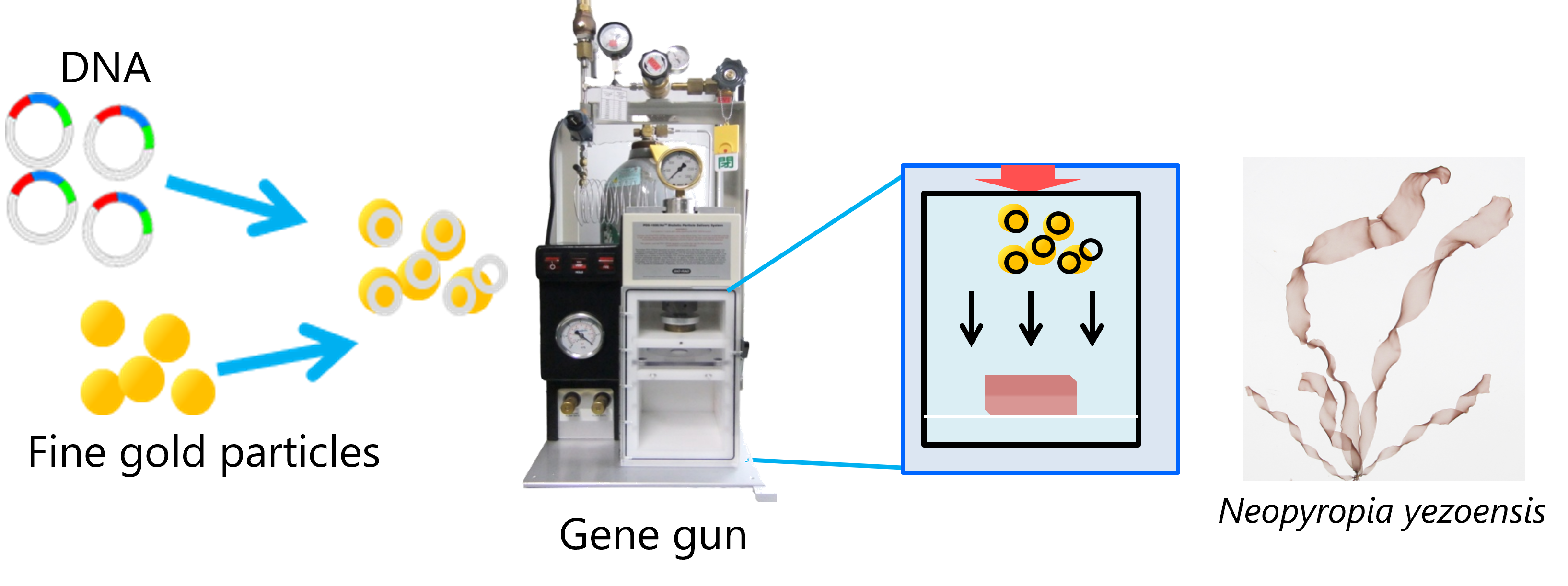
         There are several methods of gene transfer, but because seaweeds have cell walls, the methods used in animals cannot be used. Therefore, we used the gene gun method, in which the DNA (gene) to be introduced is attached to fine gold particles, and the DNA and the metal particles are directly introduced into the cells by gas pressure. We succeeded in introducing the DNA into the cells of Neopyropia yezoensis, which is the raw material for nori.


    • gene gun

    • It was found that for stable expression of the transgene in the cells of the rust fungus, it is important to use a transcription control region called a promoter derived from Neopyropia yezoensis (to promote transcription) and to optimize the DNA sequence of the transgene to match the codon of Neopyropia yezoensis gene (to promote translation).

    • Four gene constructs introduced into the cells of Neopyropia yezoensis
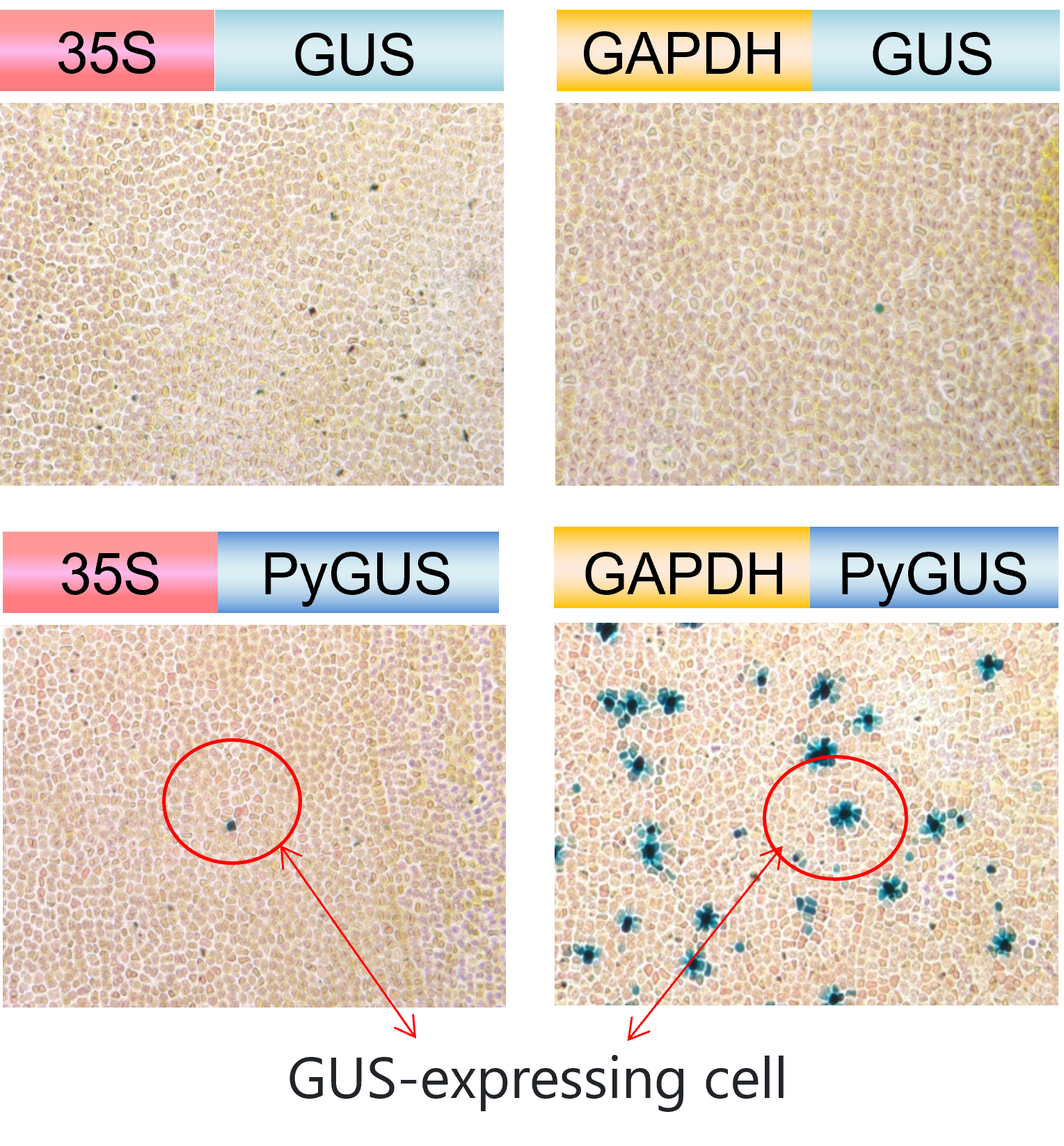
      Four gene constructs introduced into the cells of Neopyropia yezoensis

      Description of the introduced gene constructs

      35S:
      A Promoter of CaMV35S virus, which infects land plants

      GUS: β-glucuronidase
      Reporter gene from E. coli. When expressed, it turns cells blue.

      GAPDH:
      Promoter (GAPDH gene) derived from Neopyropia yezoensis.

      PyGUS:
      Modified GUS (β-glucuronidase) whose DNA sequence is adapted to the Neopyropia yezoensis codon without changing the amino acid sequence.

      By examining the number of GUS-expressing cells in the four transgenic constructs, we found that the 35S promoter, a promoter commonly used in land plants, is rarely functional and the E. coli gene is rarely translated in the Neopyropia yezoensis cells.

    • The objective was to develop a marker gene for selecting transgenic individuals. A modified hygromycin resistance gene (Pyaph7), which was adapted to the codon of Neopyropia yezoensis, was created and introduced into Neopyropia yezoensis cells using a gene gun method. After that, the Neopyropia yezoensis cells were treated with the antibiotic hygromycin. As a result, Pyaph7 was introduced into the resulting hygromycin-resistant strain, and the transgenic individuals were stably isolated.

    • PyAct1 promoter and Pyaph7


      PyAct1 promoter: Promoter of the actin gene from Neopyropia yezoensis
      Pyaph7: Modified hygromycin (Hyg) resistance gene adapted to the codon of Neopyropia yezoensis
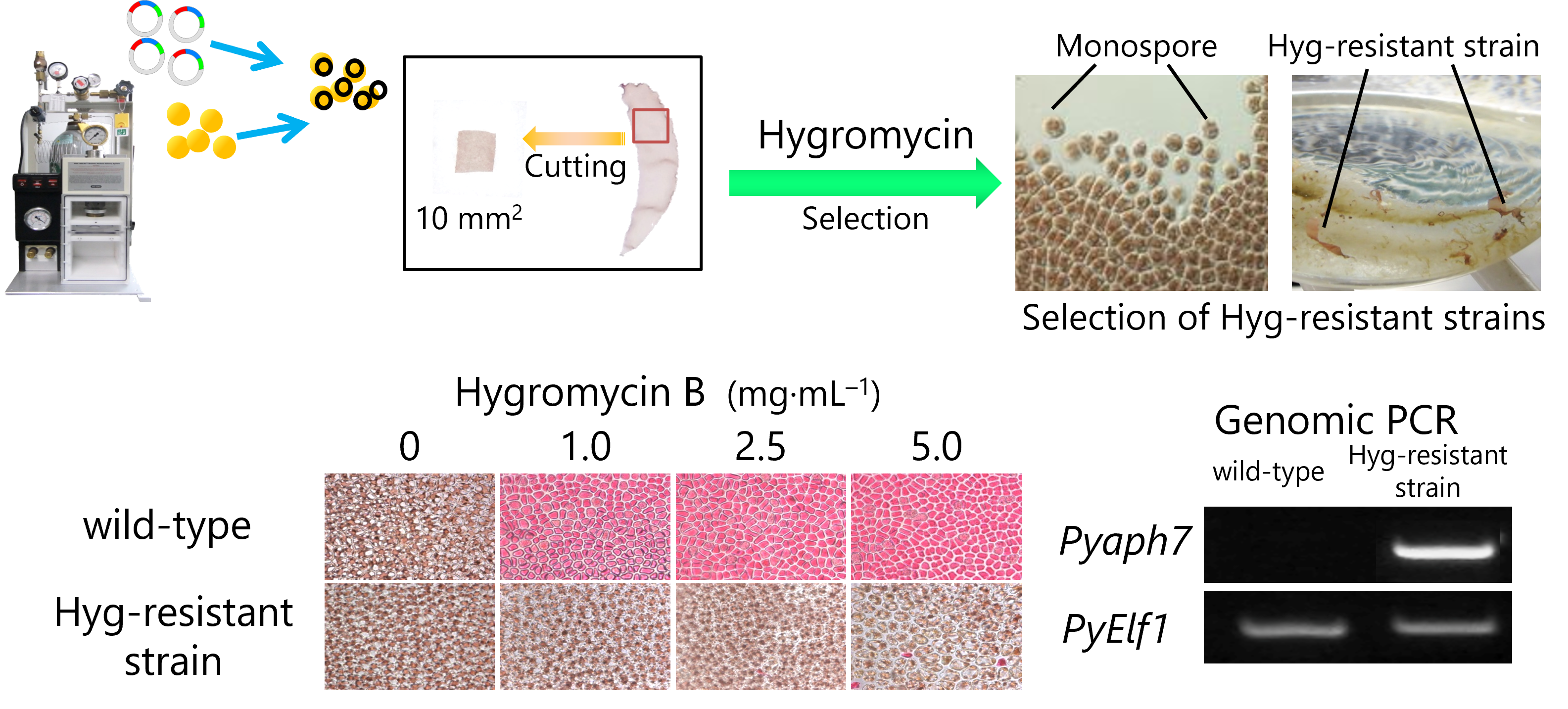


      selecting transgenic individuals

    • The gene construct utilizing a codon-modified hygromycin resistance gene (Pyaph7) as a selection marker was introduced into the Neopyropia yezoensis cells by the gene gun method. After that, the Neopyropia yezoensis cells were selected with hygromycin. As a result, the target genes (PyGUS gene and AmCFP gene) were stably expressed.

      *Blue-stained algae are those in which PyGUS and AmCFP are expressed.


    •  Gene constructs introduced into Neopyropia yezoensis cells
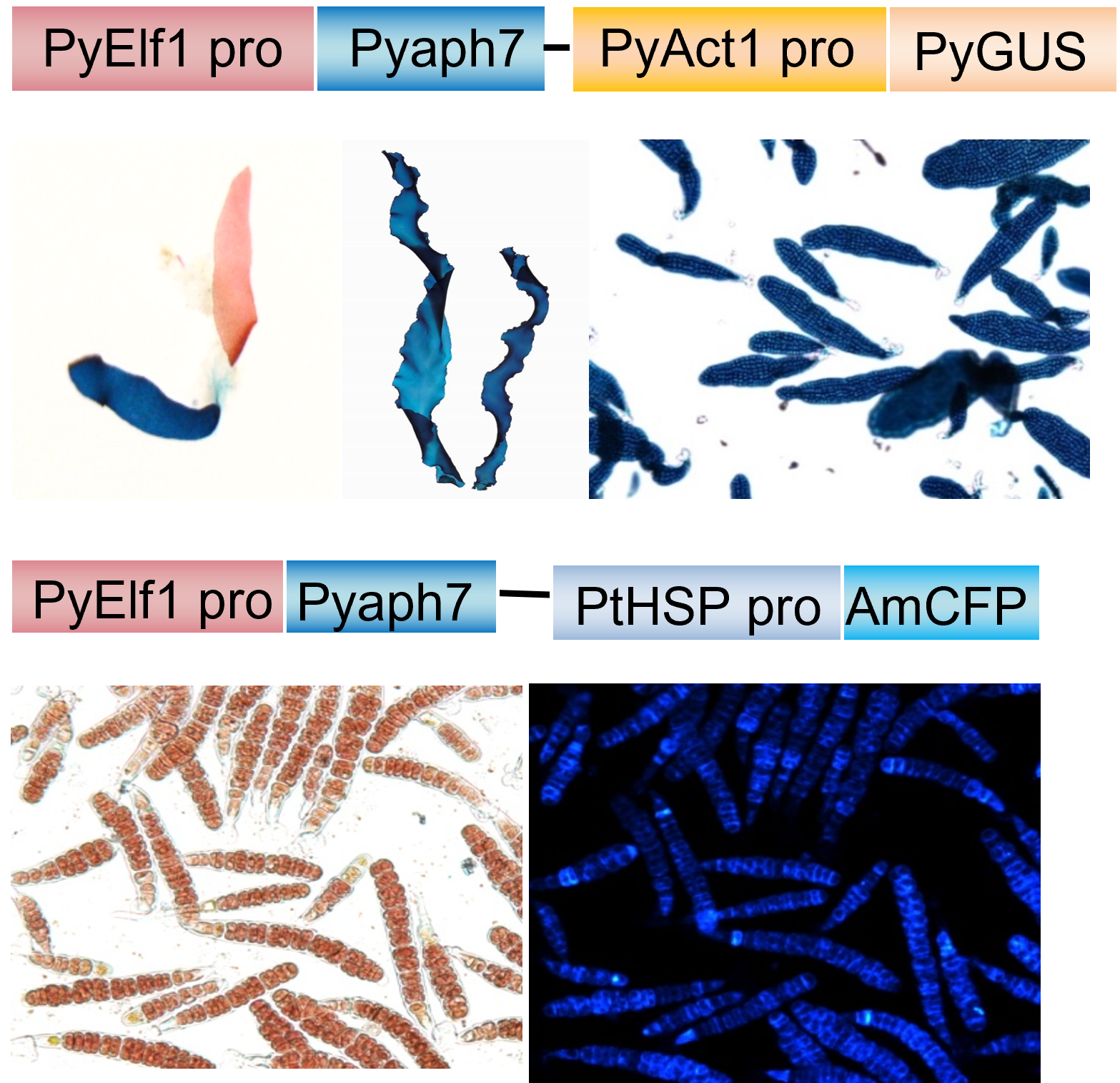
      スサビノリ細胞に導入した遺伝子コンストラクト


      Description of the introduced gene constructs


      PyElf1 pro:
      A promoter of the Elongation factor 1 gene from Neopyropia yezoensis

      Pyaph7:
      Codon modified hygromycin resistance gene

      PyAct1 pro:
      A promoter of the actin gene from Neopyropia yezoensis

      PyGUS:
      Codon-modified GUS (β-glucuronidase) gene

      PtHSP pro:
      A promoter of the HSP gene from Neopyropia tenera

      AmCFP:
      Cyan fluorescent protein from sea anemones

    • Currently, by applying the gene transfer technology that we have developed, we are developing technology to massively express or suppress useful genes.
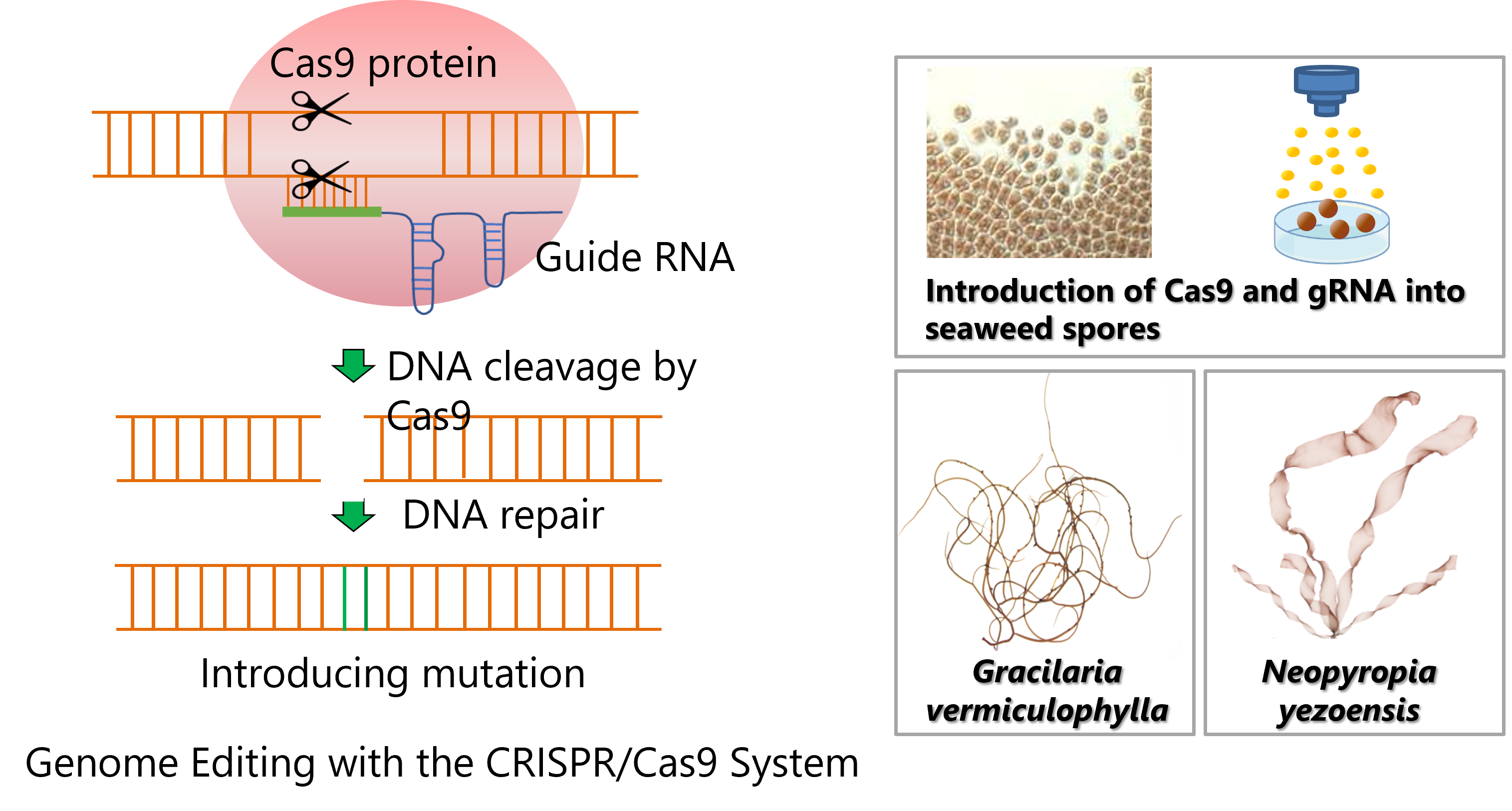
         We are also working on the development of genome editing technology, which has recently become a hot topic due to the Nobel Prize in Chemistry, and which makes it possible to easily modify target genes.
      Our goal is to establish genome editing technology that enables rapid breeding of seaweed strains and to create seaweed strains with high growth potential and high functionality for a variety of uses.


    • Genome editing with the CRISPR/Cas9 systemGenome editing with the CRISPR/Cas9 system