
Marine plastics and their effects on seabirds
セクションアウトライン
-
-
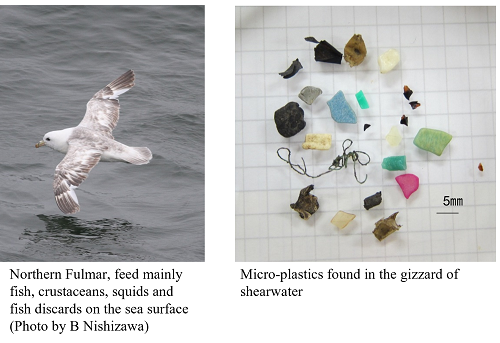
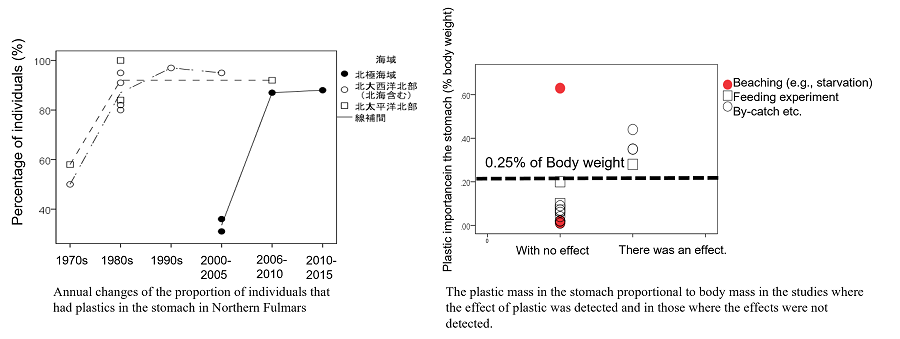
About 400 million tons of plastic are produced each year and nearly 10 million tons are discharged into the ocean. The incidence of plastics in the stomach of seabirds has increased year by year since it was reported in the 1960s. The incidence in the Northern Fulmar increased between the 1970s and the 2000s in the North Atlantic and between the early 2000 and 2008 in the Arctic. Most individuals of this species now have plastics in their stomachs. The effect of plastics ingested by seabirds is not well understood. A review of previous studies on the effects of plastic indicates that the effects are likely if the mass of ingested plastic is 0.25% or more of body weight. We are conducting a plastic feeding experiment using seabird chicks in a semi-natural condition.
-
-