

Iodine-129
섹션 개요
-
-
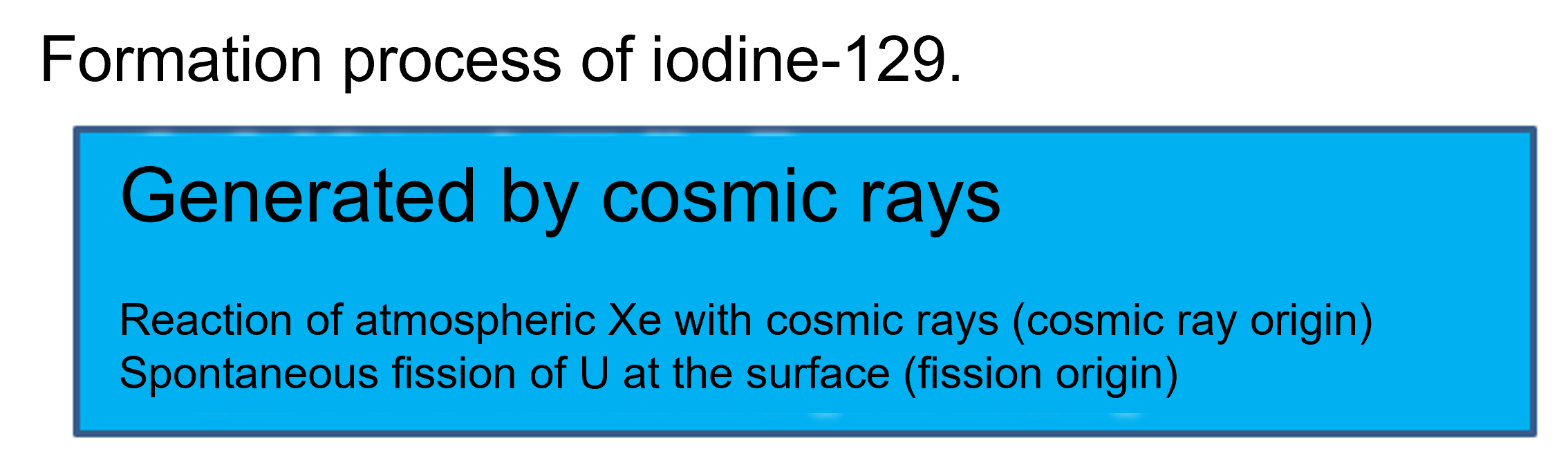
Iodine-129 (129I) is produced when xenon in the atmosphere reacts with cosmic rays. It can also be produced in the earth's crust during the spontaneous fission of natural uranium. It has a half-life of 15.7 million years, which is longer than that of other radioactive iodine, but its low abundance makes it very difficult to measure.
The Fukushima Daiichi Nuclear Power Plant accident released a significant amount of iodine-131, a nuclide with a half-life of 8 days, which is currently undetectable, but attempts are being made to reproduce this behavior using iodine-129 (129I), which also originated from the accident.
-