A research group led by associate professor
YAMAGUCHI Atsushi and assistant professor MATSUNO Kohei of the Faculty of
Fisheries Sciences, Hokkaido University, and assistant professor IIDA Takahiro of
the Training Ship Ushio-Maru attached to the Faculty of Fisheries Sciences, has
successfully analyzed the community structure of harmful red tide algae in the
Pacific coast of Hokkaido in the autumn season of 2021. Surface water samples
were taken at 32 points along the Pacific coast of Hokkaido last October by the
Ushio-Maru, and phytoplankton communities were observed. The communities were
divided into four groups, and the cell count density of the community dominated
by the red tide-causing algae Karenia selliformis was higher. A
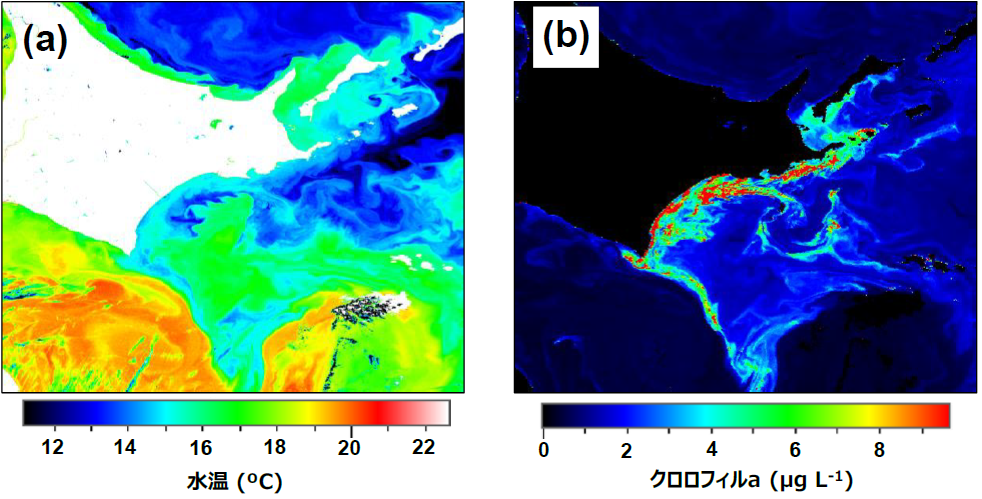
significant positive relationship was observed between chlorophyll a, an
indicator of phytoplankton abundance, and cell number density of K. selliformis.
Analysis of the relationship between environmental factors and cell number
density of K. selliformis showed a significant positive relationship
with nutrient phosphate concentration.
Red tides have been reported along the
Pacific coast of Hokkaido in the fall of 1972, 1983, 1985, and 1986. The common
factor in the occurrence of red tides in each year was the depletion of
nutrients in the surface layer under conditions where the water temperature was
1-3°C higher than usual and a thermocline*1 had developed.
Phytoplankton needs both nutrients and light for photosynthesis to proliferate,
but under these conditions, it is difficult for phytoplankton such as diatoms,
which do not have the ability to move, to proliferate because of the lack of
nutrients in the light-rich surface layer.
On the other hand, because K. selliformis
has the ability to move by flagellum, it is able to dominate by moving to the
lower layers at night to replenish nutrients and then proliferate by
photosynthesis in the surface layer during the daytime. The subsequent collapse
of the density dynamic layer was thought to have resulted in the supply of
nutrients from the lower layers, causing a large-scale harmful red tide. This
study points out the importance of early detection by satellite and control
measures while K. selliformis is still at low density in order to reduce
the damage caused by red tides.
The results of this research were published
in the May 25, 2022, issue of Bulletin of the Japanese Society of Fisheries
Oceanography.