

Characteristics of the North Pacific Subarctic Region
セクションアウトライン
-
-
The subarctic North Pacific is an area with a counterclockwise circulation called the North Pacific subarctic gyre (Figure 1). While this region is rich in nutrients such as nitrate and phosphate, phytoplankton production is known to be limited due to low iron concentrations. In coastal areas, iron can be supplied by inflows from rivers, but in the open ocean, iron is in short supply, and the oceanic mesoscale eddies*1 is considered to contribute significantly to iron supply. In the Alaska Current in the subarctic North Pacific, it is known that oceanic mesoscale eddies formed in coastal areas transport iron and phytoplankton from coastal areas to the open ocean (Crawford 2002; Mackas and Galbraith 2002; Johnson et al. 2005). In the western subarctic North Pacific, however, the impact of the oceanic mesoscale eddies on material circulation and biological production has not been clarified.
This course will present studies that have investigated the impact of oceanic mesoscale eddies on biological production in the open ocean region of the western subarctic North Pacific.
*1 The oceanic mesoscale eddies are explained in detail in another course: "The Oceanic Mesoscale Eddies: High and Low Pressures in the Ocean".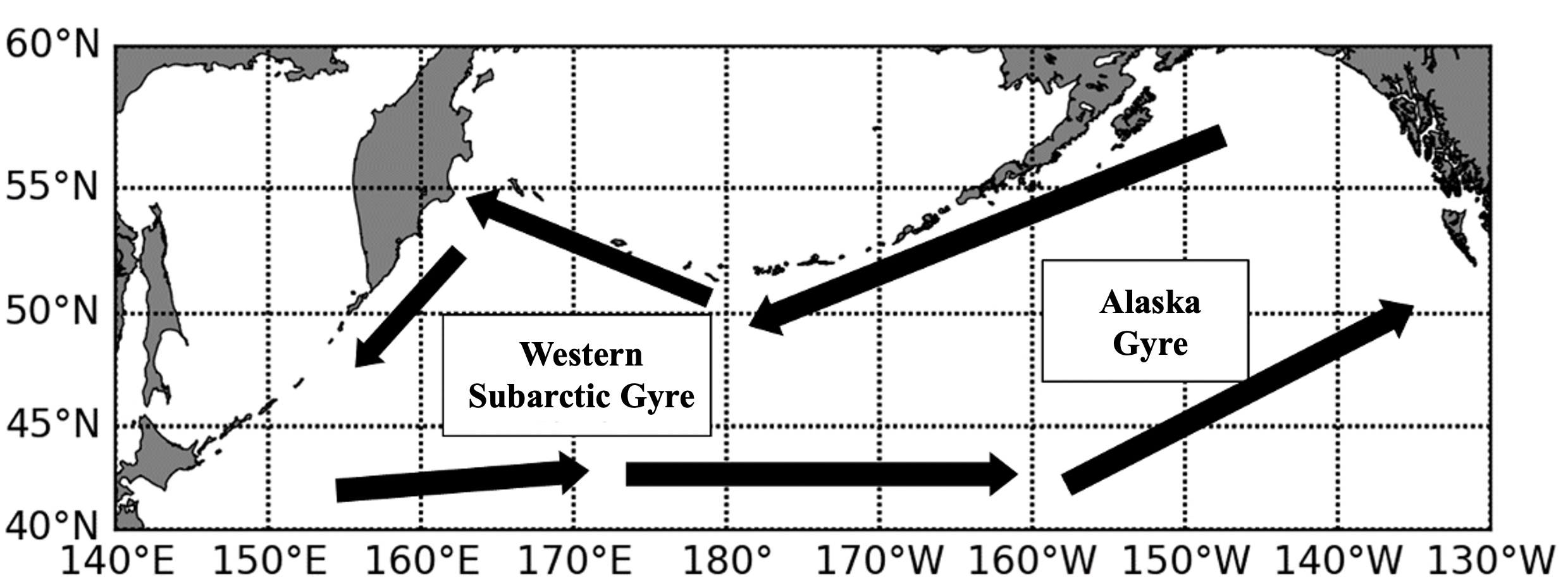
Figure 1: Circulation in the North Pacific subarctic region ("Alaska Gyre" should be "Alaskan Gyre".)
-