

Sulfate respiration (sulfate reduction)
セクションアウトライン
-
-
Oxygen and even nitric acid are gone, and without oxidized minerals such as manganese oxide and iron hydroxide, organisms that use sulfuric acid as an oxidant will dominate. The reaction equation for sulfate respiration is written as follows.
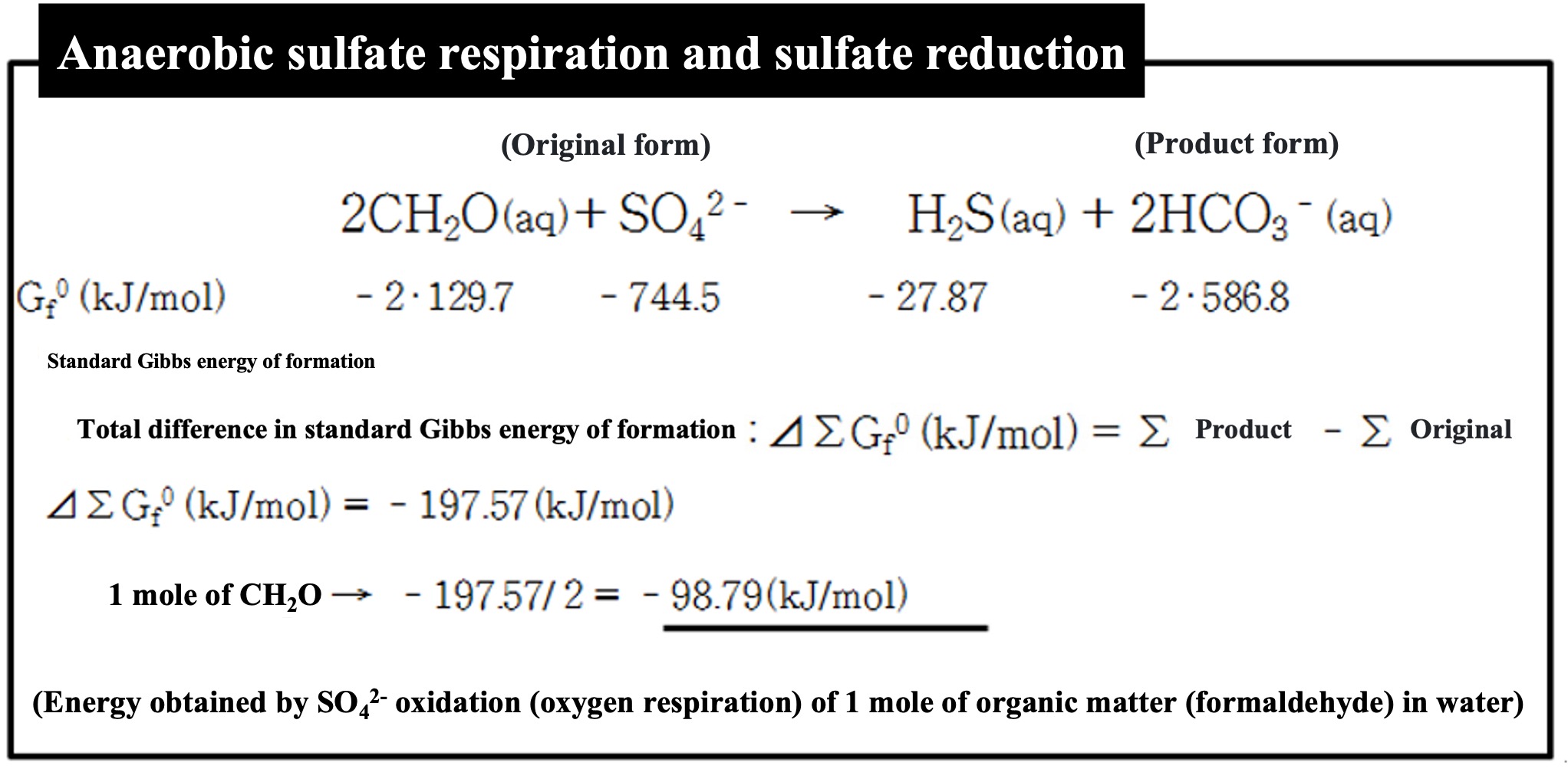
When sulfate reduction occurs, hydrogen sulfide (H2S) is produced as a reaction product. Hydrogen sulfide is what smells like ditch river (often described as the smell of rotten eggs). Sulfuric acid reduction occurs in places where large amounts of organic matter accumulate for long periods of time. However, it must be without sulfate ions, which are the source of the sulfuric acid.
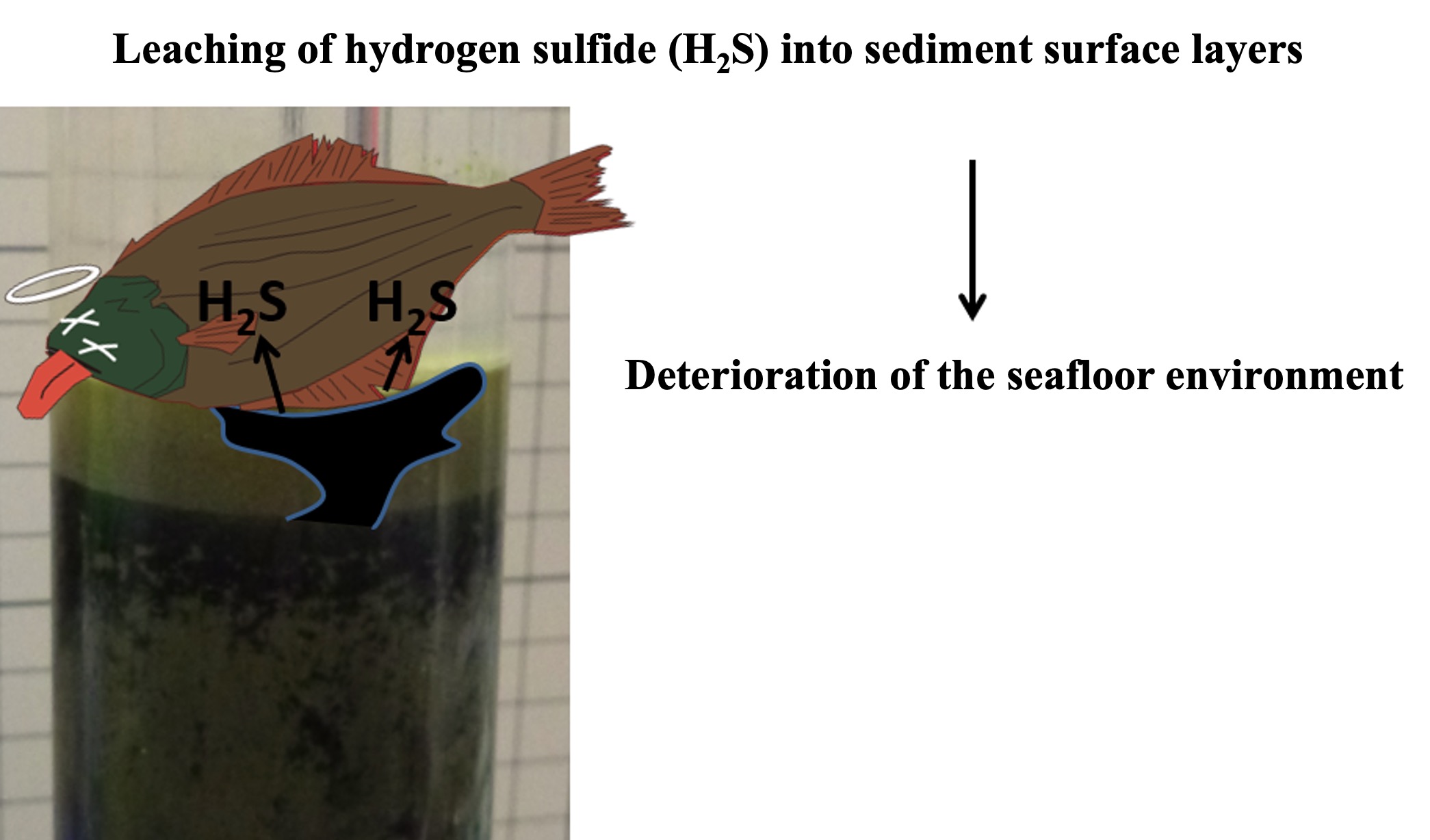
A natural environment with lots of organic matter and an abundance of sulfate ions is marine sediments. When marine sediments are sampled (because seawater is rich in dissolved sulfuric acid), you can sometimes smell hydrogen sulfide. If sulfuric acid reduction occurs in marine sediments and there is zero oxygen in the bottom water, hydrogen sulfide leaches out of the sediments and accumulates in the bottom water. Because hydrogen sulfide is highly poisonous, it can cause extreme degradation of the bottom layer environment. -
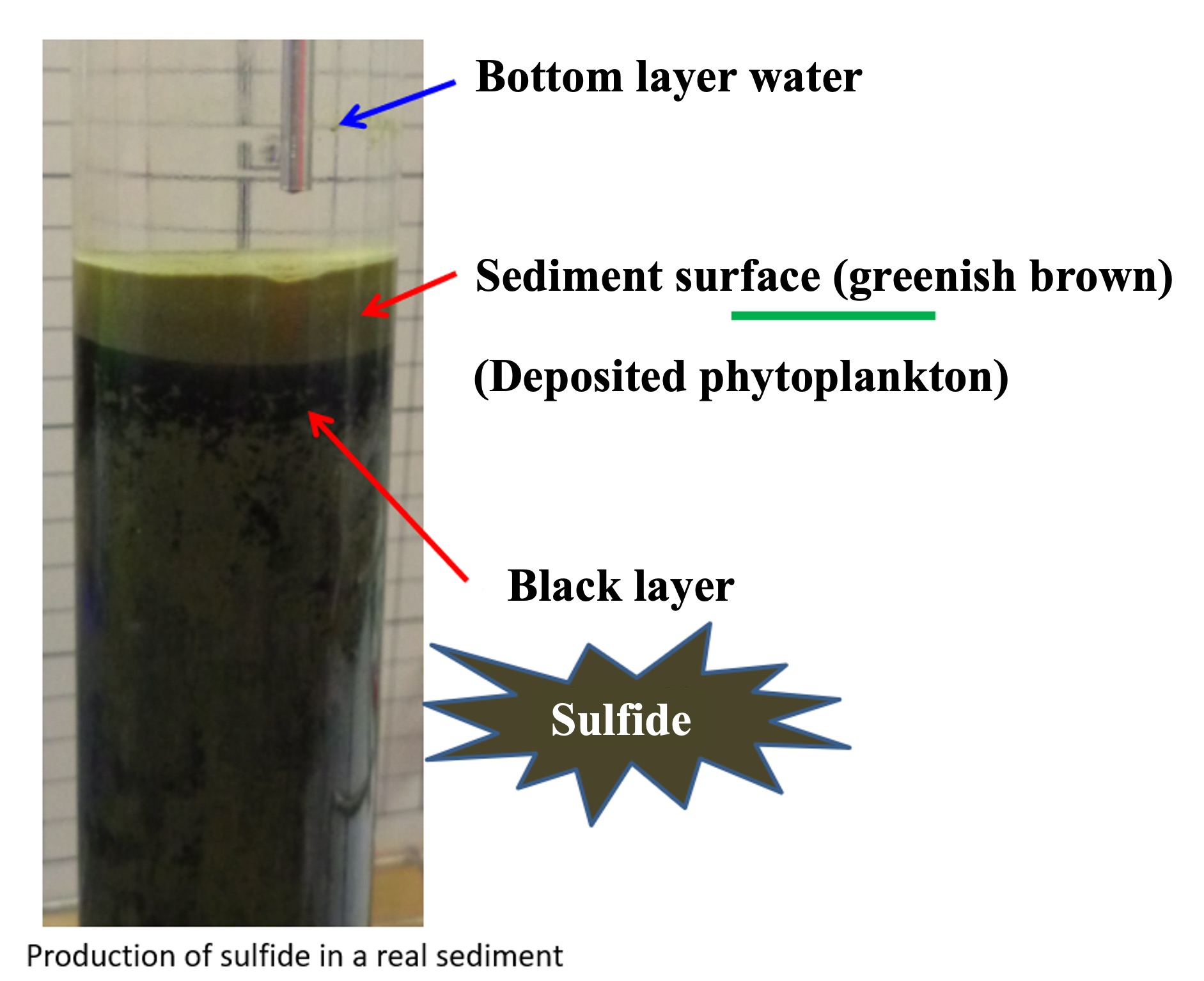
The photograph below shows a core (cylindrical) sample of marine sediment from 300 m off the coast of Hokkaido, Japan, sealed in a glass tube for storage. The surface layer of the sediment, about 1 cm thick, is greenish brown in color. This is due to the abundance of phytoplankton-derived organic particles produced in the surface layer. A black layer can be seen directly below this layer. When this black sediment was collected and hydrochloric acid was added, bubbles were generated. When this gas was passed through a lead chloride (PbCl2) hydrogen sulfide detector tube, high concentrations of hydrogen sulfide were observed.
Why is it that the black sedimentary layer, which generates hydrogen sulfide, does not reach the surface? Bottom seawater contains oxygen, which is supplied to the sediment surface. In the sediment surface layer, respiring oxygen microorganisms decompose fresh organic particles by respiration. This oxygenated sediment surface layer blocks the leaching of hydrogen sulfide from below. This is because hydrogen sulfide is relatively quickly oxidized back to sulfate ions when it encounters oxygen. (This sulfide oxidation is also believed to proceed quickly by bacterial action.)
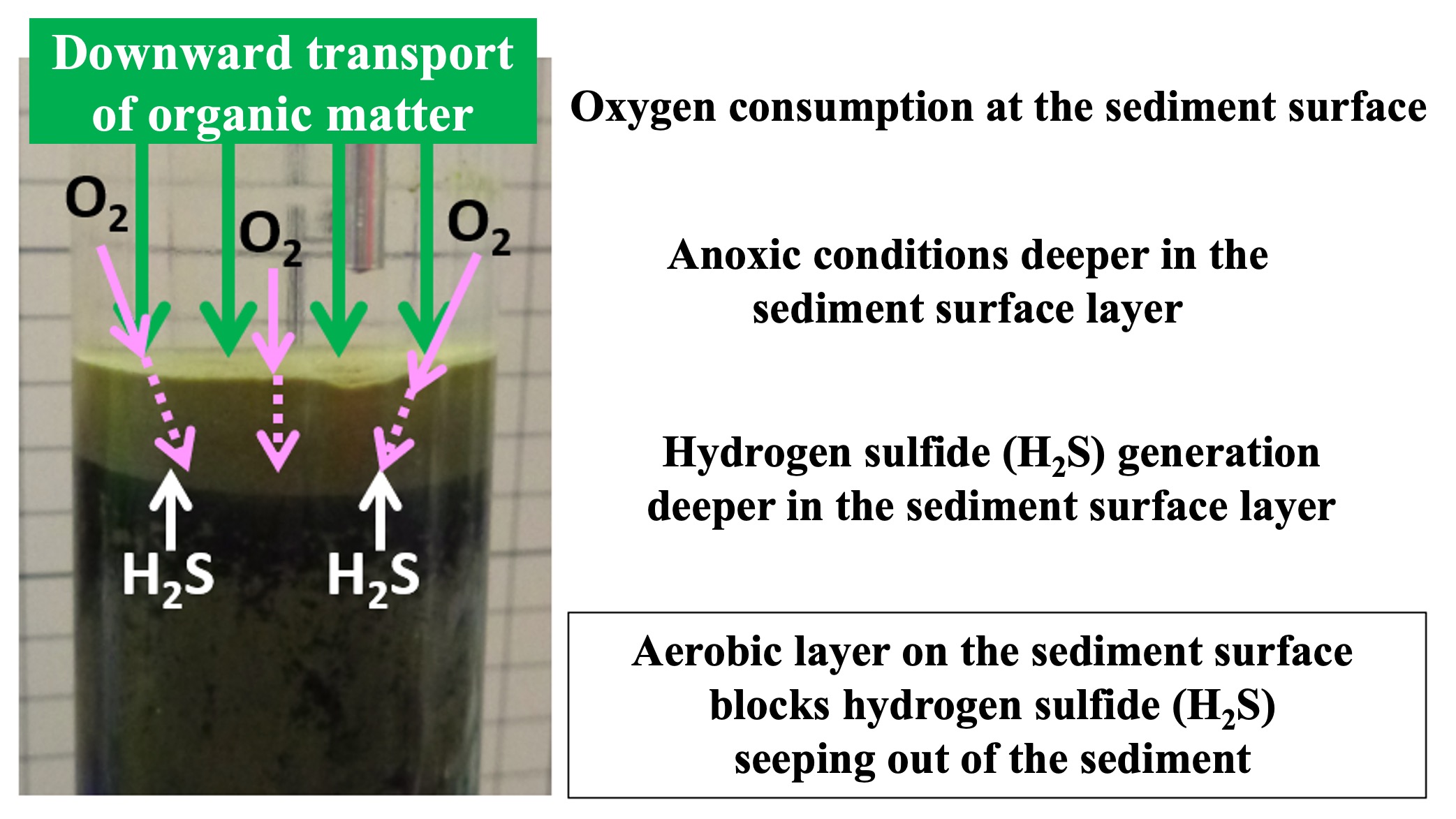
Since the Hokkaido coast faces the open ocean, the bottom seawater is supplied with oxygen on a steady basis, so hydrogen sulfide does not leach to the sediment surface. In inland bays such as Tokyo Bay, where the supply of organic particles is significant, hydrogen sulfide may leach to the sediment surface.
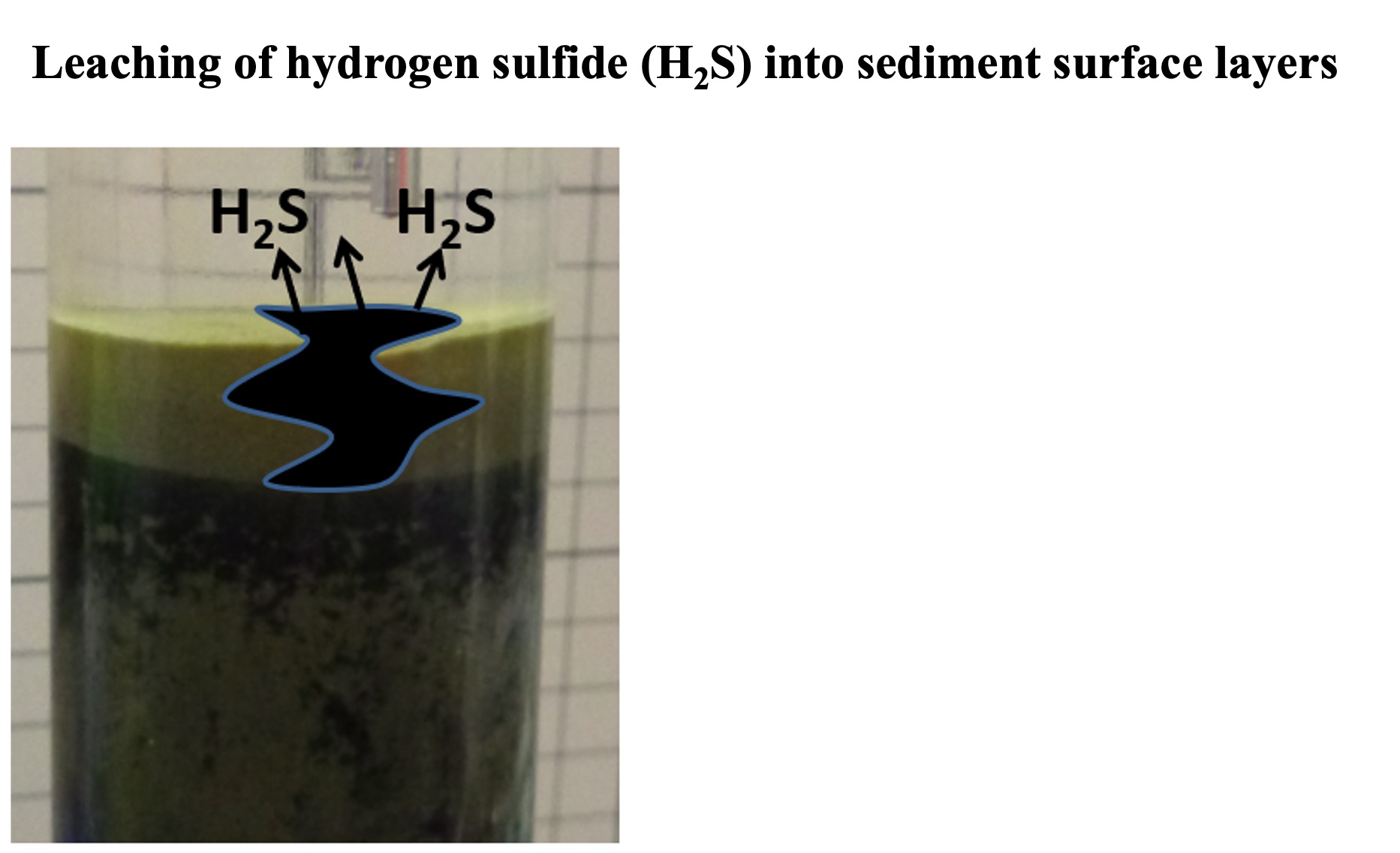
Hydrogen sulfide is highly toxic to many organisms, so exudation of hydrogen sulfide onto sediment surfaces and into bottom waters can be very damaging to ecosystems.
-
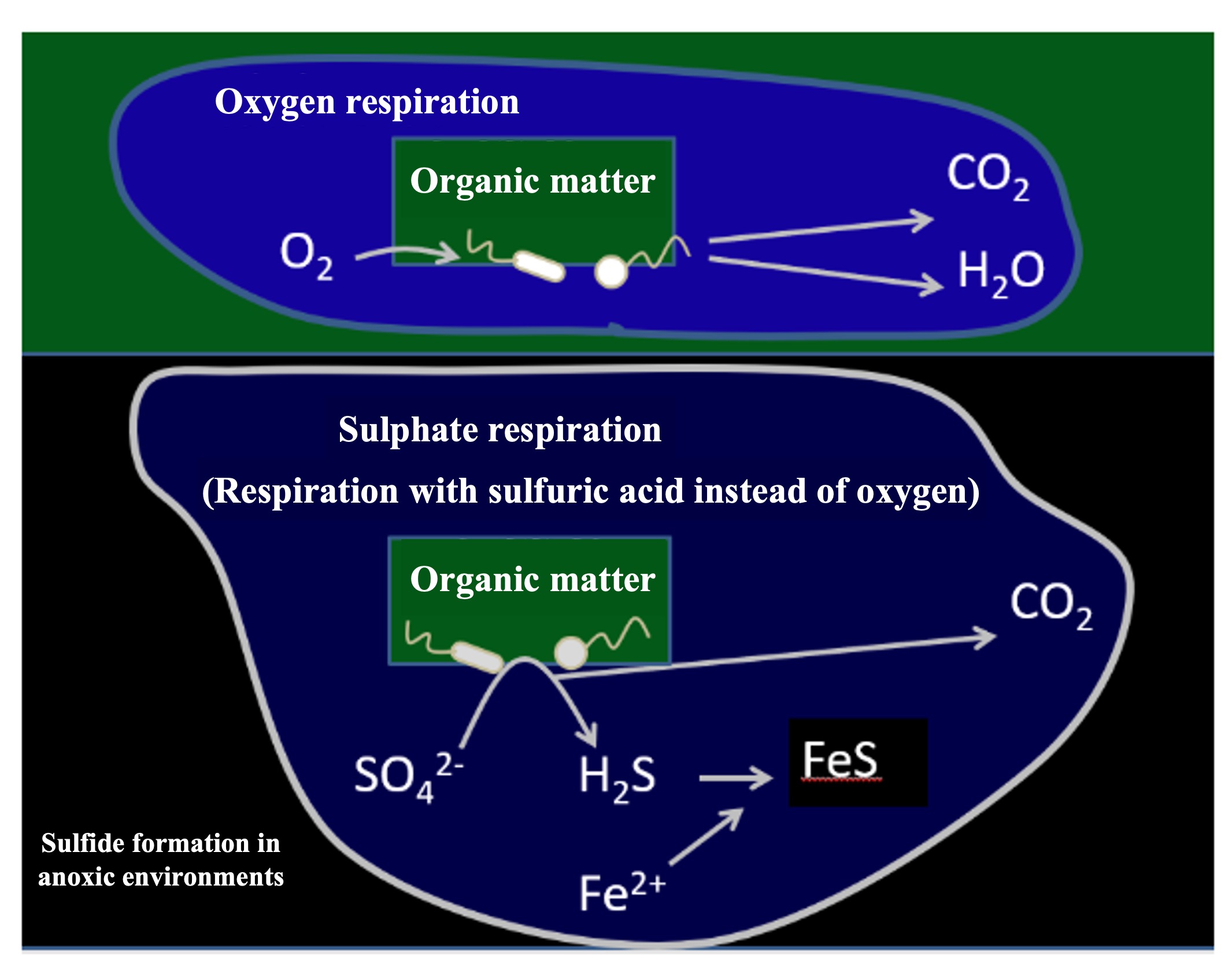
Again, the picture shows how oxygen respiration occurs at the sediment surface and sulfate respiration just below it. In the previous course, we explained that the order of respiration forms by organisms is oxygen, nitric acid, manganese oxide, iron hydroxide, and sulfuric acid. Before sulfuric acid respiration occurs, iron hydroxide is used as an oxidant. The reducing half-reaction of iron is described below.
Fe(OH)3 → Fe2+ + 3OH-
In other words, where sulfate respiration occurs, divalent iron ions (Fe2+) are abundant in the surroundings. Hydrogen sulfide (H2S) reacts with metal ions to produce black sulfides.
H2S + Fe2+ → FeS + 2H+
I referred to the black-colored areas in the sediments as "hydrogen sulfide generated layers" because iron sulfide (FeS), which is formed by the reaction of hydrogen sulfide and iron ions, is black.
-