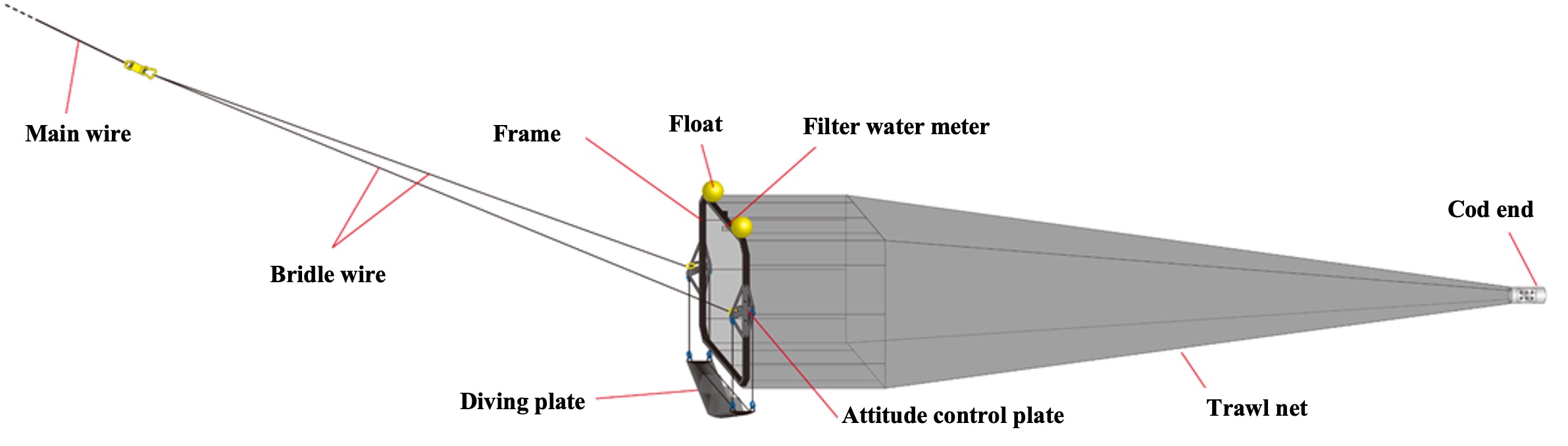
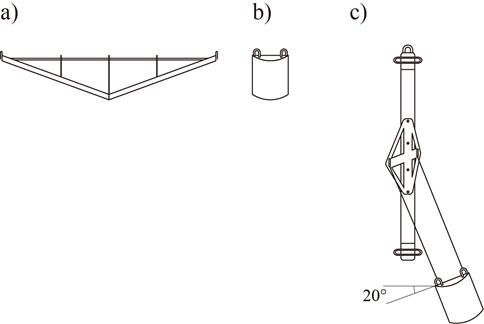
A configuration diagram of the MOHT is shown in Figure 2. A black trawl net is fixed to a square metal frame. The trawl net is made of high-strength synthetic fiber netting to withstand high speeds (up to 4 knots ≈ 2 m s-1). Four wire ropes of equal length, two each from the attitude control plates attached to the left and right sides of the frame, are suspended from which the diving plate is suspended. A pressure-resistant float is attached to the top of the frame to provide buoyancy and reduce the effect of its own weight on the depth of the net. Bridle wires are connected to the left and right sides of the frame, and the net is towed by pulling the ends of the bridle wires with the wire rope (main wire) of the hoisting machine. A detachable bucket is attached to the end of the net (cod-end) where the collected samples accumulate. To determine the amount of seawater that has passed through the net opening, a filter water meter is attached to the inside of the frame.