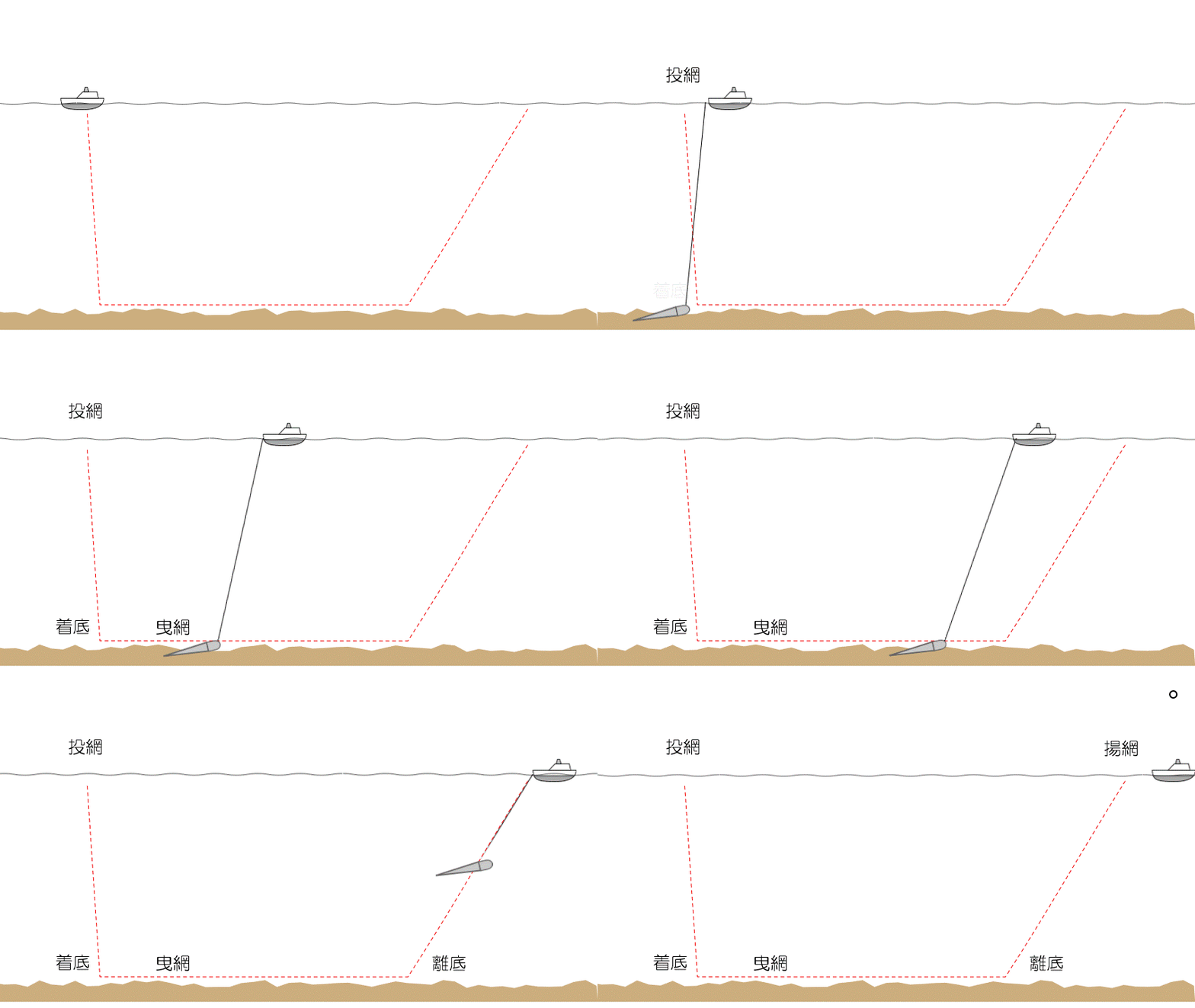
Figure 4 illustrates the flow of the
collection process using a sledge net. The sledge net is placed in the sea, and
the main wire of the winch is unrolled and sunk into the sea (casting). When
the net reaches the seafloor (landing), the vessel tows the net over the
seafloor surface (towing). The length of wire required to reach the bottom is
predicted in advance based on the water depth in the research area, and the
final determination of landing is based on the change in tension applied to the
main wire.
When the net reaches the bottom, the
tension on the main wire decreases, and the tension increases or decreases in
small increments due to drag resistance on the seafloor surface. If the main
wire is stopped immediately after landing the bottom, the net may float up, so
it should be stopped when it has been extended for a certain length longer than
the length of the wire at the time of reaching the bottom or continued to be
extended at a slower speed after reaching the bottom. The tension is carefully
monitored throughout the tow to respond immediately in the event of a large
load, such as being caught on an obstacle or a large amount of material being
caught in the net.
After towing a desired distance or after elapsed
a desired amount of time, the main wire begins to wind up. Until the net leaves
the seafloor (leaving), it is wound up at a slow speed while continuing to
monitor changes in tension. When the net leaves the seabed, the hoisting speed
is increased and the net is retrieved on board (hauling). Once the sledge net
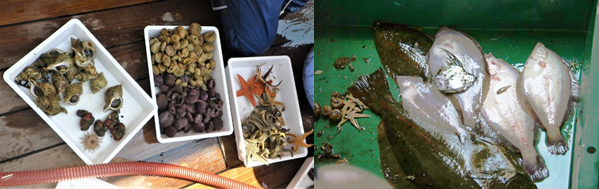
is recovered on board, the cod-end is opened and the material is removed from
the net.