Study and Training of Marine Research Diving
Section outline
-
Understanding the details of aquatic fields, such as undersea, based on real-world experience is important for a more practical study of fisheries science. For example, direct observation of aquatic organisms and the physical environment of their habitats is an effective means of gaining a deeper and broader understanding of fisheries science. However, unlike other land-based learning activities, diving requires the acquisition of knowledge and skills to master diving techniques and ensure safety. This course aims to experience, learn, and improve elementary diving techniques and to master safety management methods in the aquatic environment. In this training, students can attend lectures to obtain a diver's license, and as an option, those who wish can take additional training (at their own expense) to obtain a diving license (C-card) from NAUI (National Association of Underwater Instructors). Practical training will be conducted in the Faculty of Fisheries pool (3m depth) and on the beach (when C-card is obtained).
-
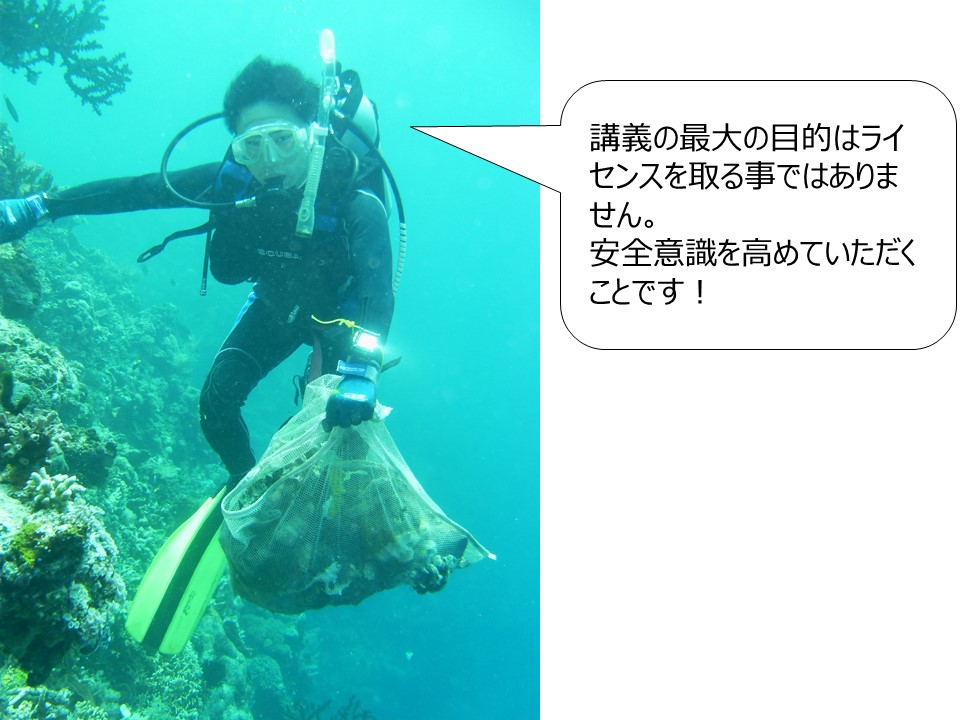
The main goal of the lecture is not to obtain a license. It is to raise safety awareness!
-
-
Guidance is given in late April of each academic year. At that time, a survey of course preferences will be conducted, taking into consideration schedules, necessary expenses, health status, and other factors. If the course is oversubscribed, the reasons for taking the course will be surveyed during the second lecture the following week, and the final decision will be made (for the past several years, the number of applicants has been within the maximum number).
-
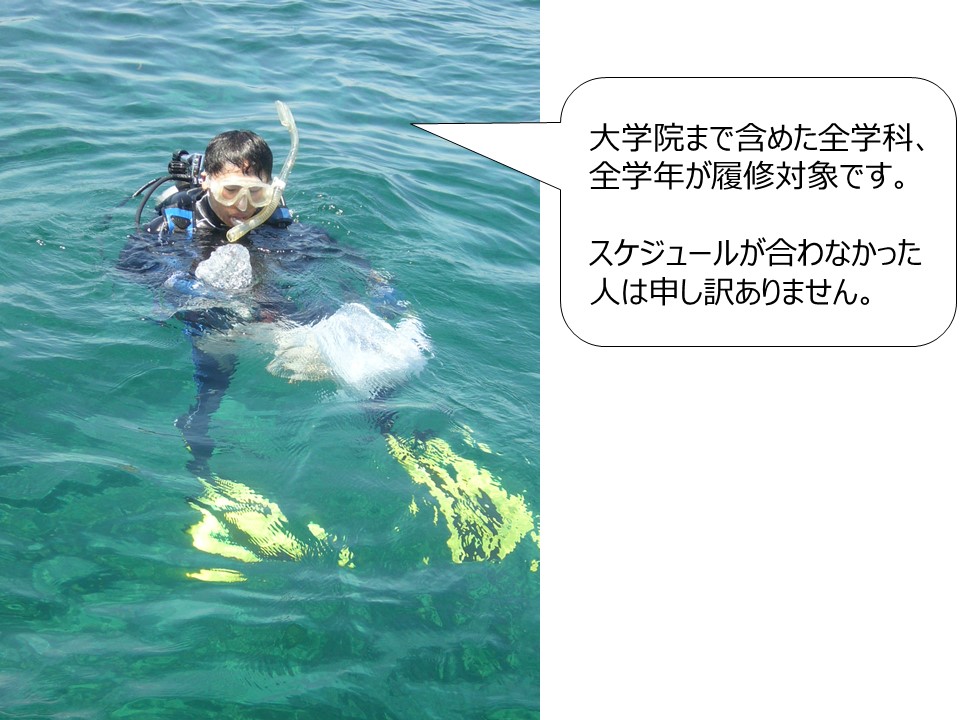
All departments and all grades, including graduate school, are eligible to take the course. Sorry for those who could not make the schedule.
-
-
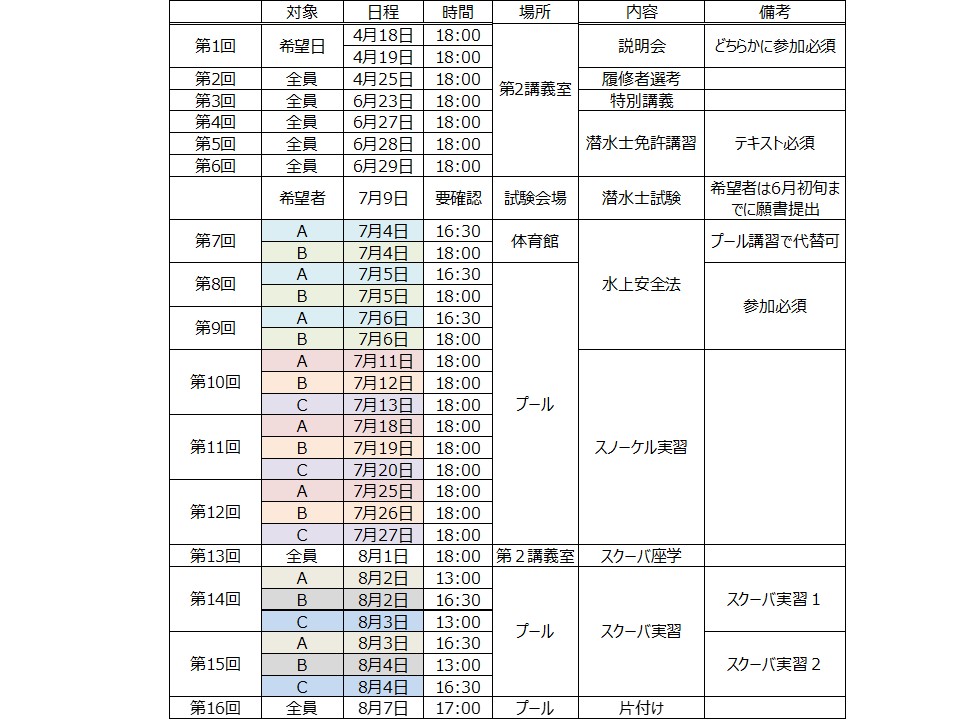
In principle, students are required to attend all lectures for safety reasons and because this course is a practical training course. On the other hand, it is difficult to coordinate everyone's schedule since the courses are offered to all departments and majors. In addition, absences due to illness or other reasons are expected. Therefore, a certain amount of supplemental courses are planned. Below is the proposed schedule for FY2023.
-
-
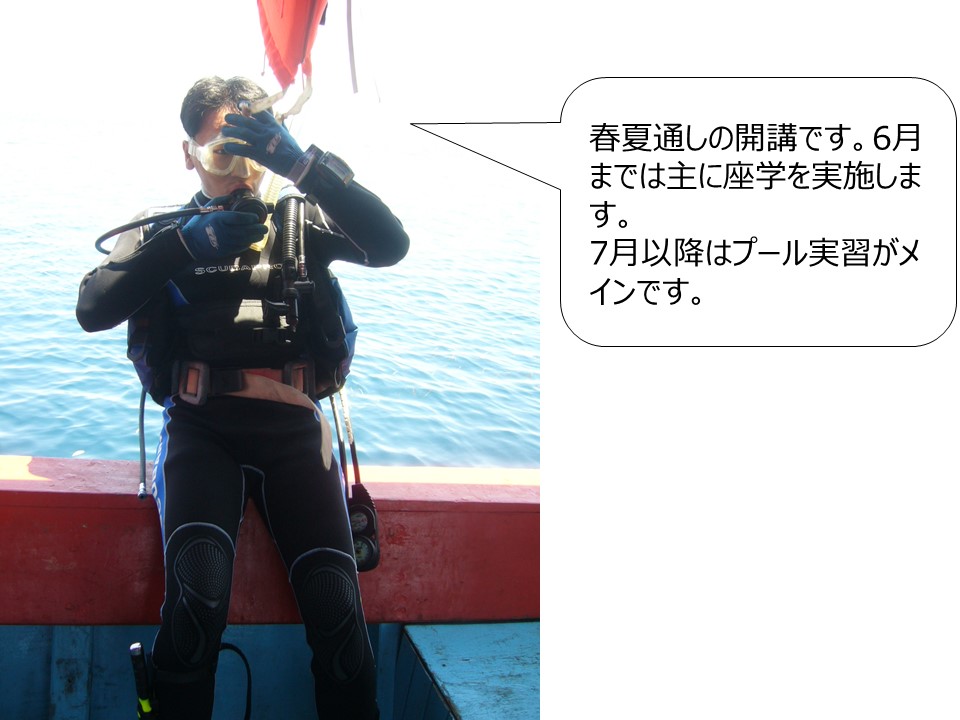
The course is offered throughout the spring and summer, with classroom lectures until June and practical training in the pool from July onwards.
-
-
Lecture content and schedule will be explained, and participants will be selected.
-
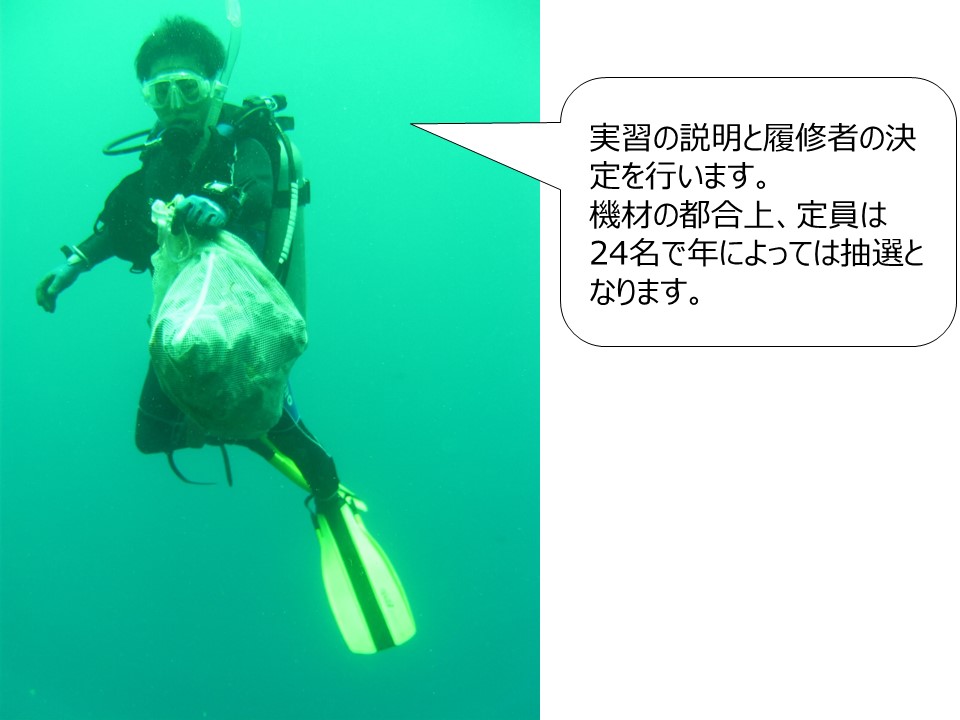
The practical training will be explained and the course enrollment will be determined. Due to equipment availability, the maximum number of participants is 24 and will be drawn by lot depending on the year.
-
-
Group discussion on safety assurance based on diving accident cases.
Dr. Tetsu of Tokai University, a specialist in underwater archaeology, will give a special lecture on case studies of activities using diving.-
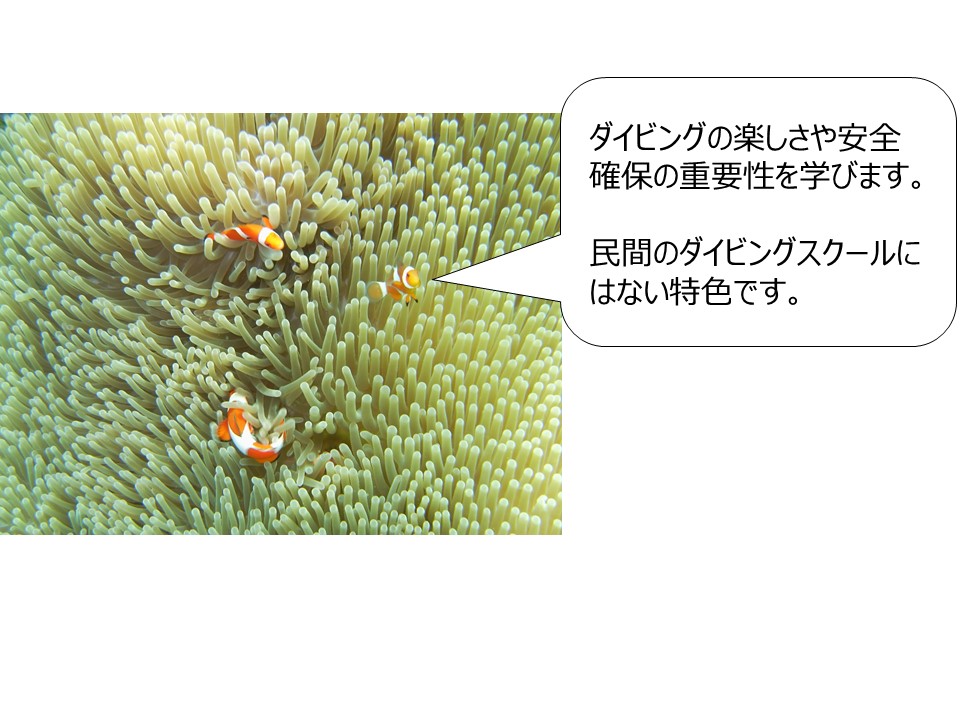
Students learn the joy of diving and the importance of ensuring safe delivery. This is a feature not found in private diving schools.
-
-
Lecturer Octopus Maruo, a diving instructor, will conduct a training course for the diving instructor examination, which is usually held in Hakodate in mid-July.
-
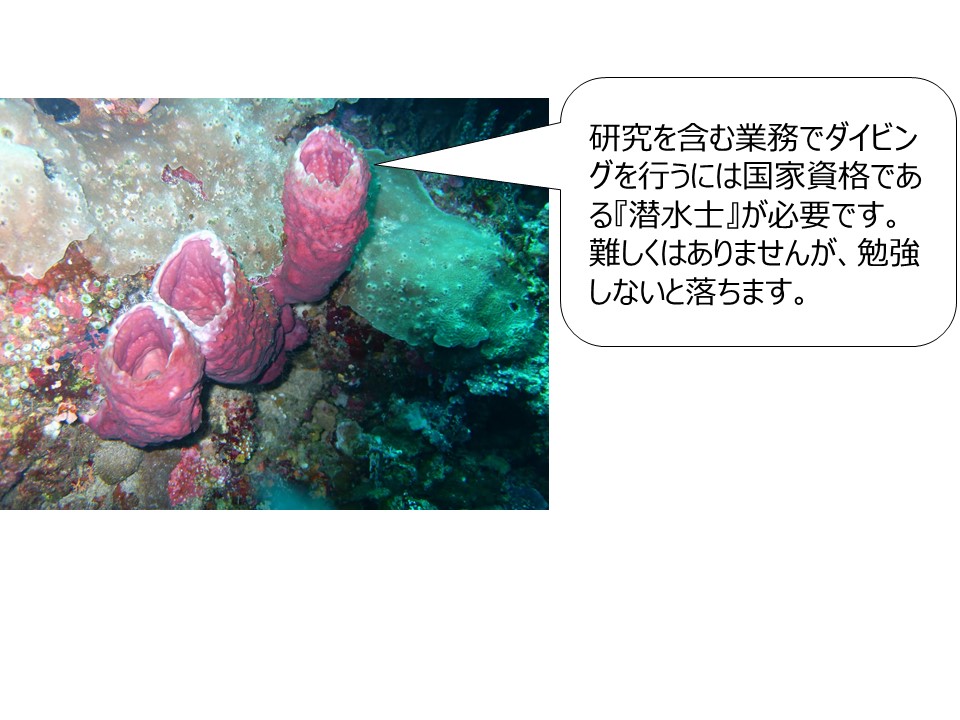
Diving for work, including research, requires a national certification as a diver. It is not difficult, but you will fail if you do not study.
-
-
Water Safety Laws will be taught by a Japanese Red Cross instructor in the gymnasium and swimming pool.
-
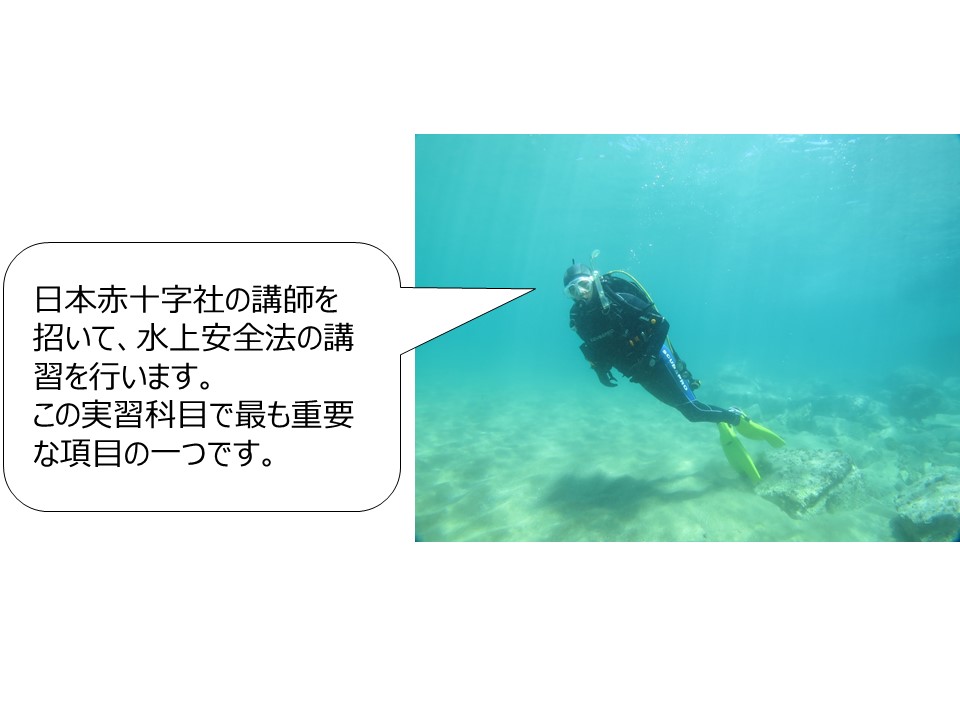
A lecturer from the Japanese Red Cross Society will be invited to give a course on water safety law. This is one of the most important items in this practical training course.
-
-
プールで基本的な遊泳およびスノーケリング実習を行う。
-
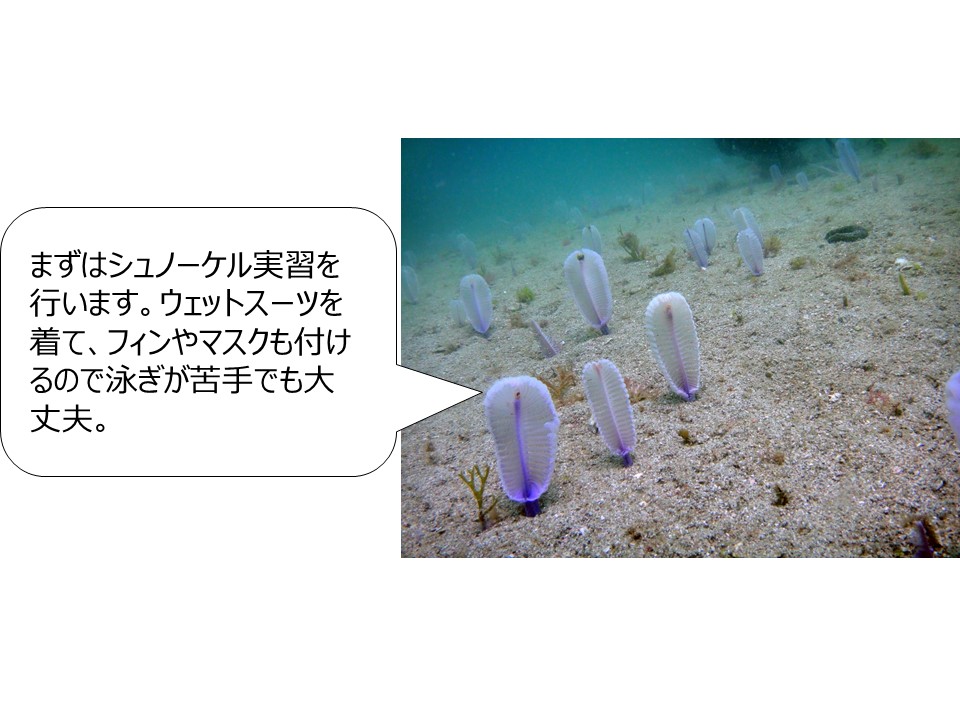
First, snorkeling practice will be conducted. Wetsuits, fins, and masks will be provided, so even if you are not a good swimmer, you will be fine.
-
-
This course is a lecture on activities using diving equipment, and is considered as a course for obtaining the C-card.
-
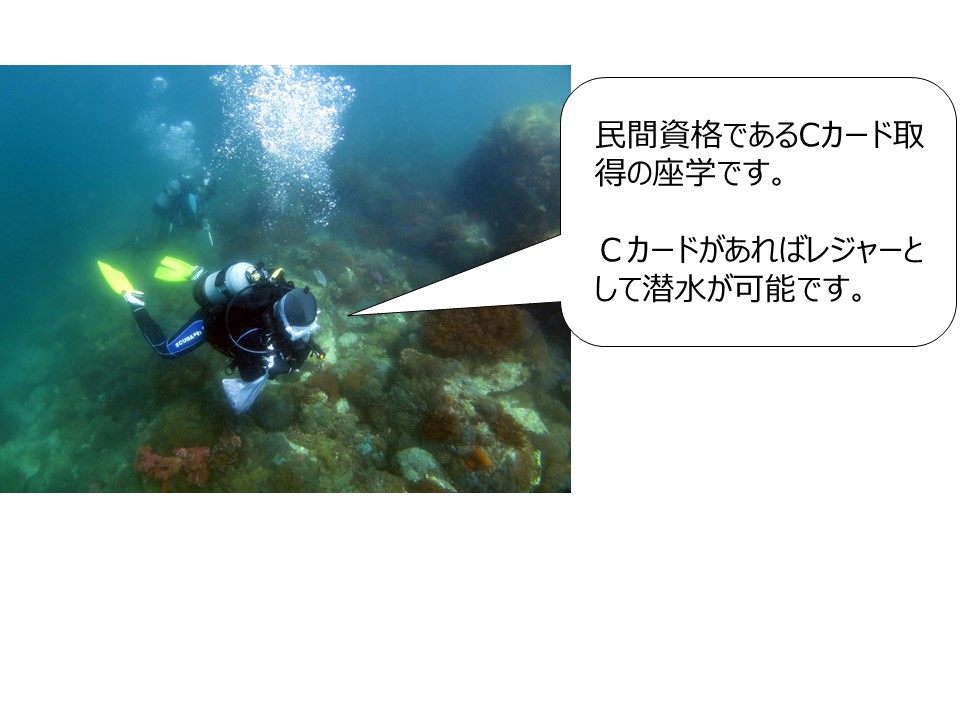
This is a classroom course for obtaining a C-Card, a private certification; with a C-Card, you can dive as a leisure activity.
-
-
Practical training in the pool under the guidance of an instructor on diving activities using equipment.
-
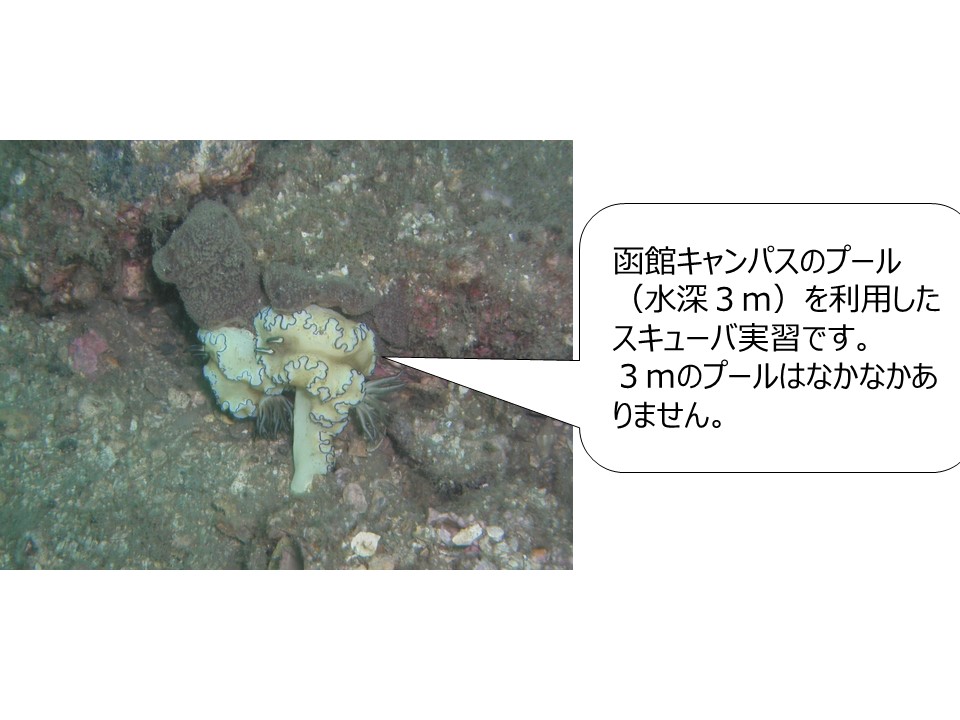
This is a scuba training using the Hakodate campus pool (3m depth). 3m pool is not so easy to find.
-
-
The students will go to the southern coast of Hokkaido for ocean training. The rest of the course is an extra-curricular activity, and an additional fee will be charged. However, since the training up to the pool training is included in the training, you can obtain a license at a lower price than you would pay elsewhere.
-
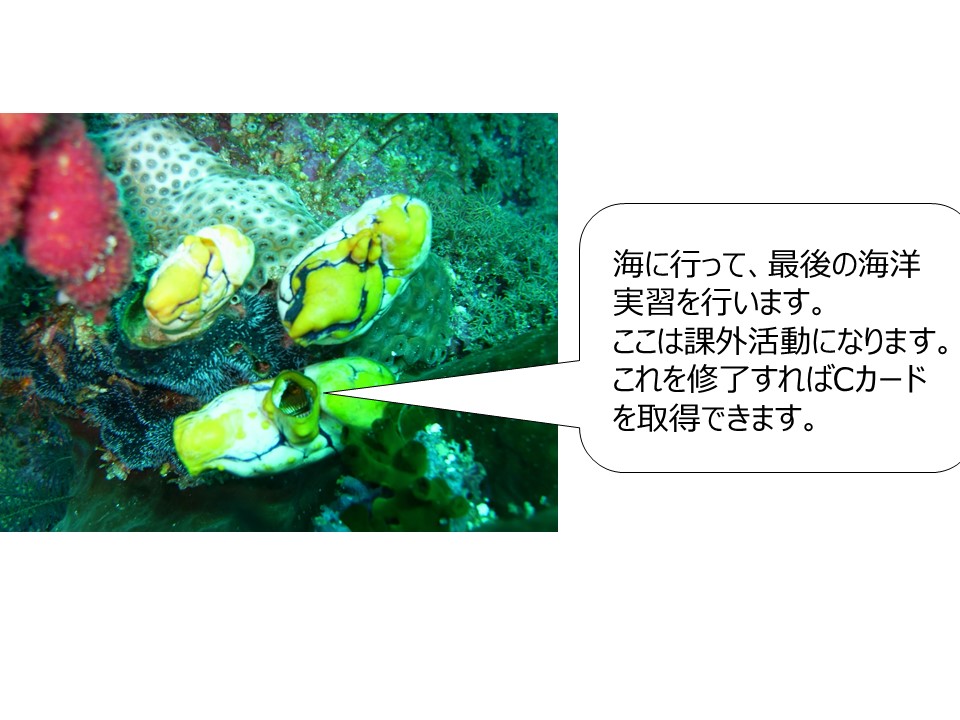
We will go to the sea for the final ocean training. This will be an extracurricular activity. Upon completion of this, you will receive your C-card.
-