

Industrial and Applied Physics (undergraduate specialty) class introduction course
Section outline
-
-
In this part, TAKAGI will explain the basics of fluid mechanics, mainly on the following topics.
- Preparation for studying applied physics(derivation, Taylor expansion, vector analysis, Newton's laws of motion, etc.)
- Basics of fluid mechanics(mass conservation law, momentum conservation law, energy conservation law)
The lecture will cover basic topics so that even beginners can easily understand. Handouts will be distributed in each class and a quiz will be given at the end of the class.Please refer to the following list of some of the texts distributed last year.Continuity equation (equation of continuity)In the case of non-steady flowConsider the quantity flowing into and out of a micro rectangular body with a component parallel to the x-axis.
Above is an excerpt from a printout explaining the continuity equations for fluids.............
-
-
-
In UENO's class, the following three main goals will be achieved.
- Formulate the equations of motion for the dynamics of a mass system based on the Newton's laws of motion
- Solve related application problems by using ordinary differential equation solving methods
- Undersatnd the dynamics of continua by learning the fundamentals of incompressible steady-state fluids
The subject matter to be covered will be simple and aimed to be easily understood by beginners in physics and mathematics. Textbooks will be distributed at each class. The following are excerpts from the textbooks on solving ordinary differential equation and fundamentals of incompressible steady state fluids.
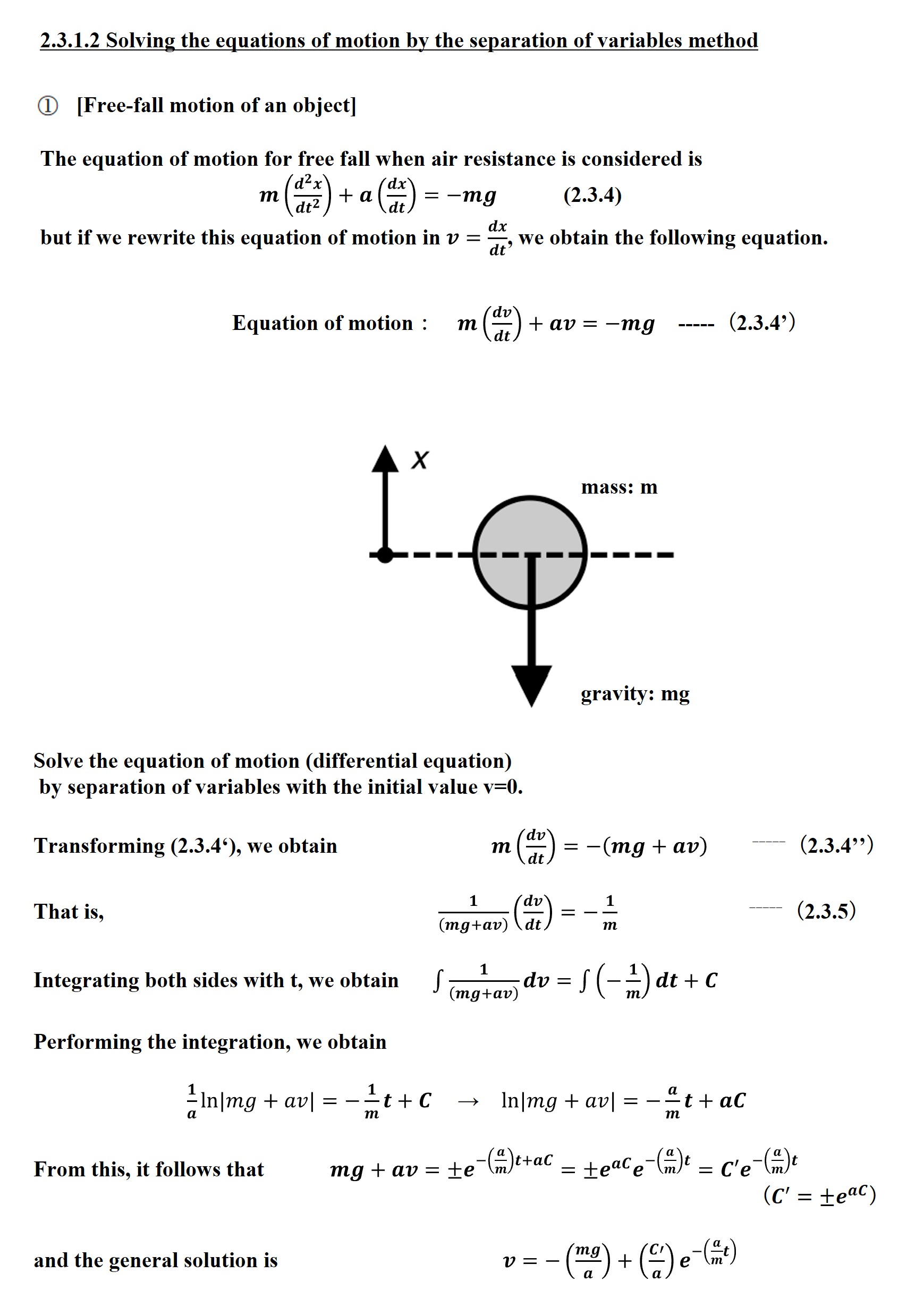
Example text on solving ordinary differential equation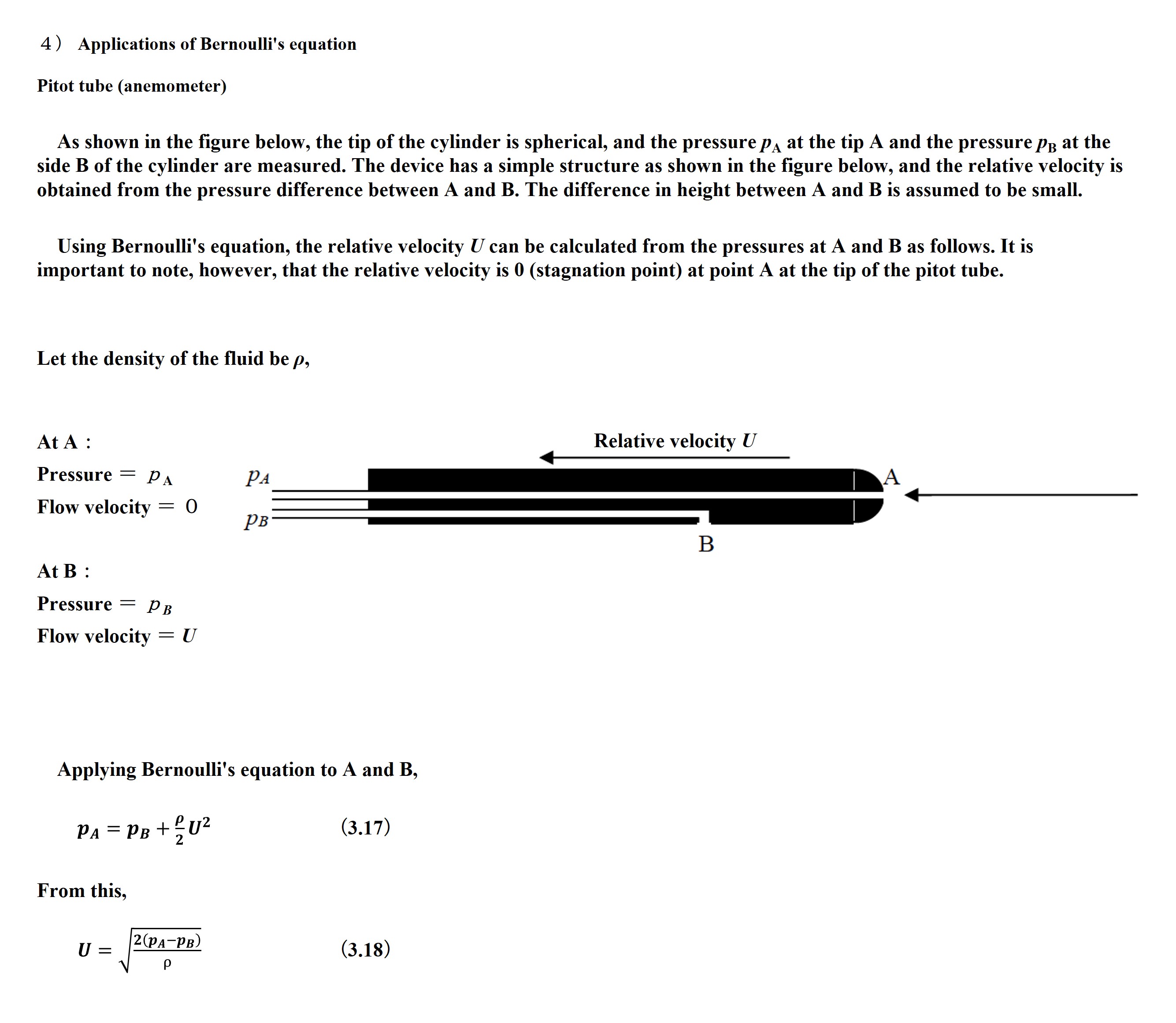
Example text on fundamentals of incompressible steady-state fluids - Formulate the equations of motion for the dynamics of a mass system based on the Newton's laws of motion
-