During the period with water temperature of
around 6 °C, scallops in Lake Saroma, stimulated by a short-term rise in water
temperature of approximately 2 °C, release the eggs or sperms. Eggs with a
diameter of approximately 80 µm are usually released around late April or early
May. The planktonic larvae metamorphose into D-shaped larva with a shell after
about 4 days. They grow as a plankton by feeding on smaller-sized plankton to a
size of about 300 µm in shell length. After about 35 days of planktonic life
stage, they attach themselves to seagrasses to complete their planktonic
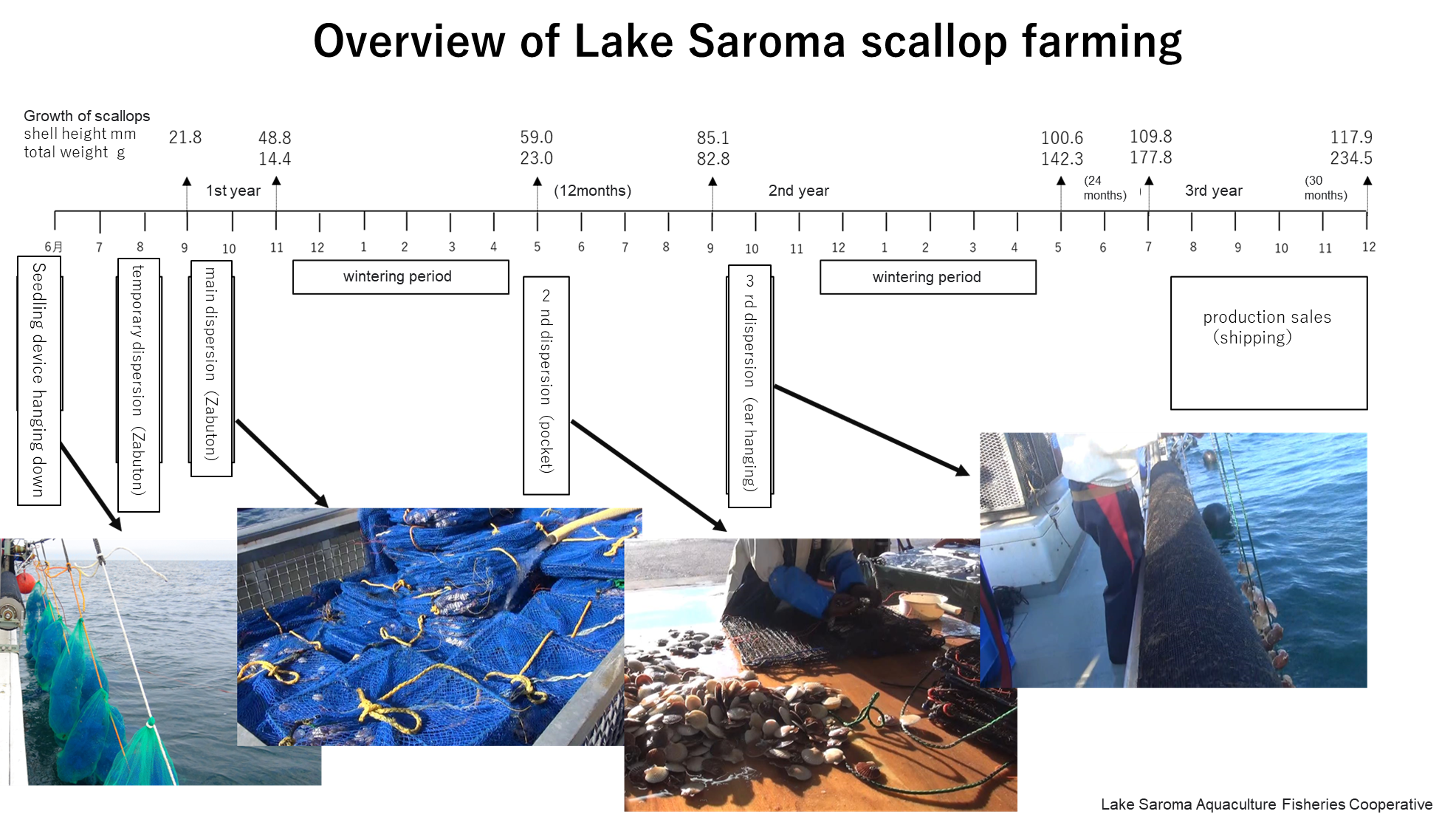
period. Currently, most of the scallops cultured in Japan are grown from
naturally occurring planktonic larvae attached to a spat bag. Fisheries Cooperatives
and Fishery Extension Offices routinely measure the abundance and size of
larvae in Spring to estimate the time of attachment. Fishermen deploy spat bags
based on this information to obtain enough juveniles.