Perfilado de sección

    • This page provides an easy-to-read overview of the class and relevant links.
      For the most up-to-date "Class Plan", "Grading Criteria and Methods," and other information,
      be sure to check the official syllabus of Hokkaido University.

    • 2nd year of Marine Bioresources ChemistryAquaculture Life Science:Academic Foundation Courses

      Teacher:ANDO Yasuhiro(Associate professor; Marine Bioresources Chemistry 


    • Organic chemistry is considered one of the five major branches of chemistry (analytical chemistry, physical chemistry, organic chemistry, biochemistry, and chemical engineering) and is a universal subject that everyone dealing with chemistry must learn.

      In this lecture, students will learn technical terms of organic chemistry and the properties and mechanisms of organic reactions.

      Contents include, for example...

    • The structure of the acetate ion CH₃COO⁻ is . OK ?
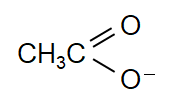
      →   The two C-O are equivalent.


      So how can we represent equivalent C-O? [Resonance hybrid]

    • Nitration of phenol yields three nitrophenols in equal amounts. OK ?

      図

        As you all know, it only produces ortho- and para-nitrophenols.
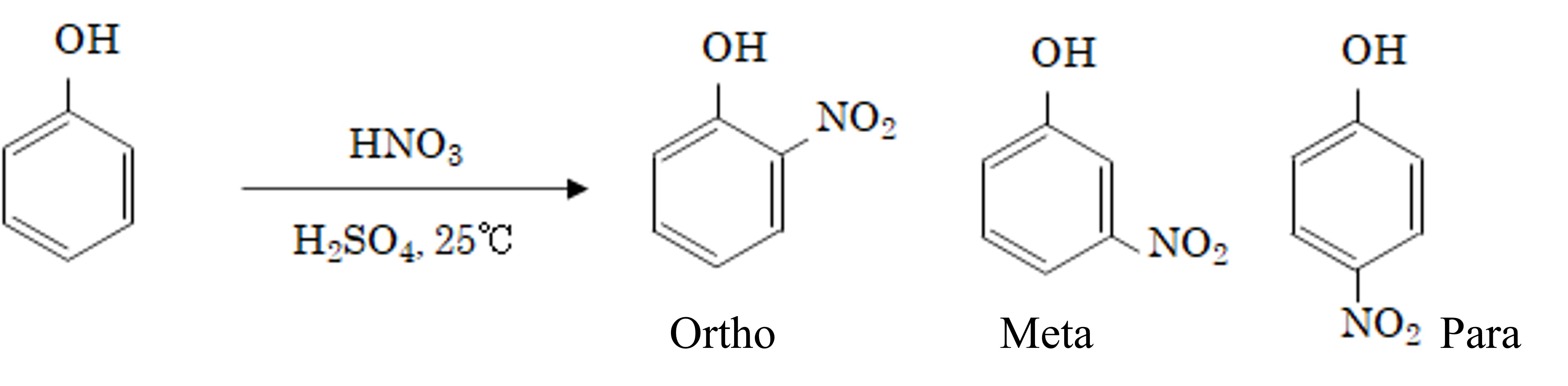
      Why does this occur? [Electrophilic aromatic substitution, Reaction intermediates]

    • Alcohols are obtained by the following reactions A and B. OK ?

      CH₃CH₂CH₂CH₂-Br + NaOH   →    CH₃CH₂CH₂CH₂-OH + NaCl     [A]

      (CH₃)₃C-Br + NaOH   →    (CH₃)₃C-OH + NaCl     [B]


      →   Reaction A will occur, but B will result in a different product.


      What does this mean? [Bimolecular nucleophilic substitution reaction, Transition state]


      In addition to these, nucleophilic acyl substitution reaction are also covered as organic reactions related to fisheries*.


      *Related classes:Practice of Marine Bioprocess Engineering 

      https://repun-app.fish.hokudai.ac.jp/course/view.php?id=738