
Laboratory Work on Nutritional Biochemistry (undergraduate specialty) class introduction course
章节大纲
-
Nutritional information is labeled on food containers and packaging in accordance with food labeling standards. This is intended to help consumers make food choices that take into account their own health and nutritional balance, and to help them maintain an appropriate diet. Therefore, all food products, including processed foods and additives for general use, must be labeled with the Nutrition Facts label.
Foods are composed of heterogeneous and diverse components, each of which is quantified by standardized analytical methods. This course is designed to provide students with an understanding of the different concepts of these analytical methods and to master the methods by performing actual analytical operations.-
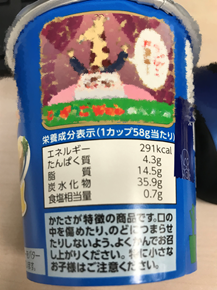
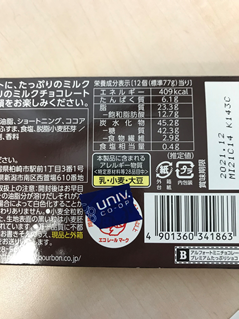
Example of Nutrition Facts Label
-
-
Using common food products as samples, the course actually quantifies moisture, ashes, protein, fat, and carbohydrates.
An understanding of the operation and principles of these basic analytical methods is an important prerequisite for success, especially in occupational areas such as food development, production, and quality control.
-
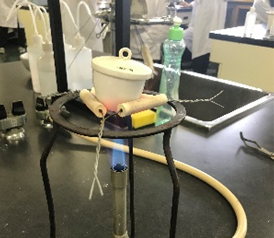
Direct ashing method
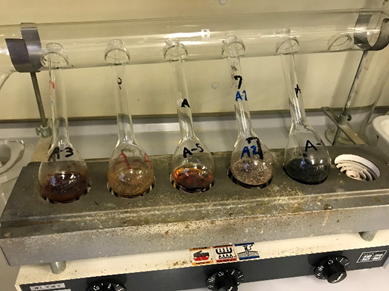
Kjeldahl decomposition
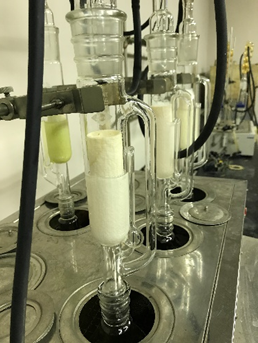
Soxhlet extraction
-