

Marine Biogeochemistry (undergraduate specialty) class introduction course
Section outline
-
-
sea salt
Ocean circulation is driven by density differences in seawater. The density of seawater is determined by salinity and temperature.
First, learn about the factors that determine the salinity of the ocean surface.
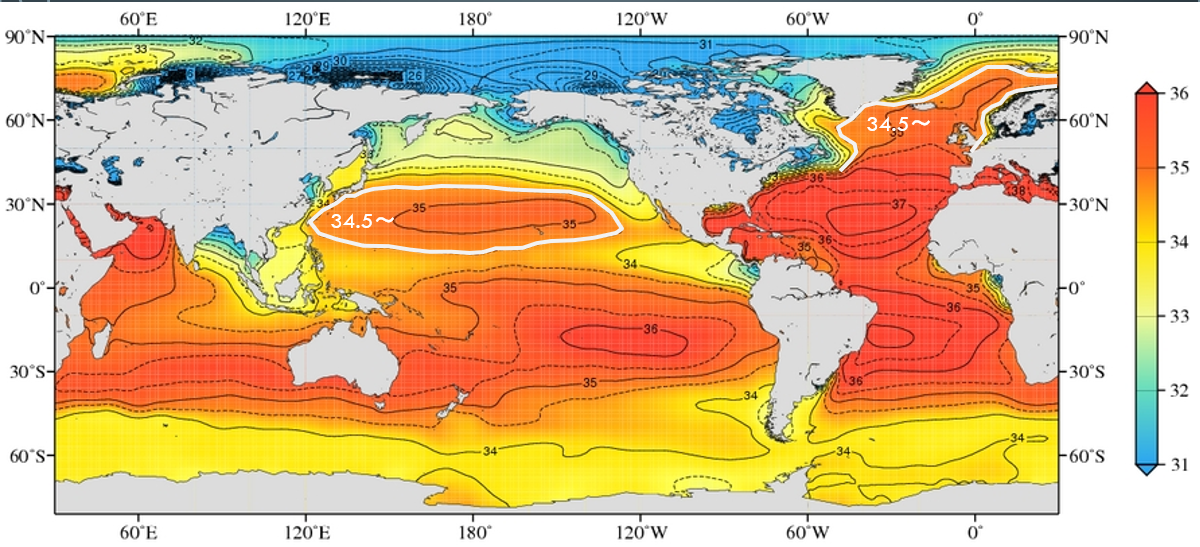
-
Ocean circulation
Deep water forms in the high latitudes of the North Atlantic Ocean, and bottom water forms in the Southern Ocean. Bottom water crawls northward along the bottom of the Atlantic, Indian, and Pacific oceans. Deep water is gradually brought to the middle and surface layers. Surface water quickly returns to the North Atlantic Ocean.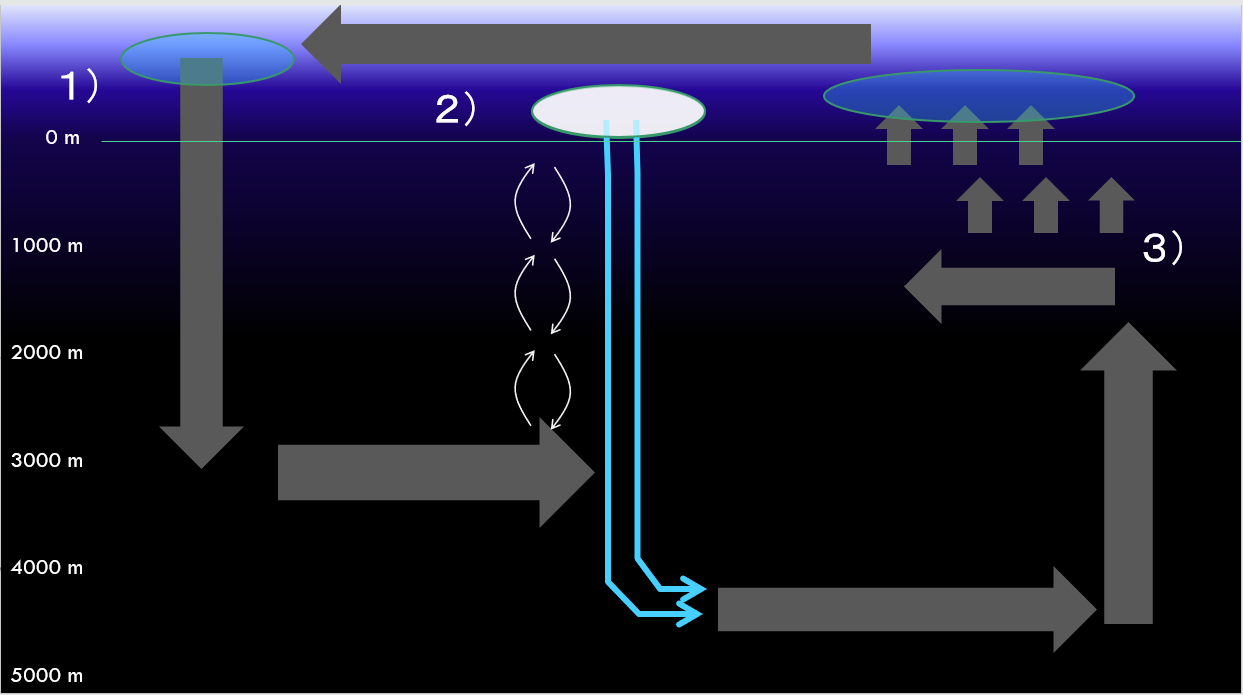
-
-
In subarctic waters, a large phytoplankton bloom occurs in early spring when sufficient light penetrates into nutrient-rich surface waters. The bloom ends when surface nutrients are depleted. Learn how bloom works.

Diatom blooms occur every year in Funka Bay, Hokkaido, from late February to mid-March.
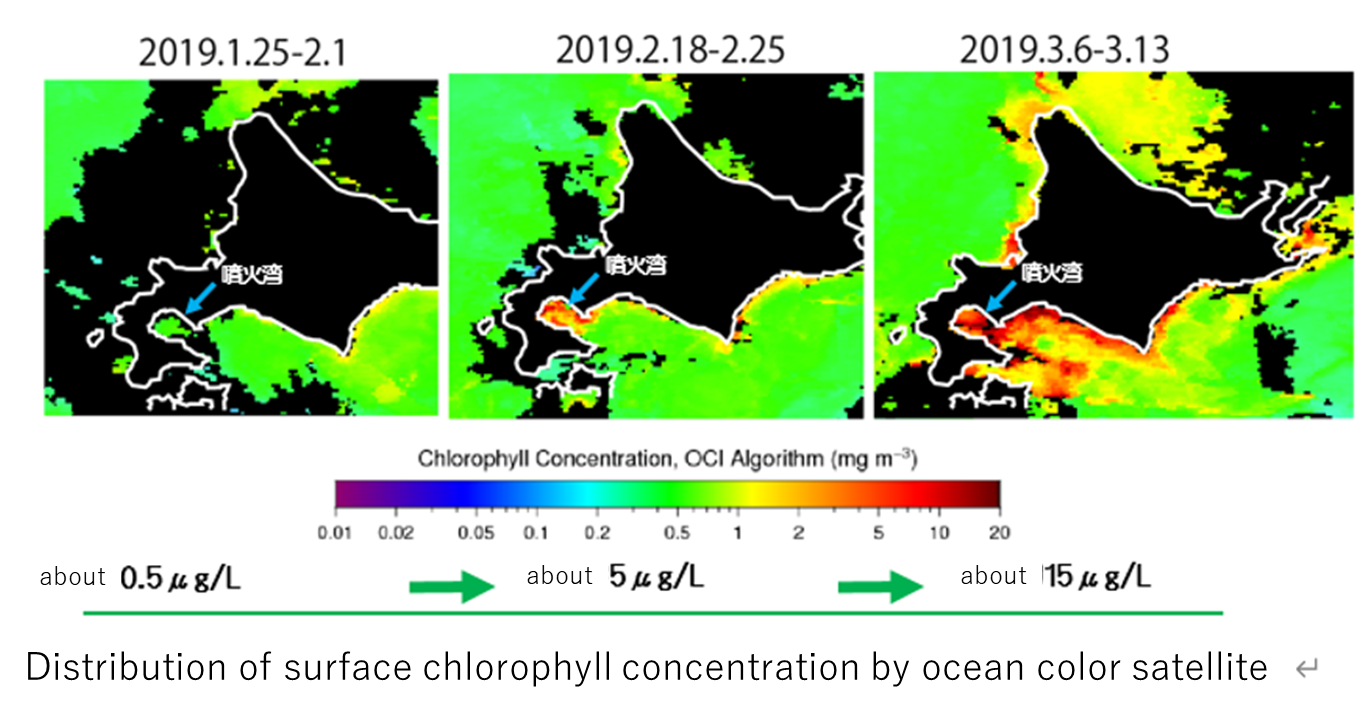
-
【introduction】 Most of the substances in seawater can be incorporated into organic matter. When organic particles become large, they fall by gravity (sedimentation). When organic matter is used as food for living things, the elements it contains become mineralized. It is easy to understand if we follow the flow of materials in the ocean, focusing on organic matter. Learn about the flow of matter as shown in the picture below.

-
Organic matter size
To understand the movement of organic particles, their size is important. Learn the size distribution of organic matter.

-
Sedimentation of organic particles
Learn the conditions and factors that cause organic particles to settle (gravitational fall) in seawater.
The picture below is an example. Let's understand it quantitatively from the calculation formula of sedimentation rate.

-
-
Learn about carbon dioxide (carbonic acid in seawater), which is attracting the most attention in ocean material cycle research.
-
Earth's carbon budget
First, learn about the earth's carbon balance.

-
Dissociation equilibrium of carbonic acid components
Calculate the concentration of each component from the dissociation equilibrium conditional expression.
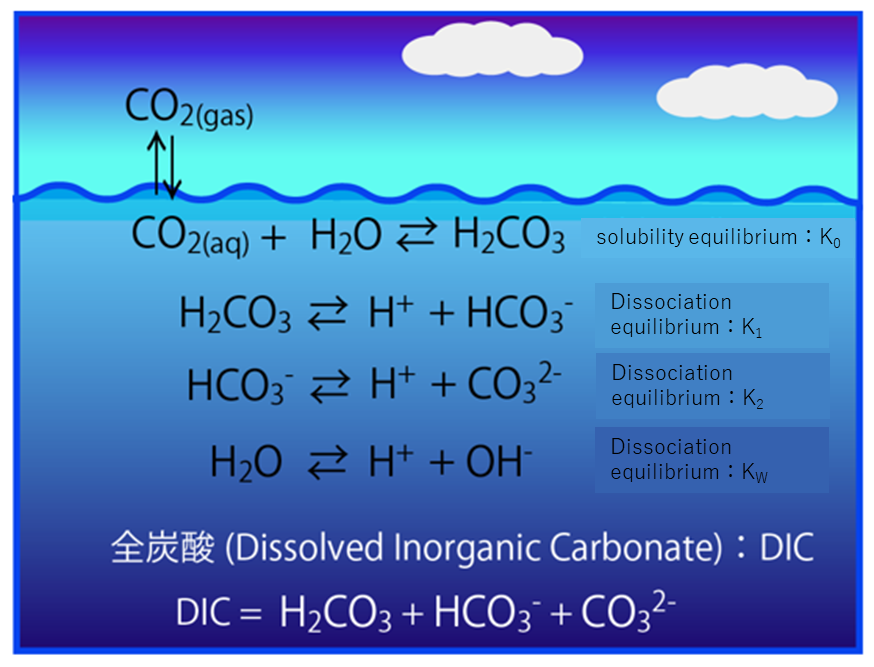
-
-
In photosynthesis and respiration, oxygen moves in the opposite direction to carbon dioxide. Measuring dissolved oxygen in seawater is the cornerstone of oceanography.
-
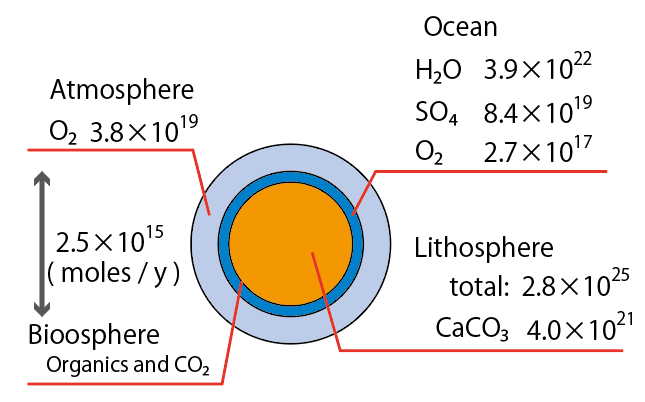
Earth's oxygen balance
First, let's learn about oxygen on Earth.
-
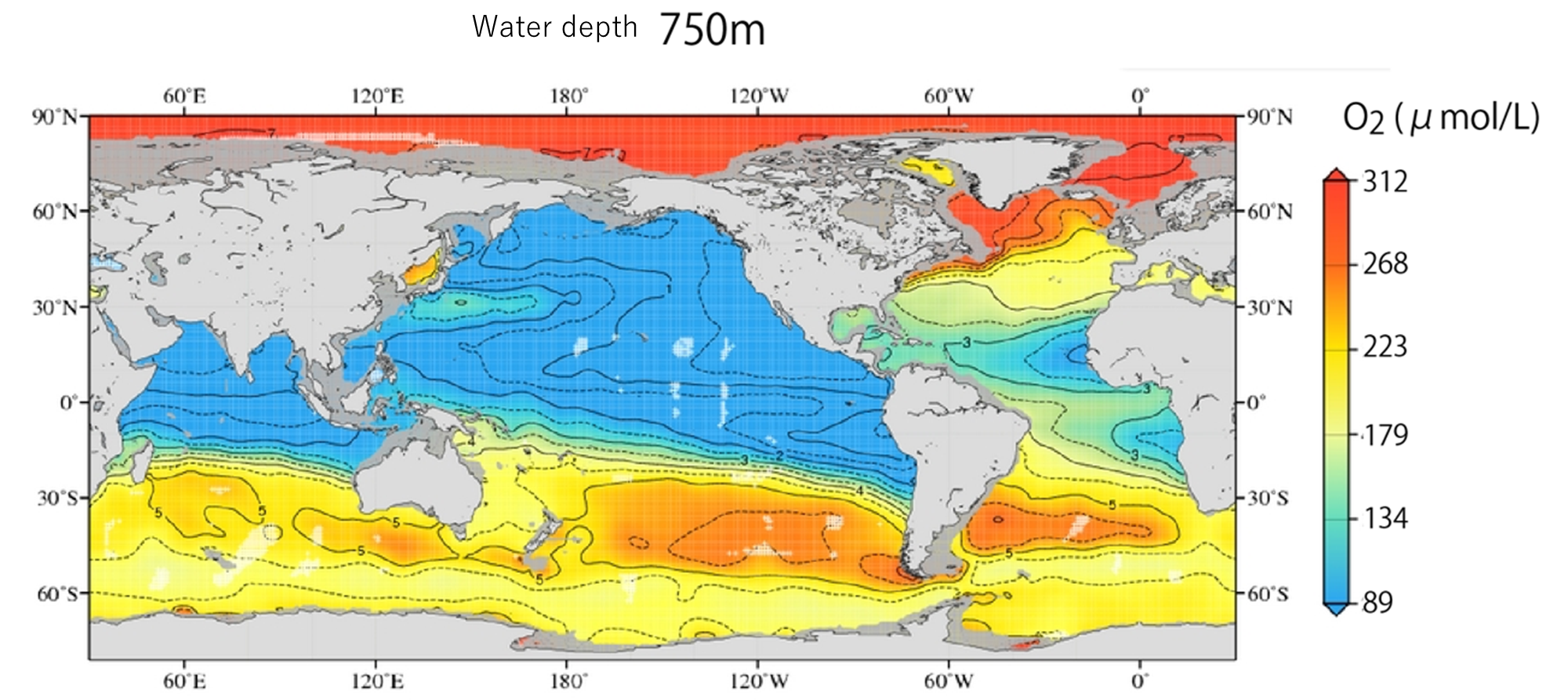
Global distribution of dissolved oxygen
Learn the factors that determine vertical and horizontal distribution.
-
-
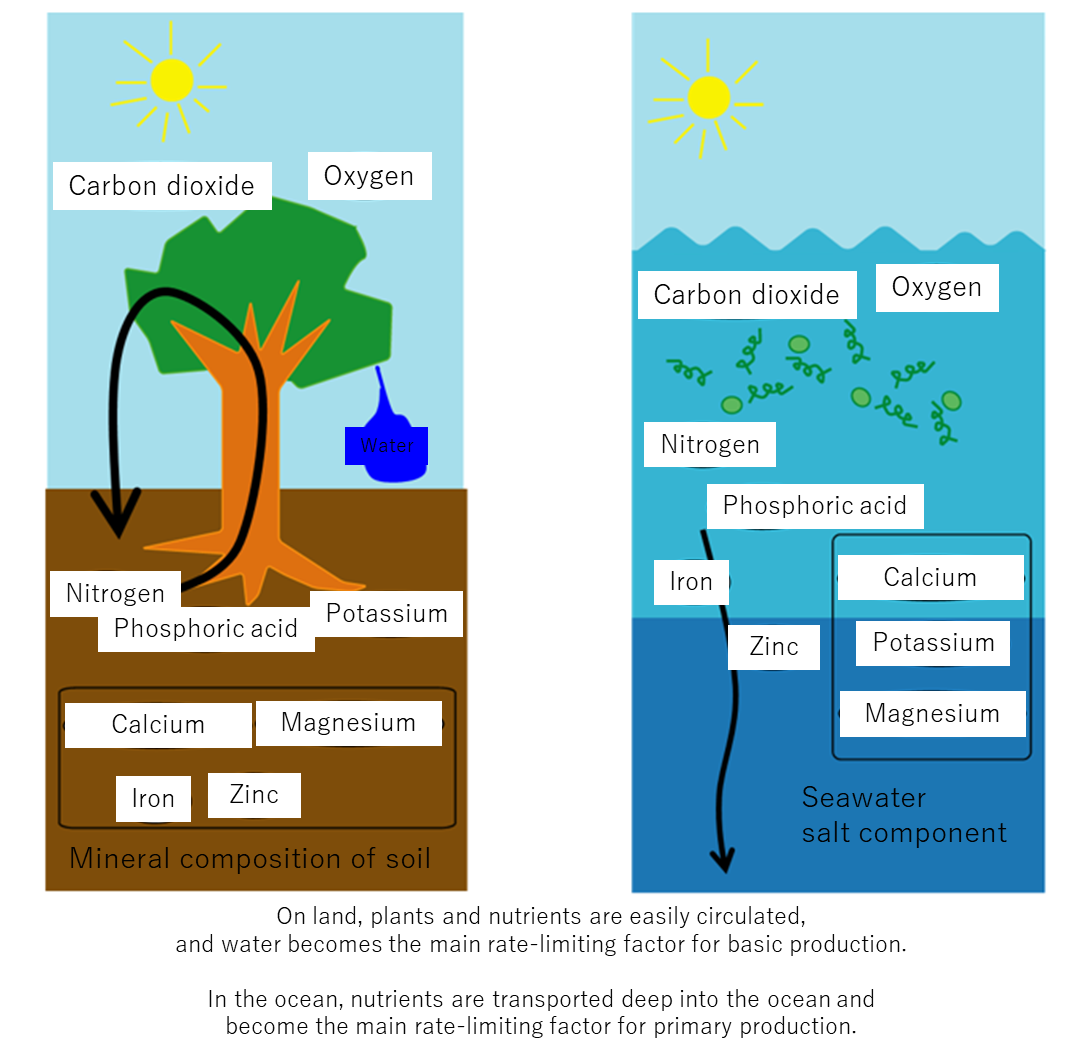
What determines the distribution of basic production in the ocean is the amount of nutrients supplied to the ocean surface. Learn about the nutritional content of the sea.
-
Nutritional components of land and sea
We will explain the definition of nutritional components for plants.
-
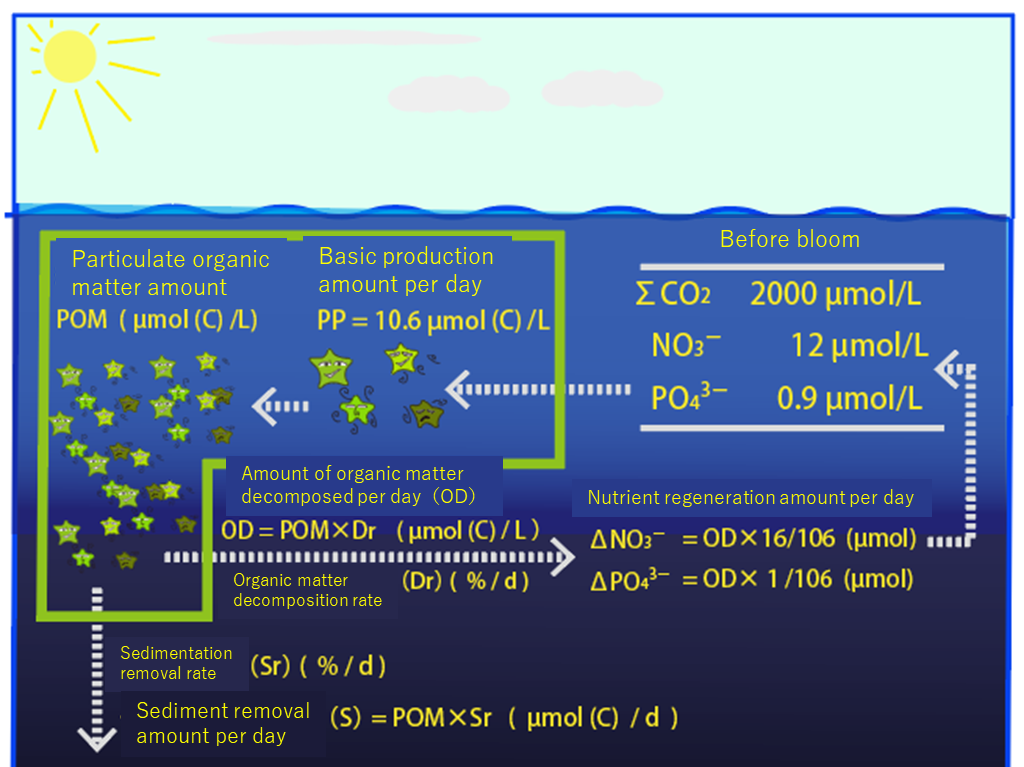
Basic production model practice questions
Let's estimate the temporal changes in basic marine production based on the amount of nutrients supplied to the ocean surface, the amount regenerated at the surface, and the amount transported to the depths.
-
-
Seawater composition in coastal areas is influenced by chemical changes in seafloor sediments. Learn the chemistry of sediments.
-
Observation to collect sediment from the ocean floor
The collected sediment is cut into layers and the water (pore water) in the sediment is absorbed. Learn why the nutritional content of pore water changes with depth.。

-
Changes in respiratory mode caused by microorganisms
Respiration is a redox reaction. Learn the forms of respiration by living organisms from the equations of the equilibrium state of redox reactions.

-
-
Learn about radionuclides distributed in the ocean. I would like to ask Professor TAKATA Hyoe of the Fukushima University Environmental Radioactivity Research Institute to give a lecture.
-
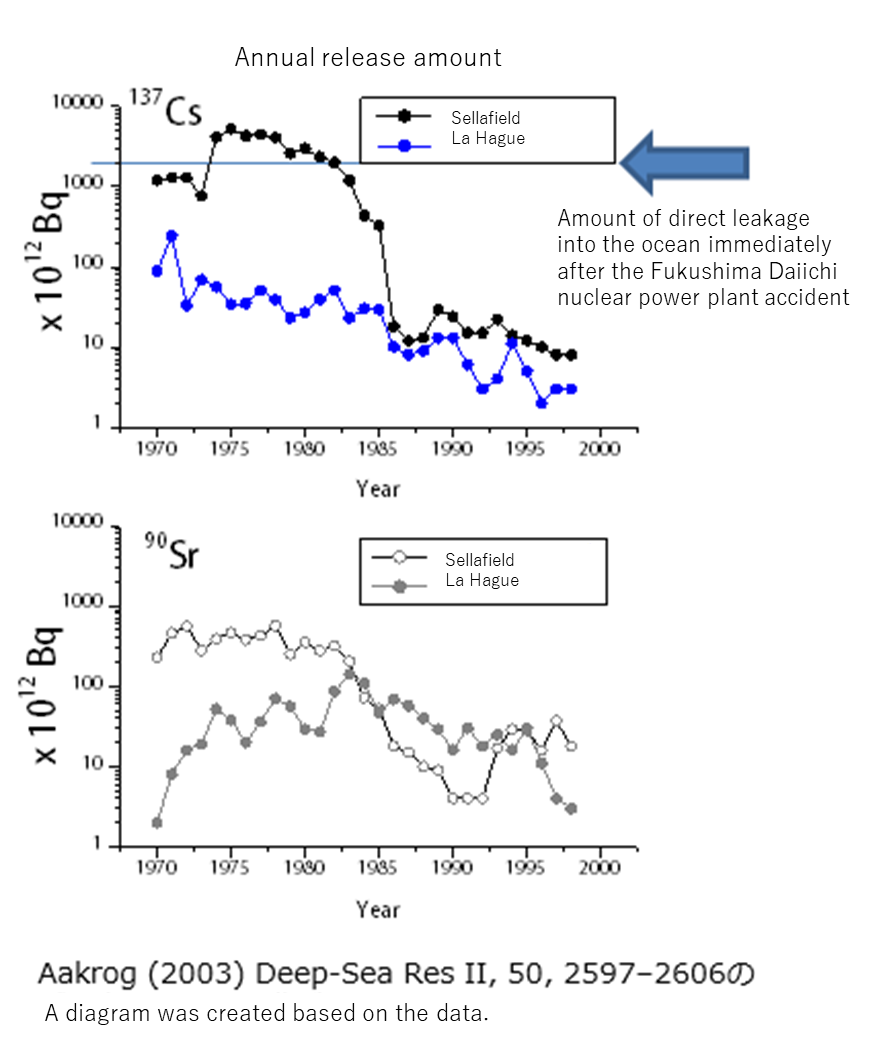
Changes in annual emissions of radioactive cesium and radioactive strontium over time
Learn about the effects of the Fukushima Daiichi nuclear power plant accident.
-
-
Learn about the chemistry of sea ice and the chemistry of the polar oceans.
-
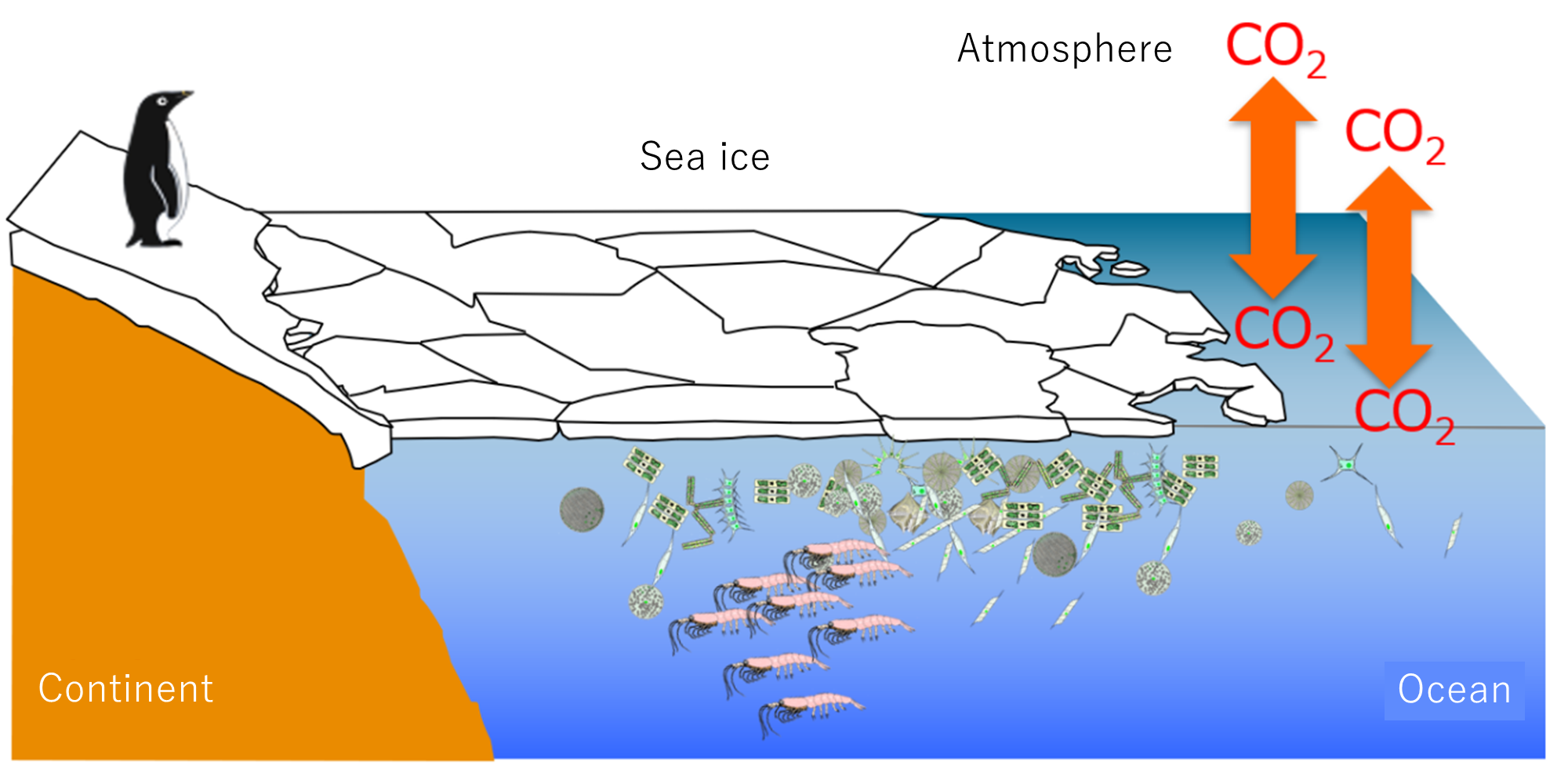
What role does sea ice play in the exchange of materials between the ocean and atmosphere? Sea ice is home to a high density of algae called ice algae. Why? There are many things we don't understand about sea ice science. You will learn a wide range of topics, from the basics of sea ice to observation examples.
-