
Introduction to Oceanography (undergraduate specialty) class introduction course
Garis besar topik
-
-
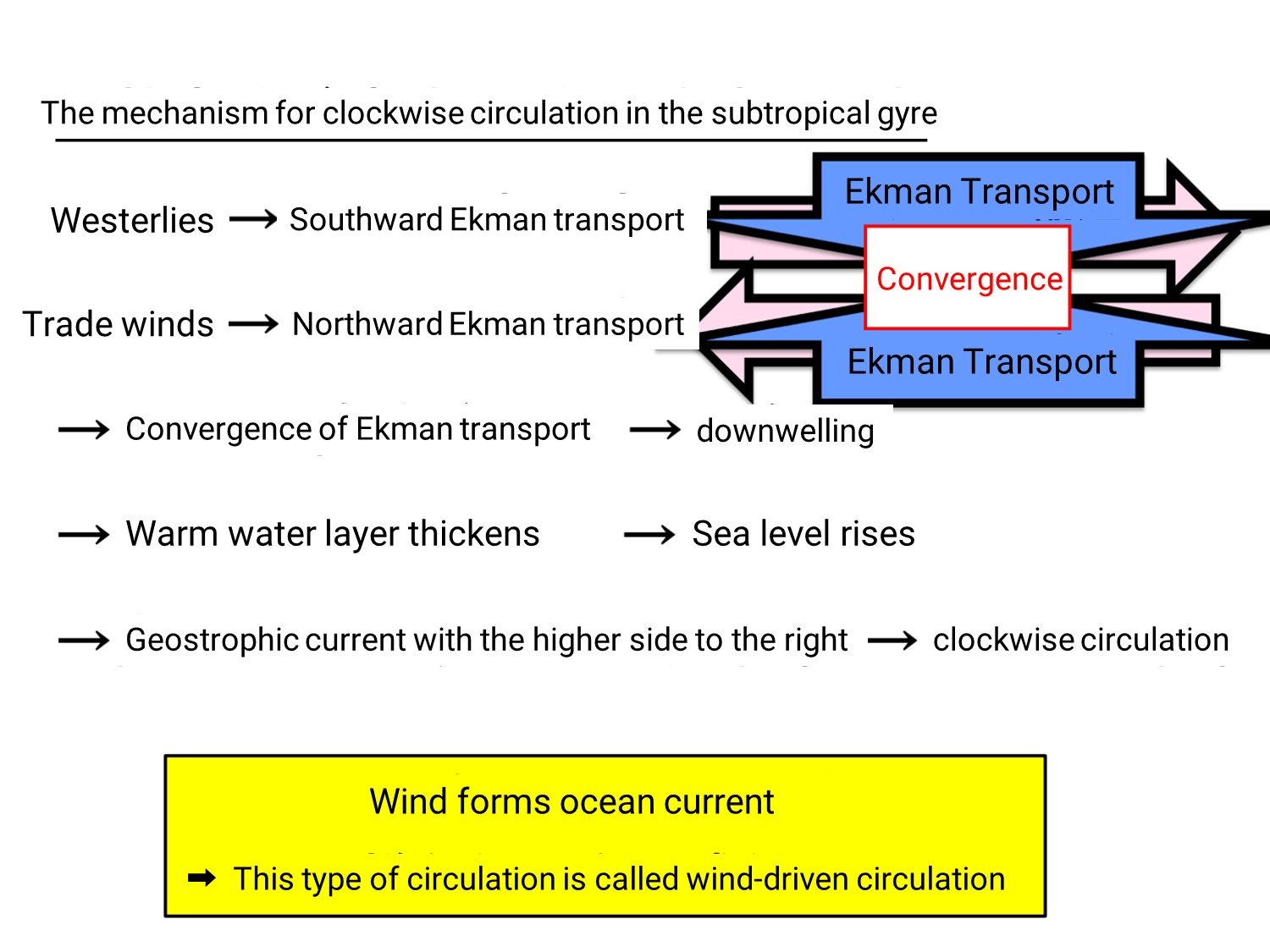
The main objective of the lectures in "Seawater travels, Heat also travels" is to understand the formation mechanism of the subtropical gyre.
The subtropical gyre is a giant clockwise vortex in the North Pacific spanning Japan to the United States, and is driven by the westerlies and trade winds. The Coriolis force (the apparent force generated by the rotation of the Earth) plays an important role in driving the vortex. The subtropical gyre redistributes heat from the oceans through solar radiation by transporting high-temperature water from low latitudes to mid-latitudes on the western side (Kuroshio) and low-temperature water from mid-latitudes to low latitudes on the eastern side.
The goal is to help students understand the essence of these phenomena by explaining these mechanisms in figures and words, without using mathematical formulas.
-
-
Hokkaido University has two training ships, the "Oshoro Maru" and the "Ushio Maru". In this lecture, you will learn about actual "oceanographic observation" and the hull structure of the "Oshoro Maru", which is designed for "safety".
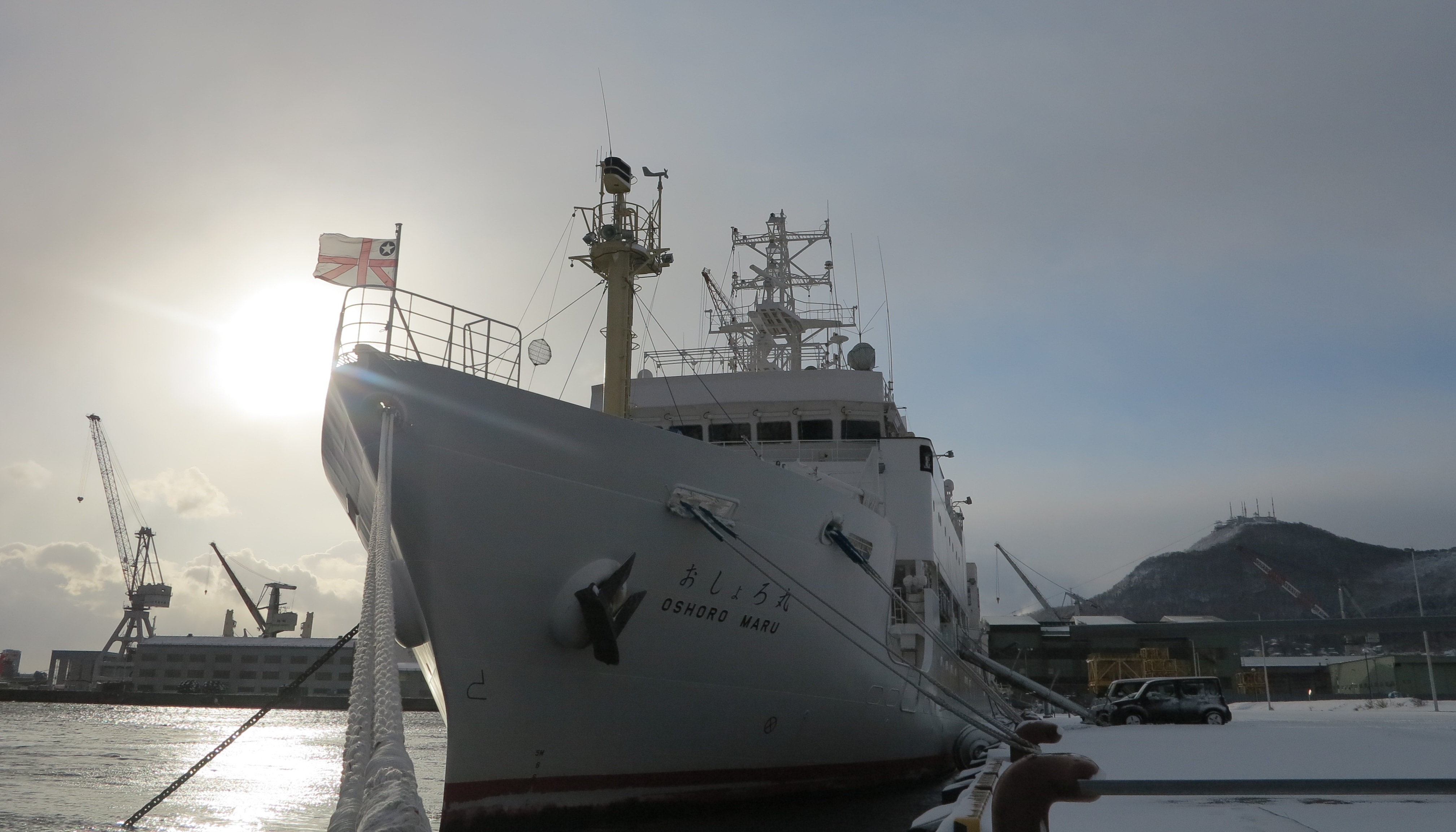
With the development of remote sensing (satellite and aircraft observation technology), it is now possible to obtain (observe) a variety of information without going to the field (ocean). Then, is it really no longer necessary to spend time (and money) in the dangerous oceans?
The ocean is not only a field for learning about the global environment, but it is also a place of daily life, a trade route that connects the world, and a border that separates nations. What are the various forms (features), characteristics, and structures (performance) of the vessels that operate there? -
In "Electromagnetic Waves Travel Around" students learn about oceanographic observations using electromagnetic and sound waves.
Electromagnetic waves and sound waves are the same "waves" and have the property of propagating through space, allowing information to be obtained remotely without having to contact the object.
The aim of this course is to understand the information obtained by using these waves and their advantages and disadvantages. -
