セクションアウトライン

    • Poster presentation @the 3rd International Symposium on Natural Science: Natural Resource Sustainability and People’s Responsibility for Society December 1-2, 2022 at Rama9 Museum, National Science Museum, Thailand (NSM) Klong 5, Pathum Thani

    • LASBOS (https://repun-app.fish.hokudai.ac.jp/) has been running by Balance de Ocean Project, Hokkaido University from 2019. Project aims to foster the next generation of top scientists of the sea by developing and accumulating online educational materials for fisheries and marine sciences. This project is also open online to everyone who aspires to learn about fisheries science and engage in various practices.  It is a system that promotes independent learning and inquiry beyond the limitations of place and time, and beyond the barriers of occupation, age, field of study, and grade, which is related to SDGs 4: Ensure inclusive and equitable quality education and promote lifelong learning opportunities for all.  

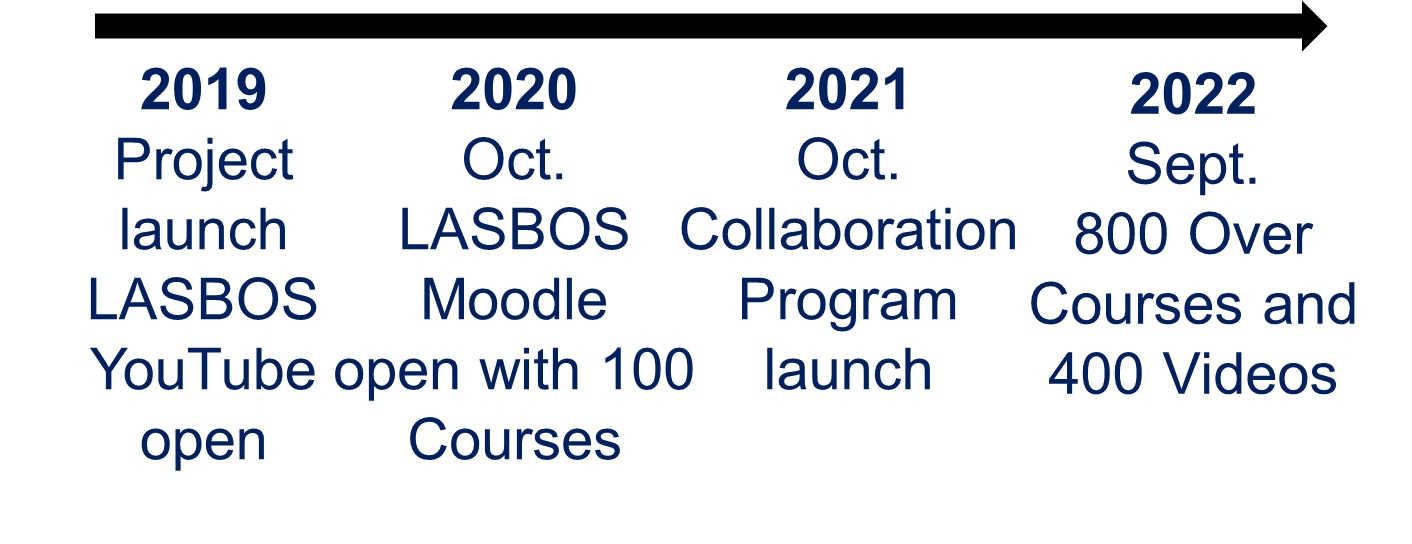
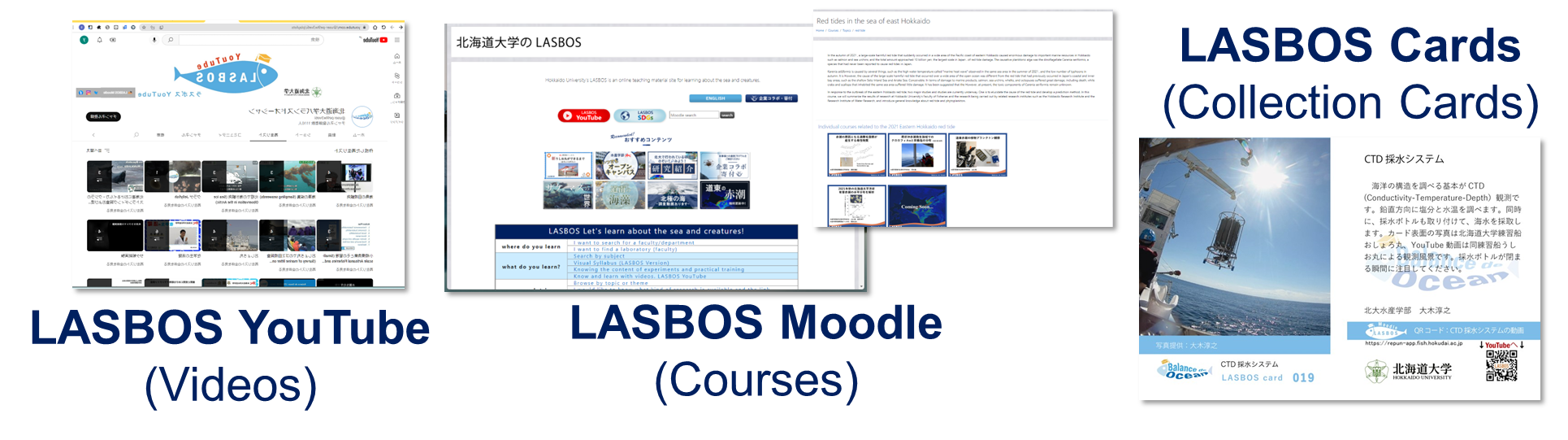
      We have accumulated and published more than 800 courses on the LASBOS Moodle and 400 educational movies on LASBOS YouTube Channel, some of these contents are translated in English for International users. We are trying to seek various channels, topics and interfaces to reach widely potential users: SDGs, wild animals, column by scientists, high school students, alumni, business.  

      These efforts are project’s responsibility for society, and also are our tactics for sustainability of the project itself based on diversity. Our goal is to bring together excellent learners, to nurture them together, and to contribute to the local community and human society through this social education project.
        

    • ◎History


    • ◎Moodle Courses, YouTube Videos and Collection Cards

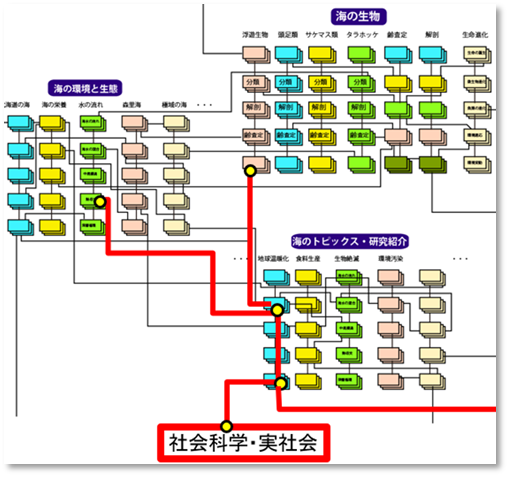
    • ◎Cross-linked & Networked Contents


      Online Courses and Videos are created as micro contents, so that easy to be cross-linked and networked


    • A trend of Science Communication (SC) had upsurged and reached its peak around 2010s. Lots of activities and discussions are still ongoing in Japan. Three important and predominant issues are;


      ◆ The “Deficit Model”
      or "information deficit model" is a theory that states that the public does not trust science and technology because they lack information or understanding on it. Sometimes integrated with the one-way communication model. (Uchida [2020] ) e.g. Lectures for public.

      ◆ Science Café and Temporary Events
      Against one-way communication model, two-way (Interactive) communication is aspired, then quick and compact scale activities of SC, science cafe style events are held by science communicators anywhere.  Keywords are place, conversation, and equal relationship.  Developing Science communicators is also an issue.

      ◆Group with Low Interest
      Most participants to the SC events, such as science café, are already highly interested in science and technology. People with low interest rarely participate in. (Kanou [2013])


    • LASBOS challenges to these issues of SC with schemes and solutions. One-way communication is inevitable or even efficient to solve deficit status to some extent. LASBOS seek various channels, topics and interfaces to reach widely potential users, including those with low interest and science communicators.
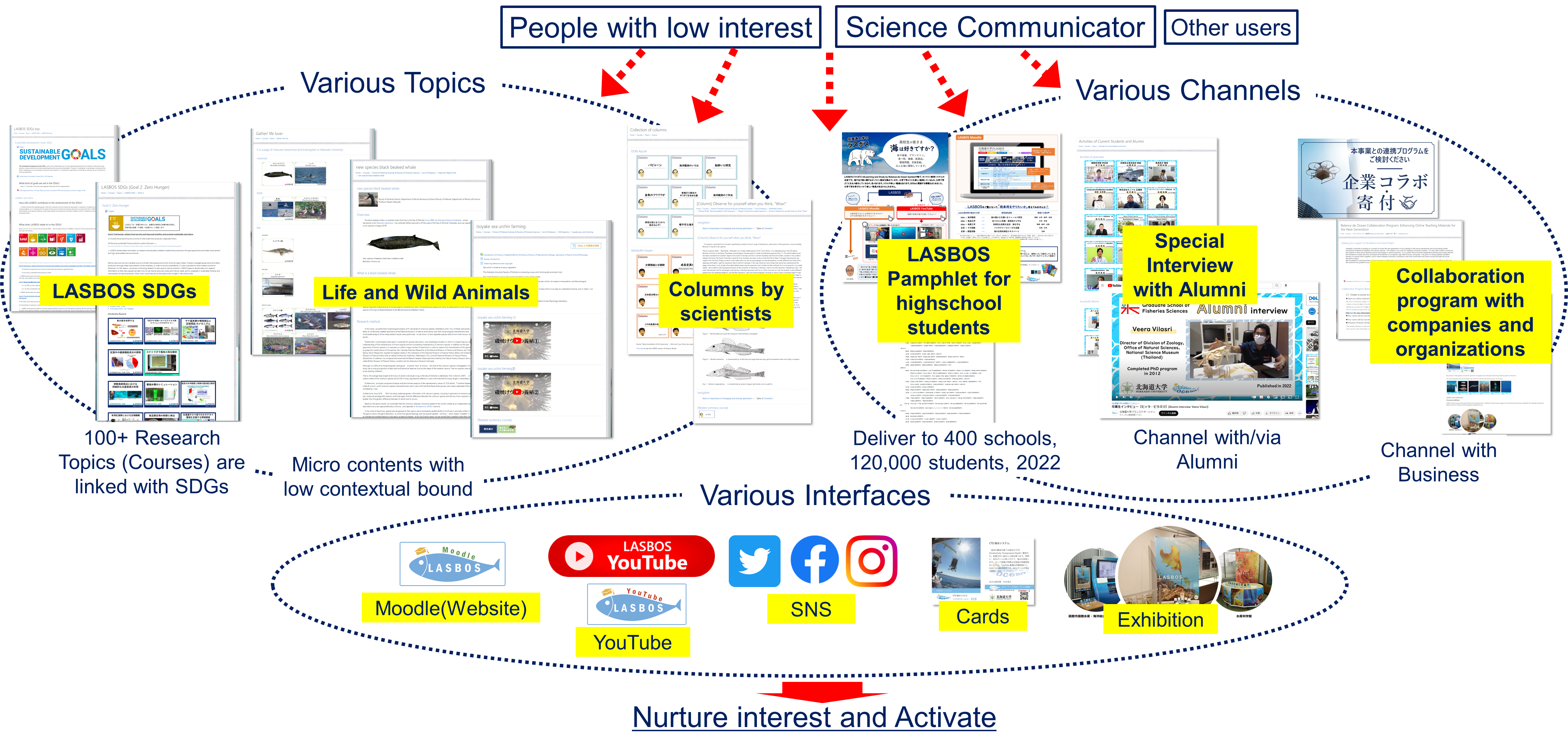


    • ◆People with low interest can access various topics, channels and interfaces at anytime and with any reasons, unpredictable triggers, because LASBOS is constant existence, different to temporal SC events.


      ◆Science Communicators can use contents and compose easily plots and constitution of the science event because LASBOS contents are microcontents, which is low contextual bound. Science Communicators get more active to host two-way communication events.


      ◆LASBOS can be the new platform to support Science Communication and outreach activities.


      Project’s responsibility for society:LASBOS’s goal is to bring together excellent learners, to nurture them together, and to contribute to the local community and human society.


    • Shunsuke Yamashita*, Hyojin Ahn, Naizheng Yan, Tohru Mukai and Atsushi Ooki 

      Faculty of Fisheries Sciences, Hokkaido University, Japan

      *ya.shunsuke@gmail.com (Corresponding Author)