

Flocculation of diatomite
單元大綱
-
-
diatomaceous earth
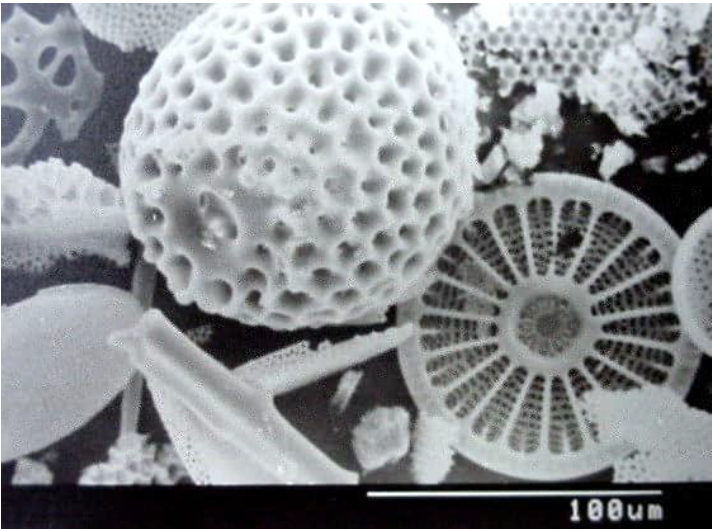
Diatomaceous earth is a fossil of diatom plankton, and more than 95% of its components are SiO2. It is common mud in Japan, found in paddy fields.
-
Frequency Distribution Curve
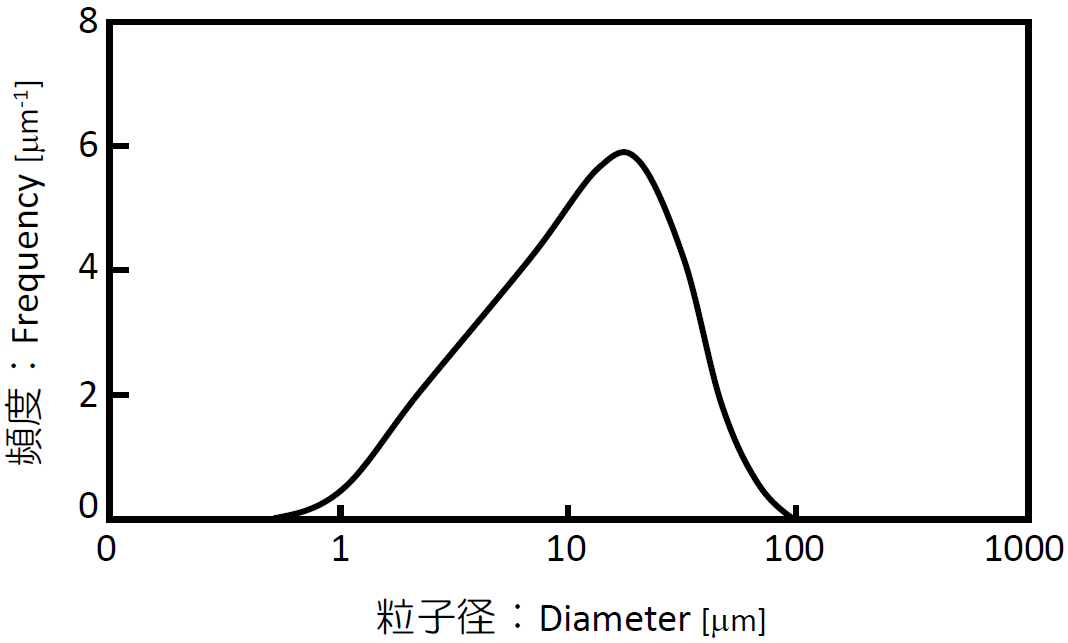
This is the particle size distribution of diatomaceous earth. The mode diameter is 10-20 μm.
-
Aggregation experiment of diatomaceous earth with biodegradable coagulant
We use a flocculant made from soy protein. The amount of coagulant added is 1% of the mass of diatomaceous earth.
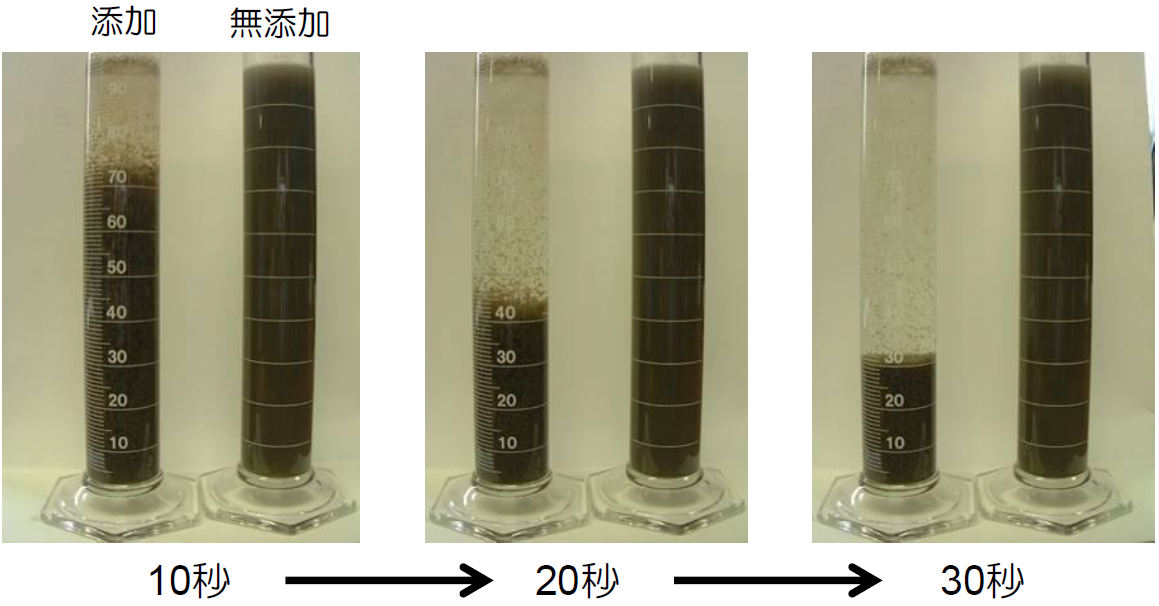
添加:addition 無添加:additive-free
10sec. →20sec. →30sec.
-
Practical example: Ultra-high-speed coagulation-sedimentation equipment
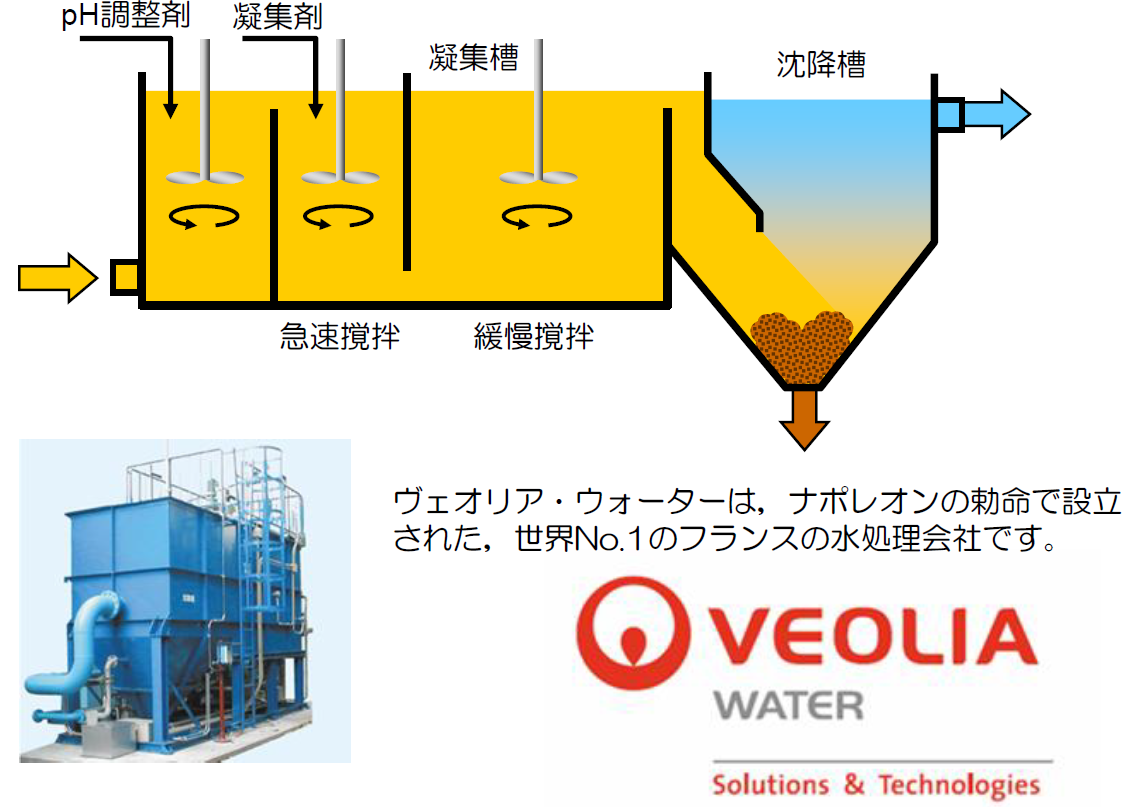
pH調整剤:pH adjuster 凝集剤:agglutinant 急速撹拌:Rapid agitation 凝集槽:agglomeration tank 緩慢撹拌:Slow agitation 沈降槽: sedimentation tank
-
Use of biodegradable flocculants
Using conventional flocculants, SS becomes industrial waste that costs a lot of money to dispose of.
Company A (soybean processing, West Japan)
•Total wastewater: about 500 t/day
•Solid waste (moisture content: approx. 50%): approx. 1 t/day
•Treatment cost: landfill cost approx. 30 million yen/year + sewage treatment cost approx. 30 million yen/year
Company B (surimi processing, Tohoku)
•Total wastewater: about 500-800 t/day
•Solid waste (moisture content: approx. 50%): approx. 5 t/day
•Processing cost: 20,000 – 30,000 yen/t
Company C (wheat processing, Tohoku)
•Total wastewater: about 250 t/day
•Solid waste (moisture content: approx. 50%): approx. 5 t/day
•Processing cost: 20,000 – 30,000 yen/t
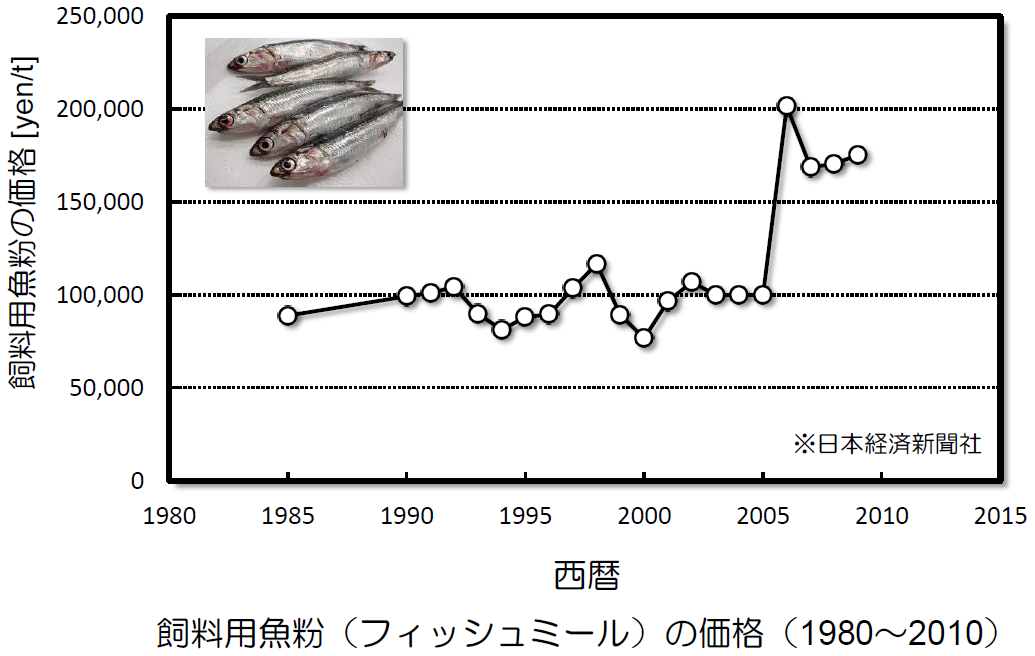
Price of fishmeal for feed (1980~2010)
The price of fishmeal, which is the main ingredient of aquaculture feed, is soaring. We believe that if wastewater from food processing plants is treated with a safe protein-derived coagulant, the recovered SS can be used as a substitute for fishmeal.
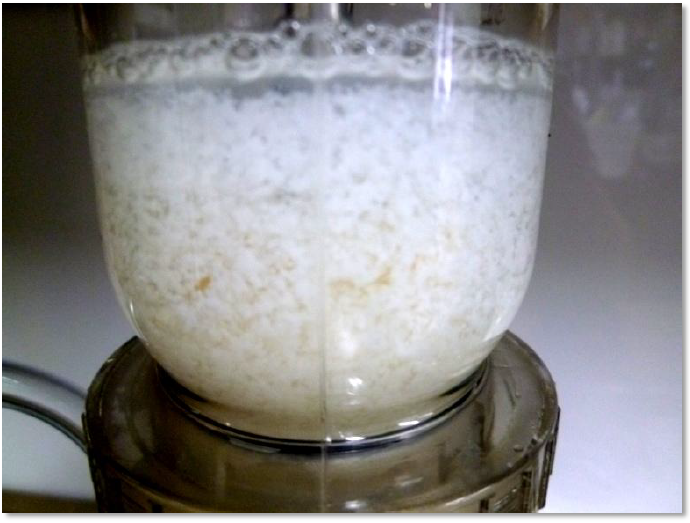
Coagulation treatment of wastewater from wheat gluten manufacturing plant
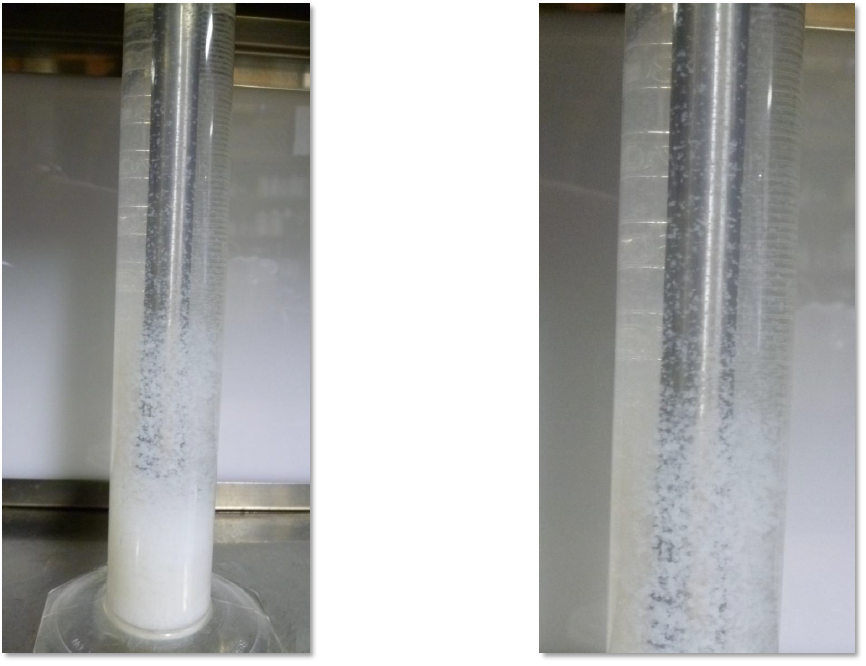
Agglomeration treatment of wastewater from tofu manufacturing plants
-
Aggregation Magnetic Separation Experiment Device 1 (self-made)
Separation of microorganisms that do not easily sink even if they aggregate
Magnetic fine particles are mixed with aggregates and separated with a magnet
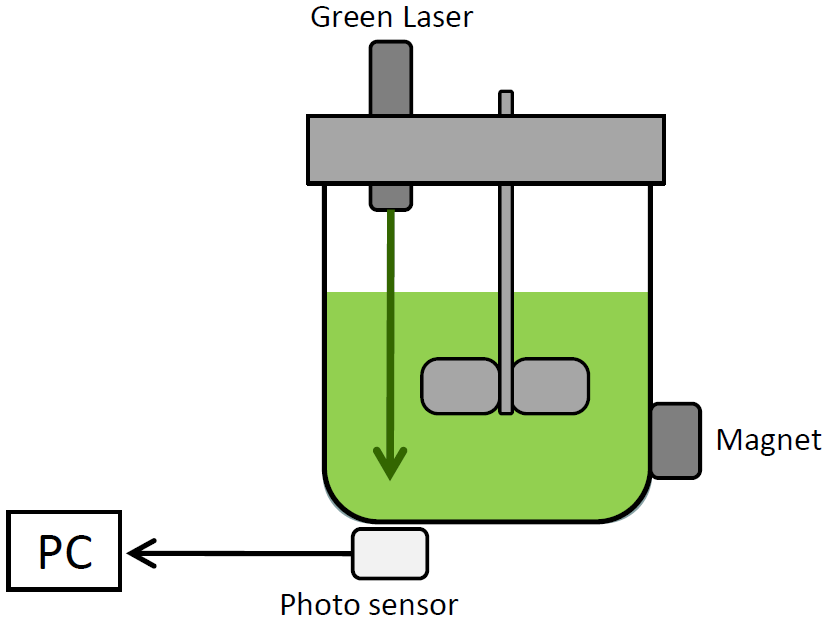
Mechanism of increase in laser light intensity when aggregates are removed
-
Apparatus 2 for coagulation magnetic separation experiment (homemade)
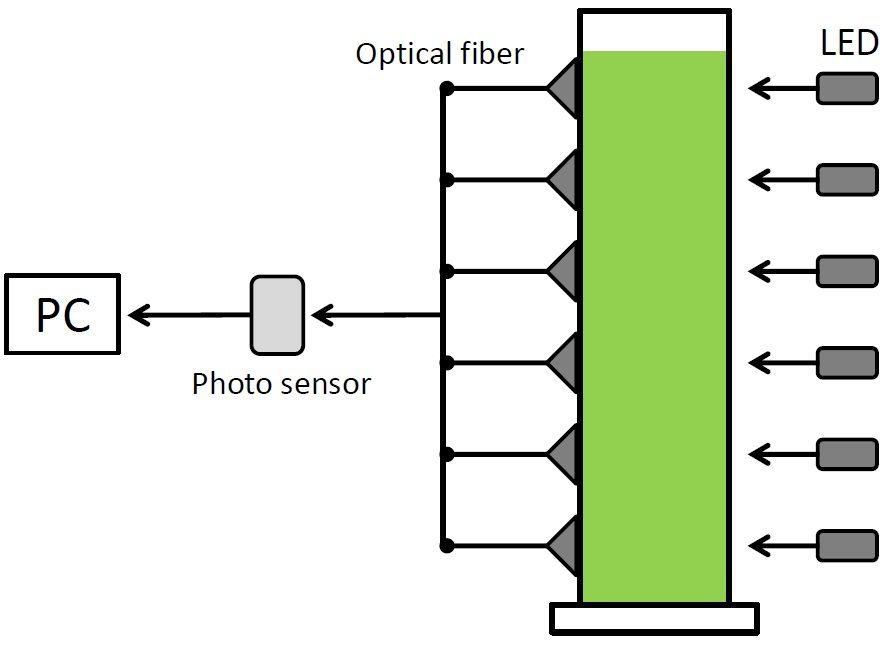
A device that measures the rate at which aggregates form interfaces and settle.
-