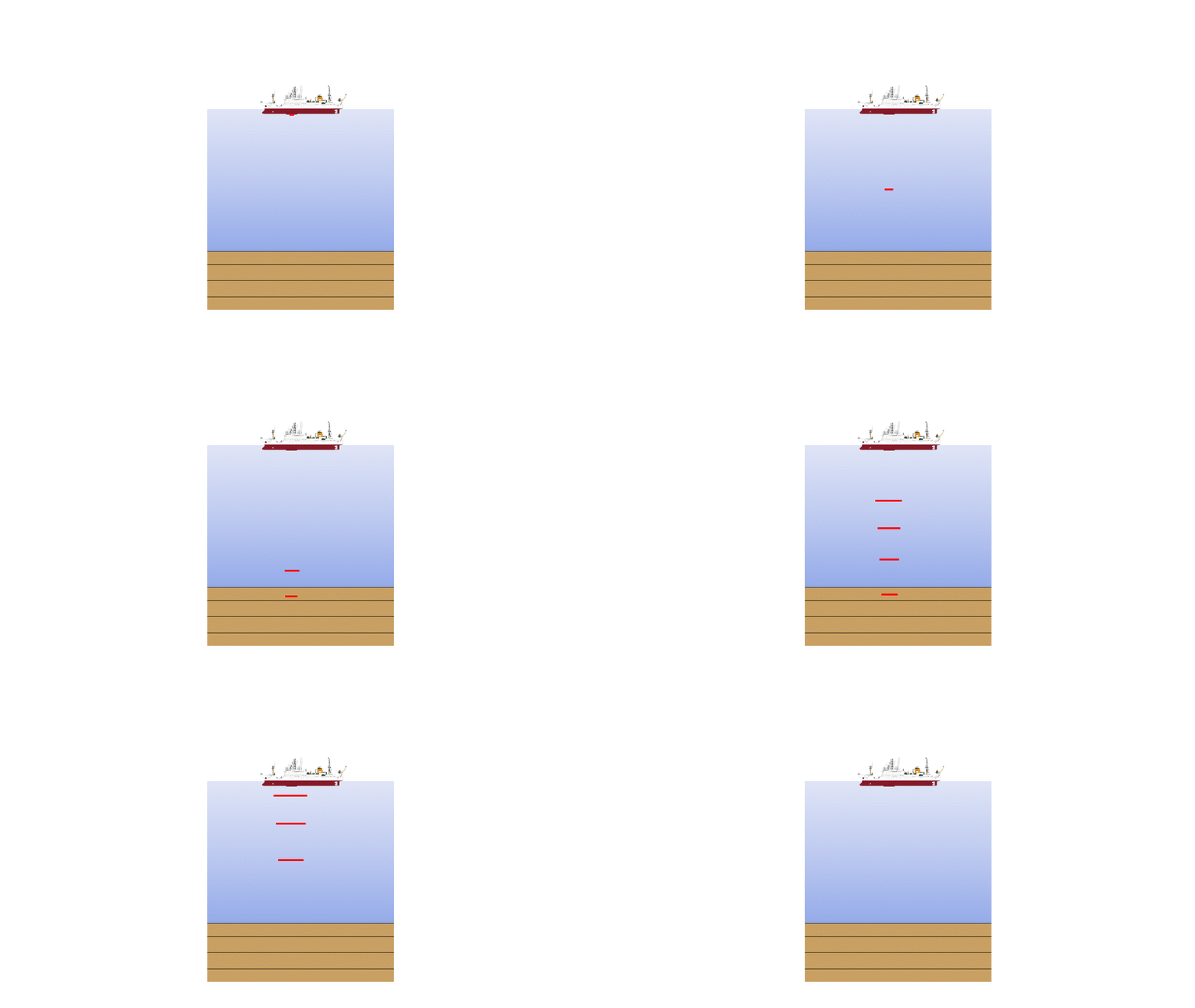
Sound waves are used in stratigraphic exploration for the purpose of searching for seafloor resources, elucidating the mechanism of earthquake occurrence, and conducting preliminary investigations of seafloor civil engineering works. When sound waves are irradiated to the seafloor, some of the sound waves that reach the seafloor penetrate below the seafloor surface and are reflected at the boundary between subsurface materials (e.g., the boundary between rocks and subsurface resources). By irradiating sound waves while the ship is moving and capturing the reflected waves from the subsurface, a cross-sectional map of the geological structure can be drawn. In order to penetrate deeper into the formation, sound waves with high penetrability and high energy are used.
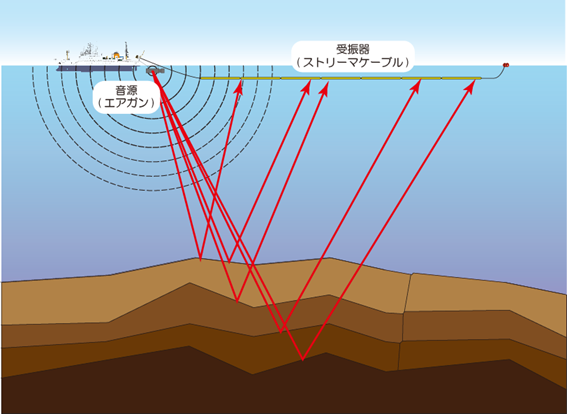
Observation equipment used for stratigraphic exploration includes a "sub-bottom profiler" (Figure 8), which transmits and receives sound waves using a mechanism similar to an echo sounding machine, and a "reflection seismic survey system" (Figure 9), which artificially generates intense very low-frequency sound (seismic waves) by releasing compressed air at once near the sea surface and receives reflected waves using a cable-like sensor deployed on the sea surface.