Section outline

    • With the emergence of acoustic bathymetry, it became possible to measure bathymetry along a ship's wake. Multi-narrow beam echo-sounder was the next step in the development of "surface" bathymetry. This echo sounding machine is widely used for charting and oceanographic research, and can map the bathymetry of the sea floor while sailing.
    • マルチナロービーム測深機

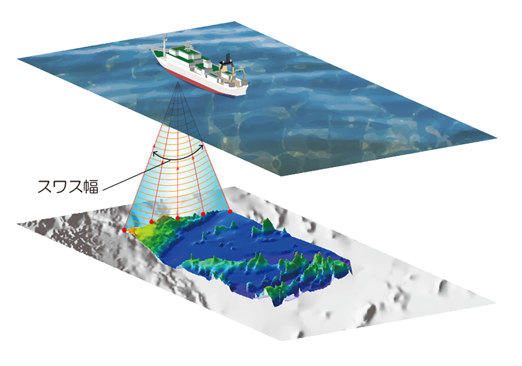
      Figure 4 Bathymetry of Multi-narrow beam echo-sounder

      スワス幅: Swath width


    • Unlike conventional echo sounding machine, which measures the depth at a single point directly below the ship, this machine can simultaneously measure the depth at multiple points spread out in the left and right directions.  By repeating bathymetry while the ship is sailing, the undulations of the seafloor can be depicted in an areal view. The swath width is the horizontal extent of the bathymetry points, and a larger swath width allows a wider area to be measured, while a smaller swath width allows a more detailed depth measurement.

    •       


      Figure 5 Multi-narrow beam echo-sounder observation screen


    • The emergence of Multi-narrow beam echo-sounder has dramatically improved the efficiency of seafloor topographic mapping. Nevertheless, it is not an easy task to survey the vast ocean floor. The area that can be covered in a given voyage schedule is limited, so surveys are repeated over several voyages or by several research ships, and the seafloor is gradually revealed (Figure 6).
    • マルチナロービーム測深機 海底地形図の作成

       Fig. 6 Repeated bathymetric mapping and research voyages