

Tips for using pipettes correctly
Section outline
-
Pipettors (pipettes that use disposable tips to measure liquids with a dial adjustment) are useful. What must be followed was explained in one previous course. On top of that, we will explain the tips necessary to perform the experiment correctly.
Points are,
(1) Do not contaminate the reagents and instruments used in the experiment.
(2) Ensure that the correct volume is aspirated and placed in the desired container.
The key points are as follows.It is important that the tip of the pipette tip be below the liquid level, but it is better not to insert it unnecessarily too deeply.
In particular, if the tip end contacts the bottom of the container, it may not be able to suck the liquid. It is natural.
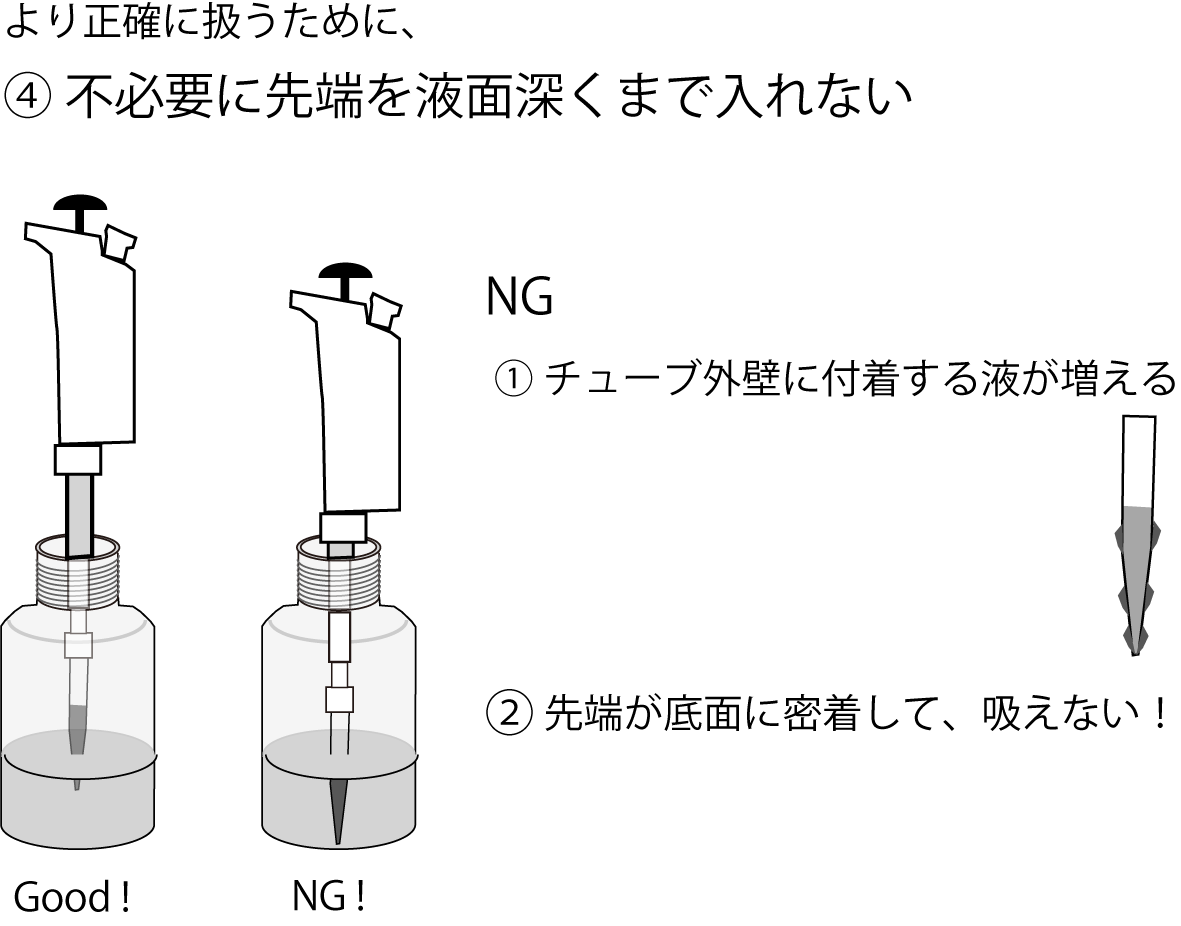
より正確に扱うために、To handle more accurately,
不必要に先端を液面深くまで入れないDo not insert the tip unnecessarily deep into the liquid.
チューブ外壁に付着する液が増えるMore liquid adheres to the outer wall of the tube
先端が底面に密着して、吸えないThe tip adheres to the bottom and cannot be sucked
To avoid contaminating the outside of the reagent bottle or pipette, lower it vertically and raise it vertically without making the slightest movement.
It is good if you feel like a pipette craftsman and can operate it like a machine yourself.
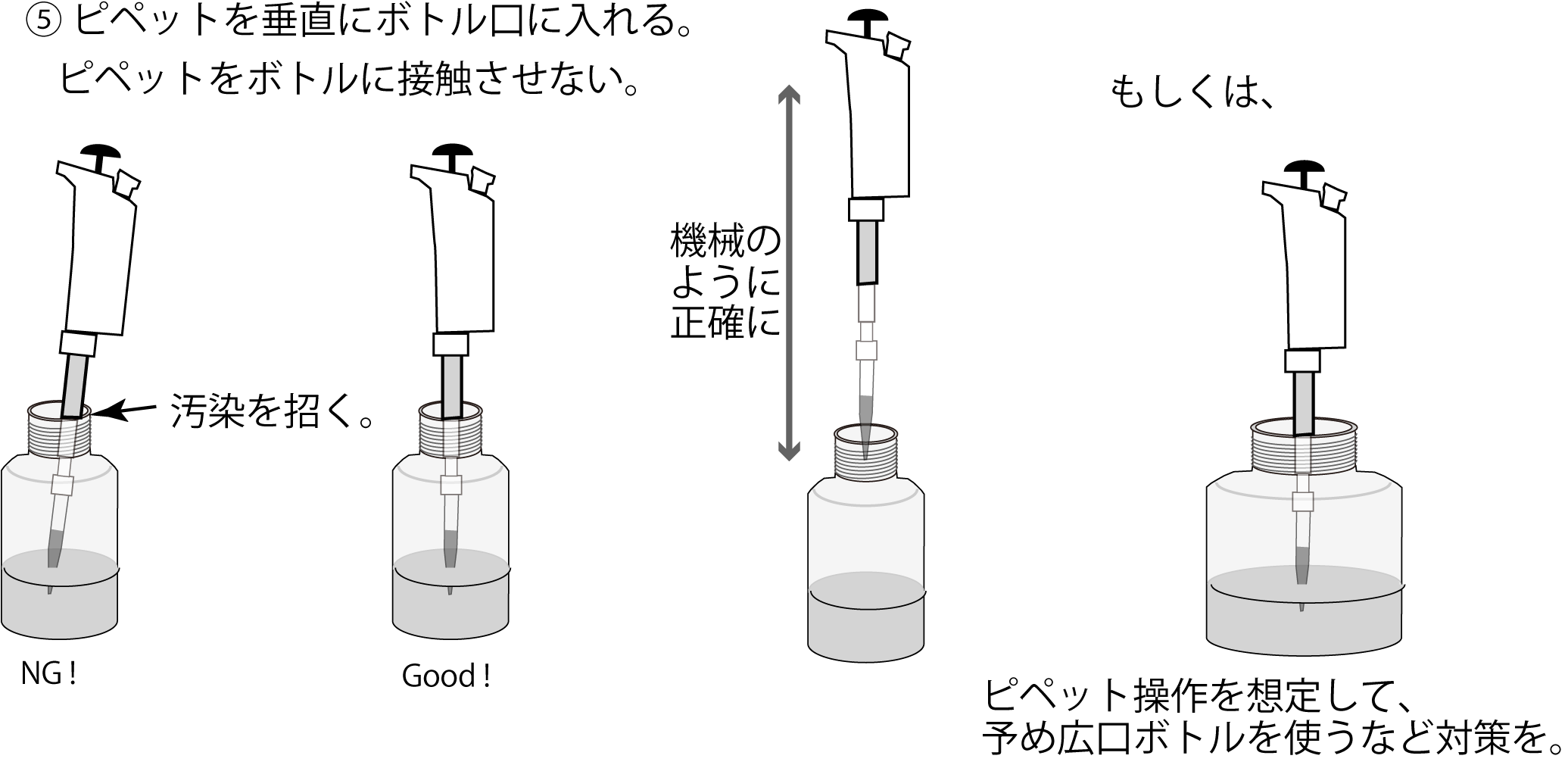
ピペットを垂直にボトル口に入れるPipette vertically into the bottle mouth
ピペットをボトルに接触させないDo not allow the pipette to contact the bottle
汚染を招くcause pollution 機械のように正確にPrecise as a machine. もしくは、ピペット操作を想定して予め広口ボトルを使うなど対策をOr, use a wide-mouth bottle in advance in anticipation of pipette operation.
-
When ethanol, methanol, or acetone is aspirated into a pipette tube (tip), it volatilizes in the pipette.
When volatilization occurs in a pipette, the internal pressure increases and liquid drips from the tip of the tube (tip).
To prevent this, you can fill the pipette with the gas before using it.

揮発性の有機溶剤を扱うときは、チューブ内に揮発させておく。(何度か吸入吐出をする)When handling volatile organic solvents, allow them to volatilize in the tube. (Inhale and dispense several times)
圧上昇increase in pressure
-
If you want to accurately measure a highly viscous liquid (such as sulfuric acid), push the piston all the way to the second stage and suck up the liquid.
★ The dial must be set to a smaller volume than the maximum volume of the pipette.
When discharging, a certain amount is discharged. The remainder is discarded.
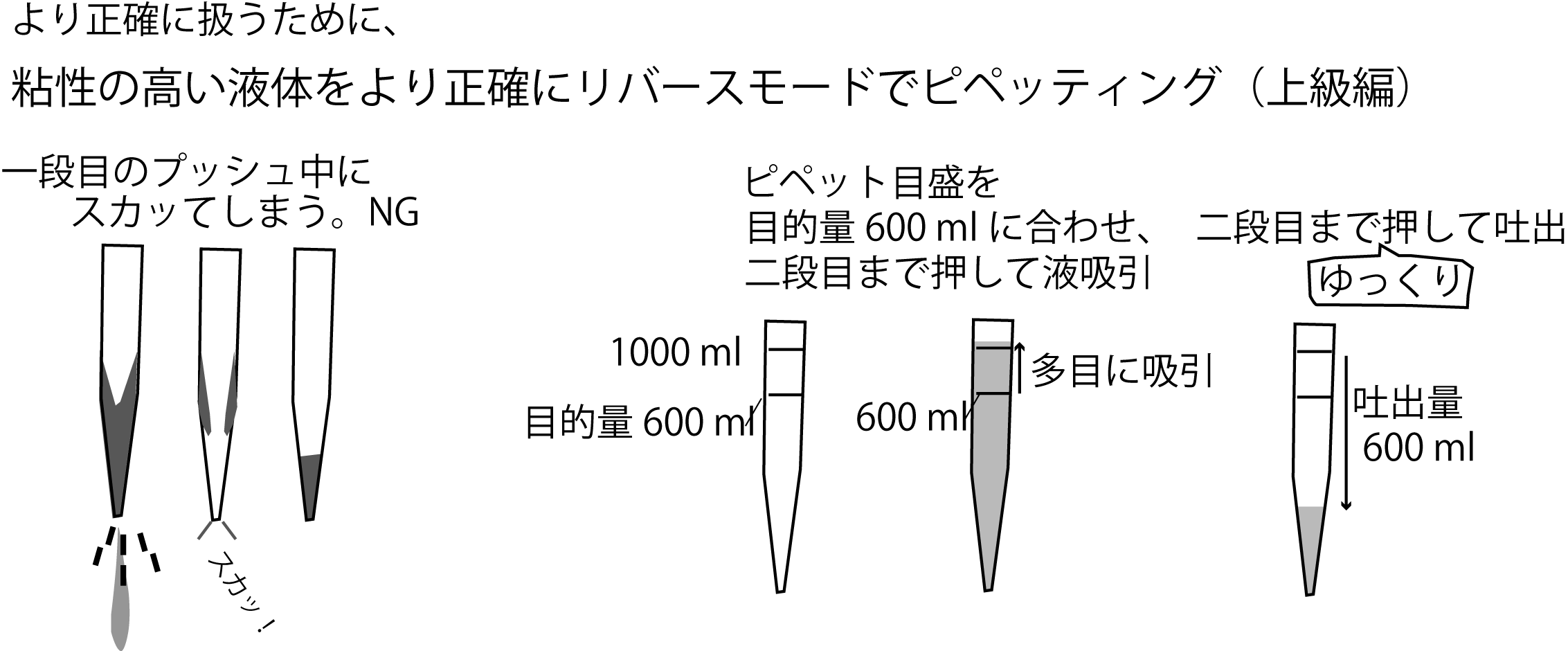
より正確に扱うために、粘性の高い液体をより正確にリバースモードでピペッティング(上級編)Pipetting viscous liquids in reverse mode for more accurate handling (advanced)
一発目のプッシュ中にスカってしまう。During the first push, it is scuffed. スカッ!Scuff! ピペット目盛を目的量600mlに合わせ、二段目まで押して液吸引Adjust the pipette scale to the desired volume of 600 ml, push to the second stage, and aspirate the liquid. 多めに吸引More suction 二段目まで押して吐出Push to the second level and spit out. ゆっくりslowly 吐出量Discharge volume
-
When measuring nutrients in seawater, a number of reagents with surface active agents (detergents) are adjusted. When you aspirate the reagent with a pipette, bubbles are inevitably generated, and these bubbles enter the pipette body. To prevent this, the tube (tip) is removed before bubbles form.
★ For detergent-containing reagents, it is better to use a variable volume dispensing device (such as the Nitimate Stepper) rather than a pipette.
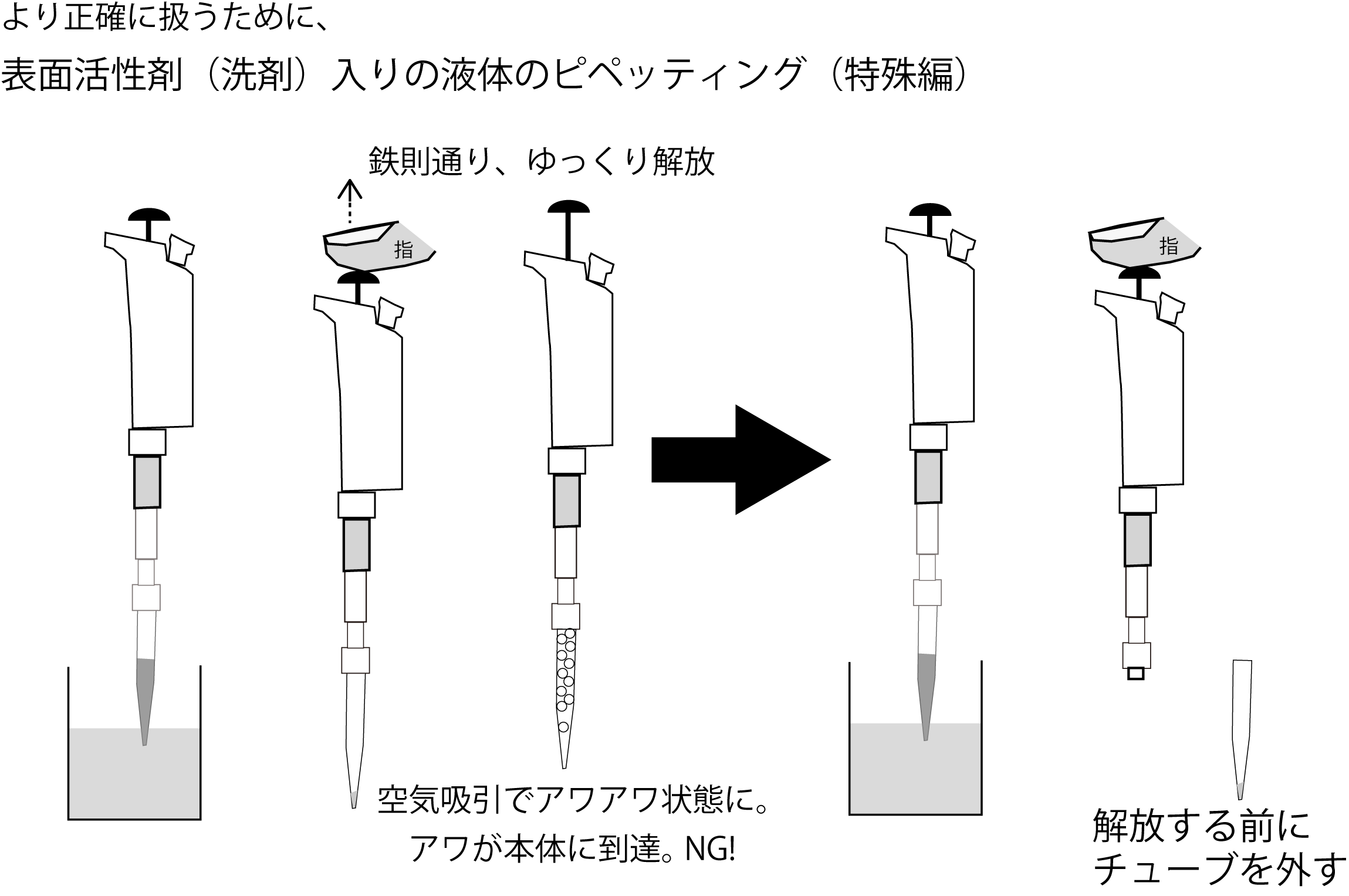
より正確に扱うために、表面活性剤(洗剤)入りの液体のピペッティングPipetting of liquids with surface active agents (detergents) for more accurate handling
鉄則通りゆっくり解放Slowly release as ironclad rule 空気吸入で泡が本体に到達Air inhalation allows bubbles to reach the main unit 解放する前にチューブを外すRemove the tube before releasing it.
-