섹션 개요

    •  Samples collected at SHEBA between October 1997 and October 1998 were used in this study; zooplankton stratified collections were conducted at SHEBA approximately once every two weeks, and the samples were fixed in 4% formalin seawater.

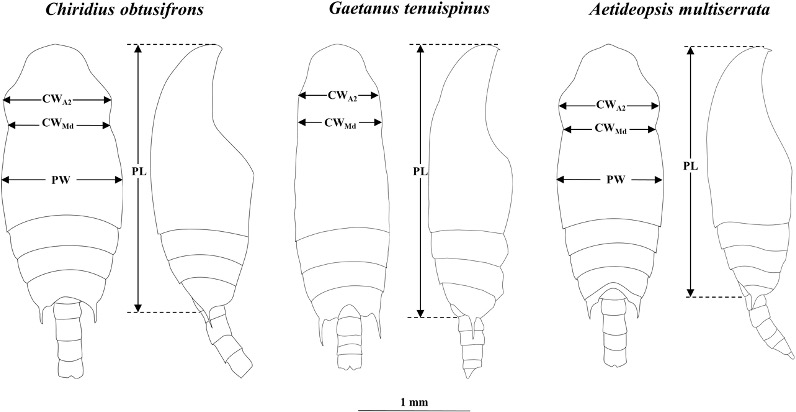
       Among the zooplankton species dominant in the sample, we were able to identify all developmental stages, including the youngest, by measuring the length of each body part of five species of particle-feeding Aetideid copepods that are dominant in the deep sea, which had not been analyzed previously (Figure 1, 2). We also determined the depth distribution of each developmental stage and seasonal changes in population structure to assess when reproduction occurs (Figure 3).

    • 【Reference diagram】

      Fig. 2

      Figure 1. The measurement sites used for species identification of the larvae of Aetideid copepods
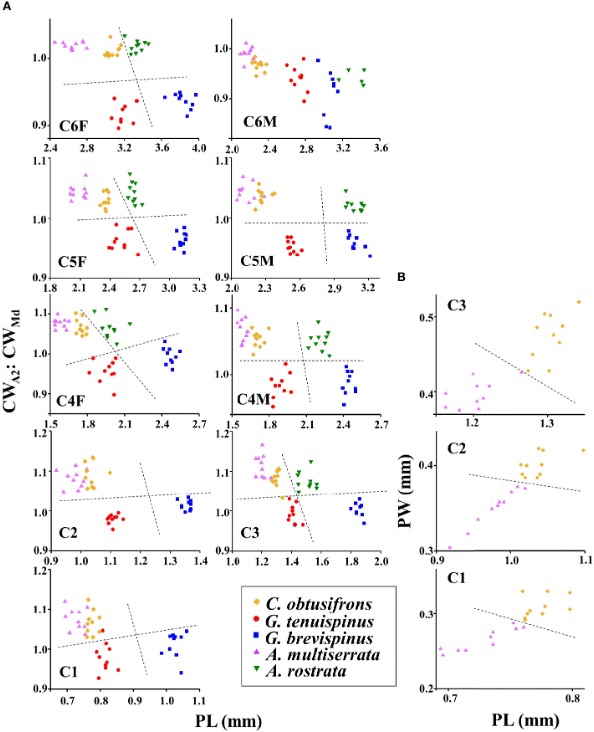
      Fig. 3

      Figure 2. Scatterplot of measured site lengths at each developmental stage of Aetideid copepods. The plotted locations differ by species and can be used for species identification.
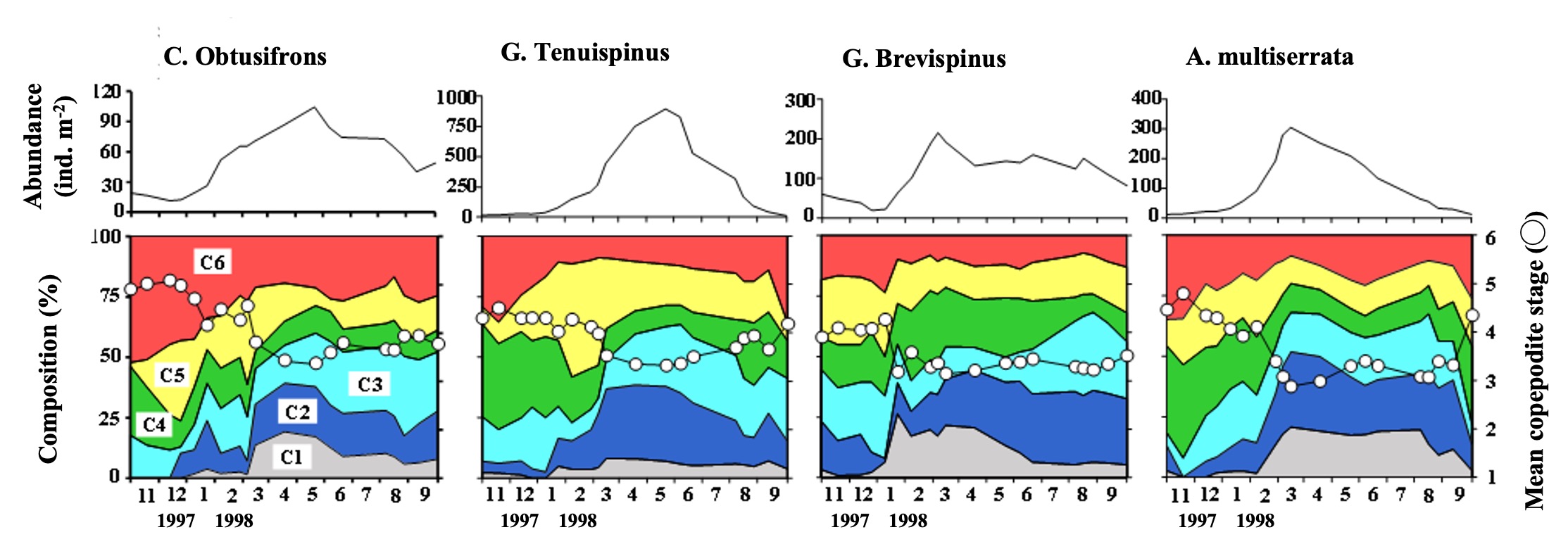
      Fig. 4

      Figure 3. Seasonal changes in the number of emergent individuals (top), developmental stage composition and mean copepodite stage (bottom) of four shallow-distribution Aetideid copepods that appeared in the SHEBA sample.