Section outline

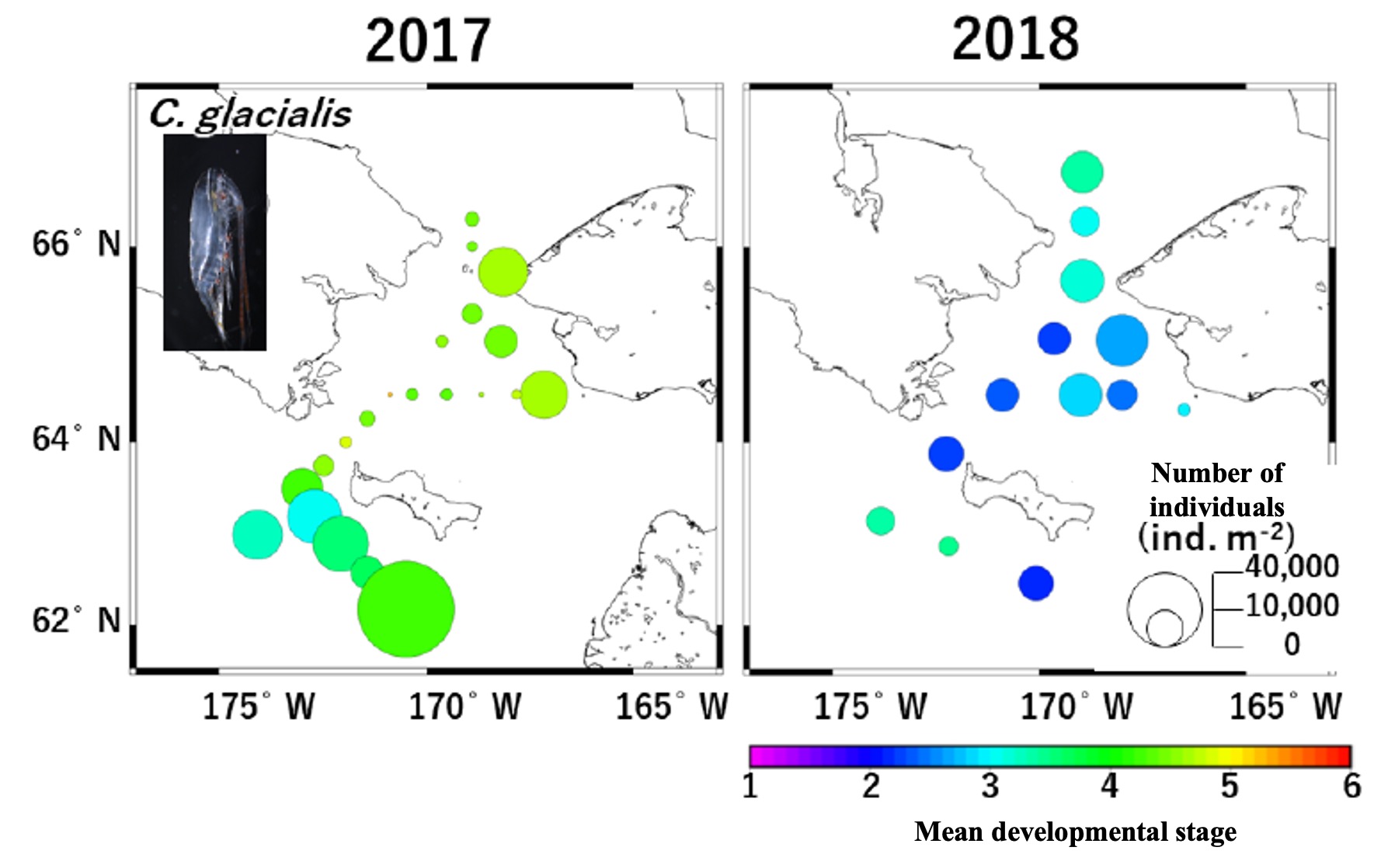
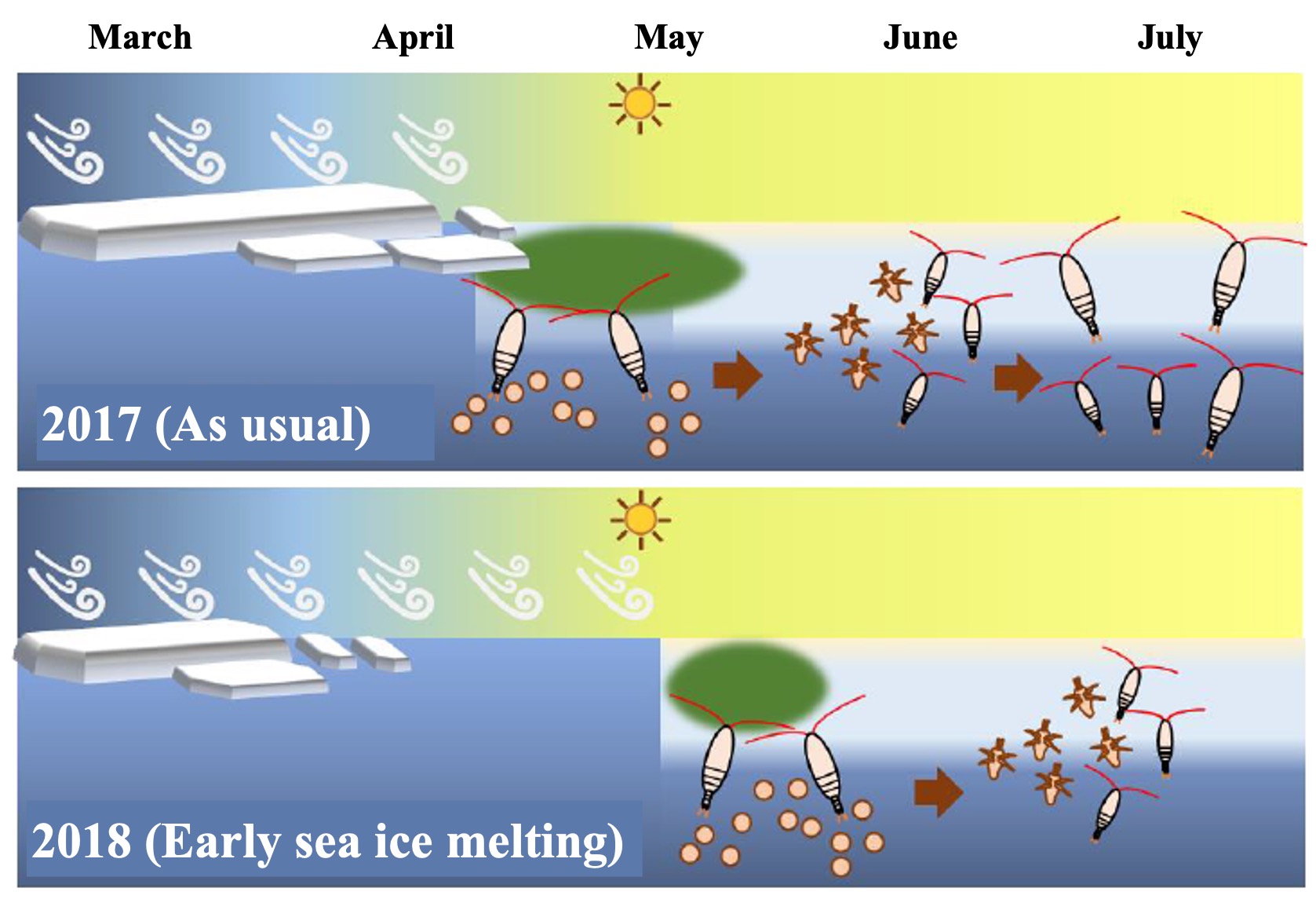
    •  Comparing the population structure of large copepods (Calanus glacialis) between 2017 and 2018, we found that the population was larger and the mean developmental stage was lower in 2018 (Figure 1). This implies that there were more young individuals and that the spawning season for this species was later in 2018. Satellite and mooring system observations indicate that the sea ice melted about a month earlier in 2018 than in usual years, resulting in a later phytoplankton bloom. Since these large copepods spawn while feeding, it is likely that the late bloom delayed the spawning season for this species (Figure 2). 

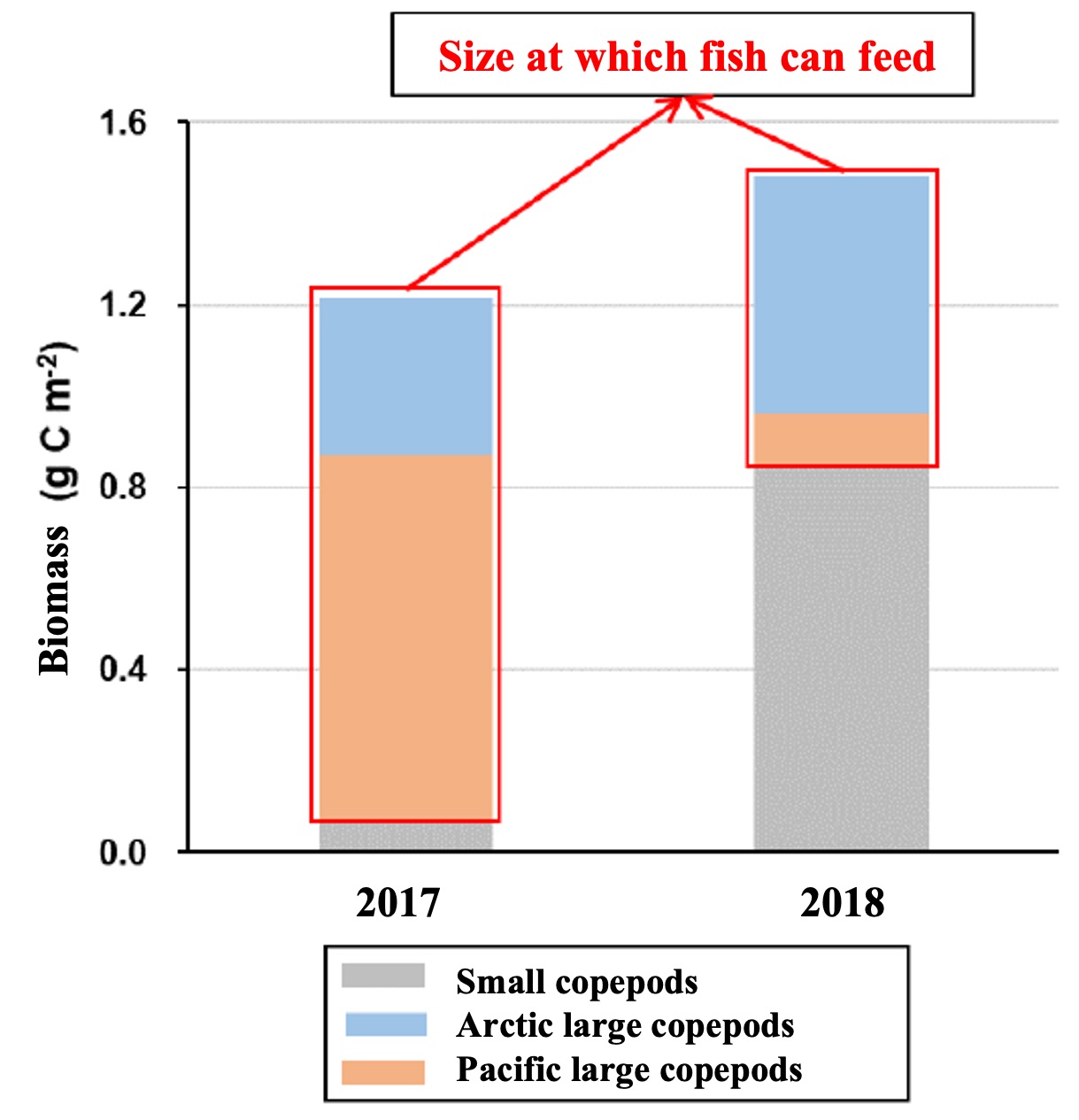
       Comparing the biomass of copepods in 2017 and 2018, we found that in 2017 there were more large copepods and in 2018 there were more small copepods (Figure 3). Considering the aspect of food for high-order predators, small copepods are considered less nutritious because they do not accumulate oil in their bodies and are less likely to be eaten due to their smaller size. In other words, in 2018, the number of large copepods, which are good food for fishes, decreased and instead there were more small copepods, which may have worsened the feeding environment for higher-order predators. 

       Thus, it is clear that the timing of the phytoplankton bloom changed, beginning with changes in the timing of sea ice melting, and that the effects of these changes extended to higher predators via copepods. 

    • Fig. 3


      Figure 1. Population size and mean developmental stage of the large copepod C. glacialis. The size of the circle indicates the number of populations, and the color indicates the mean developmental stage. 


    • Fig. 4

      Figure 2. Schematic illustration of sea ice melt, phytoplankton blooms, and copepod spawning and growth. 

    • Fig. 5

      Figure 3. Annual comparison of copepod biomass. Colors indicate size and species of copepods. Red boxes indicate the biomass of copepods large enough to be fed by fish.