섹션 개요

    • カラフトマス鼻曲がり発達の機序

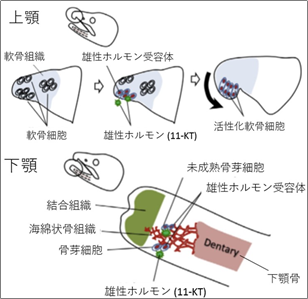
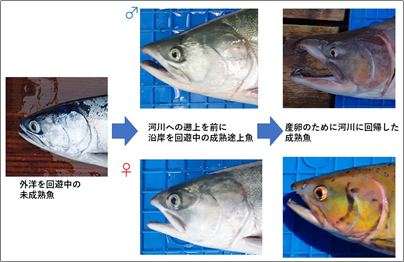
                         Mechanisms of pink salmon snout bend development (left) and changes associated with maturation (bottom)
                      カラフトマス鼻曲がり発達 成熟に伴う変化


      (left figure)

      上顎: upper jaw 軟骨組織: cartilage tissue 軟骨細胞: cartilage cells 雄性ホルモン受容体: male hormone receptor 雄性ホルモン(11-KT: male hormone (11-KT) 活性化軟骨細胞: activated cartilage cells

      下顎: lower jaw 結合組織: connective tissue 海綿状骨組織: trabecular bone tissue 骨芽細胞: osteoblast 雄性ホルモン: male hormone 未成熟骨芽細胞: Immature osteoblasts 雄性ホルモン受容体: male hormone receptor 下顎骨: mandible


      (right figure)

      外洋を回遊中の未成熟魚: immature fish migrating in the open sea 河川への遡上を前に沿岸を回遊中の成熟途上魚: maturing fish migrating along the coast before returning to the river 産卵のために河川に回帰した成熟魚: mature fish returning to river to spawn


    • In male salmons, the snout grows into a hooked snout with sexual maturity. Our research group has elucidated the developmental mechanism of bent snout formation and analyzed whether male sex hormones are involved.

      The results showed that chondrocytes and cartilage matrix increased in the maxilla, while trabecular bone tissue added to the tip of the dentary bone developed and elongated in the mandible. Furthermore, genetic analysis by PCR and histological analysis by immunostaining revealed the localization of male hormone receptors in both jaws, suggesting the involvement of male hormones. Blood analysis also showed that the blood 11-KT concentration increased with maturity, with higher 11-KT concentrations in mature males compared to mature females, suggesting that the bent snout structure develops via male hormones.