
Secondary sexual characteristics of anadromous salmonids the genus Oncorhynchus
Section outline
-
-
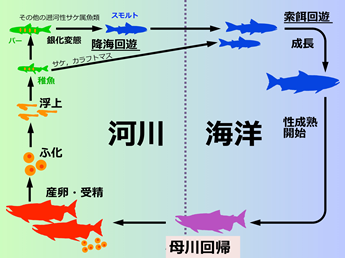
(left figure)
河川: river
産卵・受精: spawning and fertilization →ふ化: hatching →浮上: surfacing →稚魚: juvenile降海回遊: descending migration
サケ,カラフトマス: chum salmon and pink salmon その他の遡河性サケ属魚類: other anadromous salmonsパー: parr →銀化変態: smoltification →スモルト: smolt
海洋: ocean
索餌回遊: foraging migration
成長: growth →性成熟開始: start of sexual maturity →母川回帰: return to mother river
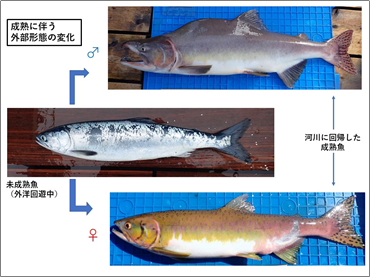
(right figure)
成熟に伴う外部形態の変化: changes in external form with maturity
未成熟魚(外洋回遊中): immature fish (migrating on the open sea) 河川に回帰した成熟魚: mature fish returning to rivers
-