섹션 개요

    •              

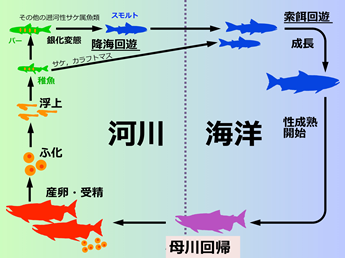
      (left figure)

      河川: river

      産卵・受精: spawning and fertilization →ふ化: hatching →浮上: surfacing →稚魚: juvenile降海回遊: descending migration

      サケ,カラフトマス: chum salmon and pink salmon その他の遡河性サケ属魚類: other anadromous salmonsパー: parr →銀化変態: smoltification →スモルト: smolt

      海洋: ocean

      索餌回遊: foraging migration

      成長: growth →性成熟開始: start of sexual maturity →母川回帰: return to mother river


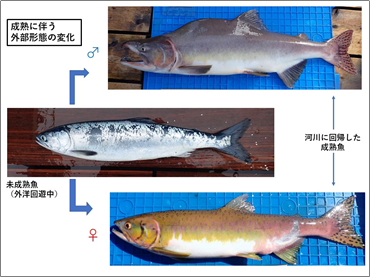
      (right figure)

      成熟に伴う外部形態の変化: changes in external form with maturity

      未成熟魚(外洋回遊中): immature fish (migrating on the open sea) 河川に回帰した成熟魚: mature fish returning to rivers


    • Among fish that migrate between the sea and rivers, those that go upstream to spawn are called anadromous migratory fish. Salmonids (Genus Oncorhynchus: hereafter referred to as “salmons”), which are representative of this group, are single spawners with a life history in which most species, with the exception of a few species, die after spawning in the river. During their foraging migration in the ocean, both sexes look similar, but when they return to rivers and mature, they show completely different external morphologies.  These are called secondary sexual characteristics, and many of them are thought to be used for fighting between males and appealing to females. Previous studies have also shown that 11-ketotestosterone (11-KT), one of the major male sex hormones (androgens) in bony fishes, is involved in the development of secondary sexual characteristics.