

Application to oceanographic observation
Perfilado de sección
-
-
Monitoring results for organic gases in seawater (isoprene is shown above) from the North Pacific to the North and South Indian Oceans and the Arctic Ocean are shown below. For more details on the results, see the references cited below.
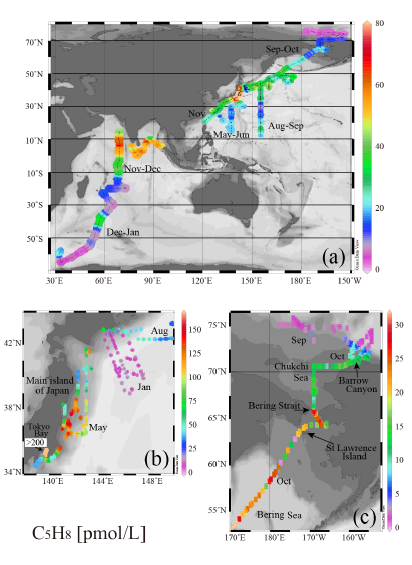
(Reference: Ooki et al. A global-scale map of isoprene and volatile organic iodine in surface seawater of the Arctic, Northwest Pacific, Indian, and Southern Oceans, JOURNAL OF GEOPHYSICAL RESEARCH-OCEANS,
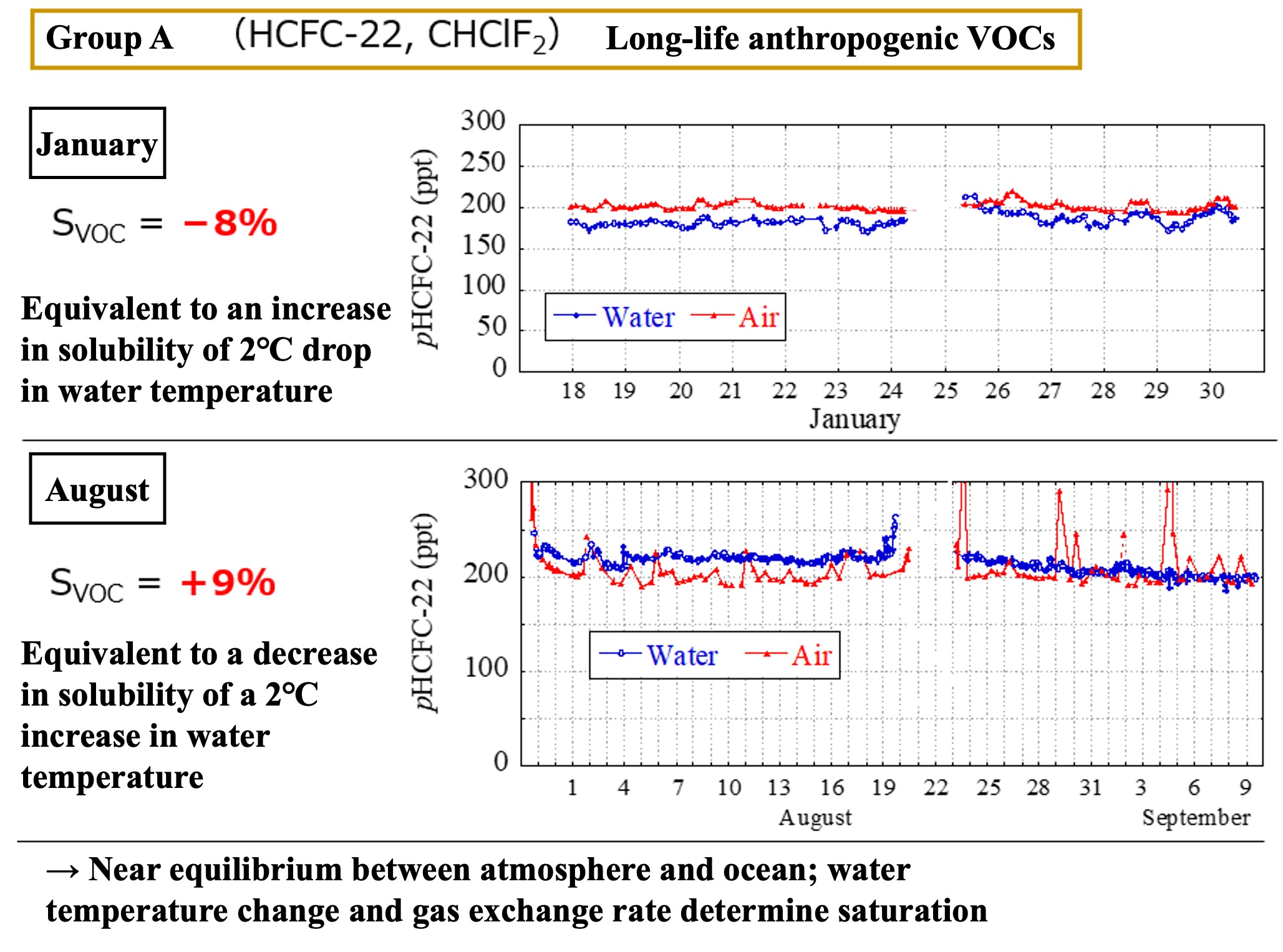
120( 6) ,4108-4128, (2015) DOI:10.1002/2014JC010519) Observed in the Pacific Ocean around Japan The results of alternating measurements of organic gases (halocarbons) in air and seawater are shown below. A:Anthropogenic components that are stable in the atmosphere (mostly CFCs) Since it is stable in seawater, the atmosphere and seawater are close to equilibrium. However, the equilibrium partial pressure in seawater changes with changes in water temperature, so the degree of saturation in seawater is reversed in winter and summer.
B:Methyl chloride (CH3Cl): Mainly derived from terrestrial plants, but also produced and lost in seawater. Oversaturated in seawater in biologically productive mixed and subtropical waters (probably produced by organisms in seawater) 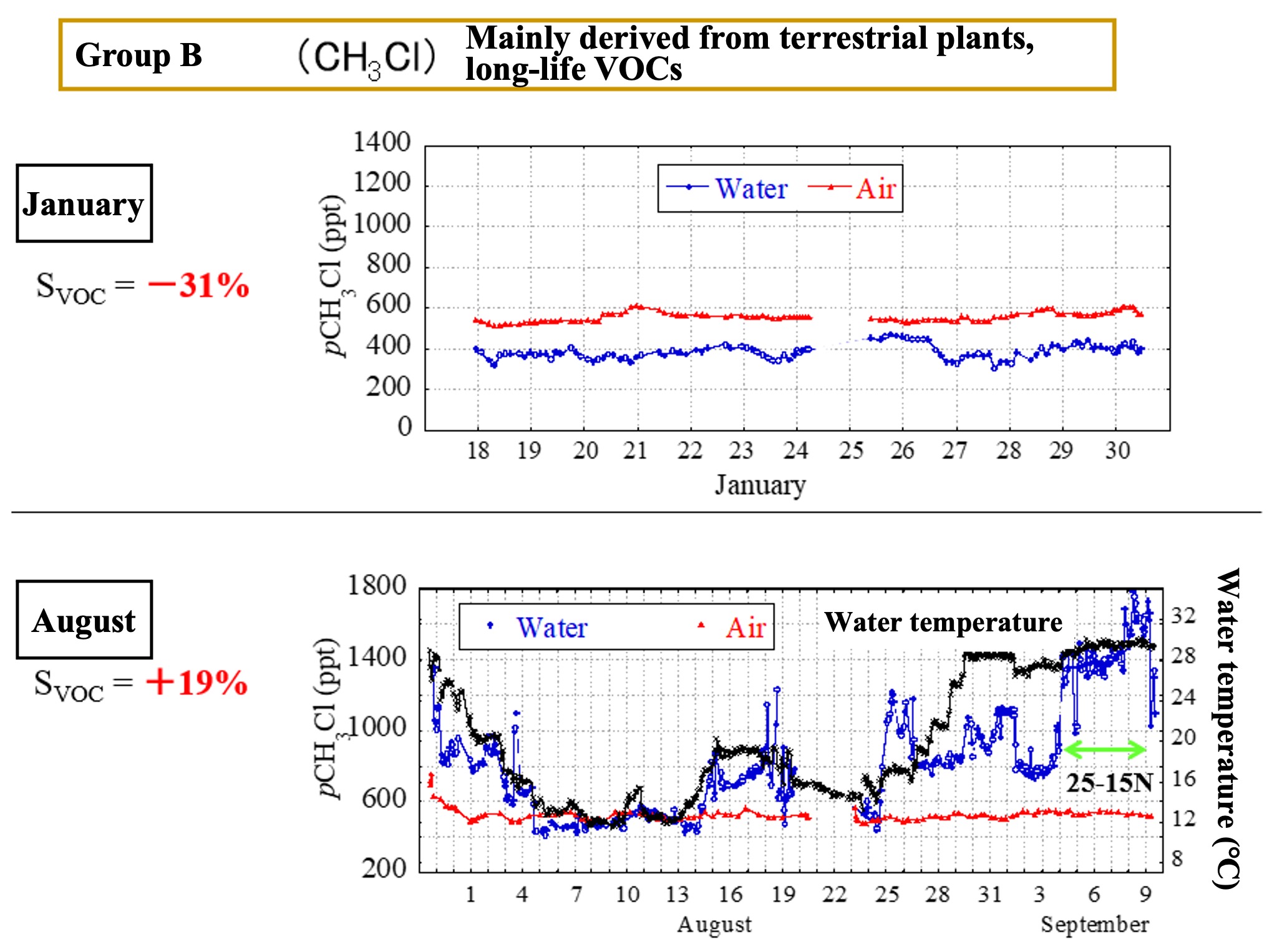
C:Methyl bromide (CH3Br): Mainly derived from terrestrial plants, but also produced and disappeared in seawater. Behavior is similar to methyl chloride, but for some reason it is unsaturated in subtropical waters. It is thought to be decomposed by microorganisms in seawater, but the details are completely unknown. 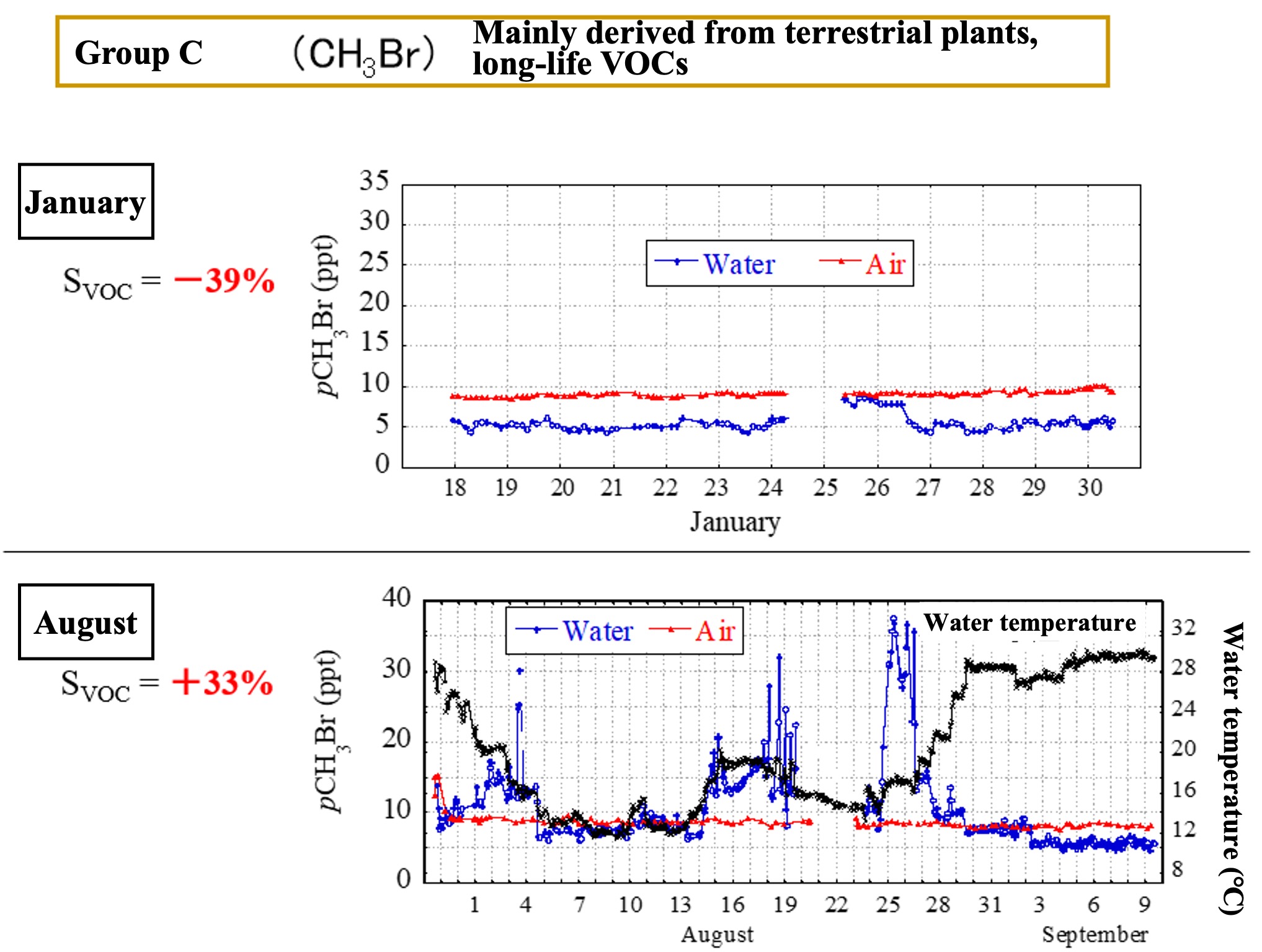
Figure plotting the partial pressure of methyl chloride and methyl bromide in seawater (unit: patm) In the subarctic, the partial pressures of methyl chloride and methyl bromide were positively correlated, but in the subtropics, no correlation was observed. 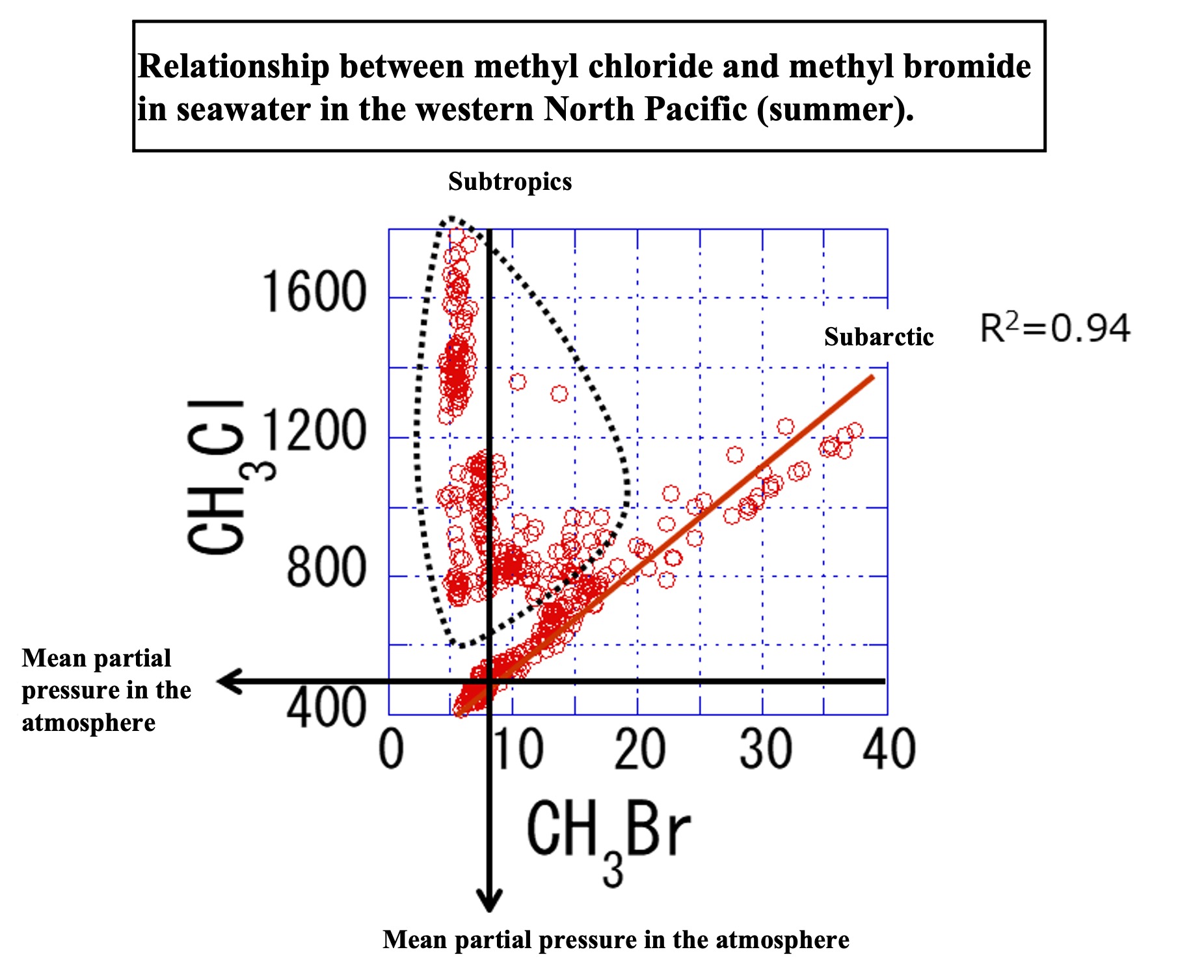
-
Reference: Ooki et al., Methyl halides in surface seawater and marine boundary layer of the northwest Pacific, JOURNAL OF GEOPHYSICAL RESEARCH-OCEANS (
115), C10013 (2010), DOI: 10.1029/2009JC005703
-