Breeding experiments were conducted at the
Akkeshi Coastal Research Station of the Field Science Center for Northern
Biosphere, Hokkaido University, using mysids and shimofuri sculpin (hereafter
referred to as “sculpin”) collected from Lake Akkeshi in eastern Hokkaido.
Fluorescent polyethylene particles with a particle diameter of 30 μm were used
as microplastics. Direct ingestion of microplastics from the water was examined
by rearing sculpin in tanks containing two different concentrations (200 and
2000 μg/L) of microplastics in seawater (water group). On the other hand,
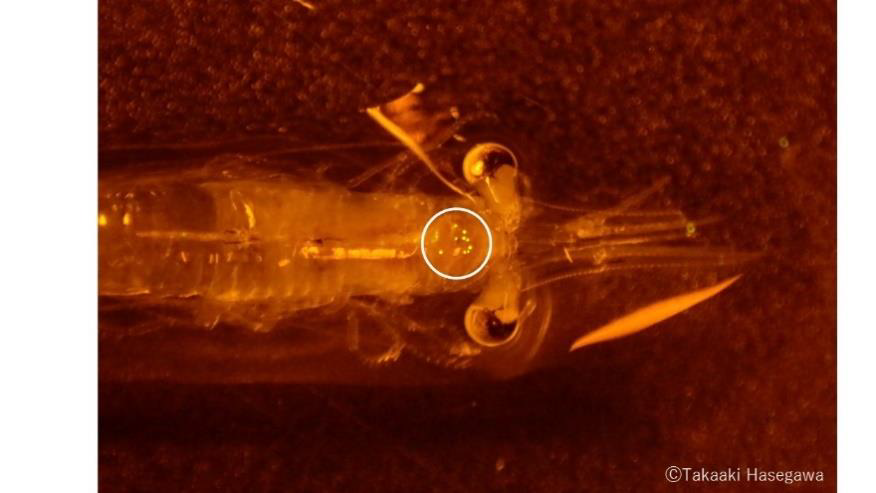
uptake of microplastics through indirect pathways via prey was investigated by
feeding mysids (Fig. 2) exposed to microplastics at the same concentration
conditions to sculpin in tanks without microplastics (mysid group). The amount
and particle size of microplastics accumulated in the digestive tract of
sculpin in each group were quantified and compared among treatment groups.