HASEGAWA Takaaki, a master course student
at the Graduate School of Environmental Science, Hokkaido University, and NAKAOKA
Masahiro, a professor at the Field Science Center for Northern Biosphere, same
university, have revealed that the amount of microplastics taken up by fish
from seawater is much higher through prey organisms than through direct intake
from the water.
As marine pollution from plastic debris
continues to increase worldwide, there is particular concern about the impact
of microplastics on marine organisms. Fish take up microplastics not only
directly from seawater but also indirectly by feeding on prey, but the relative
importance of the two pathways has been unclear. In this study, we examined the
importance of the prey-mediated pathway in the uptake of microplastics by fish
using the carnivorous fish, Myoxocephalus brandti, and its prey, the
mysids, Neomysis spp.
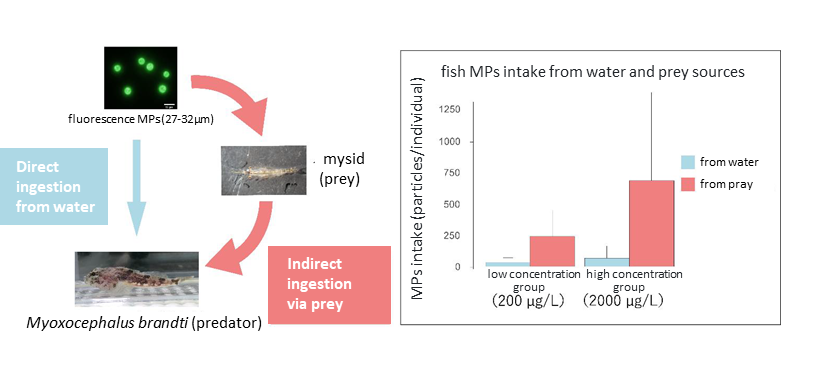
The results showed that the amount of
microplastics ingested by M. brandti through the feeding of
microplastic-containing mysids was 3 to 11 times greater than that ingested
directly from the water. In addition, microplastics taken up by the fish via
prey were smaller in size than those taken up directly, because microplastics
are broken down into smaller particles during the process of mysid uptake. It
has been pointed out that microplastics can migrate into body tissues and cause
adverse effects. Plastics also contain toxic chemicals, which may also affect
higher consumers by concentrating through the food chain. Further research on
these effects is expected.
The result of this study was published in journal Environmental Pollution released on 9 January 2021.