單元大綱

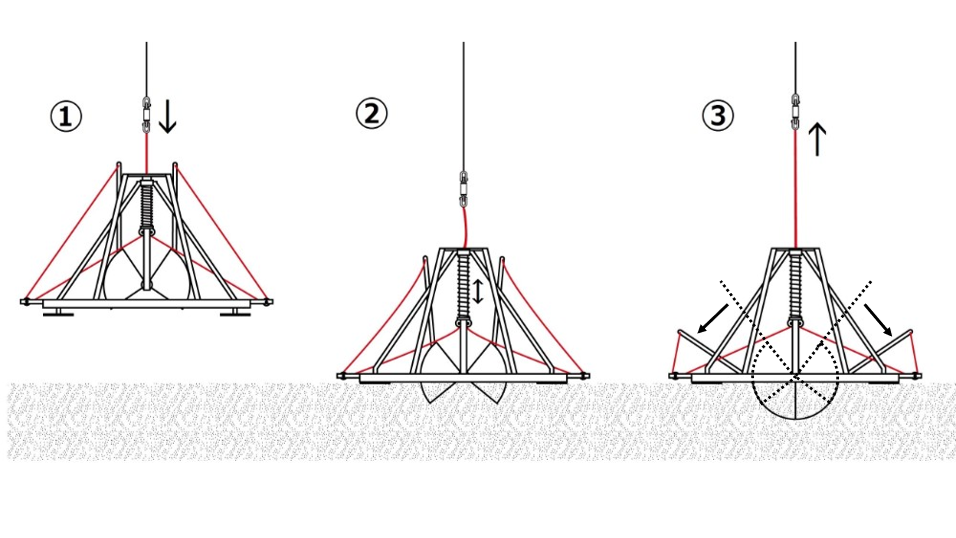
    • The operation of the Smith-McIntyre Bottom Sampler during mud sampling is shown in Fig. 3. First, the mud collector is lowered towards the seabed with the bucket open (Fig. 3-①). When the mud collector eventually reaches the seabed, the trigger operates and the open-mouthed bucket is inserted into the seabed surface by the restoring force of the released spring and its own weight (Fig. 3-②). When the wire is wound up, the bucket closes and the sediment is collected (Fig. 3-③).

      Details of the “insert bucket into seabed” and “close bucket” mechanisms presented here are shown in 2)-1 and 2)-2 respectively.


    • Fig. 3 Operation during mud sampling


    • 2)-1 Mechanism for inserting the bucket into the seabed

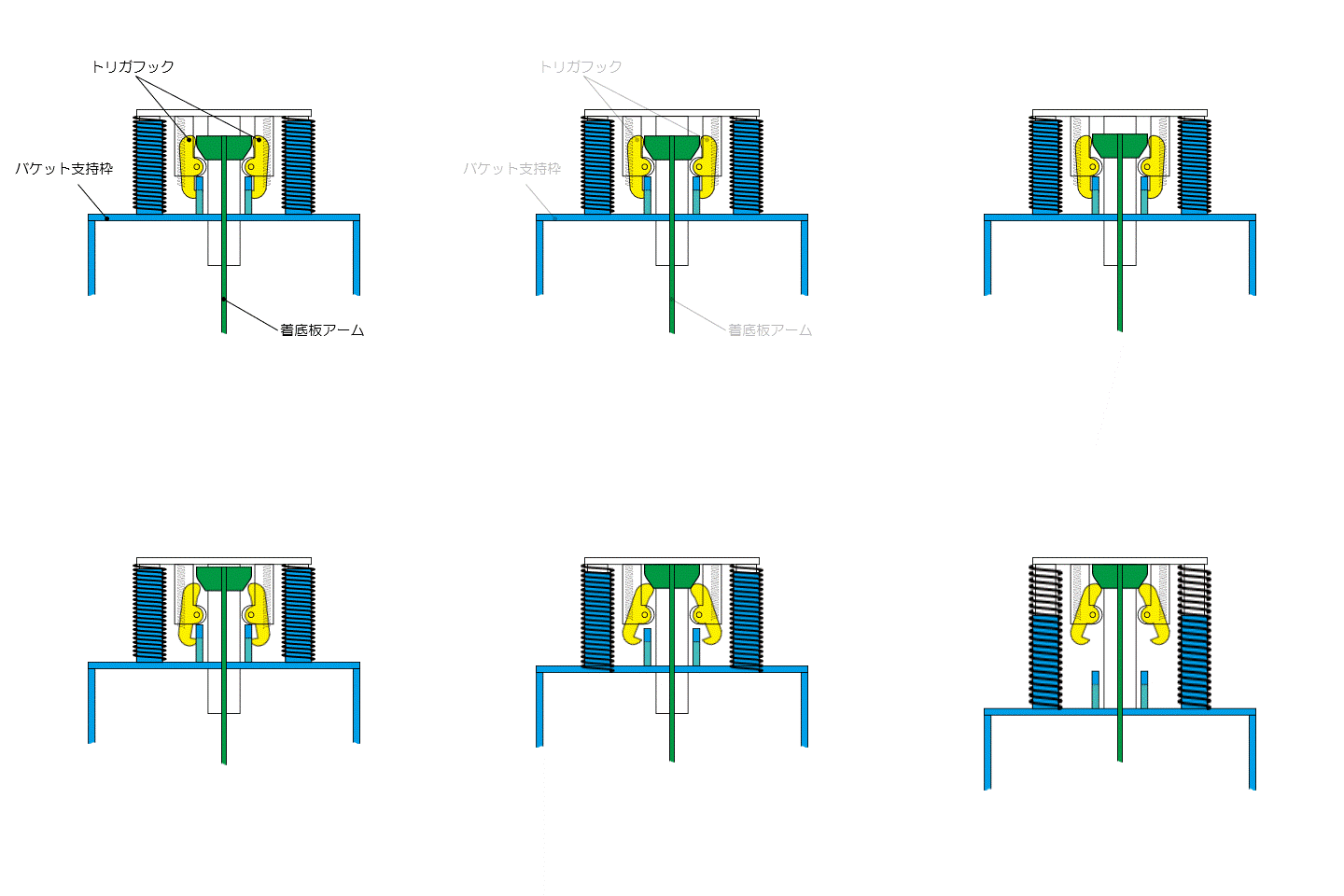
      The Smith-McIntyre Bottom-sampler uses the weight of the bucket and the restoring force of the spring shown in Fig. 2-⑧ to insert the bucket into the seabed. Figure 3- shows the spring restoring itself. The restoration is shown in detail in Fig. 4. When the landing plate reaches the seabed, the landing plate arm is pushed up and the trigger hook securing the bucket support frame is released. This releases the contracted spring and the bucket is pushed down and inserted into the seabed.


    • Fig. 4 Actuation mechanism of the landing plate trigger


    • 2)-2 Mechanism for closing the bucket

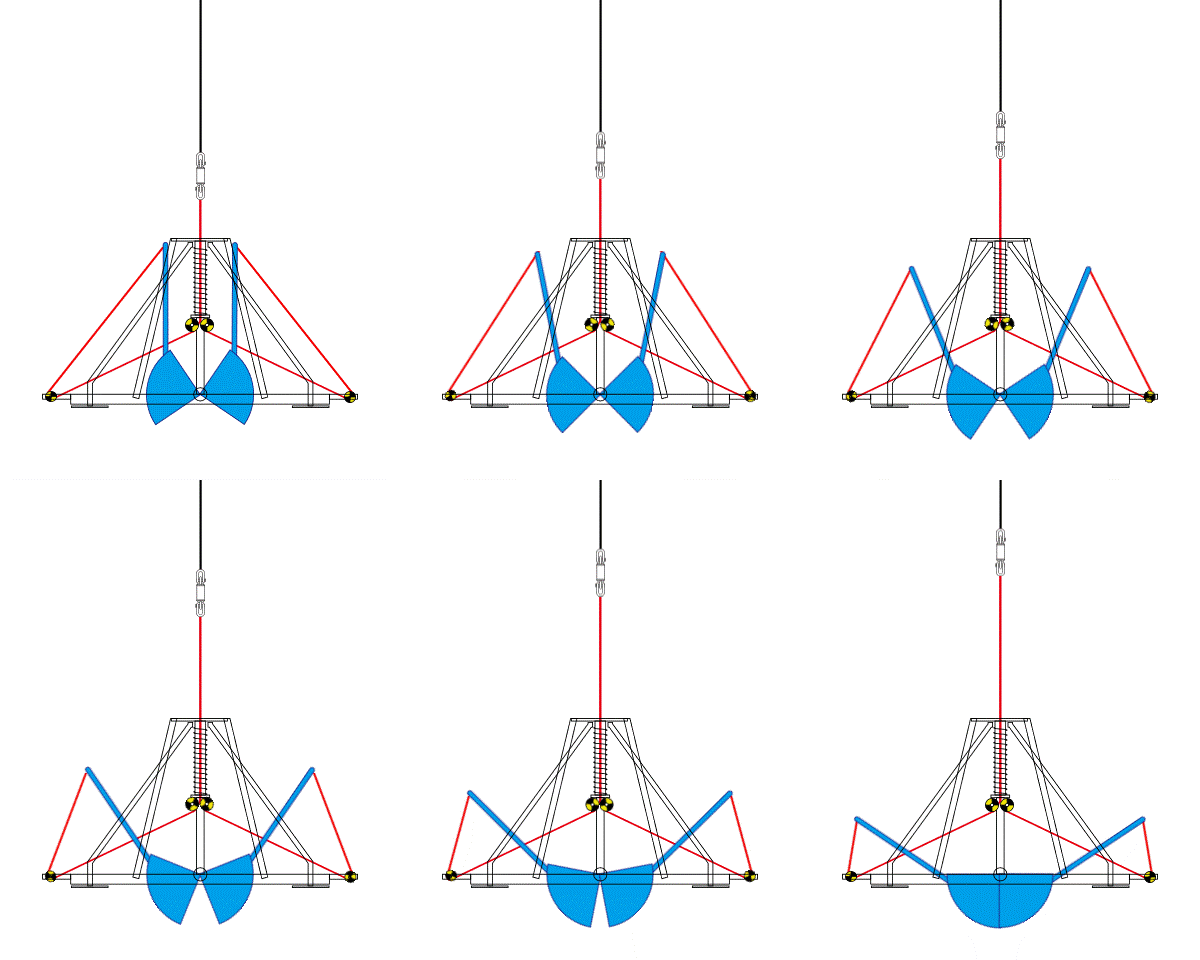
      Sediment is collected by closing a bucket inserted into the seabed. The closing of the bucket is shown in Figure 5. When the winch wire is wound up after landing on the seabed, the tip of the bucket arm spreads outwards, pulled by the closing wire. The bucket in conjunction with the bucket arm closes by the principle of leverage and collects the sediment as it gouges the seabed. When the bucket is closed, the mud sampler is lifted up by a closing wire. It is then taken off the bottom and transported on board.


    • Fig. 5 Mechanism for closing the bucket