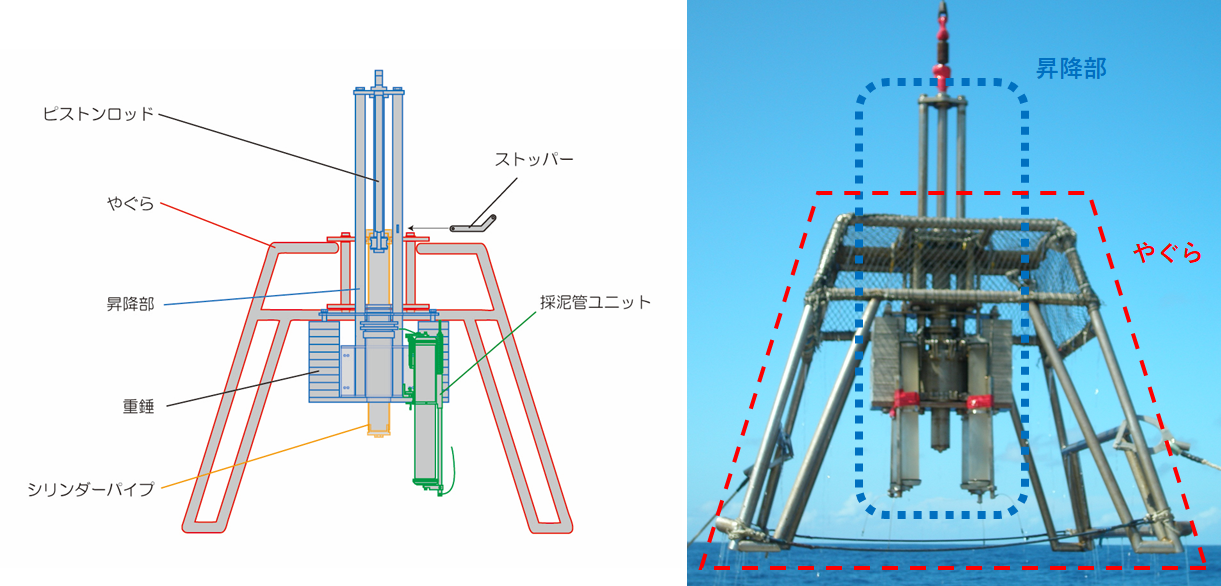
A schematic diagram of a multiple corer is shown in Figure 3. The "lifting section" to which the "mud sampling pipe unit" is attached is housed inside a metal pipe frame shaped like a turret (hereinafter referred to as "turret"). Details of the operation of each part are shown in detail in later chapters. The lifting section can be fitted with weights to adjust its weight according to the hardness of the bottom sediment. A maximum of 10 lead plates, each weighing 12 kg each, can be mounted evenly at the two mounting points on the left and right sides of the unit.
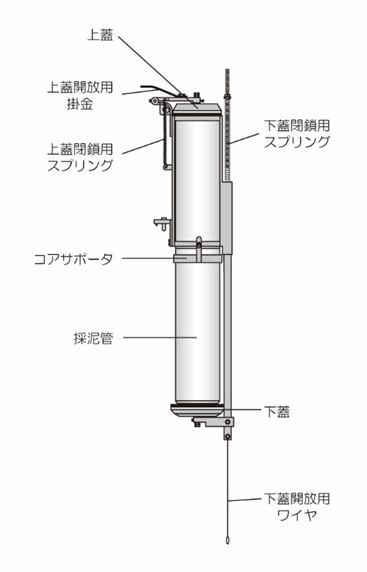
Figure 4 shows the details of the "mud sampling tube unit. The "Mud Pipe Unit" consists of a "mud pipe" fixed to a "mud pipe support frame" (hereinafter referred to as "arm") using a metal ring (core supporter) with a latch, and up to eight units can be attached to the elevator. The name "multiple corer" comes from the fact that multiple units of the mud sampling tubes introduced here can be mounted. The mud tubes are transparent polycarbonate tubes that allow clear visibility of the sediment to be collected and the seawater directly above. The arm is equipped with a mechanism to cover the mud tubes as well as a jig to attach the tubes to the lifting section.
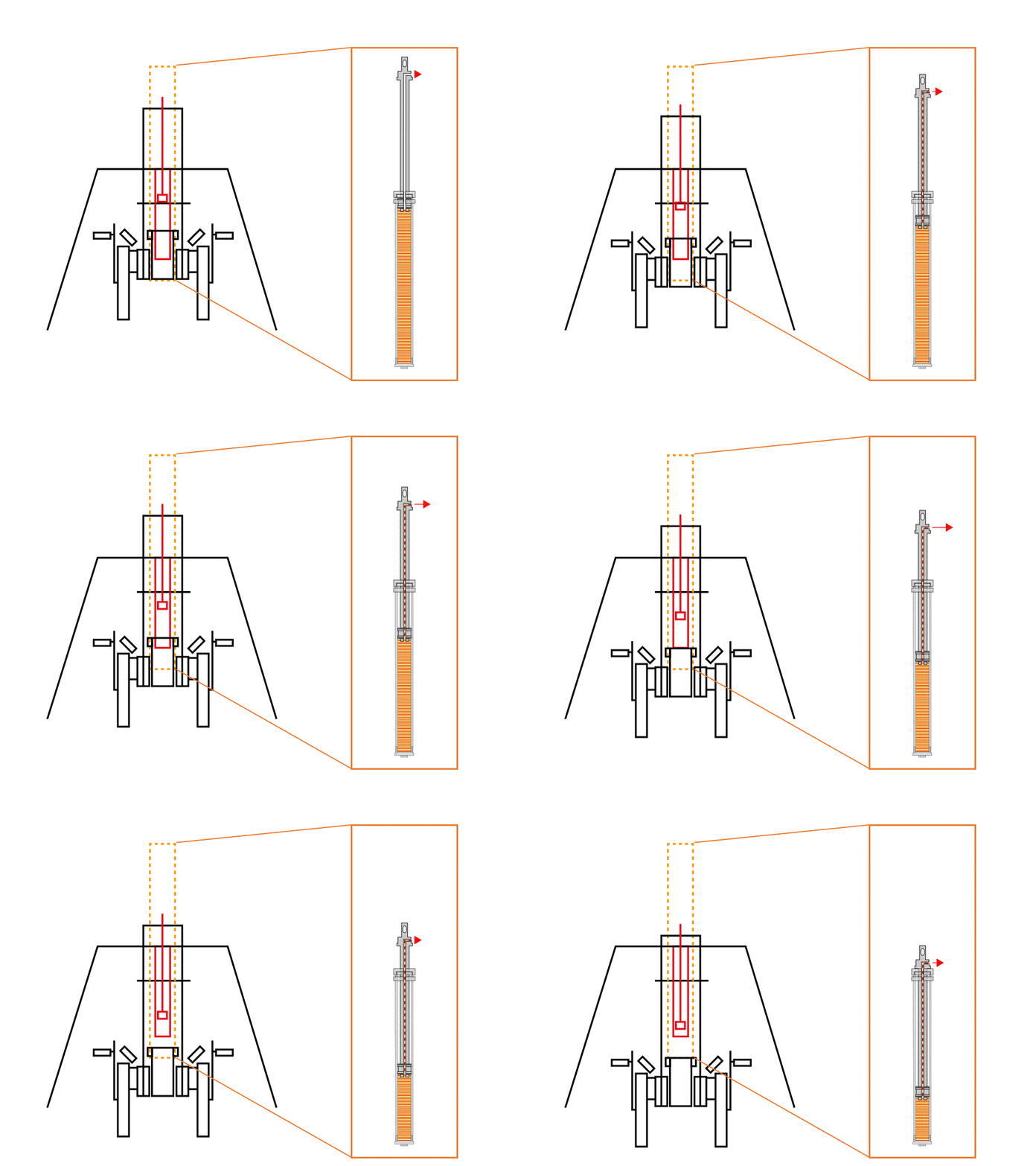
The metal pipe supporting the elevator consists of a hollow cylinder pipe and a piston rod, similar to a syringe. When the bottom sampler reaches the seafloor and the ascending section descends, seawater filled in the cylinder is pushed out through the small tube in the piston rod. At this time, the small hole in the cylinder through which the seawater exits creates water hydraulic pressure that causes the elevator to descend slowly. This mechanism is called a water hydraulic damper, and it is the feature of the multiple corer that allows for mud extraction with minimal disturbance (Figure 5).