

Topic 1
Garis besar topik
-
-
Definition of surface layer (Brief description)
According to a Descriptive physical oceanography, Talley et al,Definition of surface layer: surface mixed layer + water subducted layer of mixed layer
Think of it as a layer where water is moved by the force of wind.
Roughly,
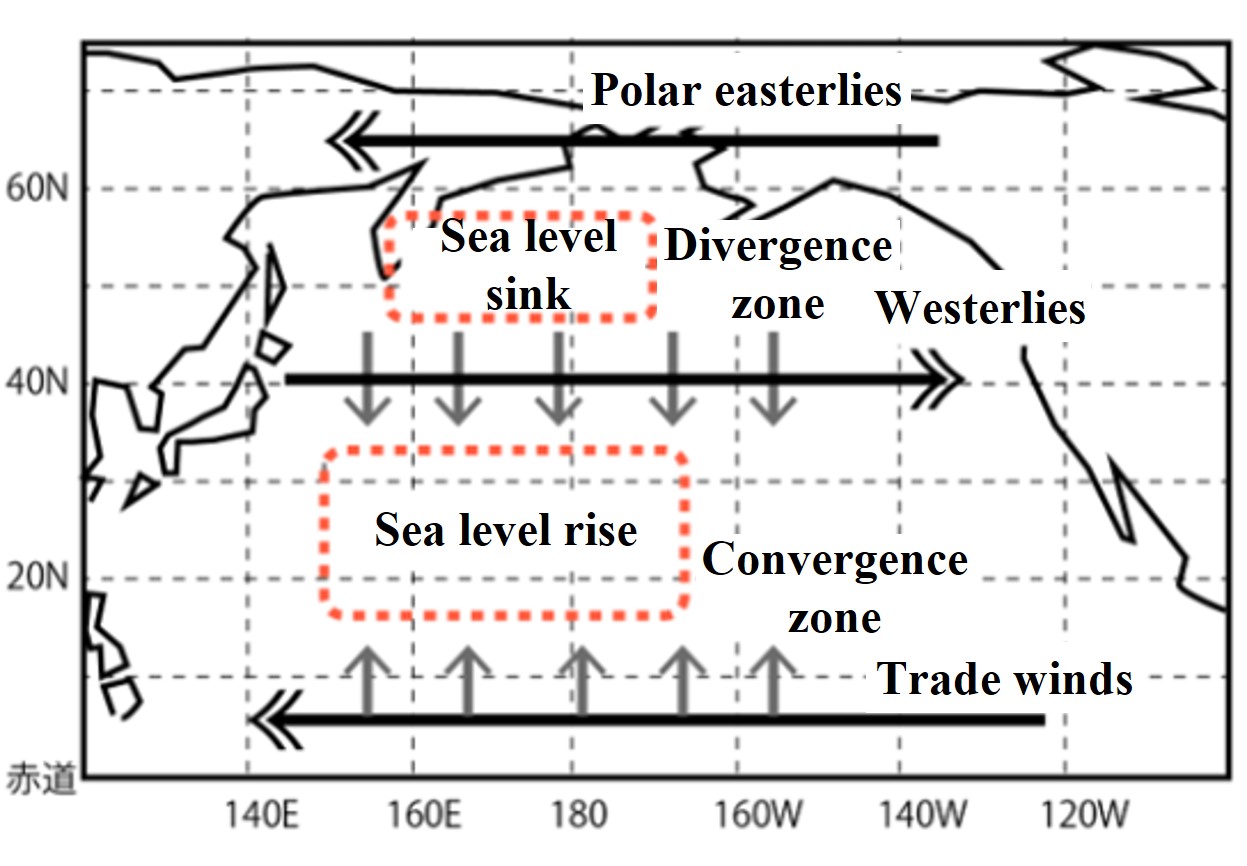
The Westerlies blow from west to east around 40° N. The Westerlies carry near-surface water in the subarctic to the subtropical by Ekman transport. The subtropical region is a convergence zone where near-surface water is concentrated by the wind, forming a thick surface layer.Subarctic: Surface mixed layer 0-200m + subduction layer 0m = surface 200m
Subtropical: surface mixed layer 0-100m + subduction layer 600m = surface 700m
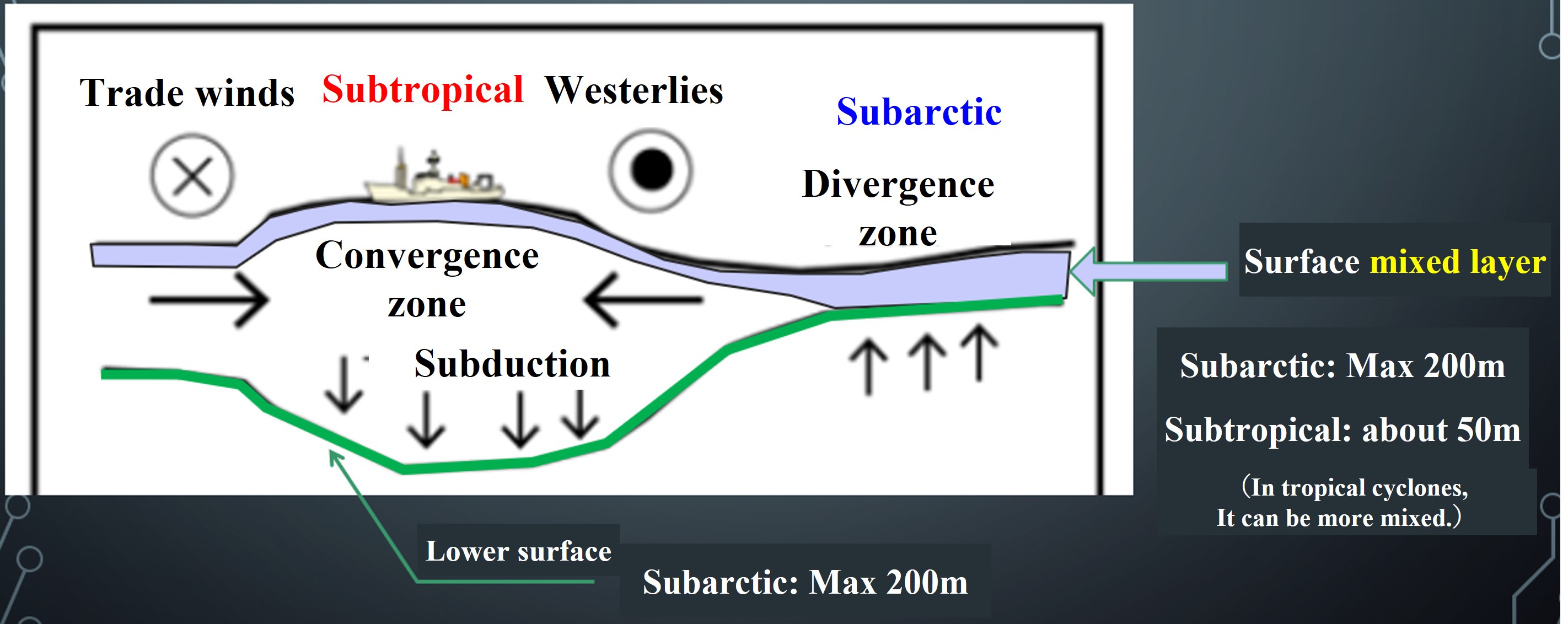
The figure below shows a north-south cross section of the North Pacific Ocean. On the right is the subarcti. In this figure, the green line is the depth of the deepest at the surface. The subarctic, where water is carried away near the surface, is a divergent zone, and the surface layer is shallower. The thickness of the surface mixed layer is depicted in light purple. In the subarctic, the mixed layer is thicker, up to about 200 meters. In the subarctic, the surface layer and the mixed layer coincide. In the subtropical, the mixed layer is shallower, about 50 meters. Beneath the mixed layer in the subtropical is a deep surface layer of water collected by the Westerlies and Trade winds.
-
Mixed and stratified layers
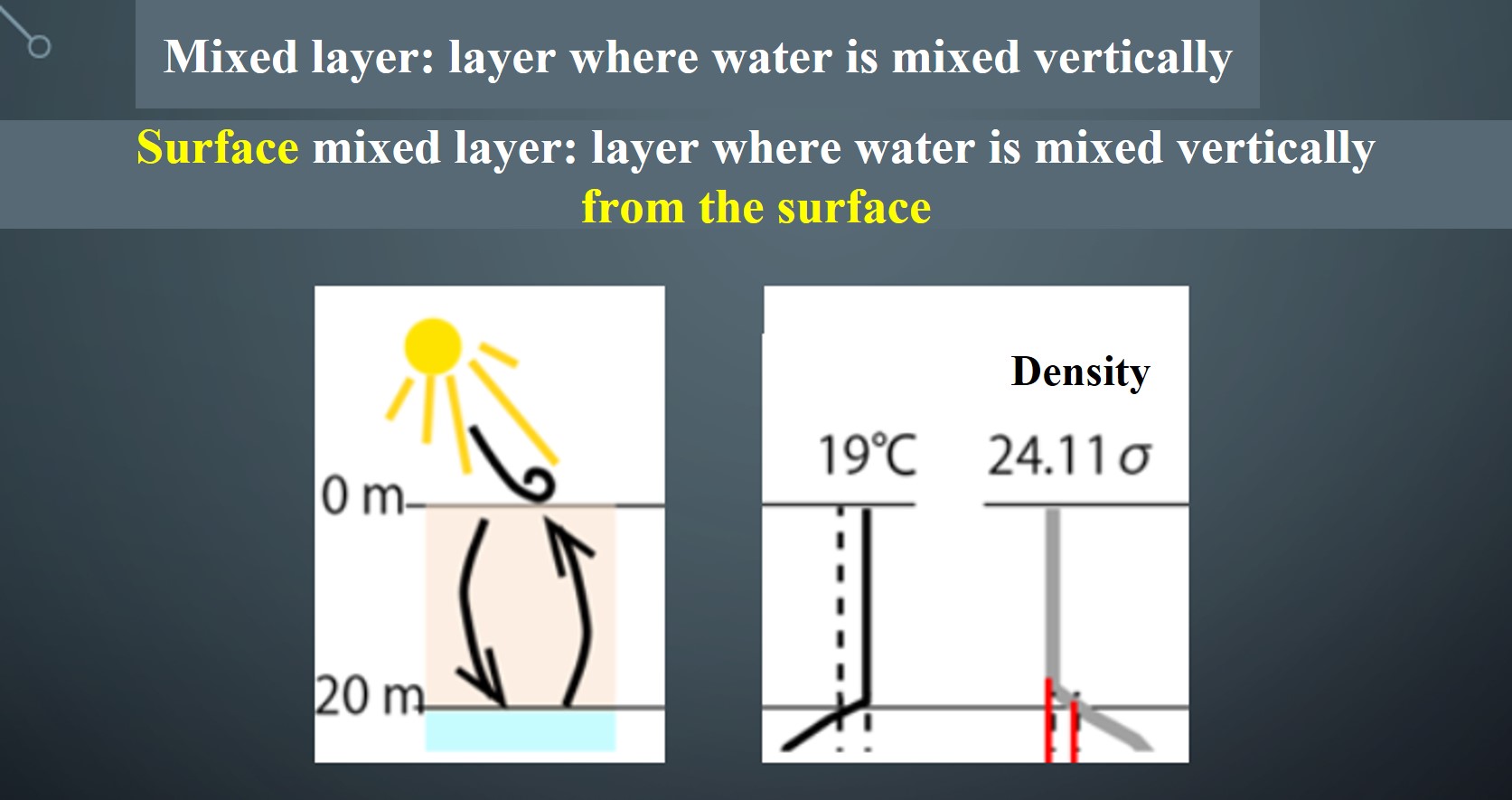
A mixed layer is a layer of water that is vertically mixed. Water on the surface of the ocean is forced to mix by the force of wind. The mixed layer is called the surface mixed layer. A mixed layer also develops when the water on the ocean surface cools and the water subducts. Within the mixed layer, the density is uniform. Many parameters other than density, such as water temperature, are also uniform within the mixed layer.
The opposite term of mixed is stratified. The low and high densities of seawater are divided by color. Low density is white and high density is black. Near the surface of the ocean was mixed, with low-density water vertically homogeneous to a certain depth. Just below that mixed layer, the density increased with depth. It was vertically layered. The vertical distribution of density is shown in the figure. In the mixed layer, the density is uniform, while in the stratified layer, the density increases with depth.
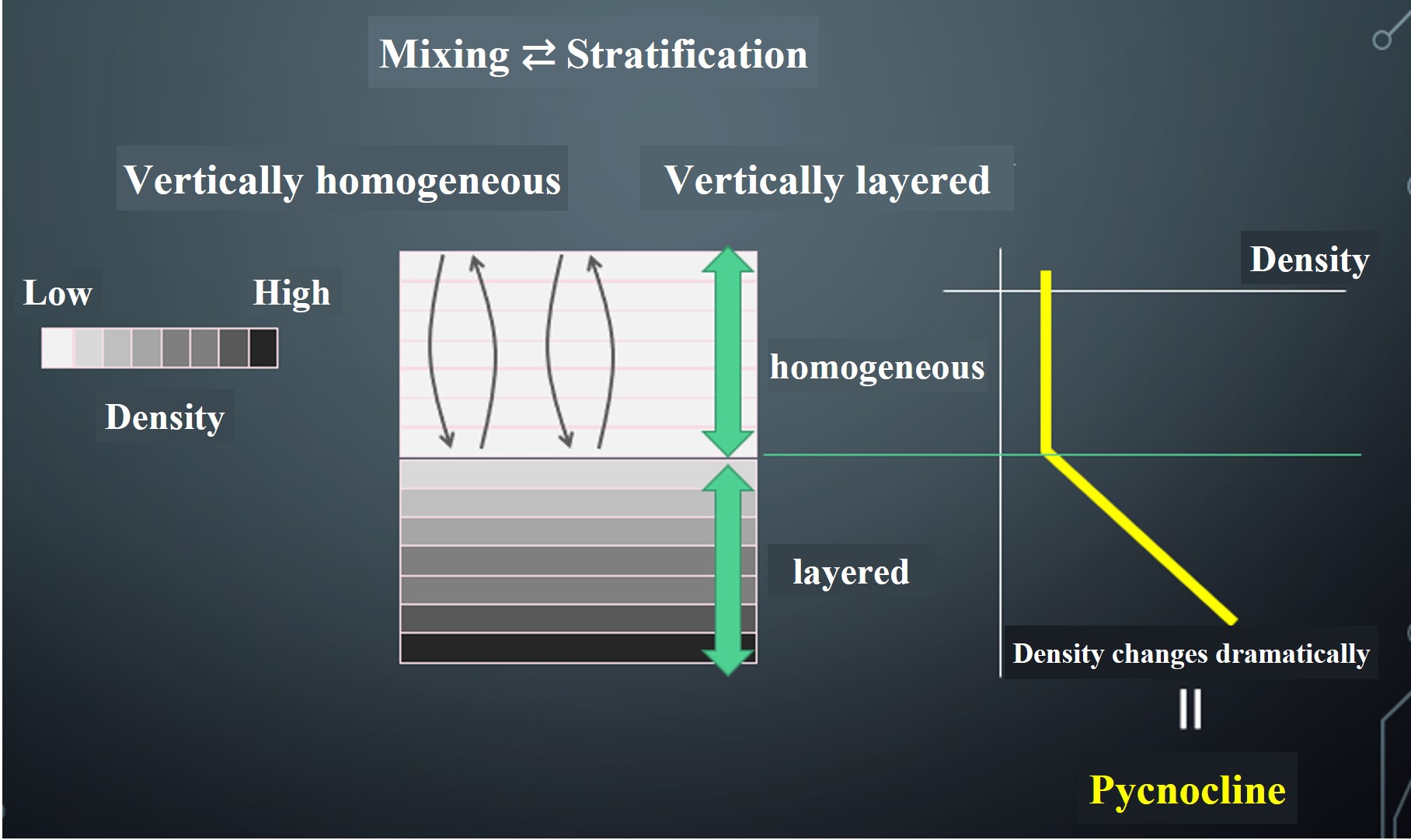
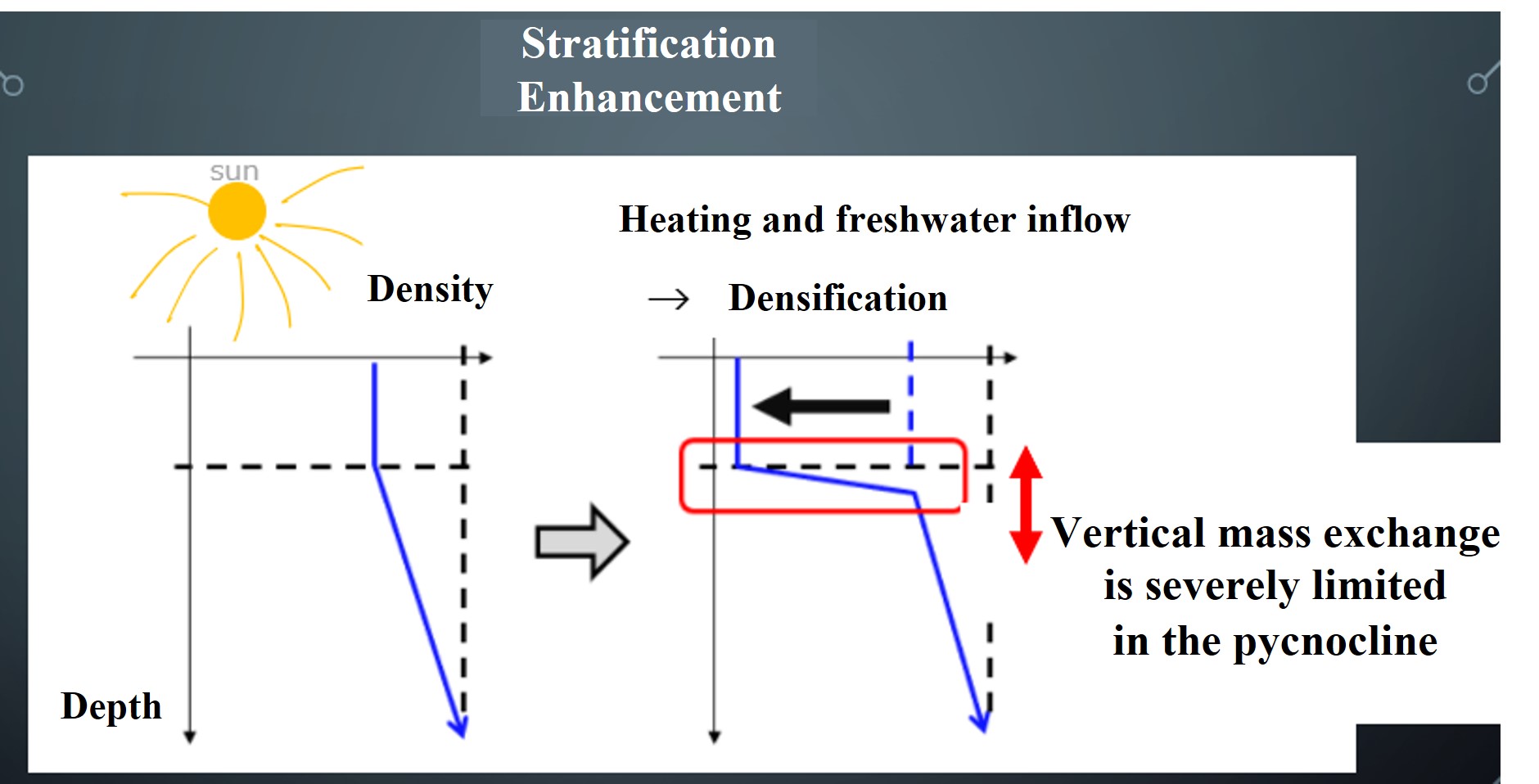
When the water in the mixed layer is heated by solar radiation, it becomes low-density. The sudden low densification results in the formation of a significant pycnocline just below the mixed layer. The stratification is enhanced. The exchange of material between the mixed layer and just below it is severely restricted. This is common in the summer and results in a severely restricted supply of nutrients from deeper into the mixed layer.
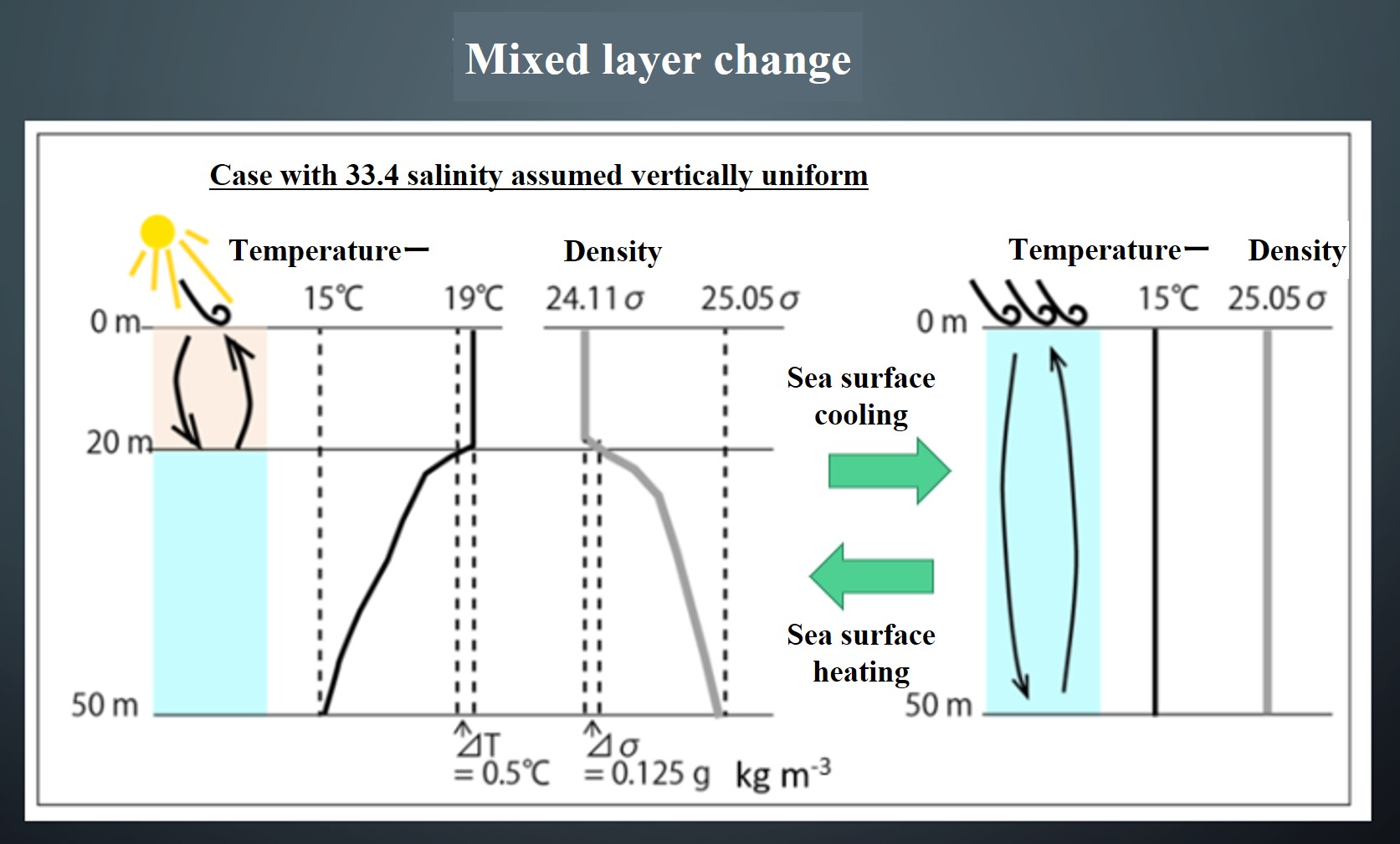
The figure shows how mixing develops. The figure on the lower left shows mixing down to a depth of 20 m due to wind forces. The water temperature in the mixing layer is 19°C. After this, a cold northerly wind blew and cooled the sea surface. With the force of the wind, the mixed layer developed to a depth of 50m, and the water temperature in the mixed layer dropped to 15°C. This is the state shown in the figure on the right. Now, let us assume that the winds weakened and the sun heated the water. The mixed layer shallows to 20 meters, and the temperature within the mixed layer rises to 19°C. Thus, the mixed layer changes with weather conditions, and the appearance of the mixed layer changes dramatically with the seasons. This is the most important reason that characterizes the basic productivity of the ocean.
-
FSC Dr. Isada explains stratification and mixing visually and clearly in this experimental video.
-
Seasonal changes in mixed layer
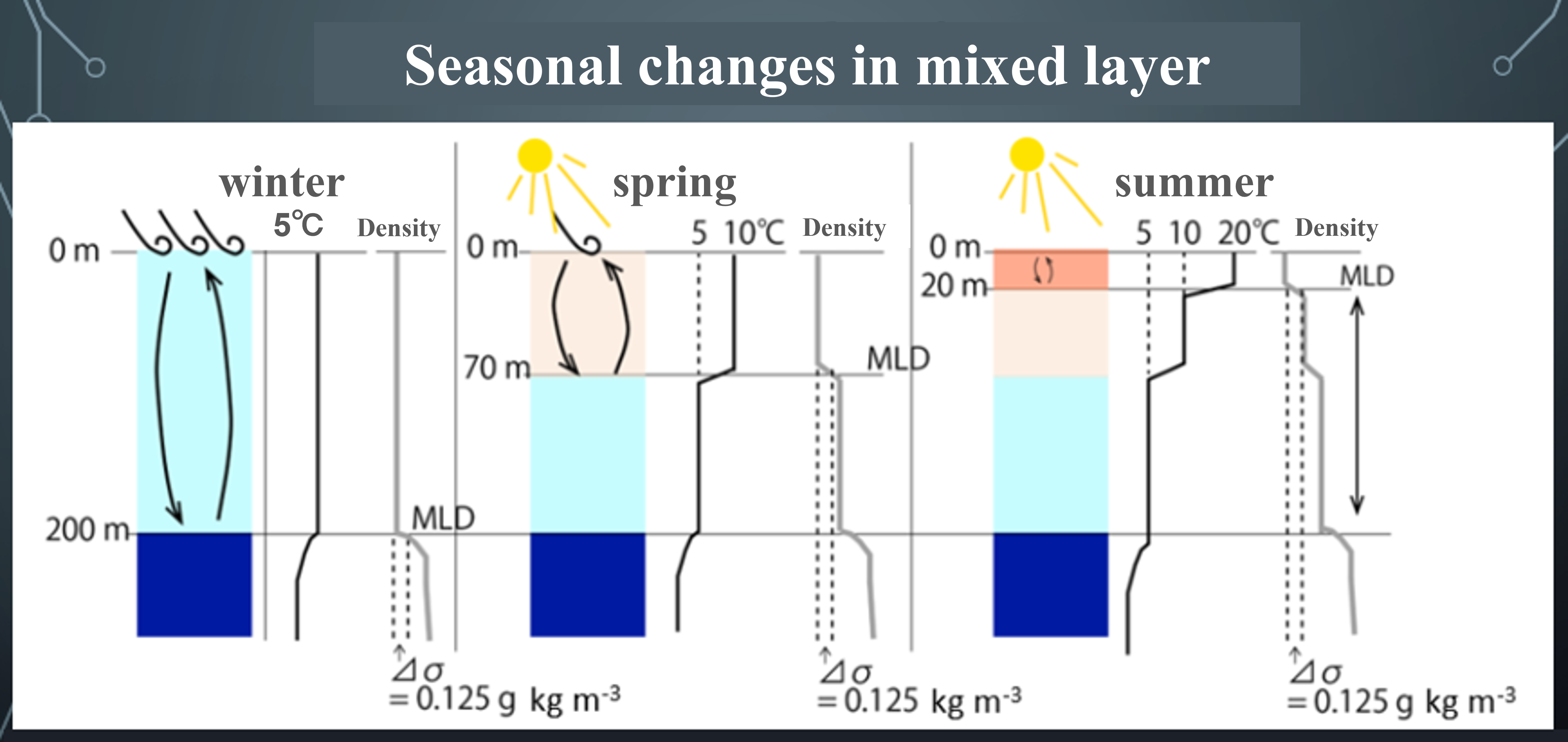
The figure shows how the depth of the mixed layer becomes shallower seasonally. The image shows the ocean at about the latitude of Hokkaido. From the left, in winter, the mixed layer is well developed due to sea surface cooling and wind force, and it mixes up to about 200 m. In spring, the mixed layer becomes shallower as the sea surface warms. In summer, the mixed layer becomes even shallower.The next course is to explain the changes in the amount of light that falls within the mixed layer and the bloom in phytoplankton that occurs as a result of these changes.
-