Perfilado de sección


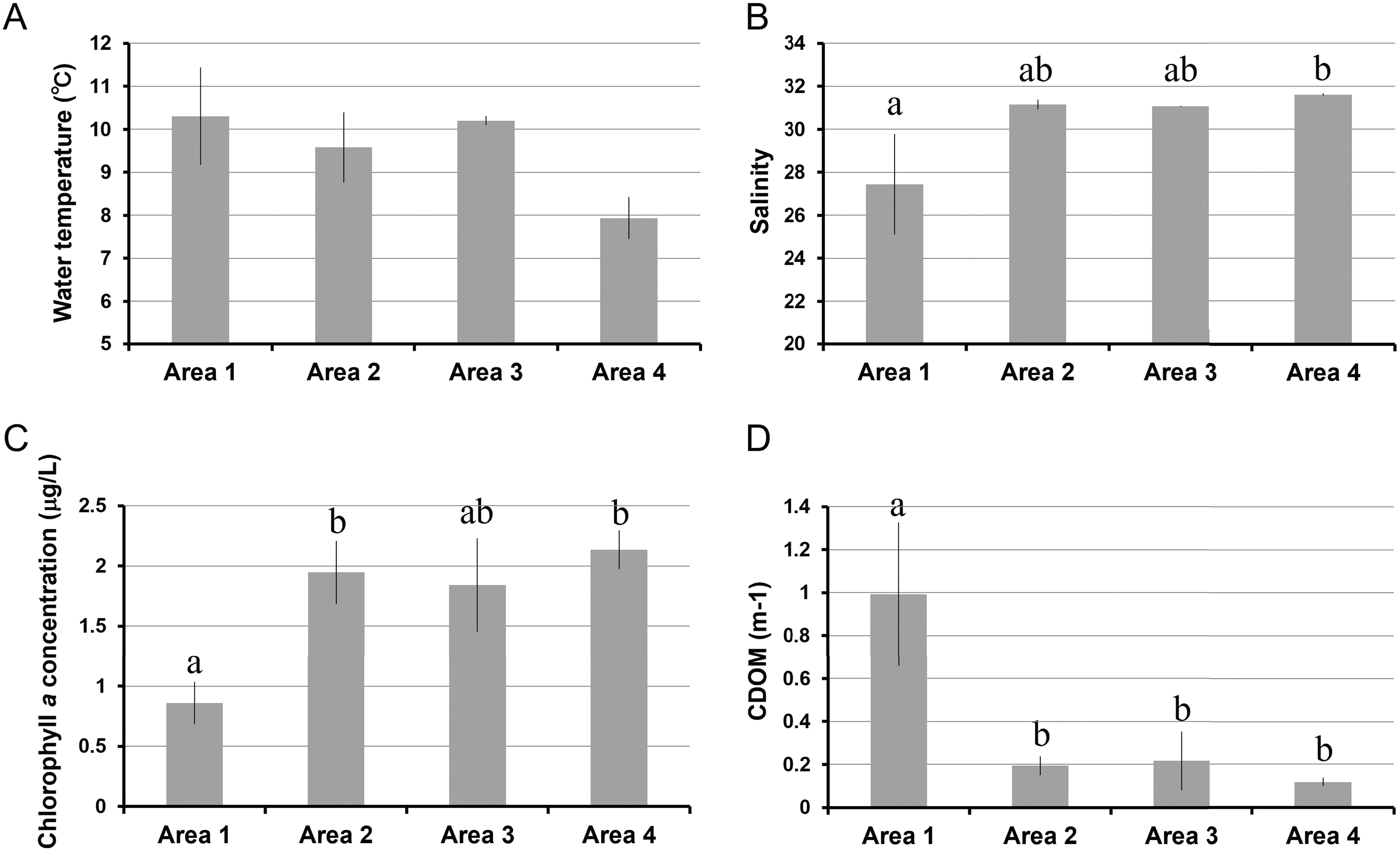
    • The water temperature in Area 4 was relatively lower than those in other areas. Even though there was a significant spatial variation by ANOVA, the post-hoc test showed no significant difference between each pair of areas. Salinity was significantly lower in Area 1 than Area 4, while no significant difference was found in other pairs of areas. Chlorophyll a concentration ranged from 0.68 μg/L to 2.33 μg/L. The lowest Chl a concentration was found in Area 1. The aCDOM(443) was significantly higher in Area 1 than in the other three areas.


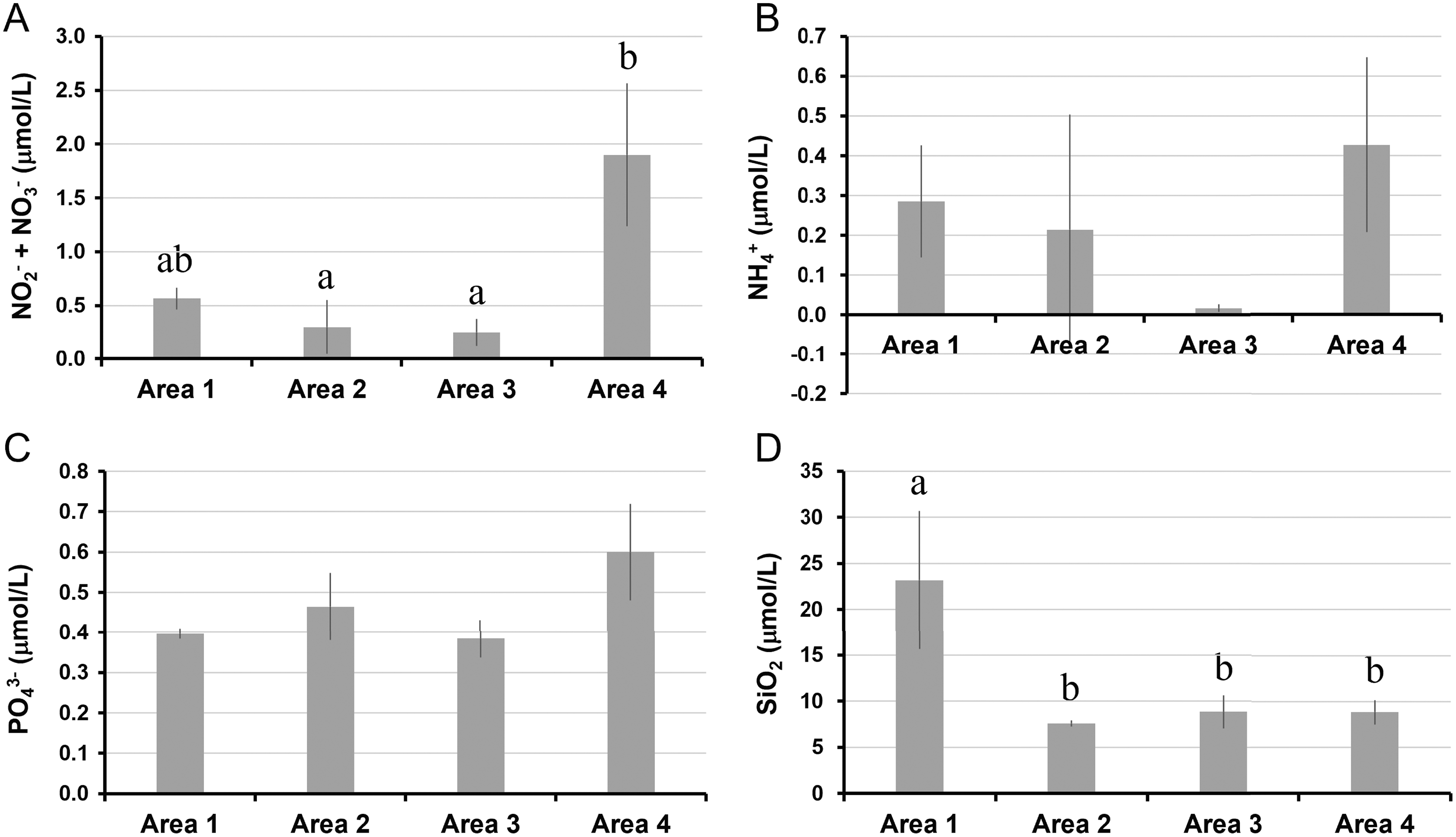
    • The total amount of nitrite and nitrate concentrations was significantly higher in Area 4 than in Areas 2 and 3. In contrast, neither ammonium nor phosphate concentrations showed significant differences among areas. Silica concentration in Area 1 was significantly higher than in the other areas.


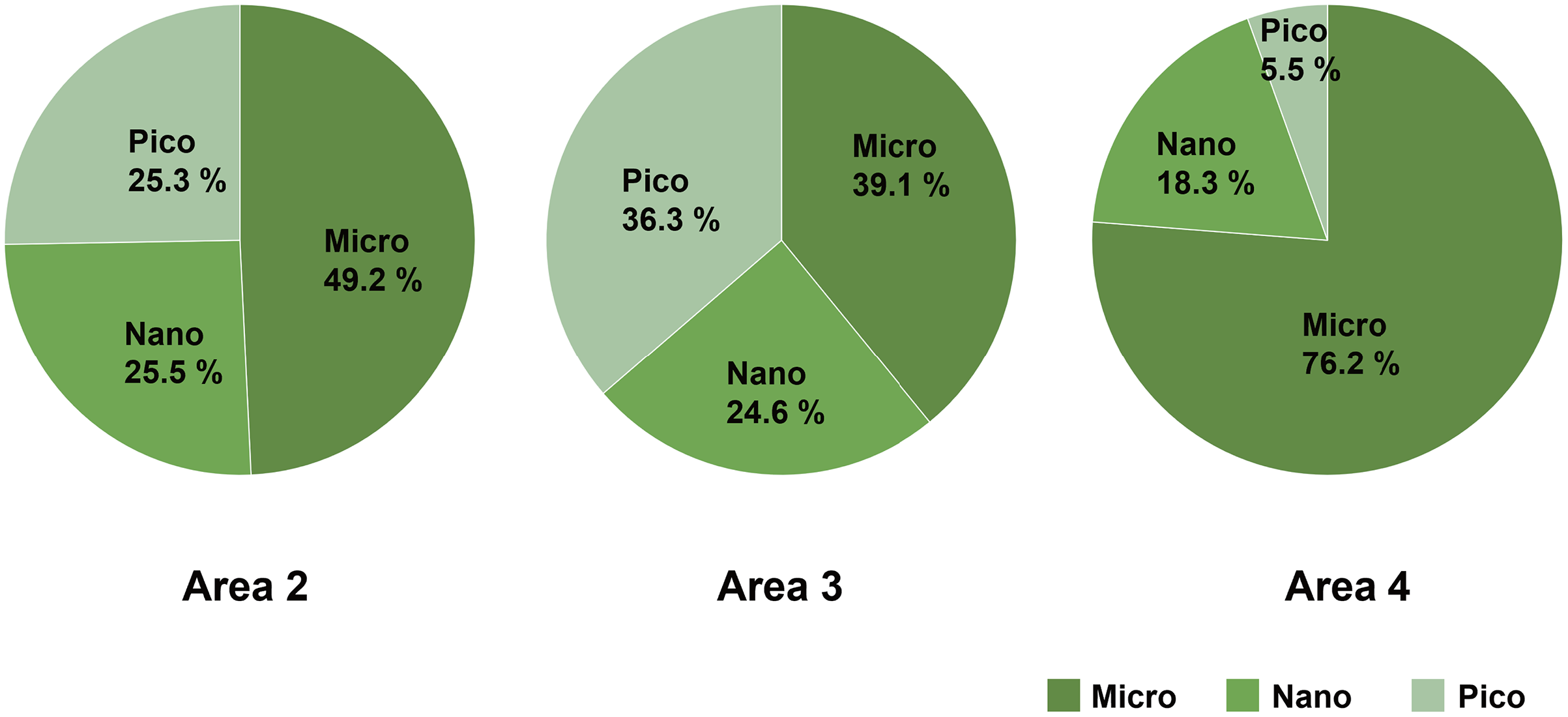
    • Micro-sized (>10 μm) phytoplankton dominated the total phytoplankton community in Area 2, while the composition of nano- (2–10 μm) and pico-sized (0.7–2 μm) phytoplankton accounted for 25.5% and 25.3%, respectively. In Area 3, the composition of micro- (39.1%), nano- (24.6%), and pico- (36.3%) sized phytoplankton were similar. On the other hand, the predominance of micro-sized phytoplankton (76.2%) was found in Area 4.


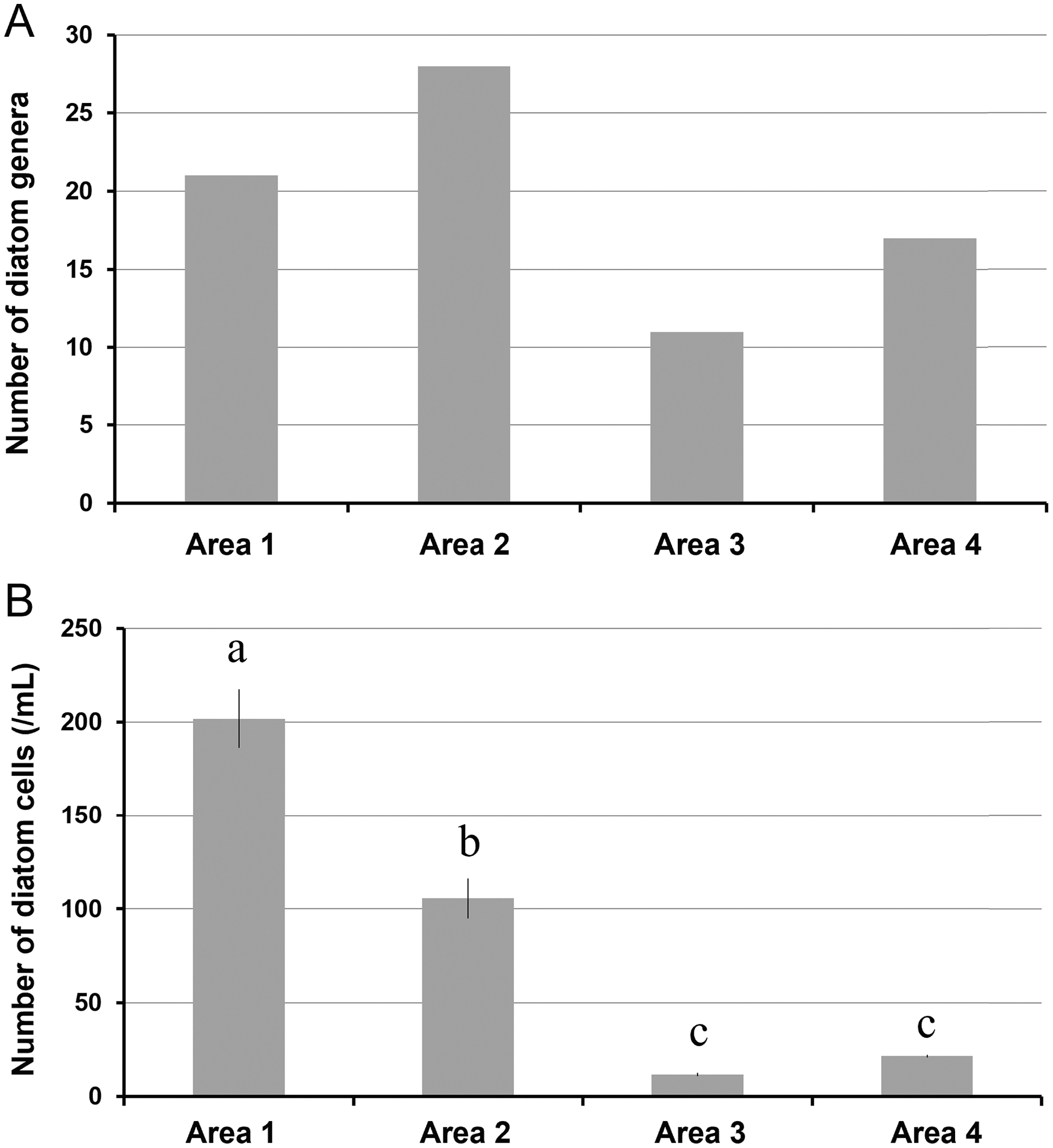
    • A total of 34 genera were observed from four different areas. Diatom composition was more diverse in Biwase Bay than in Hamanaka Bay. There were 21 and 28 diatom genera counted in Areas 1 and 2, respectively, whereas 11 and 17 genera were found in Areas 3 and 4. The abundance in Area 1 was significantly higher than those in the other three areas, and diatoms in Area 2 were significantly more abundant than Areas 3 and 4. There was no significant difference between Areas 3 and 4.


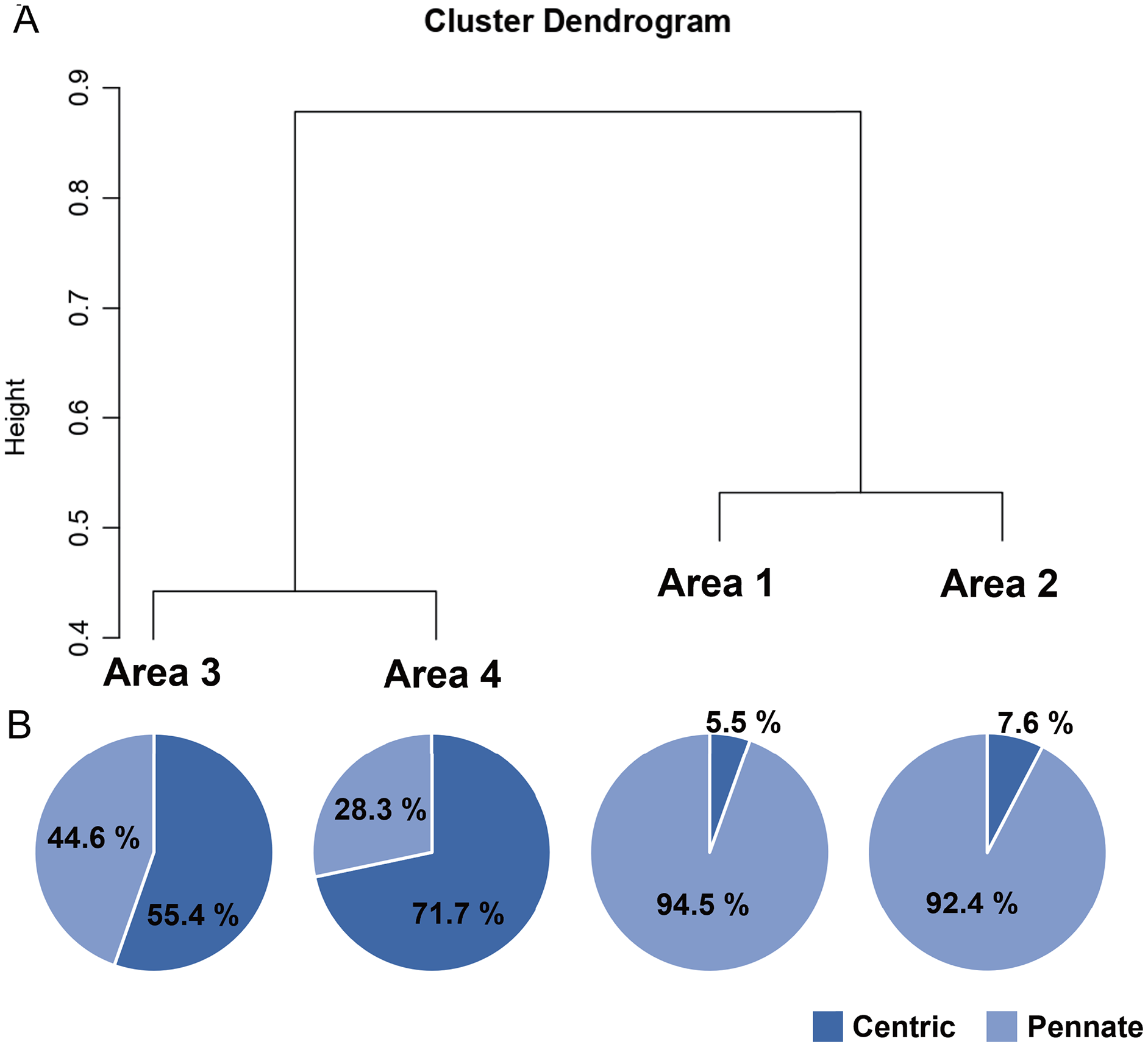
    • Cluster analysis based on the diatom genera and their cell densities classified the areas into Biwase Bay (Areas 1 and 2) and Hamanaka Bay (Areas 3 and 4). In addition, pennate diatoms were more abundant in Biwase Bay, while centric diatoms were abundant in Hamanaka Bay. The most dominant diatom genus was Cocconeis in Biwase Bay (88.7% at Area 1, 56.9% at Area 2), and Thalassiosira in Hamanaka Bay (42.8% at Area 3, 57.9% at Area 4).

    • Diatom composition along the nearshore areas of Biwase Bay and Hamanaka Bay, eastern Hokkaido, Japan, showed significant spatial variation in abundance and taxa within a spatial extent of 10–15 km. Environmental variables such as temperature, salinity and nutrient contents, and geographical feature of the coast were related to our observed variation. The variation in the environmental factors appear to be strongly affected by both the Coastal Oyashio Water and terrestrial input by Biwase River and surrounding Kiritappu Wetland. Geographical influences are related to the historical connectivity of pelagic waters that are now divided by the peninsula laying between Biwase and Hamanaka Bays. Although this study is based on just a snapshot of data, it is the first dataset collected for Hamanaka coastal water. The obtained data can be used as baseline data for future research, including the evaluation of impacts of ongoing climate change on coastal ecosystems, which is expected to heavily affect the coastal ecosystems and biodiversity of this region.