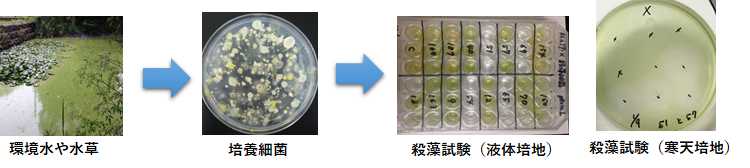
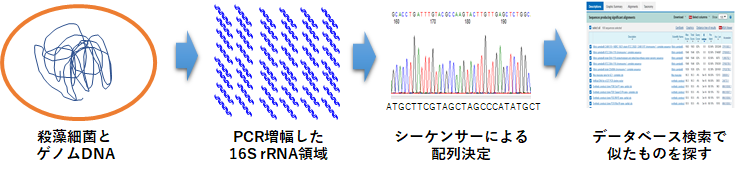
Figs.
(left) Algaecides and genomic DNA
(middle left) PCR amplified 16SrRNA region
(middle right) Sequencing by sequencer
(right) Find similar sequences in a database search
The gene region (16S rRNA sequence) necessary for species identification is amplified from the bacteria that showed algaecidal activity by PCR.
The amplified DNA is then sequenced by a sequencer. The obtained sequences are then searched in a database to find the most similar ones.
So far, many algaecidal bacteria such as Alteromonas spp. have been found in the ocean and Pseudomonas
spp. in lakes. In both cases, many bacterial species seem to be relatively easy to culture. These cause algaecidal phenomena in the laboratory, but at this time, we still do not know if they really do so in the natural environment.