The sporophytes of kelps have
various abilities to protect themselves and reproduce.
Their cell
wall is composed of cellulose as a skeleton and a matrix containing alginic
acid and fucoidan, a viscous polysaccharide that exhibits physiological
activities, such as antibacterial activity, which serve for defense together
with cuticle.
Epidermal cells have developed an intracellular structure called the physode, which
includes phlorotannin that plays a role as a repellent for herbivoreand UV
protection, and it accumulates in large quantities in damaged parts of the kelp.
In addition,
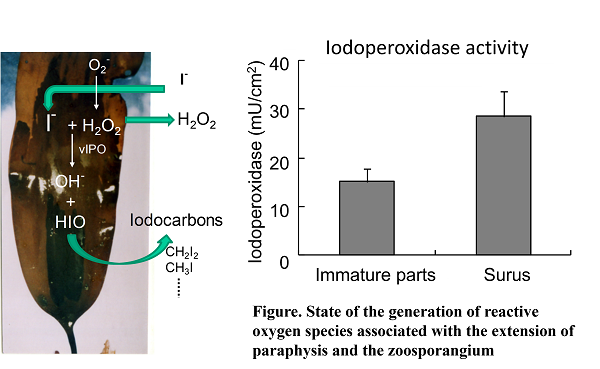
when oligosaccharides derived from alginic acid act as elicitors on the alga
body, reactive oxygen is generated, inducing various defense reactions.
One such
reaction is the activation of haloperoxidase, which releases iodine compounds
with antibacterial activity to the outside of the body, playing a part in
chemical defense.
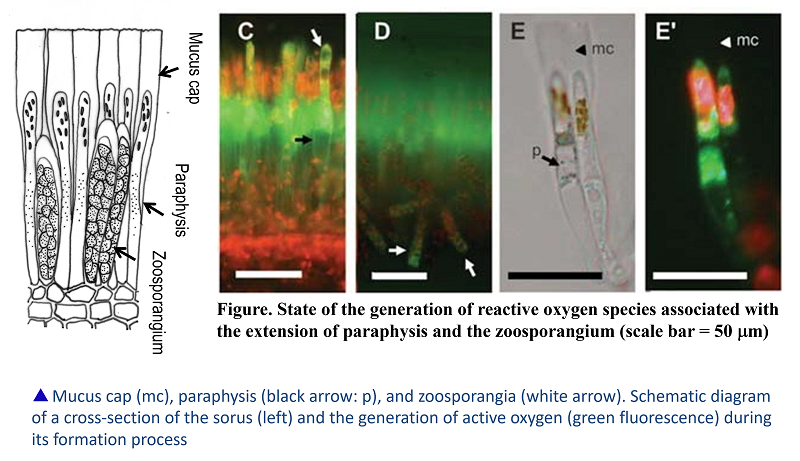
This defense mechanism is also an
important factor for the protection of the reproductive organ (sorus) of the sporophyte. The sorusexerts various abilities, protects the zoospore (germ cells),
andbridges
to the next generation.