

Evaluation of biodiversity using eDNA
セクションアウトライン
-
-
The eDNA analysis starts with collecting water. Then the eDNA is collected by filtering the water. The DNA is extracted and purified. The purified DNA is amplified and analyzed. There are currently two main methods involved in the analysis process. One is the metabarcoding method, which detects many species within a particular taxon. The other is the species-specific detection method, which detects single species. The two methods have different advantages. The former can detect many species simultaneously in one analysis, while the latter can obtain data that can be used as an index of the biomass of the target.
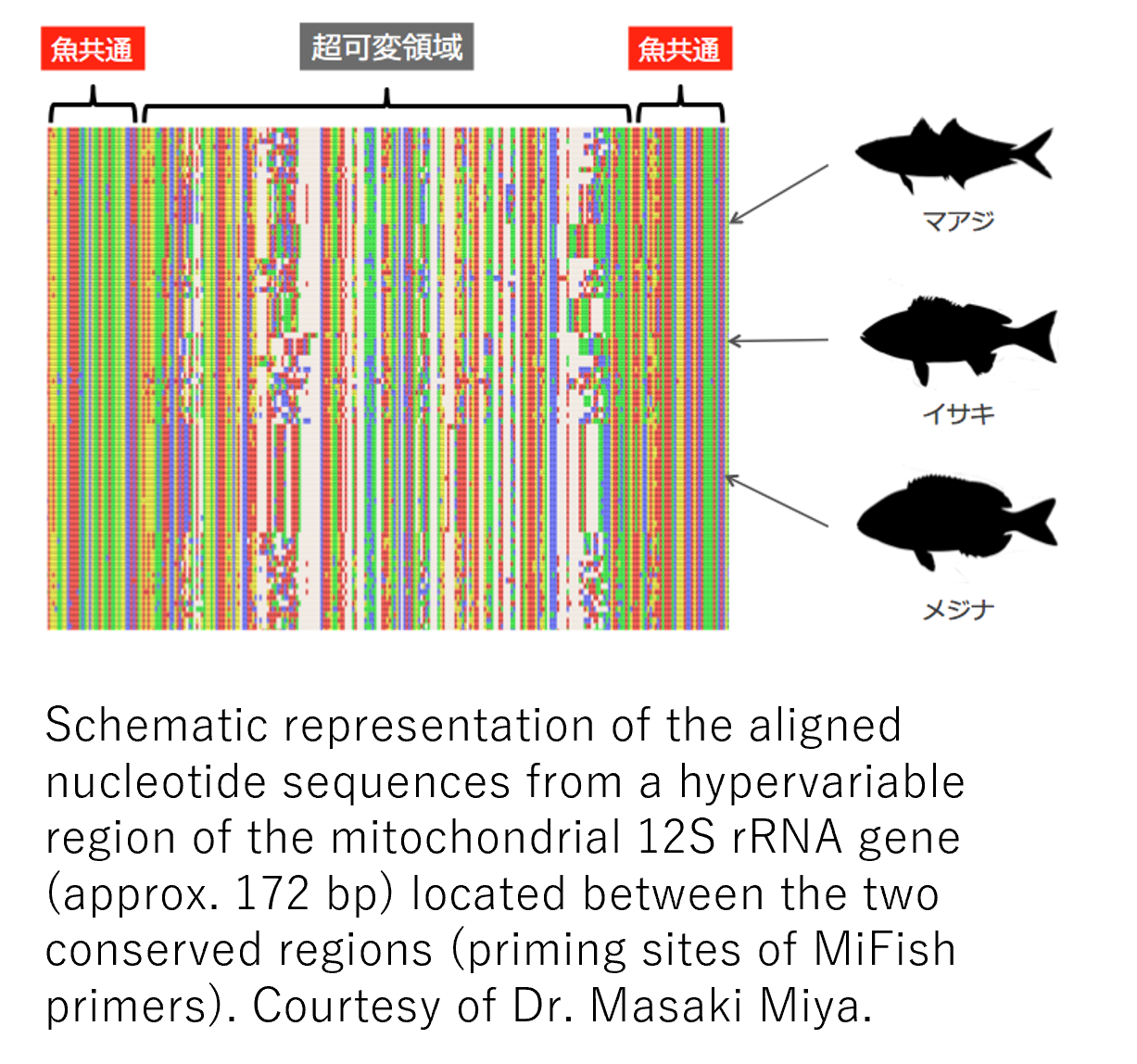
You need universal primers that can simultaneously amplify many types of DNA. By searching relatively short sequences that contain two conserved regions with an intervening hypervariable region, a large number of species can be discriminated at once. The primers are used to amplify fragments of DNA by PCR (Polymerase Chain Reaction), which are then sequenced by a next-generation sequencer. If the obtained nucleotide sequence matches with the reference, it can be inferred that the species with the sequence exists in the environment. Universal primers that are effective for various taxonomic groups, including fish, amphibians, and mammals have been developed.
-